How to Validate Print on Demand Designs Before Launching (2026)
Why Design Validation Matters in Print on Demand
Every print on demand seller has been there: you find what feels like the perfect design, launch it with excitement, run ads… and nothing happens. No sales. No engagement. Just wasted time and money.
The problem isn’t your ads or your store. It’s that you skipped the most important step: validating your design before spending money on it.
Design validation is the process of testing whether a design has real market demand before you invest in ads, inventory, or marketing. It’s the difference between guessing and knowing. And in this guide, you’ll learn exactly how to do it.
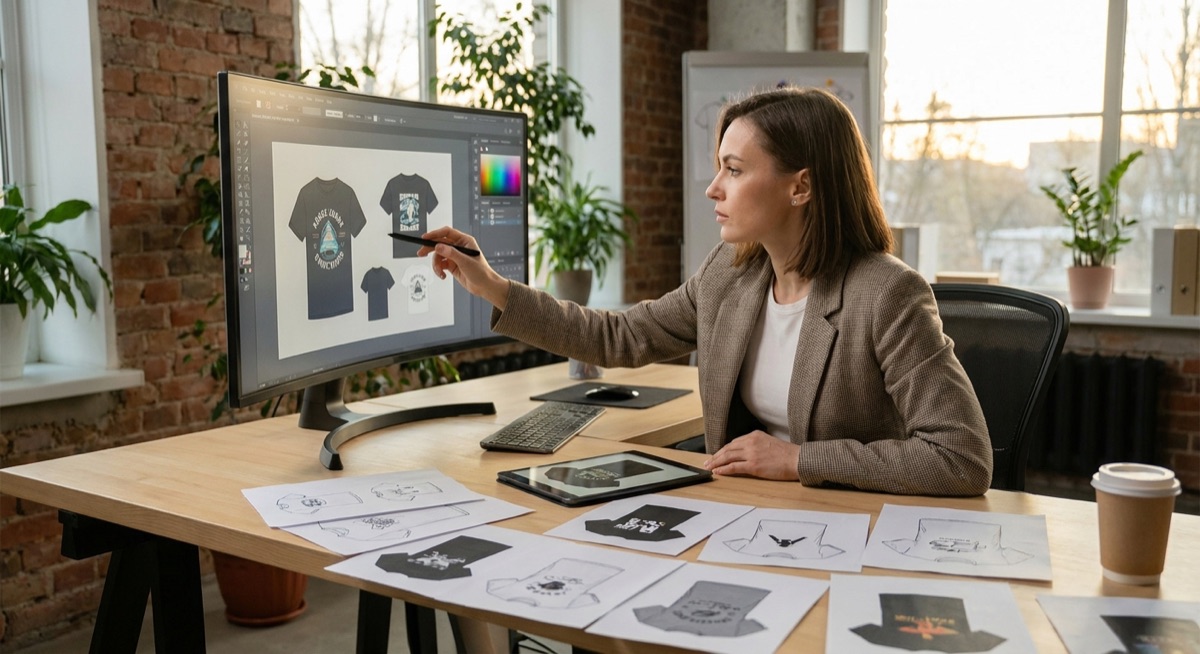
Step 1: Research Trending Designs in Your Niche
Before creating anything, you need to understand what’s already selling. This isn’t about copying—it’s about understanding what resonates with your target audience.
Where to Find Trending Designs
- Etsy: Search your niche keywords and sort by “bestsellers.” Look at reviews, favorites, and shops with high sales volume.
- Amazon Merch: Browse the t-shirt category with your niche terms. Products with higher BSR (Best Seller Rank) indicate demand.
- Pinterest: Search design-related keywords and note which pins have high engagement (saves, comments).
- Social Media: Look at what’s going viral in Facebook groups, TikTok, and Instagram related to your niche.
Spend 30-60 minutes on this research before creating any design. Document patterns you notice: colors, typography styles, humor types, and emotional triggers that appear repeatedly in top sellers.
Step 2: Test Your Concept with Social Media Polls
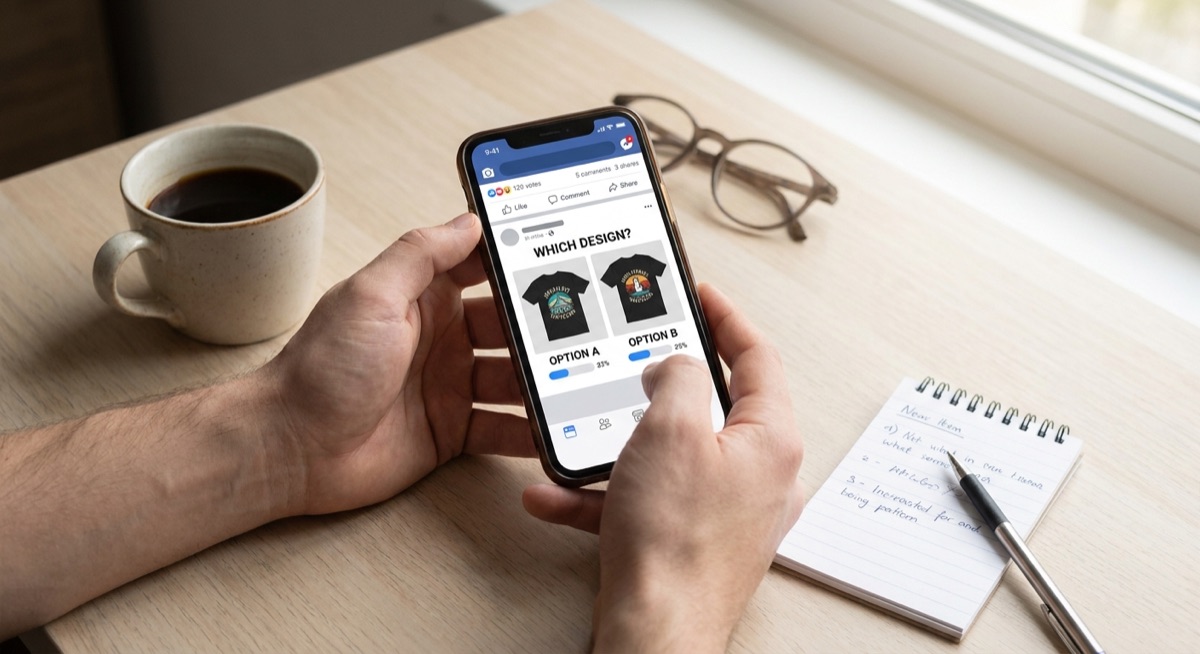
One of the fastest ways to validate a design concept is to ask real people. You don’t even need the final design yet—just the concept.
How to Run a Design Poll
- Create 2-3 rough mockups of your design concepts (can be simple sketches)
- Post them in relevant Facebook groups, Reddit communities, or your own social media
- Ask a specific question: “Which design would you actually wear?” or “Which would make a better gift?”
- Track engagement—comments are more valuable than likes
Look for genuine enthusiasm in the responses. Polite comments like “nice design” mean nothing. You want people saying “Where can I buy this?” or tagging friends who would want it.
Step 3: Analyze the Competition
Competition isn’t bad—it’s validation. If similar designs are already selling, that proves demand exists. Your job is to do it better.
Competition Analysis Checklist
- Price Points: What are competitors charging? Can you compete or offer more value?
- Reviews: Read the negative reviews. What are customers complaining about? That’s your opportunity.
- Design Quality: Is there room for improvement in typography, colors, or overall aesthetic?
- Messaging: How are competitors positioning their products? What angles aren’t being used?
A common mistake is seeing competition and running away. Instead, see it as proof of concept. Then figure out how to differentiate.
Step 4: Run a Low-Cost Ad Test
The most reliable validation comes from putting real money behind your design and seeing if strangers will buy it. This doesn’t require a huge budget.
The $20 Validation Test
- Create your final design and mockup
- Set up a simple ad on Facebook or TikTok targeting your niche audience
- Run the ad for 2-3 days with a $20-30 budget
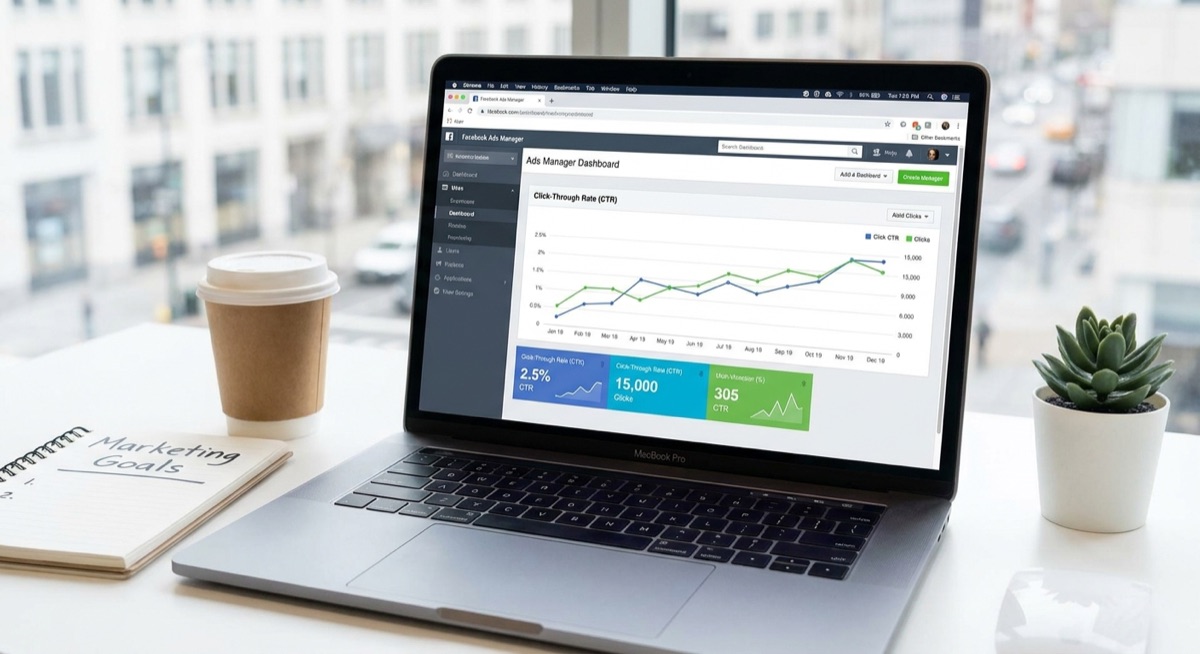
- Track click-through rate (CTR) and add-to-cart rate
What the numbers mean:
- CTR above 2%: Strong interest—design catches attention
- CTR below 1%: Weak—design or messaging needs work
- Add-to-cart rate above 5%: High purchase intent—scale this design
- High clicks, no add-to-carts: Design attracts clicks but product page isn’t converting
Step 5: Validate with Pre-Orders or Waitlists
If you want absolute certainty before investing in a design, consider running a pre-order campaign. This tells you exactly how many people will pay.
You can set up a simple landing page explaining the product is “coming soon” and collect emails or pre-orders. Tools like Shopify, ConvertKit, or even a simple Google Form work for this.
Set a minimum threshold: “If 20 people pre-order in 7 days, I’ll produce this design.” If you don’t hit that threshold, you’ve saved yourself from a failing product.
Common Validation Mistakes to Avoid
Even experienced sellers make these errors:
- Asking friends and family: They’ll say they love it to be supportive. Their opinion is worthless for validation—you need strangers.
- Falling in love with your design: Emotional attachment clouds judgment. Let the data decide, not your feelings.
- Skipping research to save time: An hour of research saves weeks of failed campaigns.
- Testing too many designs at once: Validate one design thoroughly before moving to the next.
Putting It All Together
Here’s your validation workflow:
- Research trending designs (30-60 minutes)
- Create 2-3 design concepts based on patterns you found
- Run social media polls to gauge initial interest
- Analyze competition for your top concept
- Run a $20-30 ad test on your best performer
- Scale winners, kill losers
This process takes 3-5 days but saves you from wasting money on designs nobody wants. Every successful print on demand seller has some version of this system.
FAQ
How long should I wait for validation results?
For ad tests, 48-72 hours gives enough data. For social media polls, wait until you have at least 30-50 responses before making decisions.
What if my design gets mixed feedback?
Mixed feedback usually means the concept is weak. Strong designs get strong reactions—either very positive or very negative. Lukewarm responses indicate you should iterate or move on.
Can I validate without spending money on ads?
Yes, but organic validation (polls, research) takes longer and is less reliable. A small ad budget dramatically speeds up the process and gives you real purchase intent data.
How many designs should I validate before finding a winner?
Expect to test 5-10 concepts before finding one worth scaling. This is normal—even experienced sellers don’t hit winners every time.
What’s the minimum budget needed for validation?
You can start with $20-30 for a single ad test. Plan for $100-150 if you’re testing multiple designs to find your first winner.