The Psychology of T-Shirt Buying: Why People Buy Apparel and How to Sell More (2026)
Why do people spend $30 on a t-shirt when they could buy one for $8 at Walmart?
It’s not about the cotton. It’s not about the stitching. It’s about something far more powerful: psychology.
After coaching thousands of print-on-demand sellers at Skup, I’ve watched students go from zero sales to $10K months—and the difference almost always comes down to understanding why people buy, not just what they buy.
This deep-dive will change how you think about selling apparel. We’re going beyond tactics into the fundamental psychology that drives every t-shirt purchase. Master these principles, and you’ll never struggle to create designs that sell again.

The Identity Engine: Why T-Shirts Are Never “Just Clothes”
Here’s a truth that changed everything for me: People don’t buy t-shirts. They buy identity.
A t-shirt is the most democratic form of self-expression on the planet. Unlike a tattoo, it’s not permanent. Unlike a bumper sticker, it goes everywhere you go. Unlike social media, it broadcasts who you are without requiring anyone to follow you.
When someone puts on a shirt that says “Dog Dad” or features a fishing hook design, they’re not covering their torso—they’re making a statement about who they are and what matters to them.
The Tribal Signal
Humans are tribal creatures. We evolved to identify in-group members quickly, and clothing has always been part of that signaling system. A band tee at a concert. A sports jersey at a game. A profession-specific shirt (“Nurses: Because Doctors Need Heroes Too”).
These aren’t just garments—they’re membership badges.
When you understand this, your approach to design shifts completely. You stop asking “What looks cool?” and start asking “What tribe does my customer belong to, and how can I help them signal that membership?”
The Three Identity Questions Every Buyer Asks
Before purchasing any apparel, customers unconsciously ask three questions:
- “Does this represent who I am?” (Identity alignment)
- “Will others recognize what this means?” (Social signaling)
- “Will wearing this feel good?” (Emotional reward)
If your design answers “yes” to all three, you have a winner. If it misses even one, sales will struggle.
This is why generic “inspirational quote” shirts often fail—they might align with identity, but they don’t signal tribe membership and often feel cliché to wear.
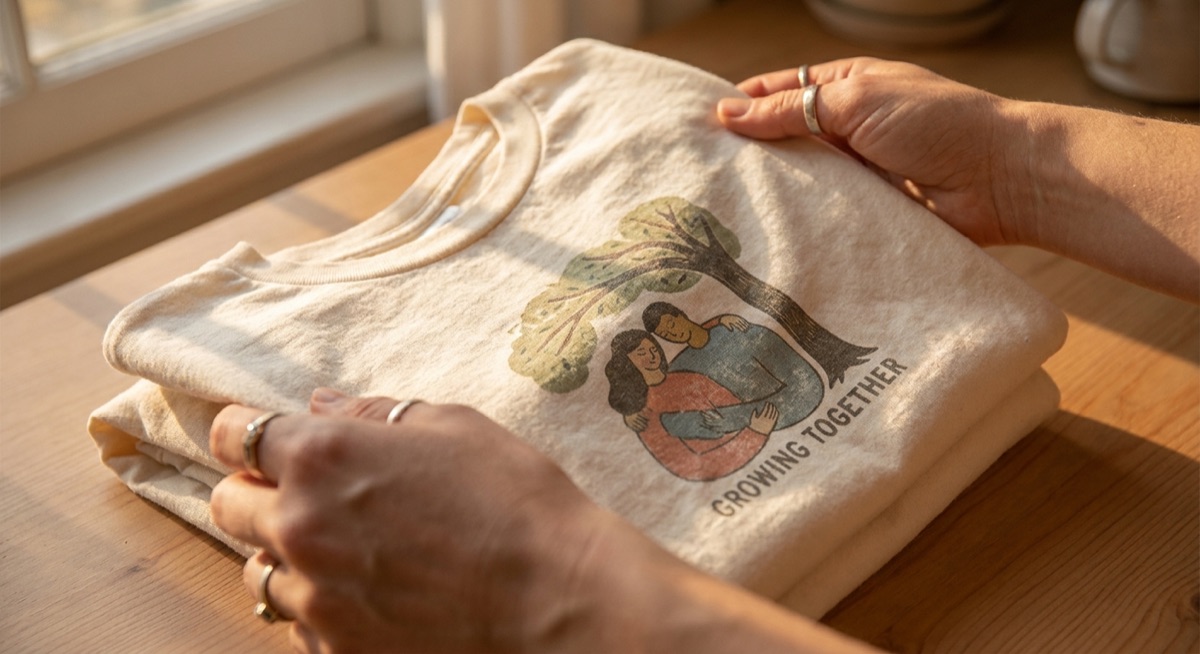
The Emotion Purchase: Understanding the Feeling Behind the Click
Every purchase is emotional first, logical second. This is especially true for apparel, where there’s rarely a “need” being fulfilled. Nobody needs another t-shirt. They want something that purchase represents.
The Five Emotional Drivers of Apparel Purchases
1. Pride
This is the most powerful driver in print-on-demand. Pride in profession (“Electrician: Because Even Engineers Need Heroes”), pride in hobbies (“Fishing: My Retirement Plan”), pride in identity (“Proud Grandpa of 5”).
Pride-based designs work because they give customers permission to brag in a socially acceptable way. Saying “I’m a great nurse” out loud feels arrogant. Wearing a shirt that implies it feels confident.
2. Belonging
Humans have a deep need to belong to something larger than themselves. Military veteran shirts, hobby community apparel, regional pride (“Michigan: Because Even Ohio Needs Someone to Look Up To”)—these tap into the fundamental human need for connection.
3. Humor
A funny shirt is a conversation starter. It signals that the wearer doesn’t take themselves too seriously and invites social interaction. Humor shirts often sell in bursts (someone shares it on social media) but can have shorter lifespans than other categories.
4. Nostalgia
References to childhood memories, past decades, or “remember when” moments tap into a powerful emotional well. Nostalgia is particularly effective for buyers over 35 who have more spending power and deeper emotional connections to the past.
5. Defiance
Some shirts exist specifically to push back against perceived norms or expectations. Political shirts, counter-culture designs, and “I don’t care what you think” messaging all tap into the rebellious spirit that lives in most people.
Matching Emotion to Niche
Different niches respond to different emotional triggers:
- Professions: Pride, Belonging
- Hobbies: Pride, Belonging, Humor
- Parenting: Pride, Humor, Nostalgia
- Fitness: Pride, Defiance
- Pets: Pride, Belonging, Humor
When you’re entering a new niche, identify which emotional drivers resonate most strongly with that audience. Your designs should deliberately trigger those specific emotions.
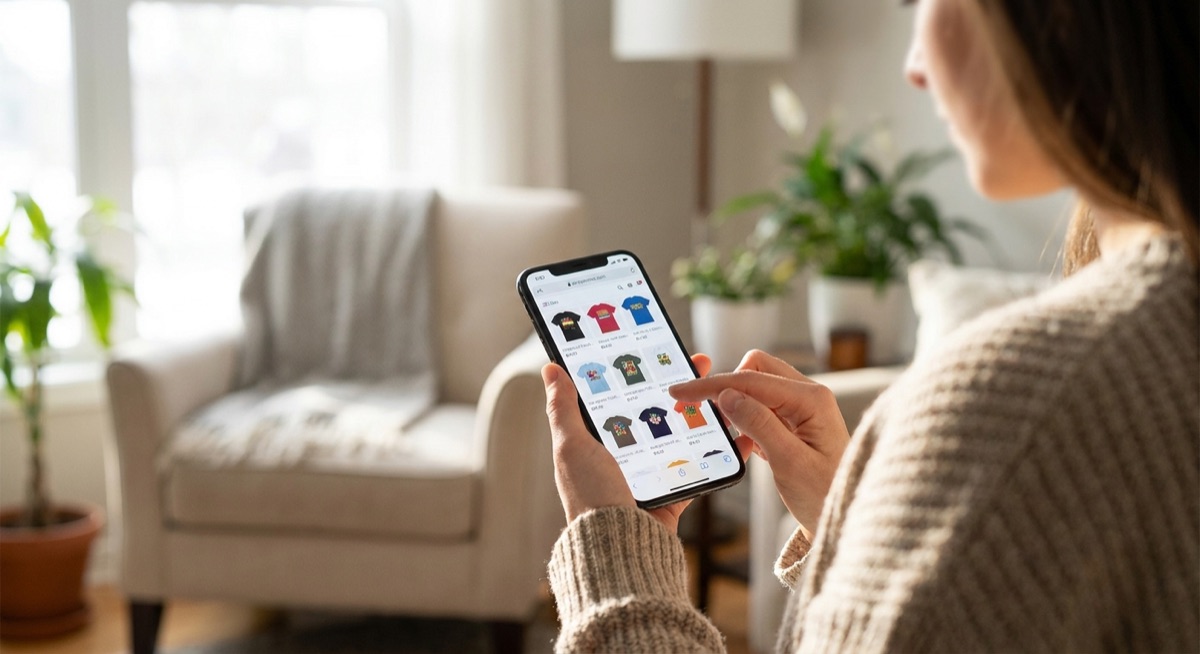
The Decision Architecture: How T-Shirt Purchases Actually Happen
Understanding the psychology of why people buy is only half the equation. You also need to understand how purchase decisions unfold.
The Impulse vs. Considered Purchase Spectrum
T-shirt purchases exist on a spectrum:
Pure Impulse: “Haha, that’s hilarious—I need that” (scroll-stop-purchase in under 2 minutes)
Considered Purchase: “This is nice, but let me think about it” (multiple touchpoints over days or weeks)
Most print-on-demand success comes from the impulse end of the spectrum. Your design needs to create an immediate emotional reaction strong enough to overcome the friction of checkout.
This is why “okay” designs fail even when they’re technically competent. They don’t generate enough emotional force to push through the purchase barrier.
The 3-Second Rule
On social media and search results, you have approximately 3 seconds to capture attention and communicate your shirt’s value proposition. If someone can’t immediately understand:
- What the shirt says/shows
- Who it’s for
- Why it’s worth stopping for
…they’re scrolling past.
This means your designs need to be instantly readable, obviously targeted, and emotionally compelling at a glance. Complexity kills conversion.
The “Gift” Psychology
Here’s something most POD sellers miss: A huge percentage of t-shirt purchases are gifts.
When someone buys a “World’s Best Fishing Buddy” shirt for their dad, the psychology shifts entirely. Now you’re not just selling identity expression—you’re selling the ability to demonstrate love and thoughtfulness through a physical object.
Gift purchases have different triggers:
- Specificity matters more (generic gifts feel lazy)
- Quality perception matters more (it reflects on the gift-giver)
- Emotional resonance matters more (will the recipient actually love this?)
Many of my most successful students at Skup have built entire businesses around “gift-ready” designs that make it easy for buyers to imagine giving them to someone they care about.
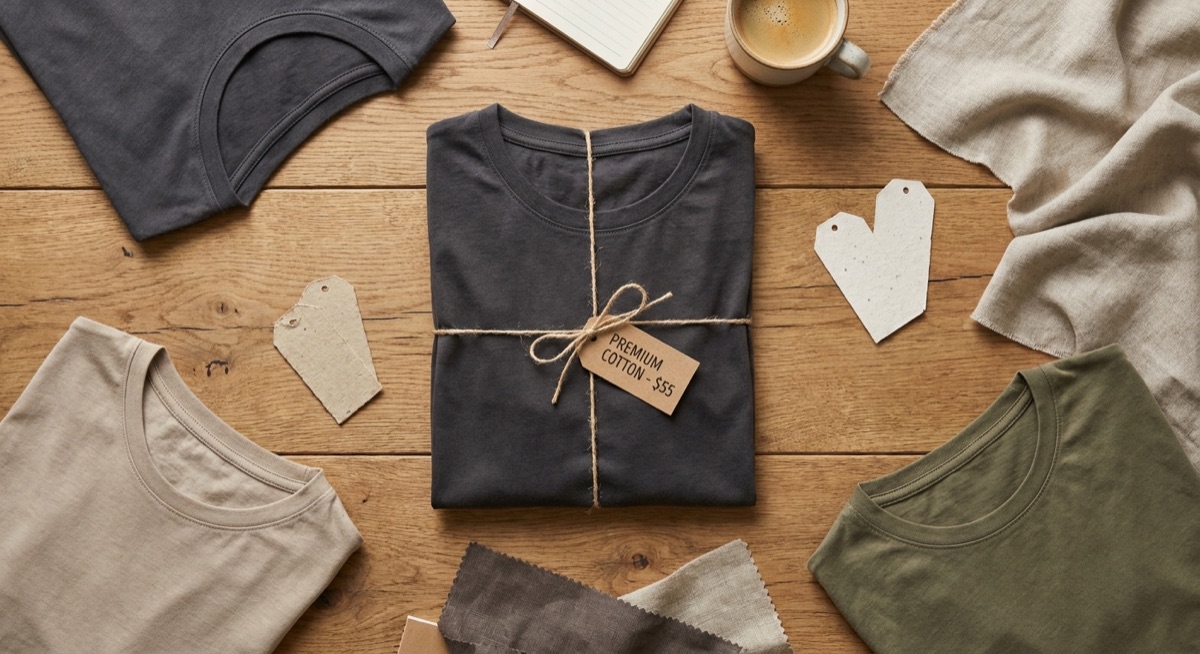
The Price-Value Paradox: Why Cheaper Isn’t Better
One of the biggest mistakes new POD sellers make is competing on price. They think: “If I sell my shirt for $19.99 instead of $29.99, I’ll get more sales.”
This fundamentally misunderstands how pricing psychology works for apparel.
Price as Quality Signal
In the absence of other information, humans use price as a proxy for quality. A $15 shirt is assumed to be lower quality than a $30 shirt, even if they’re physically identical.
This creates a counterintuitive reality: raising your prices can actually increase conversions because it positions your product as premium.
Obviously, this has limits. A $75 t-shirt needs to justify its price through brand, materials, or exclusivity. But in the $25-40 range, higher prices often perform better than lower ones.
The Perceived Value Framework
Customers don’t evaluate price in isolation—they evaluate it against perceived value. A $30 shirt that perfectly captures someone’s identity feels like a bargain. A $15 shirt that kind of fits what they’re looking for feels expensive.
Your job isn’t to lower prices. It’s to increase perceived value through:
- Design quality: Professional, polished, and unique
- Specificity: The more targeted, the more valuable
- Emotional resonance: Designs that “get it”
- Social proof: Reviews, testimonials, user photos
- Brand presentation: Professional store, good photos, clear value proposition
The “Unique Find” Premium
Mass-market retailers compete on price because they’re selling commodities. Print-on-demand wins by selling unique items you can’t find anywhere else.
When a customer finds a shirt that perfectly captures their identity—something they’ve never seen before—price becomes almost irrelevant. They’ll pay $35 for something Walmart would sell for $12, because Walmart doesn’t have that specific shirt.
This is your competitive advantage as a POD seller. Don’t compete with mass retail on price. Compete on uniqueness and specificity.

The Trust Threshold: Converting Skeptics Into Buyers
Online apparel purchases require a leap of faith. The customer can’t touch the fabric, try on the fit, or examine the print quality. They’re trusting your store to deliver what they expect.
Understanding trust psychology is essential for converting visitors into buyers.
The Five Trust Signals
1. Professional Presentation
Your store doesn’t need to look like Nike, but it needs to look legitimate. Clear product photos, readable fonts, proper grammar, and organized navigation all signal “this is a real business.”
2. Social Proof
Reviews are the single most powerful trust signal online. Products with reviews convert at dramatically higher rates than those without. Even a handful of honest reviews can transform conversion rates.
3. Clear Policies
Visible return policies, shipping information, and contact details reduce purchase anxiety. If customers can’t figure out how to get help if something goes wrong, they’re less likely to take the risk.
4. Product Information
Sizing guides, material descriptions, and care instructions demonstrate that you understand and care about the product you’re selling. This transfers into trust about quality.
5. Brand Story
Customers increasingly want to buy from people, not faceless corporations. An “About Us” page that shares your story, values, or mission creates human connection that mass retailers can’t replicate.
The Risk Reversal Principle
One of the most powerful conversion tools is risk reversal—making it psychologically safe to purchase by removing downside risk.
Strong guarantees (“Love it or your money back, no questions asked”) dramatically increase conversion by removing the customer’s fear of making a wrong decision.
Yes, you’ll get some returns. But the increase in overall sales typically far outweighs return costs. And customers who experience a smooth return process often become loyal repeat buyers.
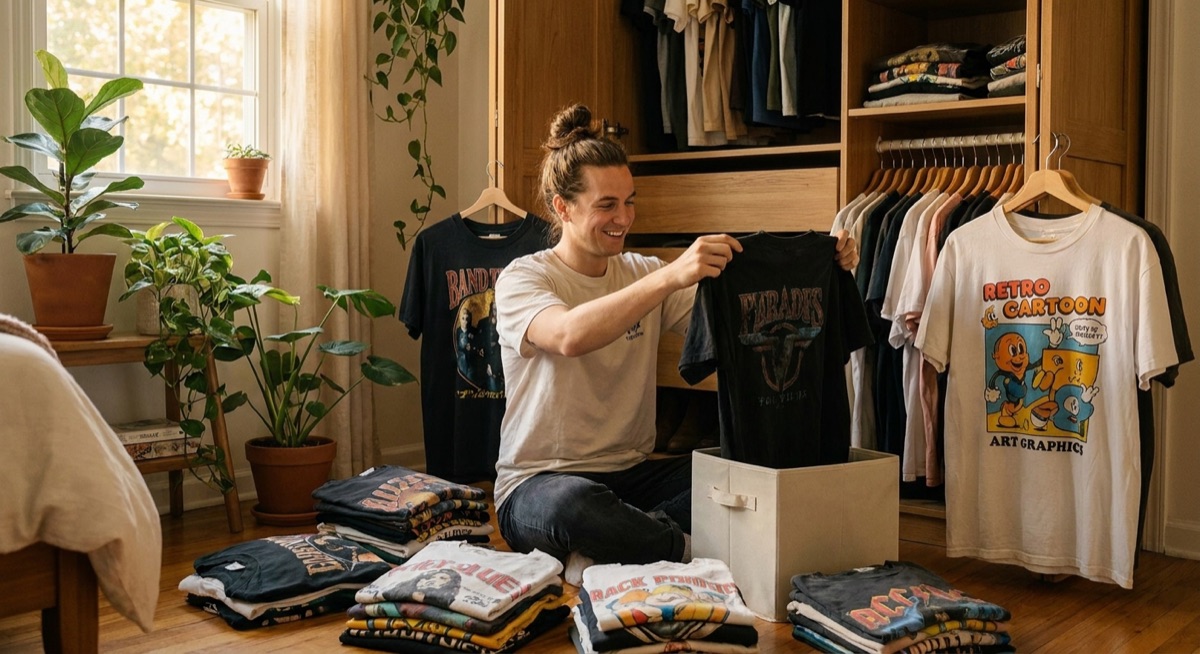
The Repeat Purchase Engine: Building Beyond One-Time Sales
The psychology of the first purchase is fundamentally different from repeat purchases. Understanding this distinction is key to building a sustainable apparel business.
First Purchase Psychology
First-time buyers are:
- Skeptical (will this be what I expect?)
- Focused on the product (does this specific item appeal to me?)
- Price-conscious (is this worth the risk?)
Repeat Purchase Psychology
Repeat buyers are:
- Trusting (I know what I’ll get from this store)
- Brand-focused (I like this brand’s vibe/quality/style)
- Convenience-oriented (it’s easy to buy here again)
This shift has massive implications for how you structure your business. Converting a first-time buyer costs significantly more than selling to an existing customer. The goal isn’t just to make sales—it’s to create customers who come back.
The Collection Strategy
One powerful approach is building design collections that encourage multiple purchases. If someone buys your “Dog Mom” shirt and loves it, they’re pre-qualified for your “Rescue Dog Advocate” shirt and your “Tired Dog Mom” shirt.
Creating related designs within niches turns one-time buyers into collection builders. Some customers will buy every design in a series if each one resonates.
The Surprise and Delight Factor
Post-purchase psychology is often neglected, but it’s critical for repeat business. When customers receive their order, their experience should exceed expectations.
This doesn’t mean spending a fortune on fancy packaging. Simple touches—a thank-you note, faster-than-expected shipping, or a design that looks even better in person than online—create positive surprise that drives repeat purchases and referrals.

The Seasonal Psychology: Timing Your Success
Apparel purchasing psychology shifts dramatically throughout the year. Understanding these rhythms helps you capitalize on peak opportunities and survive slower periods.
The Holiday Gift Mindset
Q4 (October through December) accounts for a disproportionate share of annual apparel sales because of gift-giving occasions. The psychology shifts from “do I want this?” to “would someone else want this?”
This creates opportunities for designs you might not expect. Relationship-based designs (“World’s Best Grandpa”), specific interests (“The Golf Season Is Calling”), and humor that works as gift-giving (“Another Year of Not Punching People In The Face: Achievement Unlocked”) all perform strongly.
The New Year Resolution Bump
January brings motivation-focused purchases. Fitness gear, goal-oriented designs, and fresh-start messaging tap into the resolution mindset. Notably, this applies beyond fitness—business, hobbies, and self-improvement all see increased activity.
The Summer Apparel Wave
Summer months drive increased apparel purchases simply because people need more clothing. Shorts weather means more outfit changes, vacations mean souvenir purchases, and outdoor activities drive niche-specific buying.
The “Event” Calendar
Beyond seasons, specific events drive purchasing spikes:
- Mother’s Day / Father’s Day (gift purchases)
- Graduation season (milestone celebration)
- Back-to-school (identity expression)
- Valentine’s Day (relationship humor)
- Sports seasons (team/hobby affiliation)
Successful POD sellers plan their design creation and marketing around these calendar events, releasing relevant designs 4-6 weeks in advance to capture early planners.
Putting It All Together: The Psychology-Driven Design Process
Understanding psychology is meaningless without application. Here’s how to integrate these principles into your actual design and selling process.
Step 1: Niche Psychology Mapping
Before creating any design, map out the psychological landscape of your niche:
- What identity does this audience hold dear?
- What tribe do they belong to?
- What emotions drive their purchases (pride, belonging, humor, nostalgia, defiance)?
- Are purchases primarily self-use or gifts?
- What’s the price sensitivity?
Step 2: Design Through Psychology
With your map complete, create designs that deliberately trigger the psychological drivers you’ve identified:
- Use language that reinforces identity (“I’m a [X]”)
- Include symbols that signal tribe membership
- Trigger the appropriate emotion for your niche
- Make gift-appropriateness obvious if relevant
Step 3: Present With Trust
Ensure your store and product pages include the trust signals discussed:
- Professional photography and presentation
- Reviews and social proof
- Clear policies and contact information
- Size guides and product details
Step 4: Price With Confidence
Set prices that reflect perceived value, not minimum viability. Remember: premium pricing signals premium quality, and unique designs command premium prices.
Step 5: Optimize for Impulse
Ensure your designs and marketing work within the 3-second attention window. The emotional punch should be immediate and obvious, not something that requires study.
Step 6: Build for Repeat
Structure your business for repeat customers, not just one-time sales. Collections, email marketing, and exceed-expectations fulfillment all contribute to sustainable growth.
Real Psychology, Real Results
These principles aren’t theory—they’re the foundation of real success in print-on-demand.
At Skup, we’ve watched students transform their results by shifting from “I hope people like this design” to “I understand exactly why my target customer will want this.”
Adam Schneider built a $500K business by obsessively studying what made his audience proud of their identity.
Sean Young crossed $50K by understanding the emotional drivers specific to his niche.
Shannon Roles hit consistent $7K months by creating gift-perfect designs that made buying decisions easy.
None of them had special advantages. They simply understood the psychology we’ve covered in this guide and applied it consistently.
FAQ: Psychology of T-Shirt Buying
How do I research the psychology of my specific niche?
Spend time in communities where your target audience gathers—Facebook groups, Reddit, forums. Pay attention to what they complain about, celebrate, joke about, and take pride in. Read reviews on competing products to understand what resonates emotionally. The language people use naturally reveals their psychological drivers.
Should I focus on humor or serious designs?
It depends entirely on your niche and audience. Some audiences respond primarily to humor (think general parenting), while others prefer pride-based serious designs (think military veterans). Many successful sellers offer both, letting customers self-select. Test both approaches with your specific audience rather than assuming.
How important is design quality vs. concept?
Concept beats design quality, but you need minimum viable design quality to succeed. A brilliantly targeted concept with mediocre execution will outsell a beautifully designed generic shirt. That said, improving design quality increases perceived value and allows for higher pricing. Think of concept as the foundation and design quality as the multiplier.
Do these psychology principles work for all product types?
The core principles—identity, emotion, trust, value perception—apply across all products. However, the specific application varies. Mugs have different use contexts than shirts. Hoodies have different gifting patterns than tank tops. Adapt the principles to each product’s unique psychology rather than applying them uniformly.
How do I know if my design triggers the right emotions?
Test it. Show designs to people who fit your target demographic (not friends and family who will be polite). Watch for immediate emotional reactions—laughter, nodding, “oh my god I need this.” If you have to explain why a design is good, it’s not triggering strong enough emotions for impulse purchase.
Your Next Step
Understanding psychology is the foundation, but knowledge without action builds nothing.
If you’re ready to apply these principles with structured guidance, expert feedback, and proven systems, Skup’s Apparel Cloning System gives you exactly that.
Our students don’t just learn concepts—they implement them with our step-by-step frameworks, get designs reviewed by coaches who understand psychology, and build profitable businesses that last.
Learn more about the Apparel Cloning System →
Start seeing your customers differently, and they’ll start seeing your designs differently too.
]]>