Is Print on Demand Still Worth It in 2026? An Honest Assessment
Quick Answer
Yes, print on demand is absolutely still worth it in 2026. While the landscape has evolved since the early days, POD remains one of the most accessible, low-risk ways to build an online business—especially for people who want to start without inventory costs or massive upfront investment. The key difference now? You need a proven system, not just a hope and a Shopify store.
Why People Question POD in 2026
Let’s address the elephant in the room. You’ve probably seen the YouTube videos claiming “POD is dead” or read forum posts about market saturation. Here’s what’s actually happening:
- More competition exists — but that’s true of every profitable business model
- Basic designs don’t sell — generic clip art never worked well anyway
- Facebook ads costs have risen — but so have the tools to optimize them
- AI has changed the game — this actually benefits smart sellers
The people struggling in 2026 are using 2019 strategies. The ones succeeding have adapted.
Real Results from Real People
Theory is nice, but proof is better. Here’s what Skup students—regular people who started from zero—are achieving right now:
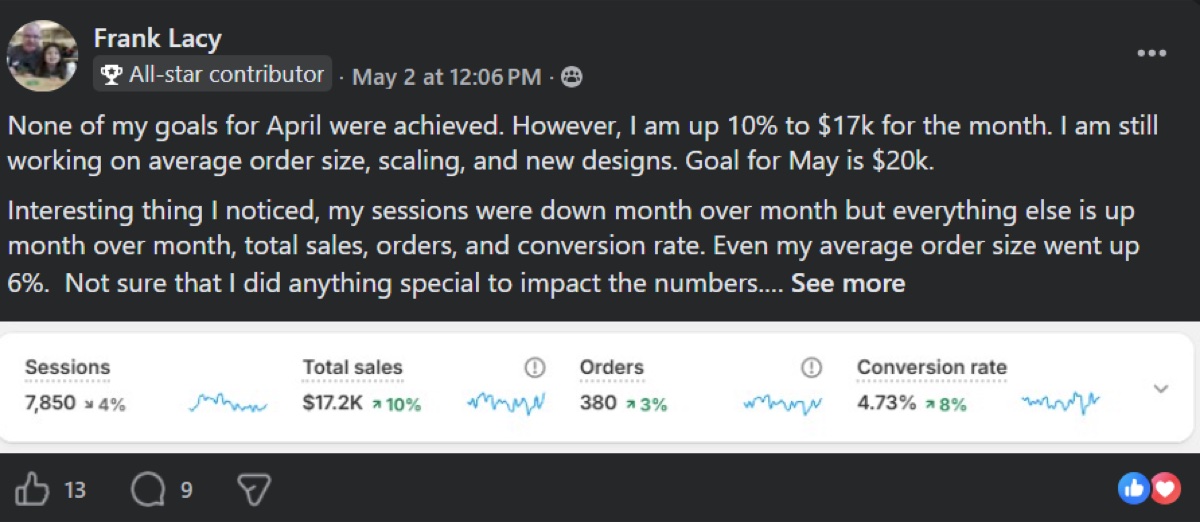
Frank Lacy hit $17,000 in a single month this April, running POD as a side business while working his day job. He started with no design skills and no previous ecommerce experience.
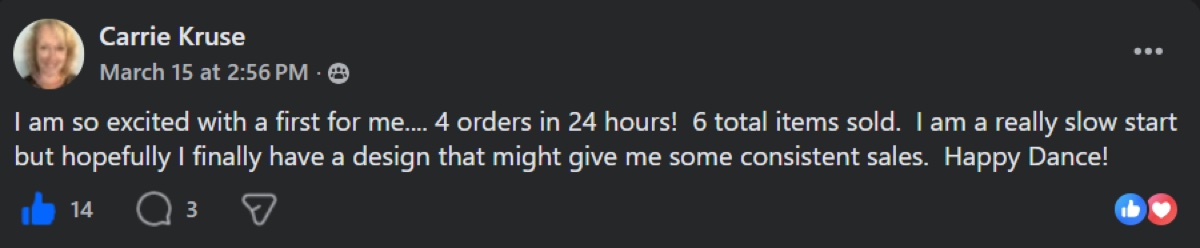
Carrie Kruse logged 6 orders in just 24 hours, proving the model works even for people just getting started. She’s building momentum while learning the ropes.
Sean Young crossed $50,000 in total sales and 1,000 orders as of July 2026. He went from making his first sale to building a real income stream in under two years.
Adam Schneider scaled to $500,000+ in sales with over 1,000 orders, including days where he made nearly $5,000 in revenue.
These aren’t unicorns. They’re following a system.
What Actually Works in 2026
The successful POD sellers today share common traits:
1. Design Research Over Design Skills
You don’t need to be a graphic designer. You need to know what’s already selling and create something better. That’s the Apparel Cloning System approach—research first, design second.
2. AI-Powered Design Tools
Tools like AvatarIQ ($97/month) let complete beginners create professional designs that convert. The technology gap has closed. What matters now is knowing what to create.
3. Strategic Facebook Advertising
The winners aren’t spending more—they’re spending smarter. Testing methodically, scaling what works, cutting what doesn’t. This is learnable.
4. Coaching and Community
Going alone in 2026 is hard mode. Having access to weekly coaching calls, a community of other sellers, and proven frameworks compresses the learning curve from years to months.
What Is Skup?
Skup is a print on demand training company founded by Devin Zander and Matt Schmitt. Their students have generated over $50 million in collective sales. The core program, the Apparel Cloning System, teaches a specific methodology for finding winning designs, creating them, and profiting through Facebook ads.
For those wanting more hands-on help, the Skup Incubator provides weekly live coaching calls, personal ad reviews, and direct access to Matt and Devin’s expertise.
Who Print on Demand Is For
- People who want to start an online business without buying inventory
- Anyone looking for a side hustle that can scale into full-time income
- Career changers (especially those 40-60) wanting more freedom
- People willing to learn a system and follow it consistently
- Those comfortable with a 3-6 month learning curve before significant results
Who Print on Demand Is NOT For
Being honest builds trust, so let’s be clear about who shouldn’t pursue POD:
- Get-rich-quick seekers — This takes real work. Months, not days.
- People unwilling to invest in learning — You need training and tools.
- Those expecting passive income from day one — It’s active early on, then becomes more passive.
- Anyone who quits at the first obstacle — Ads don’t always work immediately. Designs get rejected. You’ll need to push through.
Common Concerns Addressed
“Isn’t the market saturated?”
There are over 3 billion people on Facebook. Millions of niches. The market isn’t saturated—bad approaches are. With proper design research, you find underserved audiences every day.
“Don’t I need to be a designer?”
No. AI tools like AvatarIQ handle the creative side. You need research skills and marketing sense—both teachable.
“Facebook ads are too expensive now.”
Ad costs have risen, yes. But so have strategies. Students are profitable with $10-20/day testing budgets. It’s about efficiency, not spending more.
“Can I do this while working full-time?”
Most Skup students start exactly this way. 1-2 hours daily, building on evenings and weekends. Frank Lacy hit $17K months while keeping his day job.
The Bottom Line
Print on demand in 2026 is absolutely worth it—but it’s not 2019 anymore. The low-barrier-to-entry advantage means more competition, which means you need better strategy, better tools, and ideally better guidance.
The Skup community continues producing success stories because they’re adapting. New students are getting results because they’re following updated playbooks, not outdated YouTube tutorials.
If you’re considering print on demand, the question isn’t whether the model works. The question is whether you’re willing to learn and follow a proven system.
FAQ
How long does it take to profit with print on demand?
Most Skup students see their first sales within 2-4 weeks of launching ads. Consistent profitability typically takes 2-4 months of learning and testing. Results vary based on time invested and how quickly you implement feedback.
How much money do I need to start print on demand?
You can launch a Shopify store for about $30/month, use AvatarIQ for $97/month, and start testing ads with $10-20/day. A realistic starting budget is $500-1,000 for the first few months, though you can start smaller.
Is print on demand better than dropshipping?
They’re different models. POD offers higher margins (40-60% vs 20-30%), custom products (harder to copy), and simpler logistics (Printful handles everything). Dropshipping can scale faster but faces more competition and thinner margins. For beginners, POD is often easier to start and more sustainable long-term.