How to Build Trust on Your Print on Demand Store (2026)
Quick Answer
Building trust on your print on demand store requires a combination of social proof, professional design, clear policies, and transparency. The most effective trust signals include customer reviews, secure checkout badges, a compelling About page, clear shipping and refund policies, and professional product photography. Stores that implement these elements see significantly higher conversion rates—often 2-3x better than stores that skip them.
Why Trust Matters More Than You Think
Here’s the reality most new POD sellers don’t understand: visitors to your store have never heard of you. They’re comparing your unknown brand to Amazon, where they can get products tomorrow with guaranteed returns.
According to ecommerce research, 88% of consumers read reviews before purchasing, and 70% of shoppers abandon carts when they don’t trust the checkout process. For print on demand specifically, where customers can’t touch the product before buying, trust becomes even more critical.
The 7 Trust Signals Every POD Store Needs
1. Customer Reviews and Testimonials
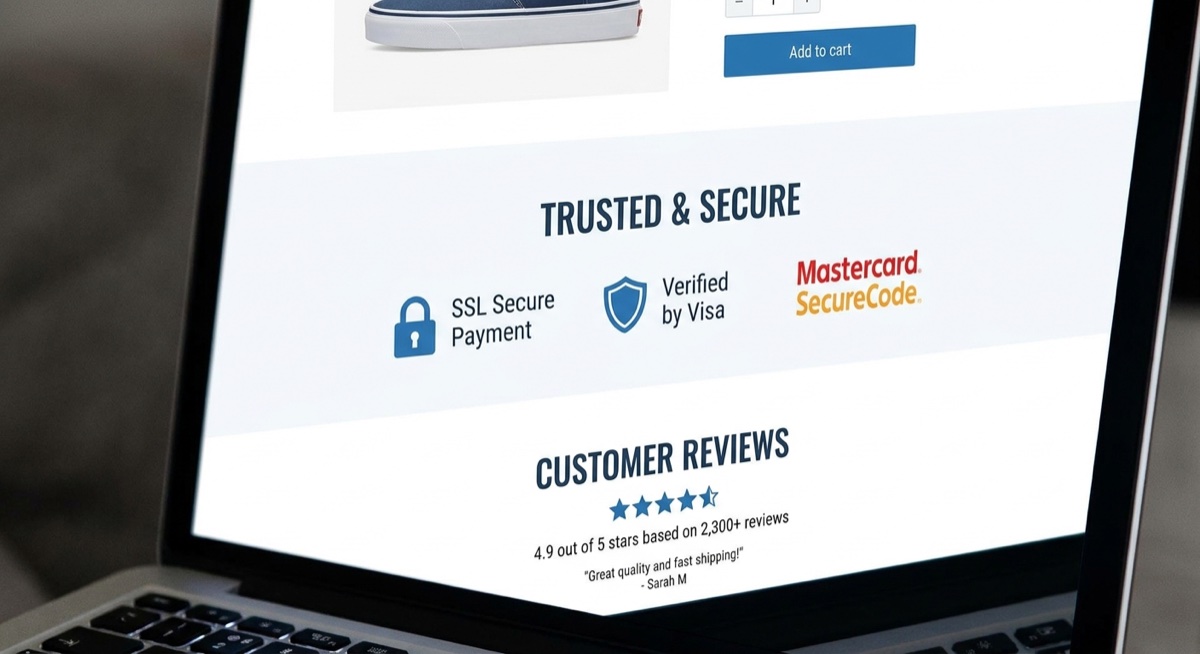
Nothing builds trust faster than social proof from real customers. Install a reviews app like Judge.me or Loox on your Shopify store. Even 5-10 genuine reviews can dramatically increase conversions.
Pro tip from coaching: Email every customer 7 days after delivery asking for a review. Offer a small discount on their next order as an incentive—this builds both reviews AND repeat customers.
2. Trust Badges and Secure Checkout
Display security badges near your add-to-cart button and in your checkout. Essential badges include:
- SSL secure checkout indicator
- Accepted payment methods (Visa, Mastercard, PayPal, Apple Pay)
- Money-back guarantee badge
- Secure payment processing icons
Many Shopify themes include these by default, but verify they’re visible on mobile—where most of your traffic comes from.
3. Professional About Page
Your About page shouldn’t be an afterthought. Include:
- Your story and why you started the brand
- Photos of real people (you or your team)
- Your mission and values
- Contact information
Customers want to buy from humans, not faceless corporations. A genuine About page can be the difference between a sale and a bounce.

4. Clear Shipping Information
Uncertainty about shipping is one of the top reasons for cart abandonment. Be upfront about:
- Production time (typically 2-5 business days for POD)
- Shipping time to different regions
- Tracking availability
- International shipping options and costs
Create a dedicated shipping page and link to it from your product pages and footer.
5. Solid Refund and Return Policy
A clear, customer-friendly refund policy actually increases sales. Many POD sellers worry about abuse, but the reality is that generous policies build confidence.
At minimum, offer replacements or refunds for:
- Defective or damaged products
- Wrong items shipped
- Significant color or print quality issues
Display your policy prominently—don’t hide it in fine print.
6. Professional Product Images
Your mockups need to look professional. Use high-quality mockup generators like Placeit or tools like AvatarIQ to create realistic product images. Include:
- Multiple angles of the product
- Lifestyle images showing the product in use
- Size charts and measurement guides
Poor product images signal an amateur operation—and customers notice.

7. Active Social Media Presence
Link your social media accounts in your store footer. An active Instagram or Facebook page shows customers you’re a legitimate, ongoing business—not a fly-by-night operation.
You don’t need millions of followers. Even a few hundred engaged followers with regular posts demonstrates credibility.
Common Trust Mistakes POD Sellers Make
- No contact information: Always include an email address and consider adding a contact form. Hidden contact info screams “scam.”
- Generic “Lorem ipsum” text: Triple-check that all placeholder text is replaced with real content.
- Broken links: Test every link on your site before running ads. A 404 error destroys trust instantly.
- Missing favicon: That little icon in the browser tab matters—it makes your store look finished and professional.
- No HTTPS: Shopify includes SSL, but verify your store shows the padlock icon. Browsers flag non-secure sites.
FAQ
How long does it take to build trust with new customers?
You can implement the core trust signals (badges, policies, About page) in a single weekend. However, building social proof through reviews takes time—typically 30-90 days of consistent sales before you have enough reviews to make an impact. Start collecting reviews from day one.
Do I need a phone number on my store?
A phone number isn’t required but can increase trust, especially for higher-priced items. If you’re uncomfortable sharing your personal number, use a Google Voice number or virtual phone service. At minimum, provide an email address and respond within 24 hours.
Should I use stock photos of people on my About page?
Authenticity beats polish. A genuine photo of yourself (even taken with a smartphone) builds more trust than obvious stock photography. If you prefer privacy, use photos of your workspace, products, or the story behind your brand instead of fake “team photos.”
The Bottom Line
Trust isn’t optional in ecommerce—it’s the foundation of every sale. New visitors are making split-second decisions about whether your store is legitimate. Every trust signal you implement removes one more reason for them to leave.
Start with the basics: reviews app, trust badges, professional About page, and clear policies. These changes can dramatically improve your conversion rate without spending an extra dollar on ads.
For step-by-step guidance on building a high-converting POD store from scratch, the Apparel Cloning System walks you through every element—from store setup to running profitable Facebook ads.