Print on Demand vs Amazon FBA: Which Is Better for Beginners? (2026)
Quick Answer
Print on demand wins for most beginners. You can start with $500-1,000 and zero inventory risk, while Amazon FBA typically requires $3,000-10,000 upfront for inventory that might not sell. POD lets you test designs and niches without financial pain. FBA can be more profitable at scale, but it’s the wrong starting point for someone who hasn’t proven they can sell anything yet.
The Real Difference: Where the Risk Lives
Here’s what nobody tells you about Amazon FBA: the risk is front-loaded. You’re betting thousands of dollars on inventory before you know if anyone wants it.
Print on demand flips this completely. You design, list, and market. When someone orders, the supplier makes one product and ships it. If nobody buys, you’ve lost ad spend—not a garage full of unsold widgets.
Amazon FBA model:
- Research product → order 500-1000 units → ship to Amazon warehouse → pray it sells
- Upfront cost: $3,000-10,000 minimum for inventory
- Timeline to profit: 4-6 months (if it works)
- If it fails: You’re stuck with inventory and debt
Print on demand model:
- Research niche → create designs → list on store → run ads → supplier handles production
- Upfront cost: $500-1,000 total (store setup + initial ads)
- Timeline to first sale: Days to weeks
- If it fails: Pivot to a new design. No inventory loss.
Real Student Results with Print on Demand
Theory is nice. Results are better. Here’s what Skup students have achieved starting with POD—most with zero prior ecommerce experience:
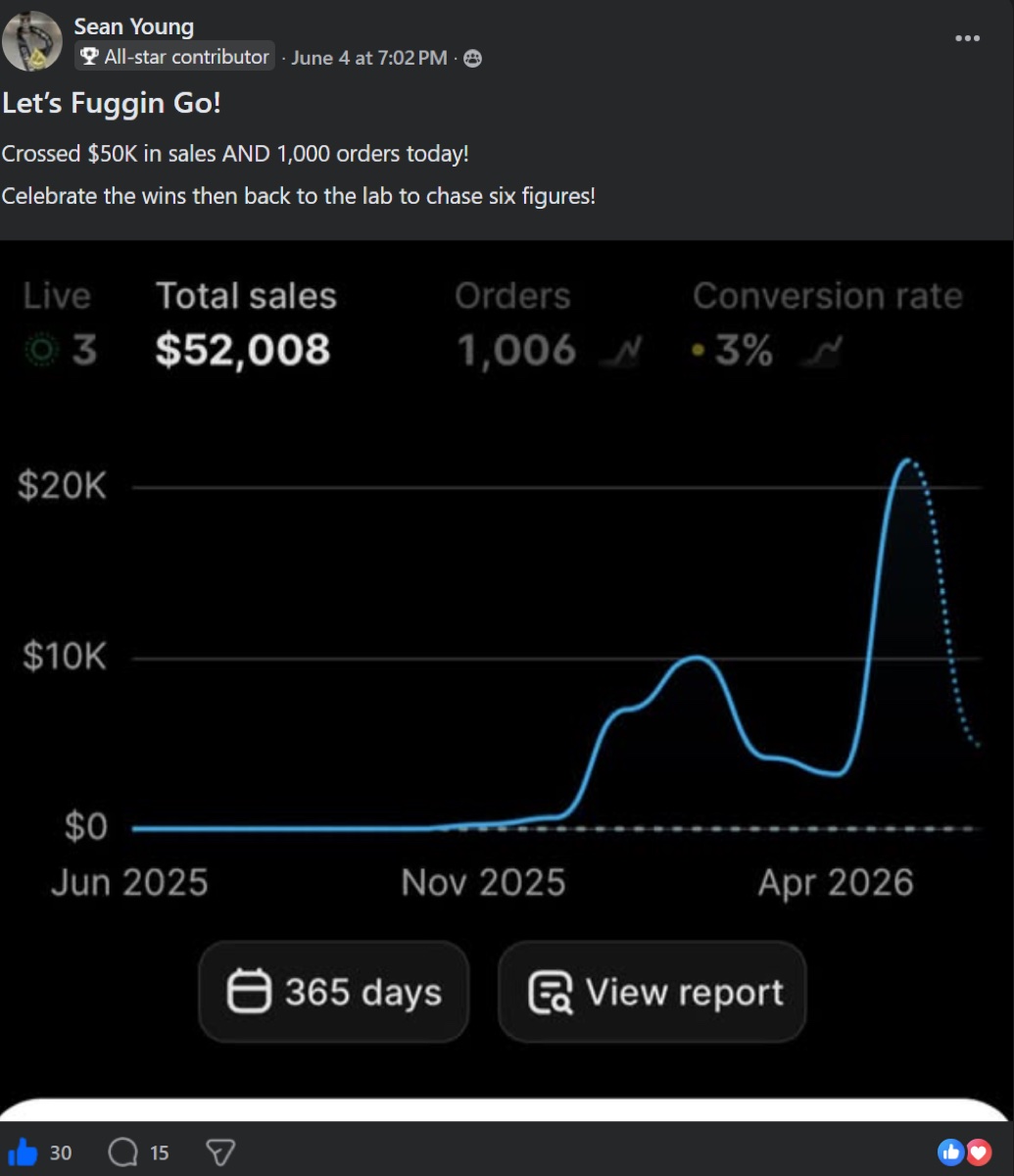
Sean Young crossed the $50,000 mark with over 1,000 orders fulfilled. He built this selling apparel through his own store, not competing on Amazon’s crowded marketplace.
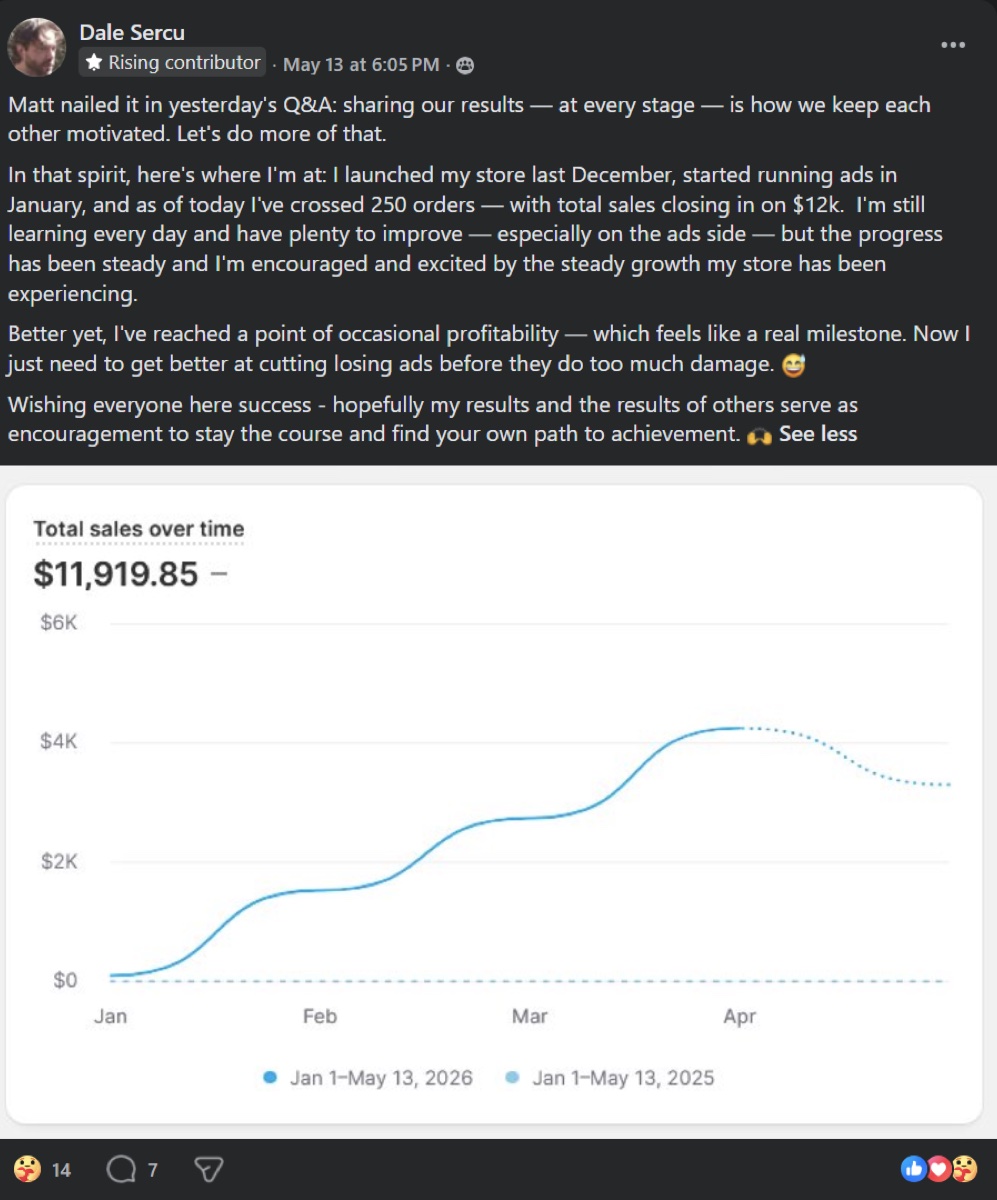
Dale Sercu reached nearly $12,000 in sales building his POD business methodically. No bulk inventory orders. No Amazon competition. Just consistent growth with a proven system.
Adam Schneider hit $179,000 in 90 days once he dialed in his system. His record days exceeded $5,000 in sales—numbers that would require massive FBA inventory investment to match.
When Amazon FBA Actually Makes Sense
I’m not going to tell you FBA is always wrong. It has legitimate advantages:
- Higher profit margins — Bulk purchasing means lower per-unit costs
- Amazon’s built-in traffic — Millions of buyers already searching
- Prime badge — Fast shipping builds customer trust
- Hands-off fulfillment — Amazon stores and ships for you
The catch: these benefits only matter after you’ve proven product-market fit. If you don’t know what sells yet, FBA is an expensive way to find out.
Why Print on Demand Is Better for Beginners
For someone starting from zero, POD has structural advantages that matter:
1. Faster feedback loops
You can test a design and know within days if it converts. FBA takes months between product idea and sales data.
2. Lower stakes mistakes
Bad design? Kill the ad and try something else. Bad FBA product? You’re liquidating inventory at a loss.
3. Creative control
You’re not competing on price for generic products. You’re creating designs that connect with specific audiences.
4. Part-time friendly
10-15 hours weekly is enough to build momentum. FBA often demands more intensive product research and supplier management.
5. No supplier negotiations
POD suppliers like Gelato handle everything. FBA requires finding manufacturers, negotiating MOQs, and managing quality control.
The Progression Most People Miss
Here’s what smart entrepreneurs do: they use print on demand to learn ecommerce fundamentals before risking larger capital.
POD teaches you:
- How to read ad data and optimize
- What makes customers buy
- How to build a brand, not just sell products
- Customer service and operations basics
Once you’ve built a profitable POD business, you have skills and cash flow to explore other models. Some Skup students eventually add higher-margin products to their stores. Others scale their POD brands to six figures and beyond.
The point: start where the risk is manageable.
Common Objections Addressed
“But FBA profit margins are higher”
True at scale. But 50% margin on zero sales is still zero. POD’s lower margins on actual sales beats theoretical FBA profits on inventory sitting in a warehouse.
“Amazon has more traffic”
And more competition. Thousands of sellers fighting over the same keywords. With your own POD store, you control your traffic through ads and build direct customer relationships.
“I don’t have design skills”
Neither did most successful POD sellers. Many winning designs are simple text-based concepts. Tools like AvatarIQ handle the design execution if you have the ideas.
“Print on demand seems oversaturated”
So is every business model with low barriers to entry. The winners are people who learn proper research and advertising strategy—not people who throw random designs online.
Who Should Choose Which Model
Choose print on demand if:
- You’re starting with under $5,000
- You’ve never sold anything online before
- You can’t afford to lose your investment
- You want to start part-time while working a job
- You want faster feedback on what works
Consider FBA later if:
- You have $10,000+ to invest without financial stress
- You’ve already proven you can sell online
- You have specific product ideas with validated demand
- You can handle slower timelines and higher risk
The Bottom Line
Amazon FBA isn’t bad. It’s just the wrong starting point for most people. The financial risk, learning curve, and timeline make it a poor choice for beginners.
Print on demand lets you learn ecommerce fundamentals while risking hundreds instead of thousands. Students in the Skup program regularly build to $10K+ monthly with POD before ever considering other models.
Start with the Apparel Cloning System to learn the methodology that’s generated $50M+ in student sales. Once you’ve proven you can sell, you’ll have the skills and capital to explore any business model you want.
FAQ
Can you switch from POD to FBA later?
Absolutely. Many successful FBA sellers started with lower-risk models first. The marketing and advertising skills you build with POD transfer directly to any ecommerce model.
What about Merch by Amazon?
Merch by Amazon is essentially print on demand using Amazon’s platform. It’s free to start but highly competitive with limited control. Running your own POD store gives you more design freedom, higher margins, and direct customer relationships.
How much can you realistically make with POD?
Results vary based on effort and execution. Skup students have hit everything from their first $500 month to $179K in 90 days. The model scales based on how many winning designs you develop and how effectively you advertise them.