How to Lower Your Facebook Ad Costs for Print on Demand (2026)
Quick Answer
To lower your Facebook ad costs for print on demand, focus on three areas: improve your ad relevance score through better targeting and creative, use campaign budget optimization (CBO) to let Facebook allocate spend to winning ads, and kill underperforming ads quickly (within 48-72 hours) before they drain your budget. Most POD sellers waste money by running ads too long without clear performance benchmarks.
Why Facebook Ad Costs Spiral Out of Control
Here’s what happens to most print on demand beginners: they launch an ad, see some clicks, and let it run hoping sales will come. Days pass. The budget drains. No sales.
The problem isn’t Facebook. It’s running ads without a clear system for when to cut losses and when to scale winners. At Skup, we’ve reviewed thousands of student ad accounts. The pattern is always the same — money bleeds out slowly on ads that were never going to convert.
Your goal isn’t cheap clicks. It’s profitable sales. That means understanding what “good” metrics look like and having the discipline to act on them.
The 5 Ways to Actually Lower Your Ad Costs
1. Nail Your Targeting First
Broad targeting sounds appealing — more people means more chances, right? Wrong. When you target everyone, you pay Facebook to show your niche t-shirt to people who would never buy it.
Start with interest stacking: combine 2-3 related interests that your ideal customer actually has. If you’re selling fishing designs, don’t just target “fishing.” Target “bass fishing” AND “Shimano” AND “fishing tournaments.” You’ll reach fewer people, but they’re the right people.

2. Use Campaign Budget Optimization (CBO)
CBO lets Facebook automatically shift budget toward your best-performing ad sets. Instead of manually allocating $10 to five different ad sets, you give Facebook $50 and let it figure out which audience converts best.
This typically lowers your cost per purchase by 15-25% compared to manual budget allocation. Facebook’s algorithm is smarter than guessing.
3. Kill Losers Fast
This is where most beginners struggle. They get emotionally attached to ads or keep hoping things will turn around. They won’t.
The 48-72 hour rule: If an ad has spent at least $15-20 without a purchase and your cost per click is above $1.50, kill it. Don’t wait. That money is better spent testing a new creative or audience.
4. Improve Your Creative Quality
Facebook rewards ads that people engage with. Higher engagement = lower costs. It’s that simple.
For POD, this means:
- Show the product on a real person (mockups with models, not flat lays)
- Use contrast — your design should pop against the background
- Keep text minimal on the image (Facebook penalizes text-heavy images)
- Test video ads — even simple slideshow videos often outperform static images
5. Retarget Your Warm Audiences
Retargeting costs 3-5x less than cold traffic because you’re reaching people who already know you. Set up retargeting for:
- Website visitors (last 30 days)
- People who added to cart but didn’t purchase
- People who engaged with your Facebook/Instagram content
Even a $5/day retargeting budget can recover sales you would have otherwise lost.
What “Good” Numbers Actually Look Like
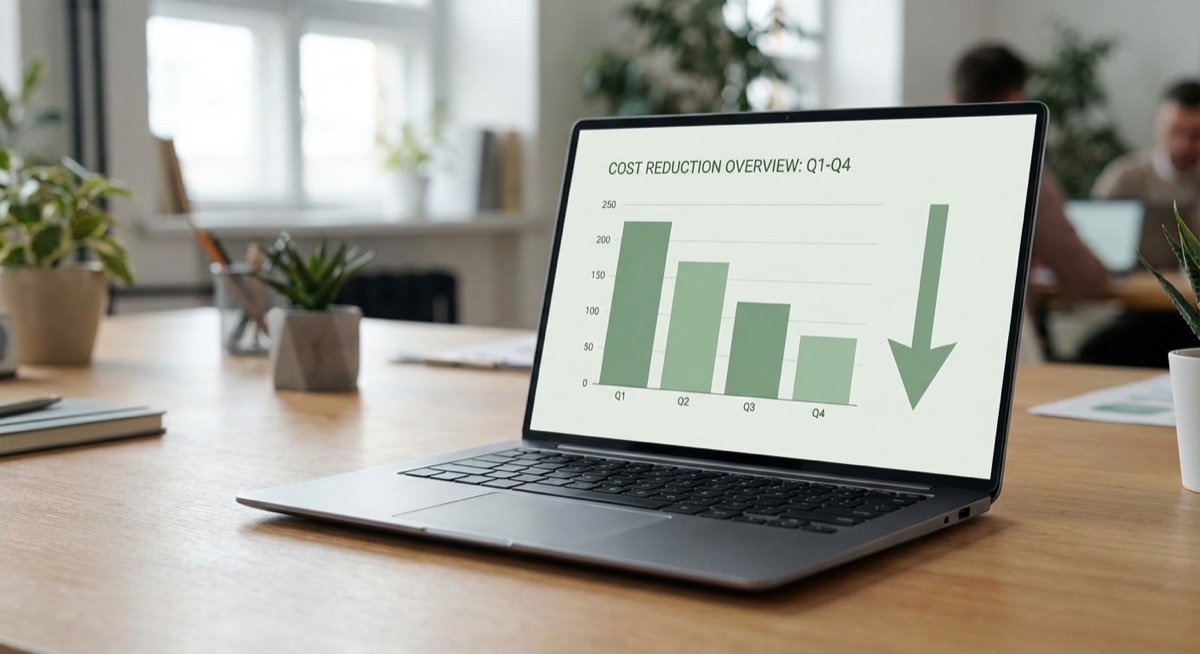
You can’t improve what you don’t measure. Here are the benchmarks Skup students use:
- Cost per click (CPC): Under $1.00 is good, under $0.70 is excellent
- Click-through rate (CTR): Above 1% for cold traffic, above 2% for retargeting
- Cost per purchase: Should be under 30% of your product price to stay profitable
- Add to cart rate: At least 5% of clicks should add to cart
If your metrics are outside these ranges, don’t scale. Fix the fundamentals first.
Common Mistakes That Waste Ad Budget
Testing too many things at once. When you change the audience, creative, and copy simultaneously, you have no idea what’s working. Test one variable at a time.
Scaling too fast. Jumping from $10/day to $100/day overnight confuses Facebook’s algorithm. Scale by 20-30% every few days if an ad is performing well.
Ignoring frequency. If your frequency goes above 2.5, your audience is seeing the same ad too many times. Either refresh your creative or expand your audience.
Running ads to a broken funnel. No amount of cheap traffic fixes a store that doesn’t convert. Before blaming ads, check that your landing page loads fast and your checkout works on mobile.

FAQ
How much should I budget for Facebook ads when starting print on demand?
Start with $150-$300 for your first month. This gives you enough data to test 3-5 different audiences and creatives without going broke. Don’t expect profitability in month one — you’re buying data about what works for your niche.
Should I use automatic or manual placements?
Start with automatic placements and let Facebook optimize. Once you have purchase data, you can analyze which placements perform best and adjust. For most POD sellers, Facebook Feed and Instagram Feed drive 80%+ of sales.
Why are my Facebook ads getting more expensive over time?
Ad fatigue is the most common cause. Your audience has seen your ad too many times and stops engaging, which raises your costs. Rotate in fresh creative every 7-14 days to combat this. Seasonality and increased competition (especially Q4) also raise costs industry-wide.
The Bottom Line
Lowering your Facebook ad costs isn’t about finding a secret hack. It’s about having clear benchmarks, killing losers quickly, and continuously improving your targeting and creative. The students who succeed at Skup aren’t the ones with the biggest budgets — they’re the ones who treat every dollar as a test and learn from the data.
If you’re tired of guessing and want a proven system for running profitable Facebook ads, the Apparel Cloning System walks you through exactly how to set up, test, and scale ads that actually convert.