Tri Blend T Shirts Custom: POD Guide
You've found a shirt style that feels noticeably better than a basic tee, but the first sample may have raised uncomfortable questions. The fabric is soft and lightweight, the drape looks retail-ready, and the mockup feels premium. Then the washed sample comes back slightly different, the print looks flatter than expected, or the production partner recommends a heat setting that seems too aggressive.
That's the reality of custom tri-blend T-shirts. The opportunity is excellent, but the product rewards sellers who understand the material instead of treating it like ordinary cotton. Get the blank, print method, design, care instructions, and supplier process aligned, and tri-blends can become the foundation of a premium POD collection people actually want to wear.
Table of Contents
- Understanding Tri Blend Fabric Characteristics
- Selecting Printing Methods and Managing Heat
- Creating Retail Quality Designs and Mockups
- Vetting Suppliers and Enforcing Quality Control
- Pricing Strategy and Listing Optimization
- Scaling Your Custom Apparel Business
Understanding Tri Blend Fabric Characteristics
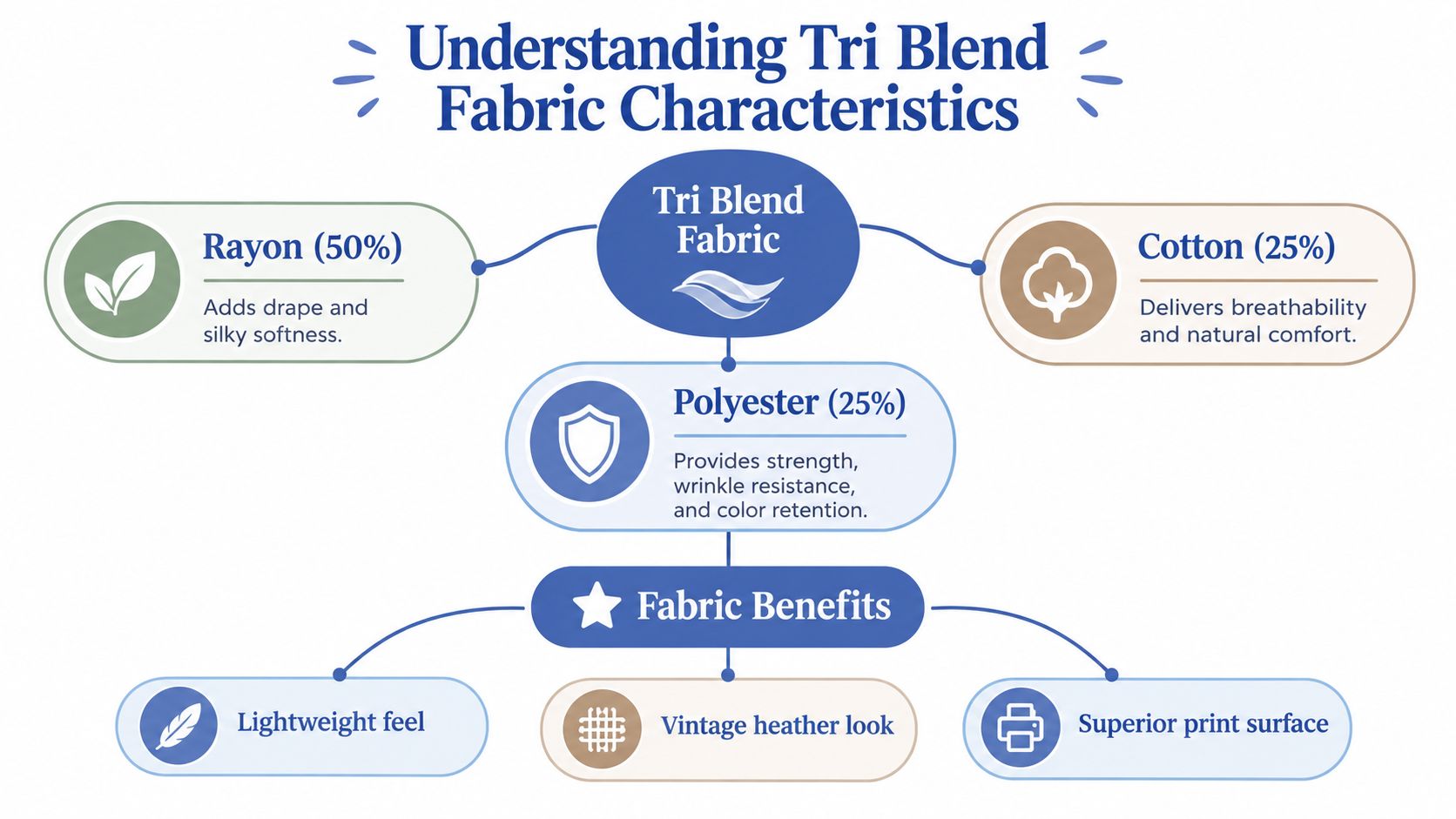
A tri-blend can look premium in a mockup and still create production problems after washing. The fabric combines polyester, cotton, and rayon, and each fiber responds differently to wear, moisture, and finishing. Rayon can shrink or distort more than the other fibers, while excessive heat may scorch or permanently change its surface. Treat the blank as a material with specific limits, not as a standard cotton tee.
The most common formula is 50% polyester, 25% combed ring-spun cotton, and 25% rayon, although manufacturers also produce variations such as 50/37/13 or blends with 60% to 65% polyester and smaller cotton and rayon shares. The ratio affects softness, stretch, drape, washing behavior, and print response. T-Shirt Elephant's fabric guide gives useful context for comparing specifications across blank suppliers.
Polyester contributes durability, shape retention, and color stability. Cotton adds a familiar, breathable hand feel. Rayon supplies the smooth surface and fluid drape that make a tri-blend feel broken-in from the first wear. The finished shirt is usually lighter and softer than standard cotton, with a heathered or vintage appearance suited to lifestyle brands, boutique merchandise, creator products, and fashion-led niche stores.
Why the material supports premium positioning
Tri-blends first entered the market in 2006, and by 2015 one blank-apparel manufacturer offered the fabric in 14 styles and 9 colors, according to Custom Ink's guide to soft custom apparel. The category has since become a familiar premium option for decorated apparel rather than a niche fabric choice.
Wholesale pricing reflects that position. One promotional catalog lists tri-blend shirts starting around $12.93 to $17.82 per shirt at 12-unit quantities across multiple brands, while another catalog positions 4.3 oz. tri-blend blanks as premium, retail-style products. Deluxe's promotional apparel listings show why these blanks should not be priced like commodity cotton.
Your merchandising should sell the wearing experience: a lightweight garment with a soft hand, fluid fit, subtle heather character, and a finish closer to retail apparel than event merchandise. Buyers who value comfort are more likely to keep wearing a shirt after the design novelty fades.
Use this guide to the best shirt materials to compare tri-blends with cotton and other common fabrics. The comparison helps match the blank to the customer instead of assuming a premium fabric suits every niche.
A practical AI design workflow can protect that premium positioning. Generate several concept directions around the niche, then instruct the design tool to preserve transparent negative space, limited ink coverage, and artwork that suits a soft heathered surface. Create separate prompt sets for minimalist, nostalgic, and creator-led graphics. Review each output manually for fine details that may disappear on a textured garment, then save the approved artwork, color notes, and placement rules in a reusable product brief.
Practical rule: A tri-blend is premium because of how it feels and wears, not simply because it contains three fibers. Your design system, listing, care guidance, and quality checks must support that promise.
Strong use cases include creator merch, boutique graphics, minimalist brand apparel, nostalgic designs, and frequent casual wear. Heavily structured uniforms, demanding workwear, and products requiring maximum opacity or ruggedness may suit heavier cotton or performance fabric better.
For positioning and merchandising ideas, use this promotional apparel guide 2026.
Selecting Printing Methods and Managing Heat
Tri-blend printing fails when a decorator treats the garment like a thick cotton blank. The fabric is lighter, more textured, and more sensitive to heat because rayon doesn't respond predictably under aggressive production conditions. Your print partner needs the garment composition before selecting ink, cure settings, pressure, and pretreatment.
Start with the visual effect you want. Water-based and discharge printing are strong options when the goal is a soft, vintage-style finish that allows the fabric's hand feel to remain noticeable. A light print can look integrated into the garment instead of sitting on top of it. That approach works especially well for distressed artwork, tonal graphics, heritage typography, and designs where a slightly aged appearance is part of the brand identity.
Screen printing can still work, but heavy ink coverage often creates the wrong experience on a lightweight tri-blend. Large opaque underbases may add stiffness, make the printed area feel heavier than the rest of the shirt, and reduce the soft advantage you paid for. DTG can suit detailed artwork and smaller runs, but test the specific blank because heathered surfaces and fiber composition influence color density.
For a broader comparison of decoration options, use this guide to different types of T-shirt printing when discussing the project with your production partner.
A safer production sequence
Identify the blank composition first. Don't approve artwork or print settings before confirming the manufacturer's fiber ratio, color, and garment specification.
Choose the hand feel before maximizing opacity. Ask whether the design needs a soft vintage result or a dense, high-contrast graphic. If softness is central to the offer, keep ink coverage controlled.
Test the exact colorway. A grey heather blank may behave differently from a darker heather or a solid shade. Polyester can also influence how colors appear and can contribute to dye migration concerns.
Control the cure temperature. Technical guidance warns that rayon can scorch during screen printing above roughly 320°F, so decorators may use low-cure additives or lower-temperature cure schedules. Dhalay International's tri-blend fabric guidance explains the heat and shrinkage risks that make testing essential.
Wash-test before release. One technical source reports possible untreated shrinkage of 3% to 5%, while another wash test reports 6% to 8%, particularly in length. Those figures shouldn't become a promise in your product listing. They should become a reason to measure the sample after washing and confirm the final dimensions.
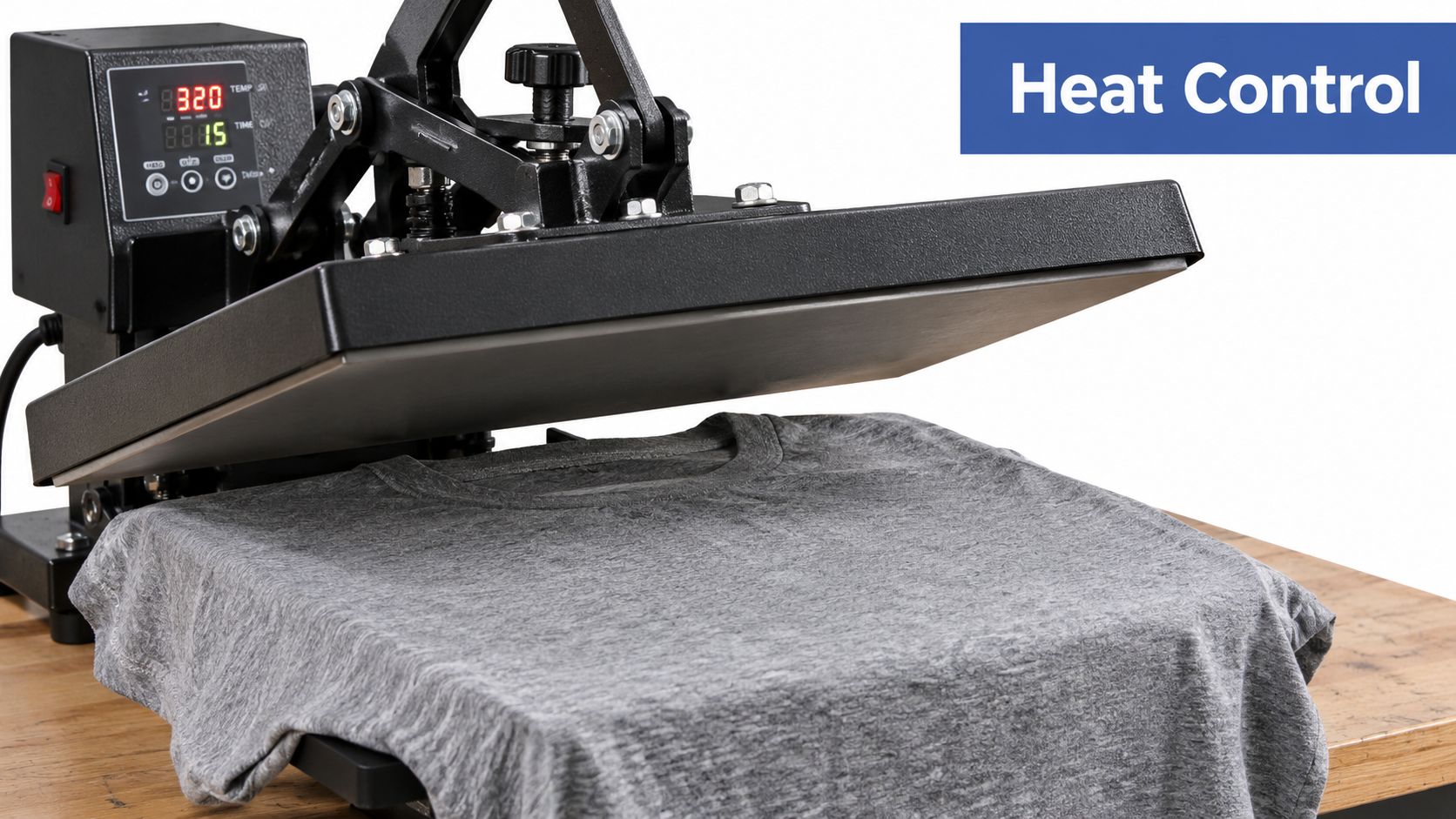
Heat management applies to transfers and heat presses too. Follow the transfer manufacturer's instructions, but don't assume the recommended setting is automatically safe for every tri-blend blank. Use a test garment, inspect the surface for scorching or shine, and check whether the print remains flexible after cooling.
Don't optimize for the strongest possible print in isolation. Optimize for the best balance of adhesion, softness, color appearance, and post-wash stability.
Give customers care instructions that protect both garment and decoration. Independent care guidance consistently recommends cold or warm washing, low-heat drying, and avoiding high heat because excessive heat can tighten the fabric and reduce shape retention. Triple Crown Products' tri-blend care guidance supports that practical approach.
Creating Retail Quality Designs and Mockups
A buyer can't touch the fabric through a product page. Your design and visual presentation must communicate the premium experience before the order is placed. That means the artwork should look intentional, the garment should sit naturally on the model, and the mockup should show enough detail for the customer to understand the fit and print placement.
A practical workflow starts with AvatarIQ, Skup's AI-powered software for creating apparel designs and product mockups. Begin by defining the niche, buyer identity, emotional angle, and garment position. A tri-blend collection for a coffee shop audience might call for understated typography and tonal artwork, while an outdoor lifestyle collection may need a more illustrative composition. The fabric can support both, but the design language should match the reason someone would wear the product repeatedly.
From concept to listing
Create several distinct design directions rather than producing minor variations of one idea. Test a clean front graphic, a small left-chest mark, a vintage badge, and a text-led design. Keep each concept aligned with the niche, and avoid filling the entire lightweight shirt with dense artwork just because the software makes it easy to generate.
AvatarIQ can then support the visual production stage by generating mockups and photoshoot-style scenes without requiring a separate photographer, model booking, or physical studio setup. Use settings that show the shirt in a believable context. A close crop can communicate print detail, while a wider lifestyle image can communicate how the garment fits into the customer's daily life.

The mockup shouldn't exaggerate the fabric. If the shirt is lightweight and drapey, show a natural fall rather than a stiff silhouette. If the print has a vintage finish, don't present it as a perfectly opaque digital decal. Accurate visuals reduce the gap between expectation and delivery, which is especially important for premium apparel.
For additional presentation ideas, this free T-shirt mockup resource can help you evaluate how different product views support the listing.
Build a repeatable creative system
Use a simple asset checklist for every product:
- Primary image: Show the full garment and design clearly against a clean background.
- Lifestyle image: Place the shirt in a setting that matches the target buyer's habits and identity.
- Detail image: Show the print texture, neckline, heather character, or close-up fabric surface.
- Information image: Explain fit, fiber composition, care, and the intended print finish without making unsupported performance promises.
- Color image: Display available garment shades accurately, especially when heather variation is part of the look.
The best creative workflow isn't about generating the largest number of designs. It's about producing a small set of coherent products, checking that each design works on the actual blank, and presenting the collection with enough consistency that the store feels like a brand.
Don't hide the technical details. A concise product description can say that the garment has a soft, lightweight feel, a fluid drape, and a heathered appearance. It can also explain that cold washing and low-heat drying help maintain the fit. Clear expectations make the premium price easier to understand.
Vetting Suppliers and Enforcing Quality Control
A polished design can't rescue a blank that arrives with inconsistent sizing, an incorrect composition, or a print that feels rigid after curing. Supplier selection should compare more than catalog price. The core question is whether the partner can reproduce the same garment and decoration experience across colors, sizes, and replenishment orders.
Start by requesting the full blank specification. A typical tri-blend may use the 50% polyester, 25% cotton, and 25% rayon formula, but variants are common. Match the composition to your intended customer. More polyester may support durability and shape retention, while a different balance can change the softness and drape. Don't use the phrase “tri-blend” as a substitute for reviewing the actual spec sheet.
Compare suppliers using physical evidence
Order samples from any supplier you may scale with. Inspect the blank before decoration, then inspect the printed garment after production and washing. A supplier that communicates clearly about fabric composition, curing, care, replacement procedures, and delivery expectations is easier to manage than one that only promises low pricing.
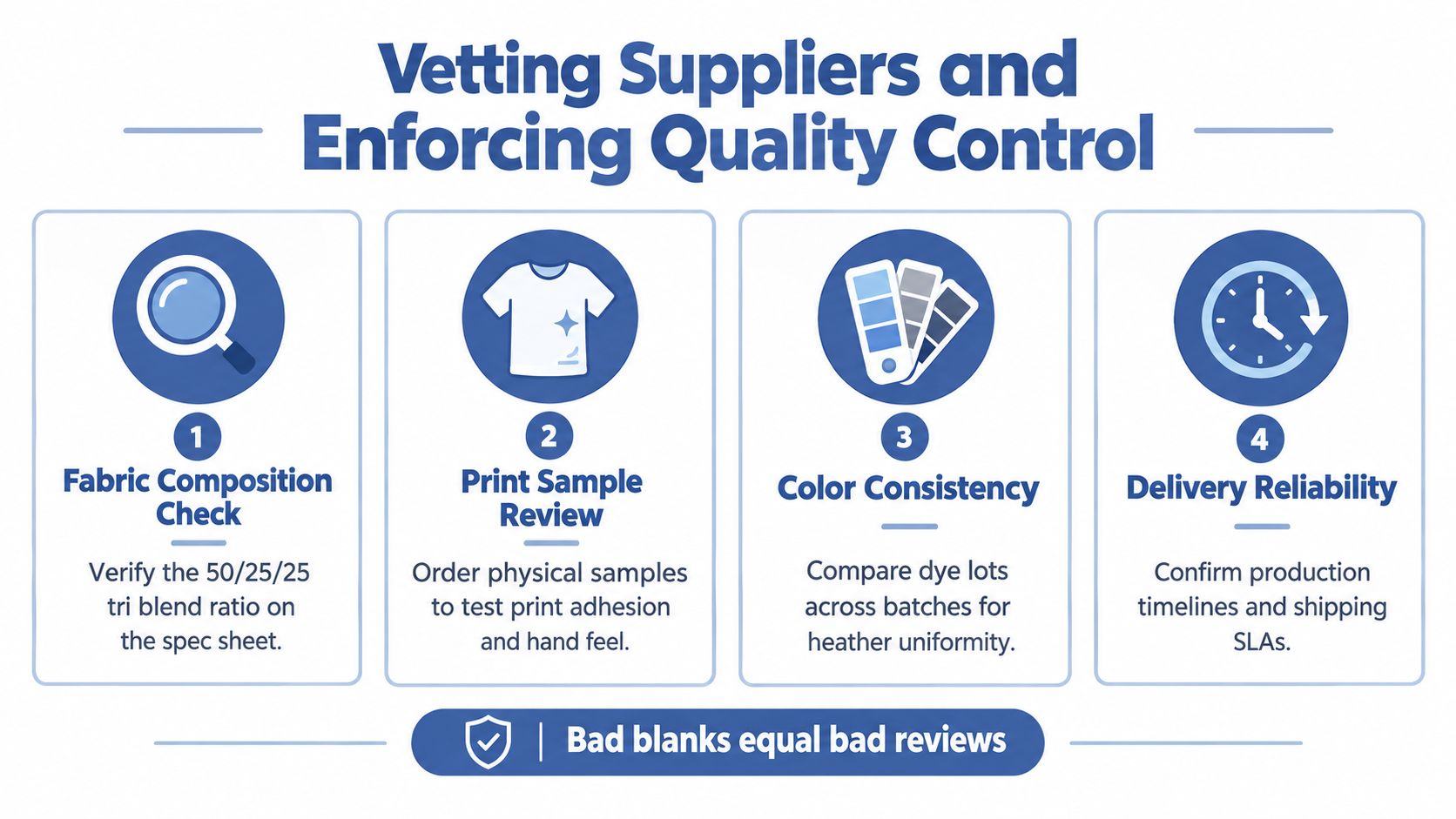
Use this quality-control sequence:
- Fabric composition check: Compare the physical garment and label against the specification sheet. Record the blank brand, style, color, and size for every approved sample.
- Print sample review: Examine adhesion, edge quality, color appearance, softness, and flexibility. A print that looks impressive but feels plastic may undermine the reason for choosing a tri-blend.
- Color consistency: Compare heathered shades across samples and replenishment batches. Subtle variation may be part of the fabric character, but noticeable inconsistency can weaken a coordinated collection.
- Delivery reliability: Ask the supplier to explain production timelines, shipping service levels, and how they handle stock changes. A premium product still creates a poor customer experience if the order arrives late.
The buying guide for print-ready tees is a useful resource when comparing blank quality and print readiness before committing to a production partner.
Wash testing is a business control
Measure the sample before washing, then follow the care instructions and measure it again afterward. Check length, width, sleeve shape, neckline recovery, print cracking, color shift, and surface texture. Rayon can shrink unpredictably, so a single unwashed approval isn't enough for a product you intend to advertise aggressively.
Keep a sample archive. Photograph the approved garment, save the supplier details, and document the print method and production settings. If a later batch looks different, you'll have a reference for identifying whether the issue came from the blank, the colorway, the print process, or the wash cycle.
Don't scale ad spend until the physical product earns approval. A supplier's catalog image is useful for discovery, but your own sample is the evidence that protects reviews, refunds, and repeat purchase behavior.
Pricing Strategy and Listing Optimization
A customer comparing two T-shirts may see similar artwork, while your tri-blend carries higher blank, printing, fulfillment, payment processing, platform, support, return, and promotional costs. Price the garment as a premium wearable and make that difference clear before the buyer leaves the listing.
Separate cost recovery from value communication. Cost recovery protects your margin. Value communication explains why the customer should pay more and helps turn technical garment details into a premium brand story.
| Cost Component | Standard Cotton | Premium Tri-Blend |
|---|---|---|
| Blank garment | Lower-cost commodity option | Higher-cost premium blank |
| Fabric experience | Familiar cotton hand feel | Soft, lightweight feel with fluid drape |
| Decoration approach | Broad range of standard methods | Method selected to preserve softness and manage heat |
| Customer positioning | Everyday basic or group apparel | Lifestyle, boutique, creator, or premium merch |
| Listing emphasis | Design, color, and basic fit | Hand feel, drape, print finish, care, and intended use |
| Margin protection | Relies more heavily on efficient volume | Relies on perceived value and disciplined pricing |
Wholesale examples in Deluxe's promotional T-shirt catalog place tri-blends around $12.93 to $17.82 per shirt at 12-unit quantities across multiple brands. Use those figures as category context, not as your complete landed cost or a universal retail recommendation. Add decoration, fulfillment, transaction fees, customer service, refunds, and planned acquisition costs before setting your price.
Write benefits buyers can feel
Lead with the wearing experience rather than a fiber lecture:
- Soft hand feel: Explain that the shirt is intended to feel comfortable against the skin.
- Lightweight drape: Connect the fabric to a relaxed silhouette and everyday wear.
- Vintage character: Describe the heathered appearance and its relationship to the artwork.
- Print finish: State whether the decoration feels soft, integrated, or intentionally vintage.
- Care requirements: Recommend the washing and drying approach that helps protect fit and shape.
Rayon introduces genuine sizing and heat sensitivity risks. Avoid claims such as “won't shrink,” “indestructible,” or “the softest shirt available.” A scorching mark, uneven shrinkage, or distorted neckline can turn an attractive margin into refunds and negative reviews. Describe the tested result instead, and make care instructions visible near the fit information.
Turn design testing into listing assets
Use an AI design workflow to create several original artwork directions for the same niche, then reject weak concepts before production. Compare typography, placement, color contrast, and detail density against the tri-blend's heathered surface. Generate mockups for the strongest options, but approve the physical print before presenting a finish, scale, or color as final.
This process gives each listing a clear design reason and a garment reason. Show the front view, close-up print texture, fabric drape, color options, and a scale reference. State that rayon content and heat-sensitive decoration can produce variation, then explain the care routine that supports the tested result.
Protect the offer with product architecture
Make the tri-blend the hero product when comfort, repeat wear, and a softer print finish support the design. Keep standard cotton available for price-sensitive buyers or customers who prefer a heavier, more structured garment. Coordinated bundles can raise order value after the core product has passed sample and wash testing.
The strongest listing connects the buyer's identity, the design's emotional appeal, and the garment's physical experience in one clear promise. That combination gives you room to charge for quality without hiding the production trade-offs.
Scaling Your Custom Apparel Business
A tri-blend collection gives you a strong foundation for building a brand because the product can compete on more than artwork. The customer gets a recognizable design, a more considered garment, and a wearing experience that can encourage repeat purchases. Your job is to turn that advantage into a system instead of relying on one successful listing.
Start with a narrow product family. Choose a clear audience, develop related design directions, approve one or more blank colorways, and create a consistent visual identity. Track which designs attract attention, which products generate completed orders, and which customer questions reveal gaps in your listing. Qualitative feedback about fit, softness, print feel, and care can be as useful as sales data when you're improving the next release.
Build the operating loop
A practical growth loop looks like this:
- Research a specific buyer identity. Find the interests, language, rituals, and visual references that make the niche recognizable.
- Create several original design angles. Use AvatarIQ to speed concept development and mockup production, then remove weak ideas before publishing.
- Approve the physical sample. Test the exact blank, color, print method, and care result.
- Launch a focused collection. Give the buyer related products rather than an unrelated catalog.
- Review customer behavior. Improve the design, photography, copy, and offer based on what people respond to.
- Scale the winners carefully. Expand adjacent designs only after the original product has a repeatable production process.
This system keeps creativity and operations connected. A design isn't a winner if the supplier can't reproduce it, and a reliable blank isn't enough if the product page fails to communicate why the garment deserves its price.
For the education side, Skup offers the Apparel Cloning System, a structured program for identifying proven apparel product patterns and creating original designs for targeted niches. Pair that type of structured product research with AvatarIQ for design and mockup production, then use supplier testing to validate the physical product before increasing promotion.
Make data part of the brand process
Keep product information organized from the beginning. Record the blank specification, approved colors, print method, care instructions, sample measurements, supplier notes, and listing language in one operating document. A resource on data foundations for retail offers useful perspective on organizing product information as a catalog grows.
The opportunity in POD is still compelling because you can test focused products without building a traditional inventory-heavy apparel operation. Tri-blends make that opportunity more interesting when you treat the material as part of the product strategy, not as a hidden production detail. Your advantage comes from combining better creative, accurate positioning, disciplined sampling, and a customer experience that matches the promise.
Start with one audience, one approved blank, and a small group of designs. Use AvatarIQ to build the visual assets, order physical samples, wash-test them, and publish only after the garment meets your standard. That process gives you a realistic path from a single custom tri-blend T-shirt to a premium collection with room to grow.
Skup gives you practical POD training and tools for building custom apparel systems, including Apparel Cloning for product research and AvatarIQ for designs and mockups. Visit Skup to explore the workflow and take your first tri-blend product from concept to a properly tested listing.