10 Y2K Fashion Trends to Monetize for Your POD Store
Y2K nostalgia isn't a sleepy style cycle anymore, it's a real commercial lane. One market estimate places the global cyber Y2K fashion market at $4.2 billion in 2024 and projects $13.8 billion by 2033, while another puts the broader Y2K fashion market at $62.4 billion in 2025 and $106.7 billion by 2034 (Accio market overview, MarketIntelo report). Search behavior matches the money, with Y2K fashion searches up 193% year over year and more than doubled since January 2021 (Accio market overview).
That matters if you sell print on demand. Buyers aren't just browsing old photos of low-rise jeans and baby tees, they're actively looking for products that feel current, wearable, and easy to style. The money is in translating the look into shirts, hoodies, hats, and personalized pieces that fit today's buying habits, without making the designs feel like costume shop leftovers.
The best Y2K products aren't the most literal ones. They're the ones that keep the energy, the glossy attitude, the playful rebellion, and the feminine, tech-forward edge, while cleaning up the fit and the mockups so they work for modern shoppers. Tools like AvatarIQ make that workflow faster, because speed matters when a trend is already pulling attention across TikTok, search, and retail.
For a broader style reference point, the best Y2K product lines usually sit right in the overlap of streetwear and high fashion fusion.
Table of Contents
- 1. Low-Rise Jeans and Cargo Pants
- 2. Butterfly and Floral Graphics
- 3. Bedazzled and Rhinestone Details
- 4. Baby Tees and Fitted Tank Tops
- 5. Vintage Band and Music Logo Graphics
- 6. Trucker Hats and Preppy Accessories
- 7. Velour and Texture Graphics
- 8. Themed Niche Communities and Subcultures
- 9. Moisture-Wicking and Modern Technical Materials
- 10. Custom Personalization and Monogramming
- 10-Point Comparison of Y2K Fashion Trends
- Your Time to Profit From Y2K Is Now
1. Low-Rise Jeans and Cargo Pants
Low-rise bottoms are one of the clearest signs that Y2K has moved from nostalgia into active retail demand. Heuritech says low-rise bottoms have been a consistent riser since 2020 in both the EU and the USA, and it also notes that fit-and-flare denim has been rising in the US since 2020 with another 4% expected in Summer 2026 versus the prior year (Heuritech). For POD sellers, that matters because the silhouette is still moving, which means buyers are not treating it like a dead trend.
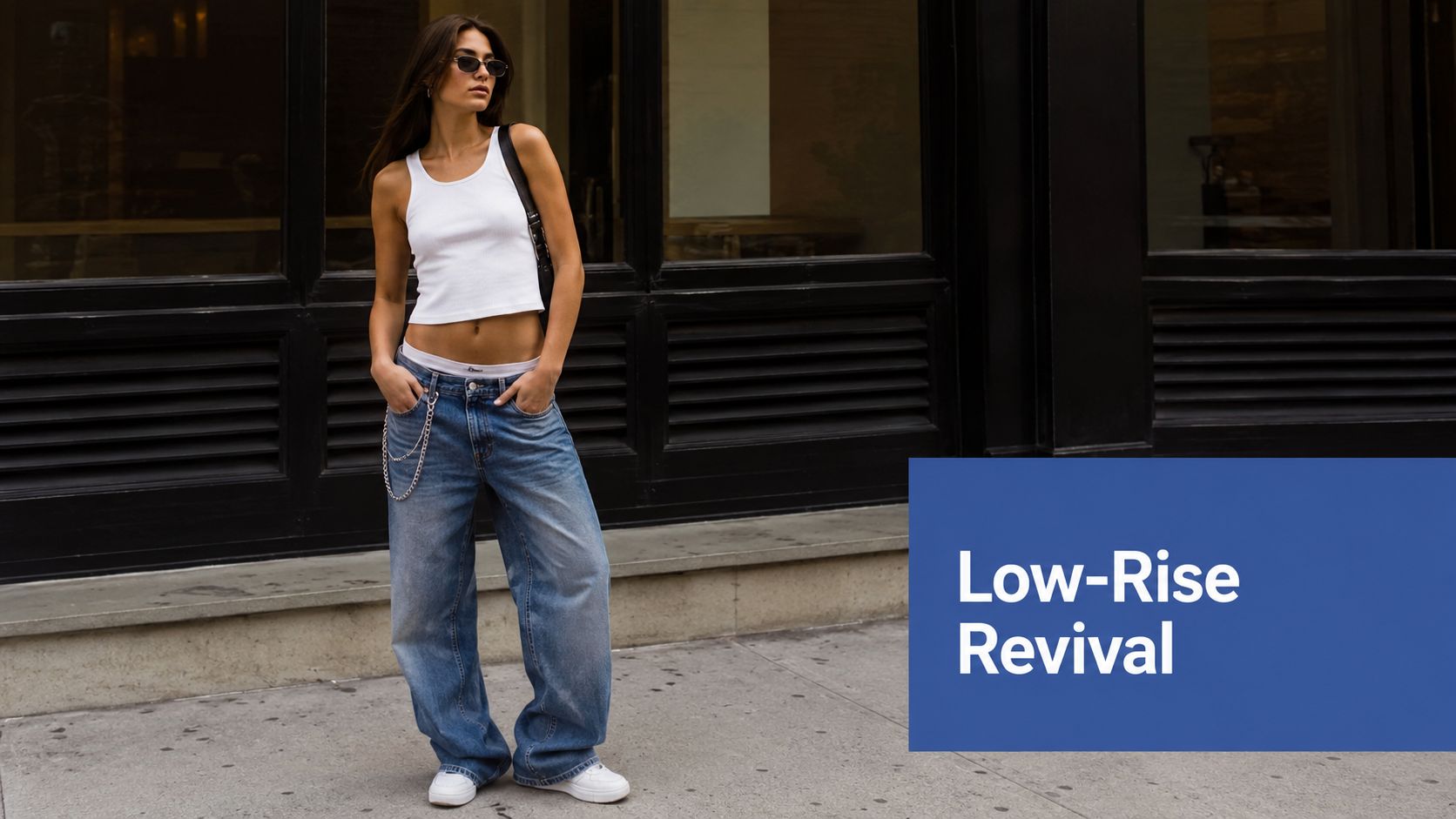
The product opportunity is in placement, not oversized art. A huge center print gets buried by low-rise proportions, while smaller front graphics, lower placement, or back prints stay visible when the top is cropped. If you mock up a shirt with AvatarIQ, style it with low-rise bottoms so buyers can see how the design sits in a real outfit, not just on a flat blank.
Practical rule: Y2K graphics need breathing room. If your artwork fights the waistband, the whole fit looks off.
Cargo pants widen the selling angle because they connect naturally to complete outfits. Pair the same tee with wide-leg cargos, a fitted tank, or a baby tee layered under an open shirt, then market it to TikTok and Instagram communities already collecting Y2K outfit inspo. The goal is to show a full look shoppers can copy, which is where streetwear and high fashion fusion fits the brief and gives the product a sharper style reference.
2. Butterfly and Floral Graphics
Butterflies are one of the fastest ways to make a design read as Y2K without over-explaining it. They carry the exact blend of softness, optimism, and early-2000s pop culture energy that buyers recognize instantly, especially when you pair them with floral flourishes, pastel colorways, or a little metallic shine. The trend works because it feels nostalgic, but not dusty.
Your product mix should stay flexible. A butterfly graphic that looks great on a baby tee won't always scale the same way on a hoodie, so build variations from the start. Use AvatarIQ to spin up multiple butterfly concepts quickly, then test which version feels strongest on cropped tees versus oversized fleece.
For design direction, keep these moves in play.
- Pastel palettes: Soft pinks, lilacs, and mint tones fit the romantic side of Y2K.
- Metallic accents: Silver outlines or chrome-style details push the design toward the futuristic edge.
- Small-repeat layouts: Tiny butterflies across the chest or sleeve can feel more premium than one oversized graphic.
- Phrase pairing: Short Y2K-style text can turn a pretty graphic into a stronger selling piece.
If you need more brainstorm fuel for shirt-ready concepts, the internal resource on t-shirt design ideas is a solid companion read. Use it to think about layout first, then layer the butterfly theme on top.
The trade-off is simple. Butterfly art sells nostalgia fast, but only if it looks intentional. Cheap-looking clip art gets ignored, while clean linework and cohesive color systems can make even a basic tee feel collectible.
3. Bedazzled and Rhinestone Details
Rhinestones work because they make a shirt feel more expensive without changing the core garment. Y2K did this everywhere, on jeans, hoodies, tracksuits, and logos, and the look still signals a little flash, a little fun, and a little status. That's why embellished pieces can justify stronger pricing than flat prints when the execution is clean.
The smart play is to treat rhinestones as a product feature, not a decoration you slap on last. Think hearts, initials, angel motifs, stars, and small icon clusters that catch light on camera. If your supplier supports heat-applied rhinestone services, build around that process from the start so your listing copy and mockups feel aligned with the actual finish.
A good launch flow looks like this.
- Pick a tight motif: Hearts, wings, or initials are easier to merch than random sparkle.
- Show the shine clearly: Use AvatarIQ mockups that make the reflective effect obvious.
- Keep the base garment simple: Rhinestones already add visual noise, so don't overload the rest of the design.
- Test before scaling: Small runs reveal whether the embellishment looks premium or gimmicky.
The biggest mistake is trying to make every piece look like a club flyer. Bedazzling works best when it feels controlled. A clean baby tee with a rhinestone wordmark or a small sparkling icon can outperform a crowded design because buyers see it as wearable, not theatrical.
If you position the product as a premium Y2K piece, rhinestones can also support better giftability. People buy sparkle for birthdays, nights out, and statement outfits, which gives you more angles than a standard flat-ink tee.
4. Baby Tees and Fitted Tank Tops
Baby tees are the foundation layer of the whole revival. They're the silhouette most shoppers picture first, and they fit the current market because they're easy to style, easy to photograph, and easy to print on. Shein said its baby tee sales tripled in the same year in the cited coverage, and made baby tees its hottest T-shirt style, which is a strong sign that the format still has real demand (AP reporting via Heuritech summary).
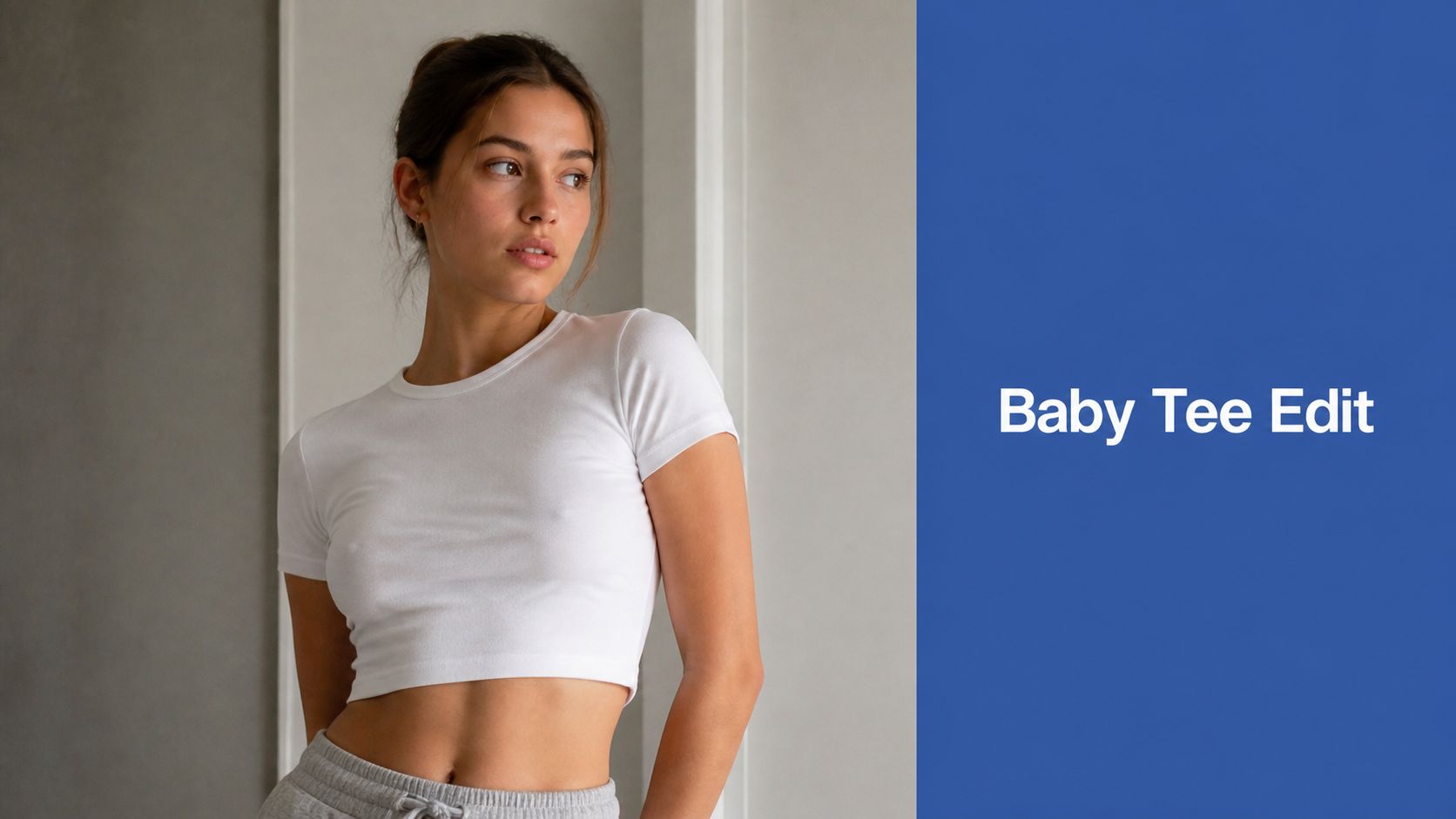
The product advantage here is size. The garment is small, the print area is focused, and the buyer expects a strong graphic or a smart line of text. That makes it a clean testing ground for niche concepts like Y2K anime, pop-punk phrases, vintage logo parodies, or flirty text treatments. Use AvatarIQ to create fit-realistic mockups across different body types so the piece doesn't look like it only works on one kind of model.
Design for the garment, not the slogan. Baby tees punish oversized artwork. If the print feels crowded, the whole top loses its appeal.
There's also a merchandising upside. Baby tees are easy to bundle, easy to colorway test, and easy to position as impulse purchases. If one design pops, expand it into a matching tank, a long-sleeve version, or a wider collection so you can build an outfit system instead of a one-off shirt.
5. Vintage Band and Music Logo Graphics
Music graphics are one of the safest ways to make Y2K feel authentic without copying the exact same butterfly-and-glitter formula everyone else is selling. The look taps into band nostalgia, festival energy, and the old habit of wearing music taste like a badge. That creates a built-in emotional hook, especially for shoppers who want something that feels borrowed from a past tour tee but still fresh enough to wear today.
The key is to avoid lazy reproduction. Go after the attitude of the genre, not direct trademark copies. Distressed type, faded layouts, worn-in ink textures, and retro concert aesthetics all work well when you build original artwork around them. If you're using AvatarIQ, mock up the distressed print so it reads like real vintage wear instead of a flat modern graphic.
A few good angles are worth testing.
- Scene and pop-punk energy: Fast typography, aggressive layouts, and high-contrast prints.
- Grunge references: Muted colors, cracked textures, and washed-out placement.
- Festival merch vibe: Tour-style graphics without naming a protected band.
- Subculture mashups: Blend music aesthetics with Y2K icons for sharper niche appeal.
For sellers who want a deeper dive into the music-merch side, merch ideas for musicians is a useful reference point. The reason music graphics work is simple, fans don't just buy a shirt. They buy identity, memory, and community.
That's also why these designs can carry stronger margins than generic trend tees. The more specific the scene feels, the less it competes with broad-market Y2K drops.
6. Trucker Hats and Preppy Accessories
Trucker hats sit at the preppy end of Y2K, and that matters because the aesthetic wasn't only about sex appeal and sparkle. It also had a status-heavy, country-club-meets-streetwear edge that made logo culture feel aspirational. If your POD brand can translate that attitude into apparel, you can sell the outfit logic, not just a standalone print.
The best approach is to design shirts that belong with the hat, then show that pairing in your mockups. A preppy logo tee, a clean collegiate-style graphic, or a subtle badge design all fit the trucker-hat ecosystem much better than a loud oversized print. Use AvatarIQ to stage the full look so buyers see a complete Y2K fit instead of trying to guess how the items work together.
If you want to go broader, the internal guide on print-on-demand caps can help you think through the headwear side of the equation. That matters because hat culture often boosts apparel sales when the designs feel like part of one closet.
Shoppers who love preppy Y2K want coordination. If the shirt and the hat clash, the whole look loses value.
This niche also works well on Pinterest and Instagram, where clean styling beats loud gimmicks. Think polo-adjacent graphics, vintage-inspired logos, and polished color palettes that keep the vibe upscale. The trade-off is that you need restraint, because too much irony can kill the preppy feel that makes the style desirable in the first place.
7. Velour and Texture Graphics
Velour is one of those Y2K signals that instantly changes the emotional read of a product. It says lounge luxury, celebrity off-duty, and soft-status energy, all in one stroke. Juicy Couture made that texture iconic, and the aesthetic still gives POD sellers a clear lane for premium-feeling designs that aren't dependent on direct fabric matching.
You don't need to print velour to borrow from it. Texture graphics, embossed-style illustrations, plush-looking wordmarks, and foil accents can all hint at that softness without turning the shirt into a costume. AvatarIQ helps here, because realistic mockups can make a flat garment look materially richer if the visual language is strong.
The best product logic here is premium positioning. If the design implies comfort, texture, and a little luxury, you can separate it from basic Y2K tees that rely only on nostalgia. That gives you a cleaner path to better perceived value, especially when the print itself is simple.
A smart velour-inspired launch usually includes:
- Soft-touch color palettes: Cream, blush, dusty rose, and muted brown keep the look refined.
- Embossed visuals: Raised-looking lettering or icon frames make the shirt feel tactile.
- Luxury shorthand: Crown motifs, script fonts, and lounge references all fit naturally.
- Quality-first messaging: Show the printing and garment texture in your content, not just the front of the tee.
The mistake is overcomplicating it. Texture-forward Y2K works best when the shirt feels calm, rich, and a little playful. If the design gets too busy, it stops reading like velour and starts reading like random decoration.
8. Themed Niche Communities and Subcultures
Y2K becomes much more profitable when you stop selling to “everyone who likes the trend” and start selling to specific communities. Scene kids, VSCO girls, skate kids, gamer girls, and anime fans all interpret the aesthetic differently, and each group wants its own version of the look. That's why a broad Y2K design often underperforms a narrower one that speaks directly to a subculture.
The best sellers listen first, then design. Spend time in Discord servers, subreddits, TikTok comment threads, and fan pages to see which phrases, icons, and inside jokes land. Then use AvatarIQ to iterate quickly, because community-driven designs often need faster testing than generic trend merch.
A few practical angles work especially well.
- Scene and emo buyers: Sharp type, dark accents, and nostalgic attitude.
- Anime and gamer fans: Y2K mashups with character-energy graphics.
- Skate culture: Loose, worn, and slightly rebellious visual language.
- VSCO-style shoppers: Light, polished, and softly branded minimalism.
The upside is organic growth. When people feel a design was made for their niche, they share it more often and talk about it more naturally. The downside is that you can't fake authenticity, so your copy, mockups, and product names need to match the community you're targeting.
That's why this is one of the best places to build a repeatable POD brand. Once you find a subculture that responds, you can expand into adjacent designs without starting from zero every time.
9. Moisture-Wicking and Modern Technical Materials
A lot of Y2K apparel looks best when it isn't trapped on cheap basics. Modern shoppers still want the nostalgia, but they also want comfort, breathability, and garments they can wear often. That opens the door to technical fabrics and more functional product choices without losing the retro identity.
The smartest move is to pair a Y2K graphic with a contemporary blank that feels better in real life. Moisture-wicking tees, breathable blends, and sustainable material options let you sell the style with a more premium, practical angle. If you build the product line this way, your mockups and your listing copy can speak to both fashion and function, which widens the audience.
Use AvatarIQ to show the same design on different garment types before you commit to a launch. That makes it easier to see whether the graphic looks better on a performance tee, an oversized cut, or a softer fashion fit.
The trade-off is simple. Technical fabrics can feel less nostalgic if the design is weak. But if the artwork is strong, the upgraded garment makes the product easier to wear, easier to keep, and easier to justify at a higher perceived value.
This is also a strong angle for customers who care about more conscious shopping. You don't need to overstate the angle, just position the product as a modern alternative to disposable fast fashion. Clean product pages, clear material descriptions, and strong visuals do most of the work.
10. Custom Personalization and Monogramming
Personalization is one of the easiest ways to make Y2K feel current and giftable. The era loved initials, nameplates, bedazzled monograms, and princess-style text, which makes this an ideal lane for custom POD. A customer doesn't just buy a tee, they buy a version that feels attached to them.
The operational upside is real. Custom pieces often feel more personal, which can lower return risk and raise perceived value. The product doesn't need a massive graphic system, either, because the personalization itself carries the design. If you want to show buyers exactly how it looks before they order, AvatarIQ is useful for quick personalized mockups.
For implementation, keep the process simple.
- Offer name fields clearly: Don't bury the customization step.
- Use Y2K-style fonts: Script, bubble, and playful block letters all fit the aesthetic.
- Preview the result: Let shoppers see the personalized version before checkout.
- Build gifting angles: Birthdays, friend trips, and matching sets all work well.
If you want a practical reference for setup ideas, the internal guide on how to make personalized T-shirts at home fits this niche well. Personalized Y2K items work because they're both trend-driven and emotionally specific, which is a strong combination for eCommerce.
The biggest mistake is making the customization feel like a slow manual process. Keep the UX tight, the preview clear, and the design options limited enough that customers can decide quickly. That's how you turn a nostalgic idea into a repeatable product line.
10-Point Comparison of Y2K Fashion Trends
| Item | Implementation Complexity 🔄 | Resource Requirements ⚡ | Expected Outcomes ⭐📊 | Ideal Use Cases 💡 | Key Advantages ⭐ |
|---|---|---|---|---|---|
| Low-Rise Jeans and Cargo Pants | Moderate 🔄: needs accurate fit mockups & styling demos | Medium ⚡: model photography, proportioned graphics | High 📊: strong nostalgic demand; good conversion in Y2K niches | Streetwear drops, vintage collections, TikTok styling | Recognizable nostalgia; styling-friendly; high visibility |
| Butterfly and Floral Graphics | Low–Moderate 🔄: design iterations and color testing | Low ⚡: graphic assets and clear mockups | High 📊: broad appeal; strong tee sales and repeat buys | Graphic tees/hoodies, pastel collections, social campaigns | Versatile designs; high margins; many variations |
| Bedazzled and Rhinestone Details | High 🔄: supplier setup, heat-setting process & QC | High ⚡: specialty suppliers, embellishment costs | High 📊: premium perception; higher AOV and margins | Premium drops, gifts, limited editions | Luxury look; price premium; distinct from basics |
| Baby Tees and Fitted Tank Tops | Moderate 🔄: accurate sizing charts & realistic fit mockups | Low–Medium ⚡: simple printing; diverse sizing assets | Very High 📊: top conversion rates; strong repeat purchases | Fast drops, influencer test launches, staple SKUs | Exceptional margins; easy to test and variant |
| Vintage Band and Music Logo Graphics | High 🔄: licensing risks and authentic design research | Medium–High ⚡: distressed design work; possible legal costs | High 📊: passionate buyers; premium pricing potential | Music fan communities, festival merch, collectors | Loyal fanbase; niche authority; viral potential |
| Trucker Hats and Preppy Accessories | Moderate 🔄: nuanced preppy styling & mockups | Medium ⚡: quality mockups; influencer collaborations | Medium 📊: smaller market but higher willingness to pay | Preppy capsule collections; accessory-led outfits | Appeals to premium buyers; collaboration-friendly |
| Velour and Texture Graphics | High 🔄: specialty printing (emboss/foil/3D) & supplier coordination | High ⚡: specialty techniques, higher per-unit costs | High 📊: elevated brand perception; premium margins | Elevated Y2K/luxury lines, limited-edition drops | Differentiation via texture; high perceived value |
| Themed Niche Communities and Subcultures | High 🔄: deep community research & sustained engagement | Medium ⚡: community management, targeted content | High 📊: strong loyalty, organic growth, high LTV | Subculture-focused launches, community-driven campaigns | Loyal customers; word-of-mouth growth; low mainstream competition |
| Moisture-Wicking and Modern Technical Materials | High 🔄: material testing and supplier partnerships | High ⚡: premium fabrics, specialized printing | High 📊: premium positioning; attracts eco/active buyers | Activewear with retro graphics; sustainable collections | Functional + retro aesthetics; sustainability appeal |
| Custom Personalization and Monogramming | Moderate–High 🔄: order workflows, previews and QC | Medium ⚡: personalization tooling; longer fulfillment | High 📊: higher AOV; emotional purchases; lower returns | Gifts, premium add-ons, occasion-based merchandising | Unique products; increased loyalty; reduced competition |
Your Time to Profit From Y2K Is Now
These y2k fashion trends are more than a passing nostalgia cycle, they're a durable demand pocket with enough search volume, retail activity, and social attention to keep paying sellers interested. The strongest signals are already clear, the market is big, the silhouettes are recognizable, and buyers know what they want. Your job isn't to invent the trend, it's to package it into products that look current, fit well, and feel worth buying.
The sellers who win here move fast but stay selective. They don't throw every butterfly, rhinestone, and cargo-pocket idea into one collection. They pick one lane, build a clean design system, and use tools like AvatarIQ to create mockups and test variants without getting stuck in production limbo. That's where print on demand stays exciting, because the barrier to entry stays low while the upside from good creative stays real.
If you're serious about turning trend traffic into a store that converts, focus on one sub-aesthetic, one strong product, and one clear audience. The Apparel Cloning method is built for that kind of execution, because it helps you find what's already working and adapt it into your own profitable version. You don't need to chase every style under the sun, you just need to ship the right one faster than the next seller.
Skup also fits naturally into this conversation because it's built around POD education, apparel-focused strategy, and faster design workflows. The opportunity is here, and the people who act first usually get the cleanest shot at the market. Start with one Y2K angle today, build the mockup, launch the listing, and keep moving.
If you want a practical system for turning Y2K trends into POD products, visit Skup and see how the Apparel Cloning approach and AvatarIQ can help you build faster. The right trend is only valuable if you can launch on it cleanly, so use the tools, pick your niche, and get your first winning design live.