Name of the Shop: A POD Founder’s Playbook
You're staring at the blank shop name field longer than you expected. The designs are in your head, the product ideas are decent, maybe even the ad angles are mapped out, but the name still feels like a small decision you can postpone.
That's the mistake. The name of the shop is the first conversion decision you make, because it shows up everywhere the buyer touches your brand, from the domain to the ad headline to the email sender name. If you get it wrong, you don't just create a branding headache, you weaken trust, recall, and relevance before the first sale ever happens.
Table of Contents
- Why the Name of Your Shop Is a Business Decision
- Three Brainstorming Lanes That Produce Winners
- Locking In Your Niche, Audience, and Offer Before You Pick
- The Availability and Memorability Checklist
- Five Name Archetypes POD Brands Win With
- Pressure-Testing Your Shortlist Before You Buy the Domain
- Your 7-Day Naming Sprint and What Comes Next
Why the Name of Your Shop Is a Business Decision
The first time a POD founder reaches the store setup screen, the name field looks easy to postpone. They type in something generic, maybe “Trend Tees” or “Daily Print Co,” and plan to clean it up after the logo is finished. That shortcut usually shows up later in weaker ad recall, flatter referrals, and a brand that never quite sticks.
A shop name is a positioning decision. It appears in the domain, the social bio, the email sender name, and the buyer's memory of your store. A vague name makes the brand easy to ignore. A specific one gives every click, every retargeting ad, and every repeat visit a clearer job.
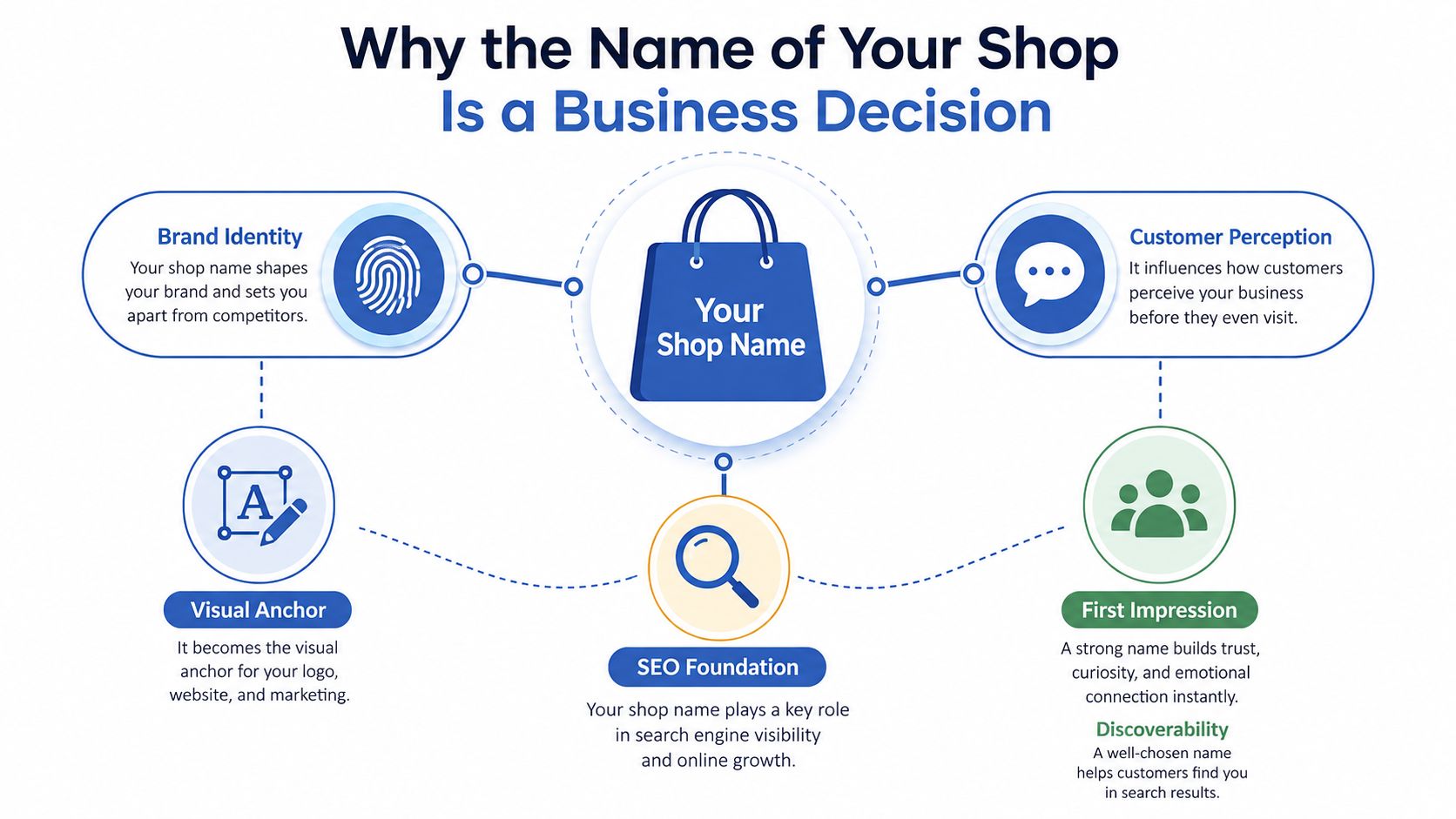
A strong name also helps buyers understand what you stand for before they inspect the product. That matters because the name shapes the way your ads, social content, and storefront fit together. When those pieces align, the store feels intentional instead of assembled from random parts.
If you want a useful reference point for how brand identity, consistency, and naming fit together, the broader set of online branding insights from quso.ai is worth reviewing before you lock anything in. Pair that with the basics in Skup's brand-building guide, and you avoid the common mistake of naming a store in isolation instead of naming a business people can remember.
Practical rule: if your name could belong to twenty different stores, it is too weak to carry a serious POD brand.
That is why I treat naming as a conversion decision. The first job of the name is to match the niche, audience, offer, and ad creative closely enough that the buyer feels the fit immediately. If you get that part right, the rest of the brand has a much better chance of earning attention instead of chasing it.
Three Brainstorming Lanes That Produce Winners
Stop trying to invent 200 clever names. That leads to mush. Use three lanes instead, then build a shortlist from the lane that fits the business you want to run.
Niche-led names
This lane signals category fast. Names built around a product or use case, like Daily Drop Tees or Funny Nurse Shirts, work well when the store needs to explain itself immediately. They help most in colder traffic, where buyers need fast context before they click.
Audience-led names
This lane centers identity, not product. A name like Moms Who Lift reads differently from a generic apparel brand because it speaks to a specific person with a specific self-image. That makes the first impression stronger, especially when the audience already sees itself as part of a subculture or lifestyle.
Offer-led names
This lane emphasizes outcome or experience. Cradle Catch feels softer and more brandable than a plain category name because it suggests a use case without spelling everything out. That gives you room to expand beyond one product type later.
The best names are usually not the cleverest ones. They're the ones that tell the right buyer, “this was made for you.”
A practical way to brainstorm is to write ten candidates in each lane, then cut anything that sounds too broad, hard to pronounce, or visually awkward in an ad headline. If you want more context on name discipline and brand language, the Font Checker Pro compliance guide is a useful reminder that presentation and naming travel together.
Locking In Your Niche, Audience, and Offer Before You Pick
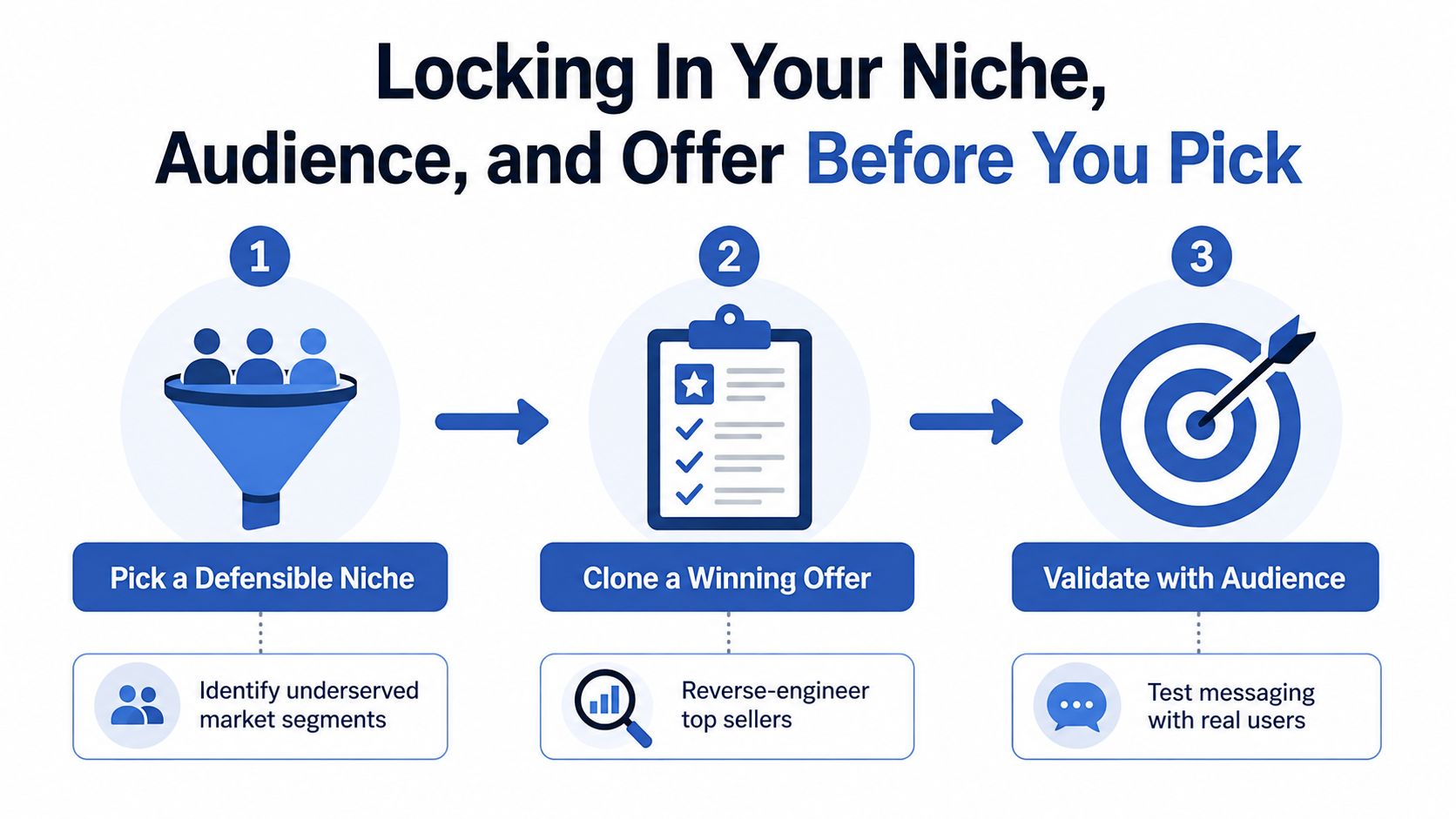
A name gets much easier when the positioning is sharp. The three-stage validation loop I trust is simple, pick a defensible niche, clone a winning offer, then test conversion before you scale spend. Once that's clear, the shop name almost writes itself.
The cleanest way to do this is with one sentence. Say who the customer is, what they want, and what the shop delivers. If you can't say that in one sentence, you're not ready to name the business yet, because the name will drift into generic territory and the ad creative will drift with it.
The one-sentence market statement
Write it like this, “For [audience], who want [outcome], this shop sells [product style] that solves [problem].” That sentence immediately filters out names that are too wide, too cute, or too disconnected from the offer.
A store called “Tee Shop Co” tells me nothing. A store built around a tighter market statement can support a name that already hints at the audience, the vibe, or the use case. That's why naming works best after niche selection, not before it.
If you want a deeper framework for that first decision, Skup's print-on-demand niche guide is the right companion piece. The right niche narrows the naming field fast, which is exactly what you want.
Let the statement narrow the name
Once the market statement is clear, choose names that mirror one of three signals, identity, category, or promise. That's how the name starts doing ad work before the buyer ever hits the product page.
The hidden advantage is simple. A name built from a real market statement usually makes the first ad concept easier to write, because the headline, the angle, and the brand tone are already aligned. That's where good naming starts to feel like a sales asset instead of a branding hobby.
The Availability and Memorability Checklist
A shop name that looks clever on paper can still kill a launch if it fails the basic checks. I've watched people spend days on logo ideas, packaging mockups, and ad concepts, then find out the domain is gone, the handles are inconsistent, or the trademark risk is ugly. That is wasted effort, and it slows down the first real test of the brand.
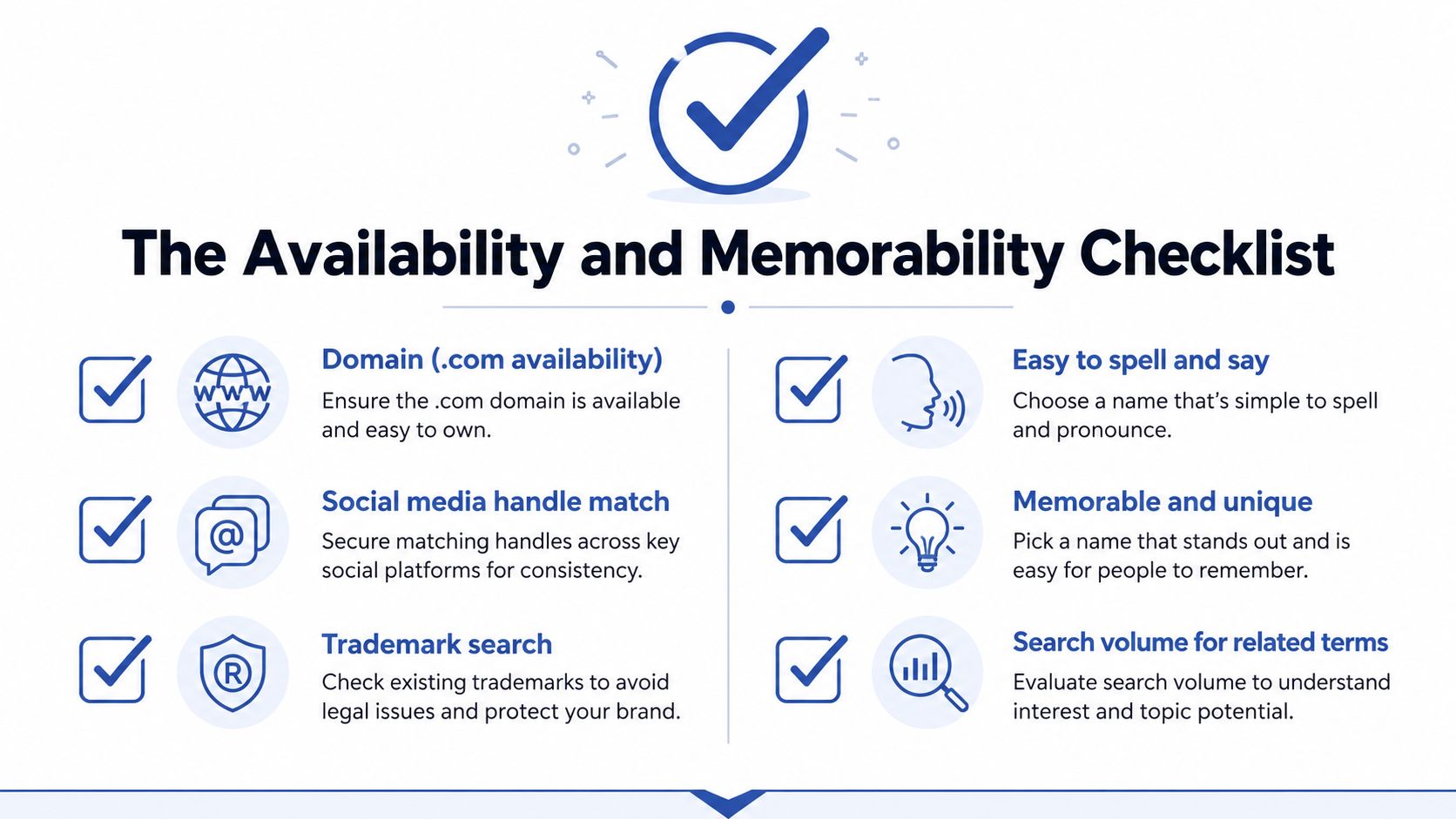
Run the filter in a fixed order. Check the domain first, then the social handles, then the trademark situation, then spelling, pronunciation, and recall. If a name fails any one of those, drop it and move on.
What to check first
Use the same pass-or-kill sequence every time:
- Domain availability: If the cleanest domain is available, the name stays alive. If the best version is taken, be careful before forcing a messy workaround that will look second-rate in ads and on packaging.
- Social handle match: Try to keep the same name across Instagram, TikTok, Pinterest, and X. When the handles drift, the brand feels unfinished and harder to remember.
- Trademark search: Run a quick search with the Skup's trademark guidance approach before you commit. A name that collides with an existing mark is not a brand, it is a liability.
- Easy to spell and say: If someone hears it once and cannot repeat it, you will lose traffic to typos and weak word-of-mouth.
- Memorable and unique: Generic names blur together fast, especially in a crowded apparel feed where every extra ounce of sameness hurts recall.
The radio test matters
Say the name out loud ten times. Then say it once the way a customer would hear it in a Meta ad. If it sounds awkward, too long, or unclear, that friction will show up in the buyer's head too.
A good name has to survive real use. It should look clean in a URL, sound natural in conversation, and still make sense when a customer repeats it to a friend. That is the standard, and anything below it deserves a hard no.
Five Name Archetypes POD Brands Win With
There is no single winning naming style. Five patterns keep showing up in POD brands that get real traction, and each one performs differently in ads, search, and long-term memory. Match the archetype to your traffic plan, not your personal preference.
| Archetype | Ad Readability | SEO Strength | Brand Recall | Trademark Risk |
|---|---|---|---|---|
| Descriptive niche name | High | High | Medium | Medium |
| Audience-identity name | High | Medium | High | Medium |
| Founder-led name | Medium | Low | High | Lower if unique |
| Invented brandable name | Medium | Low | High | Lower if original |
| Keyword-led SEO name | Very high | Very high | Low to medium | Medium |
How each one behaves
A descriptive niche name like “Funny Nurse Shirts” is blunt and clear. It works when you want fast search alignment and instant context in an ad. If your offer is narrow and the creative needs to explain itself quickly, this is a practical starting point.
An audience-identity name like “Moms Who Lift” carries more emotional weight. It feels like a badge, which helps with repeat purchases and community-driven branding. Use it when the buyer wants to signal membership, not just buy a product.
A founder-led name usually works best when the person behind the business is part of the story. It is less direct for cold traffic, but it can age well if the operator becomes the face of the company. This style gives you room to build trust around a real voice, a clear point of view, and consistent content.
An invented brandable name gives you the cleanest long-term canvas. It is weaker at first glance, but stronger when the brand needs to expand beyond a narrow product line. If you plan to grow past one niche or one product angle, this style keeps you from boxing yourself in.
A keyword-led SEO name is the bluntest option. It tells people exactly what they are getting, which helps early when the offer is narrow and the traffic strategy is search-heavy. It is not subtle, but it can be efficient.
The trade-off is simple. If you want speed, clarity wins. If you want brand equity, distinctiveness wins. Do not pretend every shop can maximize both at once, because most cannot. The right choice depends on whether the name needs to sell the first click, or carry the brand after the first purchase.
Pressure-Testing Your Shortlist Before You Buy the Domain
You already have the first pass. Now cut the list down with real signal before you spend money on the domain and start building assets around a weak name.
A fast audience poll in a relevant Facebook group or subreddit works well here. Do not ask people to invent the brand for you. Ask which name they remember, which one feels trustworthy, and which one sounds like a real shop they would buy from.
Then build two mockup ads with the same copy and swap only the name. The version that feels more natural in the headline usually tells you more than another hour of internal debate. If one name looks awkward in the ad, it will slow you down later in paid traffic.
A simple landing page gives you another read. Watch for hesitation, weak click-through, or comments asking what the shop sells. Those reactions mean the name is doing too much or too little work.
Fast validation beats endless debate
Use the name in a real sales context, then say it out loud as if it were in an inbox, on a product label, and in a customer recommendation. Weak names usually sound fine on paper and clumsy everywhere else.
A name that needs a paragraph of explanation is already hurting the brand. If a buyer has to decode it before they understand the offer, the name is working against conversion from the start.
The legal check still belongs here, but keep it tight. Use the trademark sanity check discussed above, then commit only after the shortlist passes that filter. If you want a sharper legal lens on the process, the trademark infringement guide lays out the basics before you buy the domain and start building around the name.
Your 7-Day Naming Sprint and What Comes Next
Day one is positioning. Write the one-sentence market statement and don't move on until it's tight. Days two and three are for brainstorming across the three lanes, niche-led, audience-led, and offer-led, until you have a real shortlist instead of a pile of random ideas.
Day four is the filter. Kill every name that fails the domain, handle, trademark, or memorability checks. Day five is archetype selection, where you decide whether this store needs a descriptive, identity-driven, founder-led, brandable, or keyword-heavy name.
Day six is audience testing. Day seven is the decision, the domain purchase, and the start of brand execution. That's the point where overthinking stops paying you back.
The name of the shop is the first brand asset, not the last one. Get it right, and every ad, every email, and every referral gets easier from day one. Get it vague, and you'll keep paying for that mistake in every channel you touch.
Skup helps entrepreneurs build print-on-demand apparel businesses with coaching, training, and AvatarIQ, its AI-powered design tool for generating apparel graphics and mockups. If you want a sharper path from niche selection to naming to launch, visit Skup and see how the pieces fit together.