How to Choose the Perfect Print on Demand Niche: The Complete 2026 Guide
You’ve watched the tutorials. You’ve set up your Shopify store. You’ve connected Gelato or Printify. Everything’s ready to go—except you’re staring at a blank screen wondering: What the hell should I actually sell?
This single question has killed more print-on-demand businesses than bad designs, high ad costs, or difficult customers combined. Pick the wrong niche, and you’ll burn through your ad budget chasing people who will never buy. Pick the right one, and you’ll wonder why this business ever seemed hard.
After coaching hundreds of students and analyzing what separates $500/month stores from $50,000/month stores, we’ve identified the exact framework for choosing a niche that actually makes money. This isn’t theory—it’s the same methodology our students use to find their first winning products and scale to consistent sales.
Quick Overview
The ideal print-on-demand niche sits at the intersection of three factors: passion (people care deeply about it), identity (they want to express it publicly), and size (enough potential buyers exist on Facebook and Instagram). Most beginners fail because they optimize for only one factor—usually what they personally find interesting—instead of validating all three. The best niches aren’t always obvious, and the most “popular” niches are often oversaturated disasters for newcomers.
Table of Contents
- Why Niche Selection Makes or Breaks Your Business
- The Three Types of Print on Demand Niches
- The 5-Factor Niche Evaluation Framework
- How to Research Niches (Step-by-Step)
- Validating Your Niche Before Spending Money
- The 7 Biggest Niche Selection Mistakes
- 50+ Proven Niche Ideas for 2026
- Real Student Examples: From Niche Choice to First Sales
- Category Stores: The Advanced Approach
- Frequently Asked Questions
- The Bottom Line
Why Niche Selection Makes or Breaks Your Business
Here’s a truth most gurus won’t tell you: the niche you choose determines 60-70% of your success before you design a single shirt.
Think about it logically. If you pick a niche with millions of passionate buyers who publicly identify with their interest and actively spend money expressing that identity—your job becomes finding good designs and testing them. The demand already exists.
But if you pick a niche where people are mildly interested, don’t publicly identify with the topic, or don’t buy apparel to express themselves—you’re pushing a boulder uphill. Even the best designs won’t save you.
Real example from coaching calls: One student picked “people who like hiking” as their niche. Sounds reasonable, right? Millions of people hike. But here’s the problem—most hikers don’t strongly identify as “hikers” the way, say, nurses identify as nurses or dog owners identify as dog owners. The identity connection was weak, and despite good designs, ads consistently underperformed.
Another student chose “hospital workers” instead of just “nurses.” By expanding slightly to include nursing assistants, CNAs, respiratory therapists, and medical technicians, they multiplied their potential audience from 4 million to 15+ million—while keeping the strong identity connection. Same effort, dramatically different results.
The Math Behind Niche Selection
Let’s get specific. When you run Facebook ads, you’re paying to show your products to people. Your cost per purchase depends on:
- How many people see your ad (reach)
- How many click (click-through rate)
- How many buy (conversion rate)
A good niche improves ALL three metrics simultaneously:
- Reach: Larger niches give Facebook more people to test
- Click-through rate: Identity-based niches get higher engagement because people see themselves in your designs
- Conversion rate: Passionate niches convert better because the emotional connection to purchase is stronger
This is why niche selection isn’t just important—it’s foundational. Get it right, and everything downstream becomes easier. Get it wrong, and you’ll struggle no matter how hard you work.

The Three Types of Print on Demand Niches
Not all niches are created equal. Understanding the different types helps you identify opportunities and avoid traps.
1. Occupation/Profession Niches
People spend 40+ hours per week at their jobs. For many, their profession becomes a core part of their identity. This creates built-in demand for apparel that lets them express pride, humor, or solidarity with their work.
Examples: Nurses, teachers, firefighters, electricians, truck drivers, welders, mechanics, accountants, lawyers, real estate agents, hairdressers
Why they work:
- Strong identity connection
- Built-in community and shared experiences
- Gift-giving opportunities (colleagues, spouses buying for their partner)
- Easy to find on Facebook (job titles are targetable data points)
Watch out for: Corporate professionals (lawyers, accountants) may be less likely to wear graphic tees publicly than trade workers or healthcare professionals. Consider the lifestyle of your audience.
2. Hobby/Interest Niches
Hobbies command people’s free time, money, and emotional investment. The best hobby niches involve activities people do regularly and discuss publicly.
Examples: Fishing, hunting, gardening, knitting, woodworking, camping, motorcycles, gaming, reading, cooking, photography, golf, running
Why they work:
- People spend money on hobbies (they’re already buyers)
- Community aspect creates word-of-mouth potential
- Lots of inside jokes and references to mine for designs
- Gift-giving is huge (spouses and family members buying for hobbyists)
Watch out for: Extremely mainstream hobbies (like “cooking”) may be too broad for effective targeting. Niche down: “BBQ enthusiasts” or “sourdough bakers” will outperform “people who cook.”
3. Identity/Lifestyle Niches
Some niches are defined not by what people do, but by who they are or what they believe. These can be incredibly powerful because the identity connection is inherent.
Examples: Dog owners (specific breeds work better), cat lovers, parents (especially specific types: boy moms, girl dads, grandparents), veterans, faith-based communities, specific cultural identities
Why they work:
- Identity is the most powerful purchase driver
- People want to signal who they are to the world
- Strong emotional connection to messaging
- Repeat purchase potential (they’ll buy multiple designs)
Watch out for: Overly broad identity niches (“dog owners” has millions of designs already). Niche down to breed-specific or combine with another factor: “Labrador owners who hunt” or “Golden Retriever service dog handlers.”

The 5-Factor Niche Evaluation Framework
Before committing to any niche, run it through this evaluation framework. Score each factor 1-5 and aim for a minimum total of 18/25 before proceeding.
Factor 1: Audience Size (1-5 points)
How many people are in this niche in the United States (or your target country)?
- 1 point: Under 500,000 people (too small)
- 2 points: 500,000 – 2 million
- 3 points: 2 – 5 million
- 4 points: 5 – 15 million
- 5 points: 15+ million (ideal range)
Google “[profession/hobby] statistics USA” to find these numbers. For example: “How many nurses in USA” returns 4+ million registered nurses, plus LPNs, nursing students, and retired nurses—easily 6-8 million total.
Factor 2: Identity Strength (1-5 points)
How strongly do people in this niche identify with it publicly?
- 1 point: They rarely mention it (casual interest)
- 2 points: They occasionally discuss it
- 3 points: It’s part of how they introduce themselves
- 4 points: They actively share content about it on social media
- 5 points: It defines them—they post about it constantly and join communities around it
Check Facebook Groups and Instagram hashtags. If there are dozens of active groups with 50,000+ members each, identity strength is high.
Factor 3: Buying Behavior (1-5 points)
Does this audience already buy apparel to express their identity?
- 1 point: You can’t find anyone selling to this niche
- 2 points: A few sellers exist but with minimal traction
- 3 points: Multiple sellers exist with moderate sales
- 4 points: Active market with many successful sellers
- 5 points: Large market with proven demand across multiple platforms (Etsy, Amazon, Shopify stores)
Search Etsy for “[niche] shirt” and filter by Star Sellers with recent reviews. If you find 20+ successful listings, the market is validated.
Factor 4: Competition Level (1-5 points)
How saturated is this niche with other print-on-demand sellers?
- 1 point: Extremely saturated—same designs everywhere
- 2 points: Highly competitive with established players
- 3 points: Moderate competition with room for differentiation
- 4 points: Low competition with proven demand
- 5 points: Underserved niche with clear demand signals
Counterintuitively, some competition is good—it validates demand. Zero competition often means no market exists. The sweet spot is niches with proven demand but room for fresh designs.
Factor 5: Design Potential (1-5 points)
How many unique design angles exist for this niche?
- 1 point: Very limited—only 5-10 obvious design ideas
- 2 points: Limited—maybe 20-30 design angles
- 3 points: Moderate—50+ design possibilities
- 4 points: Strong—100+ design angles including humor, pride, seasonal
- 5 points: Excellent—endless possibilities with sub-niches, inside jokes, and lifestyle connections
Think about: Can you create designs around humor? Pride? Holidays? Specific situations within the niche? The more angles, the better your testing potential.
Example Evaluation: Nurses vs. Accountants
Nurses: Audience Size (5) + Identity Strength (5) + Buying Behavior (5) + Competition (2) + Design Potential (5) = 22/25
Accountants: Audience Size (4) + Identity Strength (2) + Buying Behavior (2) + Competition (4) + Design Potential (3) = 15/25
Nurses score 22/25—excellent niche despite high competition. Accountants score 15/25—the low identity strength is a deal-breaker. Even with less competition, accountants rarely buy apparel about being accountants.

How to Research Niches (Step-by-Step)
Once you have a niche idea, here’s exactly how to validate it before investing time and money.
Step 1: Etsy Research
Etsy is your best friend for niche validation. Search “[your niche] shirt” and filter by:
- Star Sellers only
- Sort by relevance (Etsy’s default)
Look for products with:
- Recent reviews (last 30 days)
- “Bestseller” badges
- Multiple sales on similar designs
If you find 10+ Star Sellers with recent sales on your niche, demand is validated. Click into the reviews and look at dates—if sales happened this week, even better.
Step 2: Amazon Research
Search Amazon for “[niche] shirt” and look at Best Seller Rank (BSR) in the Clothing category. Products with BSR under 100,000 are selling regularly. Under 50,000 = strong sellers. Under 10,000 = bestsellers.
Step 3: Facebook Group Analysis
Search Facebook for groups related to your niche. Look for:
- Total number of groups
- Member counts (50,000+ is excellent)
- Activity level (posts per day)
- Engagement on posts (comments, reactions)
Active Facebook groups signal strong identity connection and community. This is also where your potential customers spend time—they’re reachable through Facebook ads.
Step 4: Instagram Hashtag Check
Search Instagram for hashtags related to your niche. Look at post counts and recent engagement. This signals how actively people share content about the topic—an indicator of identity strength.
Step 5: Google Trends
Check if interest in your niche is growing, stable, or declining. Enter your niche into Google Trends and look at the 5-year trend. Stable or growing = good. Sharp decline = avoid.

Validating Your Niche Before Spending Money
Before running Facebook ads, validate your niche with low-cost methods:
The Etsy Test
Launch 10-20 designs on Etsy before running paid ads anywhere. It costs about $4 total to list 20 products, and you’ll learn:
- Which designs get favorites (signals potential)
- Which designs actually sell (validates demand)
- What price points work
If you get 0 favorites and 0 sales after 30 days across 20 designs, the niche may have problems. If you get favorites and occasional sales, the niche has potential for scaling with Facebook ads.
The Social Proof Test
Post design mockups in Facebook groups (where allowed) and gauge reactions. Don’t sell—just test interest. Comments like “I need this!” or “Where can I buy?” validate demand. Silence or negative feedback = warning sign.
The Gift Test
Ask yourself: Would someone buy this as a gift? Many print-on-demand sales come from gift purchases (spouse buying for partner, child buying for parent, friend buying for friend). If your niche passes the gift test, you’ve unlocked a secondary customer base.
The 7 Biggest Niche Selection Mistakes
Mistake #1: Choosing Based on Personal Interest Only
Just because you love something doesn’t mean there’s a market. Your obscure hobby might be too small, or the identity connection might be too weak. Always validate with data—never assume.
Mistake #2: Going Too Broad
“Dog owners” is too broad. There are hundreds of thousands of competing designs. “Labrador owners” is better. “Labrador owners who hunt” is even better—specific enough to create targeted messaging, broad enough to sustain a business.
Mistake #3: Going Too Narrow
On the flip side, “Left-handed underwater basket weavers in Montana” isn’t a niche—it’s a handful of people. You need at least 500,000+ potential customers to build a sustainable business with Facebook ads.
Mistake #4: Ignoring Competition Signals
Some competition is healthy—it proves demand exists. If you find a niche with absolutely zero competition, be skeptical. Others have likely tried and failed. No competition often means no market.
Mistake #5: Chasing Trends Without Foundation
Trending topics can spike sales temporarily, but they crash just as fast. Build your foundation on evergreen niches, then layer trending designs on top. A fishing store can add seasonal hunting designs; a nurse store can add viral healthcare memes. But the core niche should be timeless.
Mistake #6: Not Considering Gift-Givers
Many successful niches thrive on gift purchases. “Dog dad” shirts are often bought by spouses. Nurse appreciation gifts come from patients and families. If your niche has a natural gift-giving angle, you’ve effectively doubled your target audience.
Mistake #7: Picking Based on CPM Expectations
Some beginners avoid “expensive” niches because they hear CPMs are high. But a niche with $15 CPM that converts at 3% is better than a niche with $5 CPM that converts at 0.5%. Focus on overall profitability, not individual metrics.
50+ Proven Niche Ideas for 2026
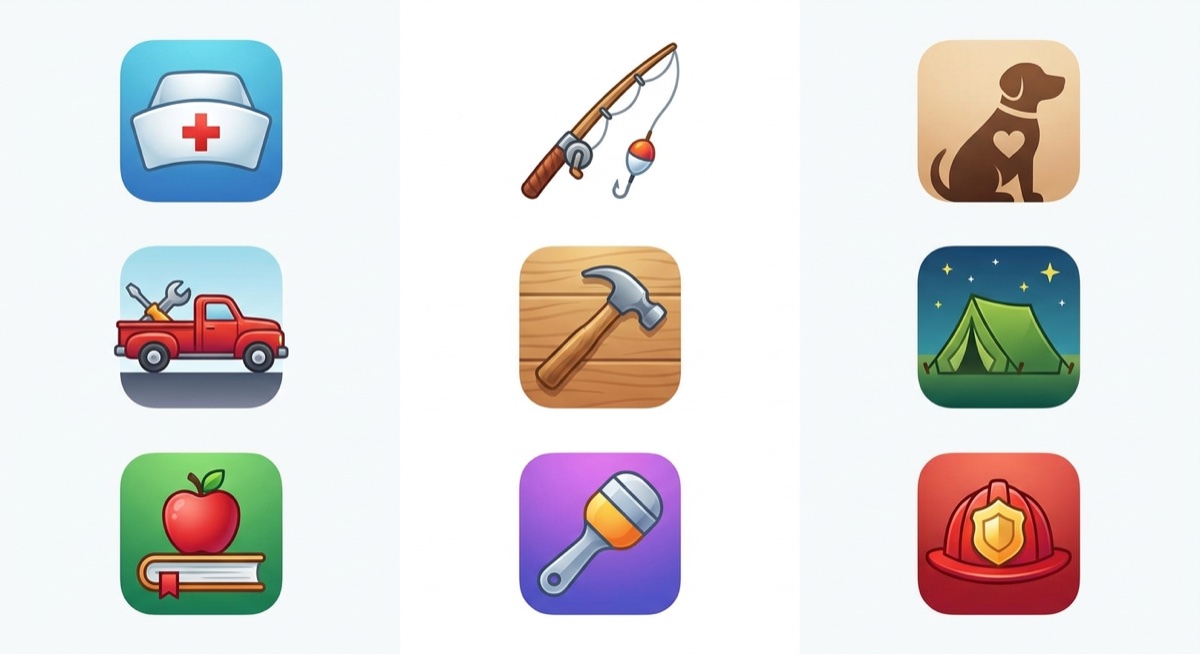
Occupation Niches
Nurses, CNAs, EMTs, firefighters, police officers, teachers, school bus drivers, truck drivers, electricians, plumbers, welders, mechanics, carpenters, HVAC technicians, landscapers, farmers, ranchers, real estate agents, hairdressers, bartenders, chefs, veterinarians, pharmacists, dental hygienists
Hobby Niches
Fishing, hunting, camping, hiking, kayaking, golf, running, CrossFit, yoga, gardening, woodworking, knitting, crocheting, quilting, reading, gaming, photography, birdwatching, astronomy, beekeeping, homesteading, RV living, sailing, motorcycles
Identity Niches
Dog breeds (Labs, Golden Retrievers, German Shepherds, Bulldogs, Dachshunds), cat lovers, horse owners, chicken keepers, boy moms, girl dads, grandparents, veterans, military spouses, homeschool parents, only children, twins, specific faith communities
Category Store Opportunities
Hospital workers (nurses + CNAs + techs + admin), blue collar trades (electricians + plumbers + HVAC), outdoor enthusiasts (camping + hiking + fishing), pet owners (dogs + cats + horses), first responders (fire + police + EMT)

Real Student Examples: From Niche Choice to First Sales
Theory is helpful. Real results are better. Here’s how actual Skup students applied this framework:
Adam Schneider: $500K and Counting
Adam didn’t pick an obscure niche—he picked a proven one and executed relentlessly. By focusing on tested designs, consistent ad testing, and reinvesting profits into more tests, he’s generated over $500,000 in sales. His secret? “I stopped overthinking the niche and started testing. The data told me what worked.”
Sean Young: 1,000 Orders in His First Year
Sean recently crossed 1,000 orders and $50,000 in total sales. His approach: pick a niche he understood (even if he wasn’t personally passionate about it), research what was already selling, and create better versions of proven designs. “I treated it like a business from day one, not a hobby.”
Dale Sercu: Nearly $12,000 with Methodical Testing
Dale built his store by validating his niche on Etsy first. After seeing which designs got favorites and sales organically, he scaled those winners with Facebook ads. This low-risk approach let him validate before investing heavily in advertising.
Kristen Brown: $418 Record Day
Kristen found success by niching down within a broader category. Instead of targeting all pet owners, she focused on specific breed communities. The tighter focus meant her messaging resonated more strongly, and her ad costs dropped as conversion rates climbed.
Category Stores: The Advanced Approach
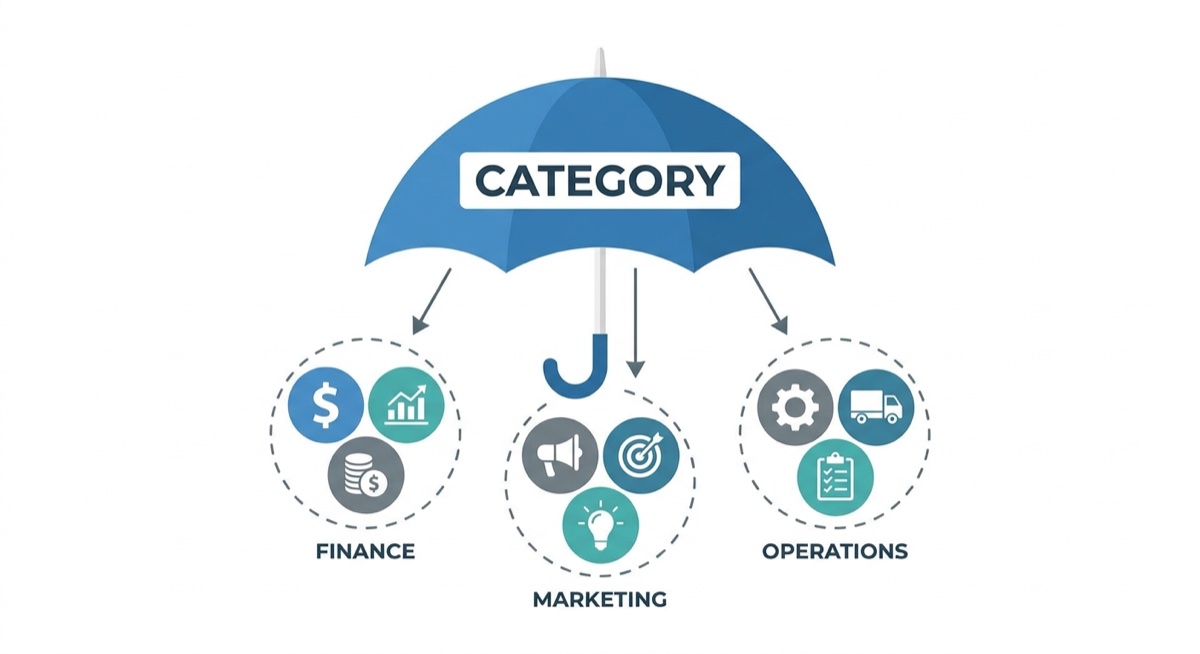
Once you understand single niches, consider the category store model—grouping related niches under one store.
Why Category Stores Work
Instead of “Nurse Store,” you build “Healthcare Heroes Store” targeting:
- Registered nurses
- Licensed practical nurses
- Certified nursing assistants
- Respiratory therapists
- Medical technicians
- Phlebotomists
- Healthcare administrators
Benefits:
- Larger audience: 15+ million potential customers instead of 4 million
- Cross-selling: A nurse browsing might buy a gift for their CNA friend
- Ad efficiency: Facebook’s broad targeting finds buyers across related roles
- Design leverage: Some designs work across multiple sub-niches
Category Store Examples
- Blue Collar Trades: Electricians, plumbers, welders, carpenters, HVAC, mechanics
- First Responders: Fire, police, EMT, 911 dispatchers
- Outdoor Life: Camping, hiking, fishing, hunting, kayaking
- Pet Parents: Dogs (by breed), cats, horses, chickens
- Educators: Teachers, principals, school counselors, librarians, bus drivers
When to Use Category vs. Single Niche
Start with a single niche if you’re brand new—it’s simpler to focus. Once you’ve proven you can get sales, expand to related niches under a category umbrella. The category approach requires more products and testing capacity but scales better long-term.

Frequently Asked Questions
How long should I test a niche before giving up?
Give any niche at least 10-20 design tests with Facebook ads before concluding it doesn’t work. One or two failed tests prove nothing—the design might be wrong, not the niche. If you’ve tested 20+ designs with proper ad setup and see no traction, consider pivoting.
Can I run multiple niches at once?
Technically yes, but we don’t recommend it for beginners. Focus on one niche until you’re profitable, then expand. Splitting attention between niches slows learning and dilutes effort.
What if my niche is seasonal?
Seasonal niches (like hunting or Christmas-specific) can work but require planning. Either accept seasonal revenue fluctuations or pair with an evergreen niche to maintain year-round income. Many successful sellers combine evergreen cores with seasonal spikes.
Should I pick a niche I’m personally interested in?
Interest helps with motivation and understanding your audience—but never pick a niche ONLY because you like it. Validate with data first. Some of our most successful students sell to niches they had zero personal connection to before starting.
How do I know if a niche is too saturated?
Saturation matters less than you think. Even “saturated” niches like nurses or dogs generate millions in sales because the markets are enormous. The question isn’t “is there competition?”—it’s “can I create designs that stand out?” Fresh angles always exist.
What’s the minimum audience size for Facebook ads?
We recommend niches with at least 500,000 people for sustainable Facebook advertising. Smaller niches can work but require tighter profit margins and less room for testing. Larger audiences (5M+) give Facebook more optimization room.
Can I combine two niches?
Yes—and it’s often powerful. “Nurses who love dogs” or “Teachers who garden” creates hyper-specific targeting. The combined audience is smaller, but the identity connection is stronger. Make sure the overlap is large enough (at least 500K potential customers).
What if I pick wrong?
Then you pivot. Seriously—no one knows who you are yet. You can rebrand, start a new store, or expand your current store into a category. The only real failure is quitting before you find what works.
The Bottom Line
Niche selection isn’t about finding the “perfect” niche—because perfection doesn’t exist. It’s about finding a niche with validated demand, strong identity connection, and enough size to sustain your growth.
Use the 5-factor framework. Do the research. Validate before investing heavily. And remember: execution beats selection every time. A “good enough” niche with excellent execution will outperform a “perfect” niche with mediocre follow-through.
The students winning in print on demand aren’t the ones who found secret niches no one else discovered. They’re the ones who picked reasonable niches, tested relentlessly, and kept going until they found winning designs.
Stop overthinking. Start testing. The data will tell you what works.
Ready to find your winning niche and designs? The Skup Incubator provides step-by-step training, weekly coaching calls, and a community of sellers doing exactly what you’re trying to do. Our students have generated over $50 million in collective sales—and the methodology works for complete beginners through experienced sellers scaling to six figures.