How to Write Product Descriptions That Convert for Print on Demand (2026)
Why Product Descriptions Matter for Print on Demand Success
Most print on demand sellers obsess over designs while completely ignoring their product descriptions. Big mistake. Your description is often the final push that turns a browser into a buyer—or sends them clicking away to a competitor.
The truth? A mediocre design with a killer description will outsell a great design with a lazy “comfortable cotton t-shirt” copy every single time.
This guide breaks down exactly how to write product descriptions that convert for your POD store in 2026.

The Anatomy of a High-Converting POD Product Description
Every winning product description has three core elements:
1. The Hook (First Line)
Your opening line needs to grab attention immediately. Don’t start with boring specs. Start with emotion, identity, or a problem you’re solving.
Bad: “This is a comfortable unisex t-shirt made from cotton.”
Good: “For the coffee addict who needs everyone to know—before they’ve had their morning cup.”
2. The Story (Middle Section)
This is where you connect the product to the buyer’s identity. Who is this product for? What does it say about them? How will they feel wearing it?
3. The Details (End)
Now you add the practical stuff: sizing, material, care instructions. But even here, make it scannable and benefit-focused.
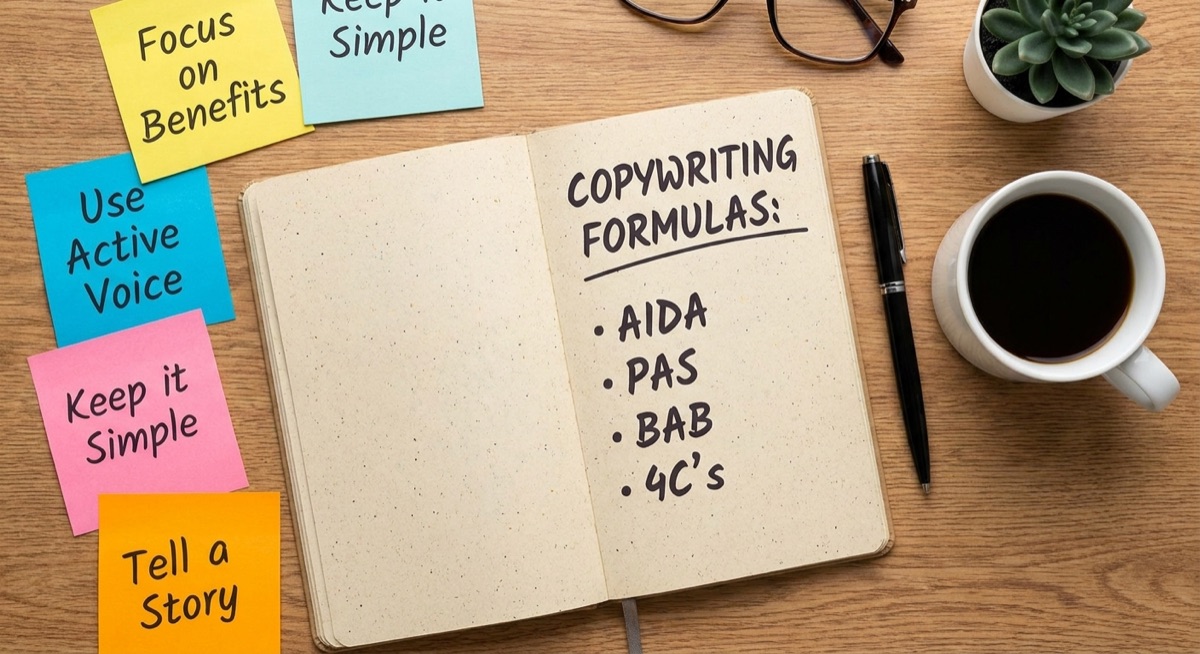
5 Formulas That Work for POD Descriptions
You don’t need to reinvent the wheel. These proven formulas work across niches:
Formula 1: Identity + Emotion
“Made for [specific person] who [specific trait or belief]. Wear it when you want to [feeling or action].”
Formula 2: Problem-Agitate-Solution
“Tired of [common frustration]? This [product] lets you [desired outcome] without [the hassle].”
Formula 3: The Gift Angle
“Looking for the perfect gift for [specific person]? This [product] says ‘[message]’ better than words ever could.”
Formula 4: Conversation Starter
“Warning: Wearing this [product] may result in strangers [positive interaction]. Perfect for [specific person] who loves [trait].”
Formula 5: Before/After
“Before: [current state]. After wearing this: [transformed state]. Join [number or community] who already made the switch.”
Real Examples That Convert
Let’s look at how these formulas work in practice:
Niche: Dog Lovers
“For the person whose dog is the real boss of the household—and proud of it. This shirt is your public declaration that yes, your schedule revolves around walkies, and no, you wouldn’t have it any other way. Soft enough to double as pajamas when you’re up at 3am because someone heard a suspicious leaf outside.”
Niche: Fitness
“5am alarm. Cold gym floor. That voice in your head saying ‘just one more set.’ This shirt is for the ones who show up anyway. Moisture-wicking fabric that keeps up with your hardest sessions. Because your workout deserves better than a free conference tee.”
Common Mistakes That Kill Conversions
Avoid these description killers:
- Generic specs only: “100% cotton, unisex fit” tells me nothing about why I should buy THIS shirt
- No target audience: Writing for “everyone” means connecting with no one
- Wall of text: Break it up with line breaks, bullets, and bold text
- Missing size guidance: “Order one size up for a looser fit” reduces returns and increases confidence
- Forgetting SEO: Include relevant keywords naturally—people search “funny dad fishing shirt” not “humorous male angler apparel”
The 10-Minute Description Writing Process
Here’s how to write compelling descriptions fast:
- Minutes 1-2: Define your buyer. Who specifically is this for?
- Minutes 3-4: Write three words that describe how they’ll feel wearing it
- Minutes 5-7: Draft using one of the five formulas above
- Minutes 8-9: Add practical details (sizing, material, care)
- Minute 10: Read it aloud—if it sounds robotic, humanize it
Ready to Level Up Your POD Business?
Product descriptions are just one piece of the puzzle. At Skup, we teach the complete system—from finding winning designs to running profitable ads to scaling past your first $10K month.
Students like Adam Schneider have used these strategies to hit $500K in total sales. The difference between struggling sellers and successful ones often comes down to mastering the details—like writing descriptions that actually convert.
Start treating your product pages like the sales tools they are, and watch your conversion rates climb.