10 Best Side Hustle Ideas to Start in 2026
The most useful answer to “what are the best side hustle ideas?” isn't the one with the highest headline income. It's the one that still works when you have limited time, limited confidence, and a full-time job or family responsibilities. That matters because 58.6% of side hustlers earn less than $250 per month, while only 2% work more than 40 hours weekly, according to GovFacts' overview of the side-hustle economy.
A better path is to choose a model that builds something reusable. You might begin with a service, learn what customers repeatedly need, and turn that knowledge into products, an audience, or an eCommerce brand. Print-on-demand, or POD, is especially flexible because you can create and sell products without buying inventory upfront.
This roundup compares ten connected opportunities by time to first earnings, startup cost, difficulty, monthly income potential, flexibility, and scalability. Treat every income range below as a qualitative planning category, not a promise. Your first goal is useful evidence, such as conversations, completed work, a sale, or repeat demand.
If you need reliable help with execution while building a business, Hire Latam talent can also be a practical way to extend your capacity without immediately taking on a full-time employee.
Table of Contents
- 1. Print-On-Demand Apparel Business
- 2. Niche-Focused Digital Design Services
- 3. Affiliate Marketing and Content Monetization
- 4. Dropshipping and Product Research Consulting
- 5. Email Marketing and List-Building Services
- 6. Facebook and Meta Advertising Management
- 7. AI-Powered Design and Mockup Services
- 8. Niche Community Building and Audience Development
- 9. Shopify Store Setup, Optimization and CRO
- 10. Niche-Specific Training and Coaching Programs
- Top 10 Side Hustles: Quick Comparison
- Turn One Strong Idea Into Your Next Move
1. Print-On-Demand Apparel Business
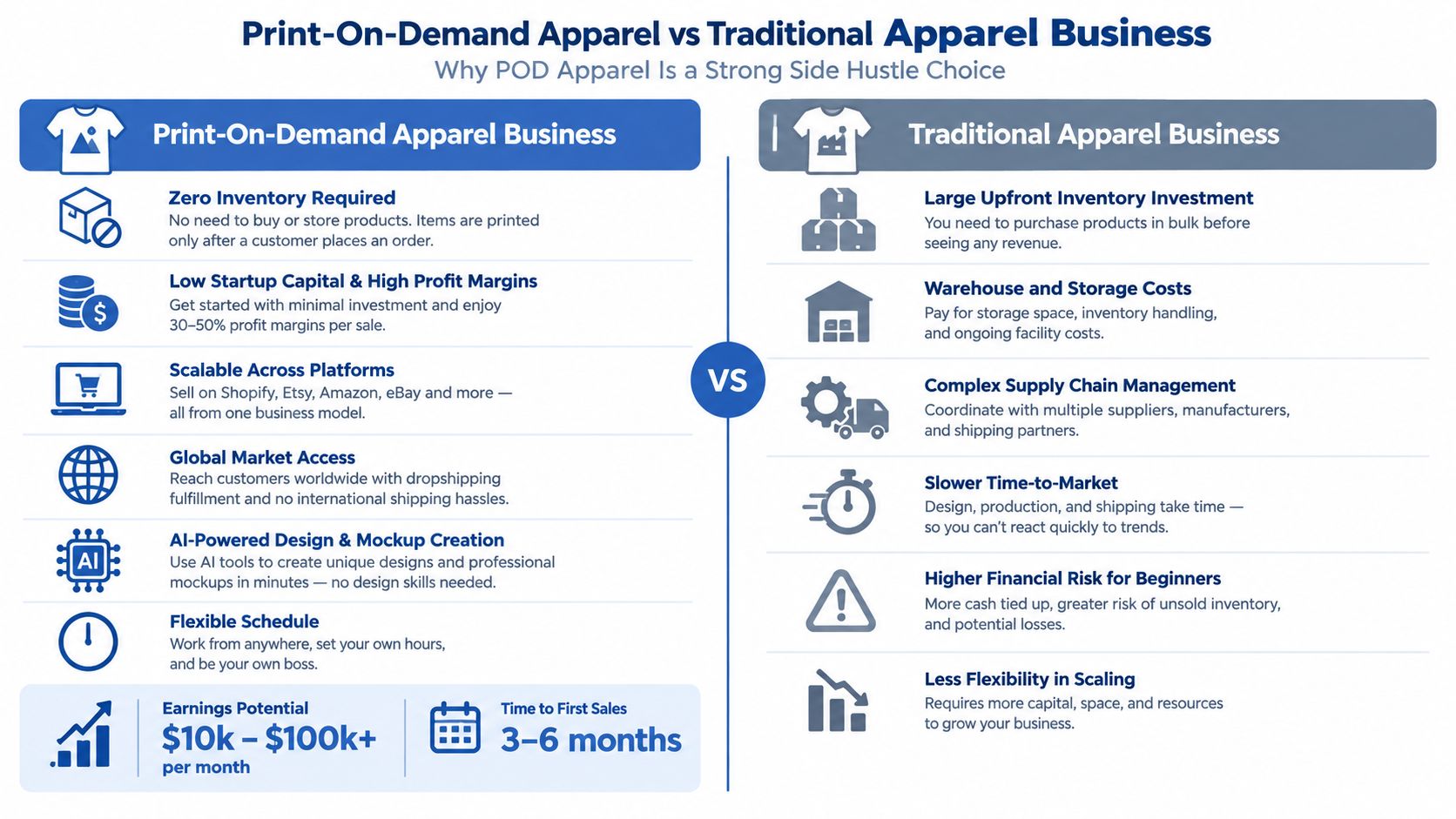
POD apparel is one of the most accessible ways to build an eCommerce asset. You create designs for a defined audience, publish products through an online store, and let a fulfillment partner produce and ship orders after customers buy. That removes the need to store boxes at home, while still giving you room to build a recognizable brand and an owned customer list.
Global retail e-commerce sales rose from approximately $1.34 trillion in 2014 to a projected $8.03 trillion in 2027, according to Capital One Shopping's online shopping statistics. The market's expansion doesn't guarantee that a particular shirt will sell, but it creates a durable environment for testing focused products.
Decision snapshot
- Time to earnings: Potentially short after publishing and testing, but demand validation takes patience.
- Startup cost: Low compared with inventory-based apparel, because production happens after purchase.
- Difficulty: Moderate. The hard parts are niche selection, design quality, offer creation, advertising, and margin control.
- Monthly income potential: From an early validation project to a scalable brand, depending on product-market fit and execution.
- Ideal user: A creative beginner, parent, or employee who wants flexible work and a product-based growth path.
A practical launch sequence is simple. First, choose one narrow niche, such as fitness communities, trades professionals, hobbyists, or identity-driven groups. Second, research products that already attract attention, identify gaps, and create distinct variations with AvatarIQ for designs and professional mockups. Third, test a small catalog, track customer acquisition cost, return on ad spend, lifetime value, and profit margin, then expand what earns evidence.
The Apparel Cloning approach used by Skup follows that sequence without copying protected brands or designs. It focuses on identifying proven demand, finding underserved angles, and building original products. For U.S. sellers, search the USPTO's goods and services classification guidance, especially International Class 25 for clothing, before committing to a brand phrase or apparel line.
2. Niche-Focused Digital Design Services
Specialized design services can produce income sooner than a product business because clients pay for a result, not for your store to mature. The stronger play is to pick a narrow buyer, then build skills and assets that can later support POD, templates, and licensing. If you already understand a trade, hobby, or customer segment, that focus matters more than offering every kind of design to everyone.

A generalist often gets compared on price. A niche designer gets hired for relevance. Electricians need truck graphics, yard signs, quote PDFs, and branded apparel. Fitness studios need class promos, merch graphics, and seasonal campaigns. Pet brands need packaging, social assets, and repeat product variations. The work becomes easier to sell when the buyer can see that you already understand their audience, their visual references, and the files they use.
Here is the decision view for this path.
- Time to earnings: Often faster than product businesses if you have samples and can contact prospects directly.
- Startup cost: Low. The main investment is time, portfolio development, and client acquisition.
- Difficulty: Moderate. Revision control, client communication, and scope discipline matter as much as design skill.
- Monthly income potential: Variable, from a few side projects to a stable roster of repeat clients.
- Ideal user: Someone with visual skill, niche familiarity, or direct access to a community that already buys creative work.
Launch it in three moves. First, choose one niche where you have credibility, interest, or warm contacts. Second, create portfolio pieces for that niche even if no one commissioned them yet. Show applied work, such as a shirt graphic, an event flyer, a storefront sign, and a social post set. Third, sell fixed packages instead of vague hourly help. Clear offers reduce friction and make revisions easier to control.
Use AvatarIQ to speed up concept variations and mockups, then keep your real value in taste, positioning, and dependable delivery. Early jobs can come from Fiverr, Upwork, local businesses, or community groups, but the better long-term move is turning repeat requests into standardized packages and reusable templates. If you want to strengthen fundamentals first, review how to become a graphic designer. This side hustle works best when client cash flow funds an asset library you can keep using.
3. Affiliate Marketing and Content Monetization
If a creator says, “I may earn a commission if you buy through this link,” that is not a throwaway line. It is part of the job. Affiliate marketing works when recommendations are accurate, useful, and tied to content that helps people make a decision, not when links are scattered across posts and hoped for the best.
This side hustle builds an asset that can feed several others. A focused audience around eCommerce, POD, or creator tools can support affiliate income, sponsored placements, digital products, consulting, or your own store later. That is why this path fits the bigger picture so well. You are not only chasing commissions. You are building distribution, trust, and a list you control.
Decision snapshot
- Time to earnings: Usually slower because trust, search visibility, and repeat attention build over time.
- Startup cost: Low, though hosting, production tools, and email software can add ongoing costs.
- Difficulty: Moderate to high. Good publishing is not enough by itself. Distribution, product judgment, and consistency matter.
- Monthly income potential: Highly variable, from early commissions to a broader media business.
- Ideal user: A consistent communicator who likes teaching, reviewing, comparing, or documenting a niche over time.
Start with one narrow subject you can cover for a long time without forcing it. Then publish content around real questions buyers ask, such as which tool fits a beginner, what mistakes to avoid, or where margins get squeezed. Build an email list from day one. Platform reach can disappear overnight, but your list remains a direct channel.
Keep the monetization standards high. The FTC says endorsements must be truthful, not misleading, and clearly disclose material relationships such as payment, free products, employment, or family ties under the FTC endorsement guidance. In practice, promote products you have used or can evaluate with integrity.
A workable system is simple. Publish one strong piece each week, repurpose it into shorter posts, and send one email that answers a specific problem. Track clicks, subscriber quality, repeat readers, and the questions people keep asking. Those signals often show the next revenue path before commissions do.
4. Dropshipping and Product Research Consulting
Good product research is a service on its own. Stores do not just need product ideas. They need a sharper read on demand, positioning, likely objections, margin pressure, and fulfillment risk before they spend on traffic or inventory commitments.
That makes this a practical side hustle for operators who already review niches the way an owner would. If you run POD campaigns, test offers, or study customer feedback, you already have part of the skill set. The opportunity is to package that operating judgment into something a store can buy: a niche review, a product shortlist, a competitor teardown, or a call that helps a founder choose what to test first.
Decision snapshot
- Time to earnings: Often relatively fast if you can show a clear method and reach active store owners.
- Startup cost: Low, mainly your research time and basic business setup.
- Difficulty: High. Weak recommendations waste a client's budget, so judgment and evidence matter.
- Monthly income potential: Variable, with better consistency once you standardize reports and offers.
- Ideal user: An experienced seller or analytical operator who prefers research, validation, and strategy work over fulfillment.
Start small and make the output useful. Run one paid session around a specific decision, such as which niche to enter, which product angles deserve testing, or where a catalog has weak differentiation. Ask about audience, pricing limits, traffic sources, creative assets, and shipping constraints. Then deliver a tight document with findings, risks, test priorities, and a direct recommendation.
After a few projects, turn your process into named offers. For example, sell a product viability review, a competitor positioning report, and a pre-launch testing checklist. That structure also connects well with POD and adjacent services. Research can lead into creative direction, store setup, ad testing, or retention work.
Keep the promise realistic. Research improves the quality of a test and cuts avoidable mistakes. It does not replace execution, creative strength, or customer response.
5. Email Marketing and List-Building Services
A good email program gives a store something rented channels cannot. Repeat access to interested buyers, clear post-purchase communication, and a system for bringing people back without paying for every click again.
That makes this side hustle practical for operators who can write, structure offers, and spot weak customer journeys.
Instead of selling "email marketing" as a broad service, sell outcomes tied to specific points in the funnel. Start with list growth and first-purchase conversion, then expand into retention. For a POD brand, that usually means fixing the signup offer, tightening the welcome sequence, improving abandoned-cart emails, and adding post-purchase education that reduces hesitation and supports repeat orders.
The work has range, so the decision factors matter:
- Time to earnings: Often relatively quick when you can show a clear audit and practical fixes.
- Startup cost: Low to moderate, depending on software access and portfolio development.
- Difficulty: Moderate. Strategy, copy, segmentation, deliverability, and testing all matter.
- Monthly income potential: From project-based work to recurring client retainers.
- Ideal user: A strong writer or marketer who likes systems and measurable customer journeys.
A simple launch path works well. First, audit one store and identify a small set of missed revenue opportunities. Second, rewrite or build one flow, usually welcome or abandoned cart, so the client sees execution instead of advice alone. Third, turn that result into a tighter offer, such as list-growth setup, flow optimization, or ongoing campaign management.
Specialize early. Pick one platform, such as Klaviyo, ActiveCampaign, or ConvertKit, and learn how forms, segments, product feeds, and integrations affect performance across the full customer journey. Reusable templates help, but the message still needs to match the product, price point, and buyer intent.
For implementation ideas, use this guide to email list building as a relevant reference. Keep claims measured. Email can drive revenue, but results still depend on traffic quality, offer strength, deliverability, pricing, and fulfillment.
6. Facebook and Meta Advertising Management
Meta ad management suits operators who are comfortable making decisions with incomplete information. Results can swing because of creative fatigue, attribution gaps, seasonality, or store-side issues that have nothing to do with the campaign setup. That makes this a strong side hustle for someone who can test methodically, explain trade-offs clearly, and stay calm when a winning ad starts slipping.
For POD brands and adjacent eCommerce businesses, the value is not pushing buttons in Ads Manager. It is connecting audience research, hooks, offers, product pages, and fulfillment economics into one acquisition system. If a shirt gets clicks but low conversion, the problem may be the design, price, shipping expectations, or the landing page. Good media buyers catch that early and say so.
Here is the practical call before you start taking clients:
- Time to earnings: Moderate. Store owners usually want to see sound judgment before they share account access or budget responsibility.
- Startup cost: Moderate, mostly your time spent learning the platform, reviewing accounts, and building reporting habits.
- Difficulty: High. Creative testing, attribution limits, margin pressure, and frequent platform changes all affect performance.
- Monthly income potential: Variable, from freelance account support to a narrow client roster or a specialized agency path.
- Ideal user: A data-minded marketer who can spot store-level problems, not just ad-level metrics.
The fastest way to build credibility is to manage a small number of suitable accounts and document your thinking. Record the hypothesis behind each test, what changed, and what happened to acquisition cost, return on ad spend, lifetime value, contribution margin, and refunds. Cheap traffic is not useful if the business loses money after fulfillment and support costs.
Set up repeatable operating rules. Define how you launch campaigns, rotate creatives, raise or cut budgets, and report each week. Use Facebook ads for beginners as a starting reference, then improve by studying real accounts under real constraints.
Practical rule: Scale only when the ad, product page, margins, and customer quality all support the move.
7. AI-Powered Design and Mockup Services
AI design and mockup work is one of the fastest adjacent services to build around POD because it helps sellers test ideas without waiting on a full custom shoot. The actual product is not the tool. It is a useful creative package that a store owner can publish, test, and revise quickly.
With AvatarIQ, you can turn one concept into several assets: design directions, product mockups, and photoshoot-style visuals for listings or ads. That speed matters, but judgment matters more. A mockup still has to fit the brand, the audience, and the garment. If the typography is weak, the message is vague, or the file setup is sloppy, the client still has extra work to do.
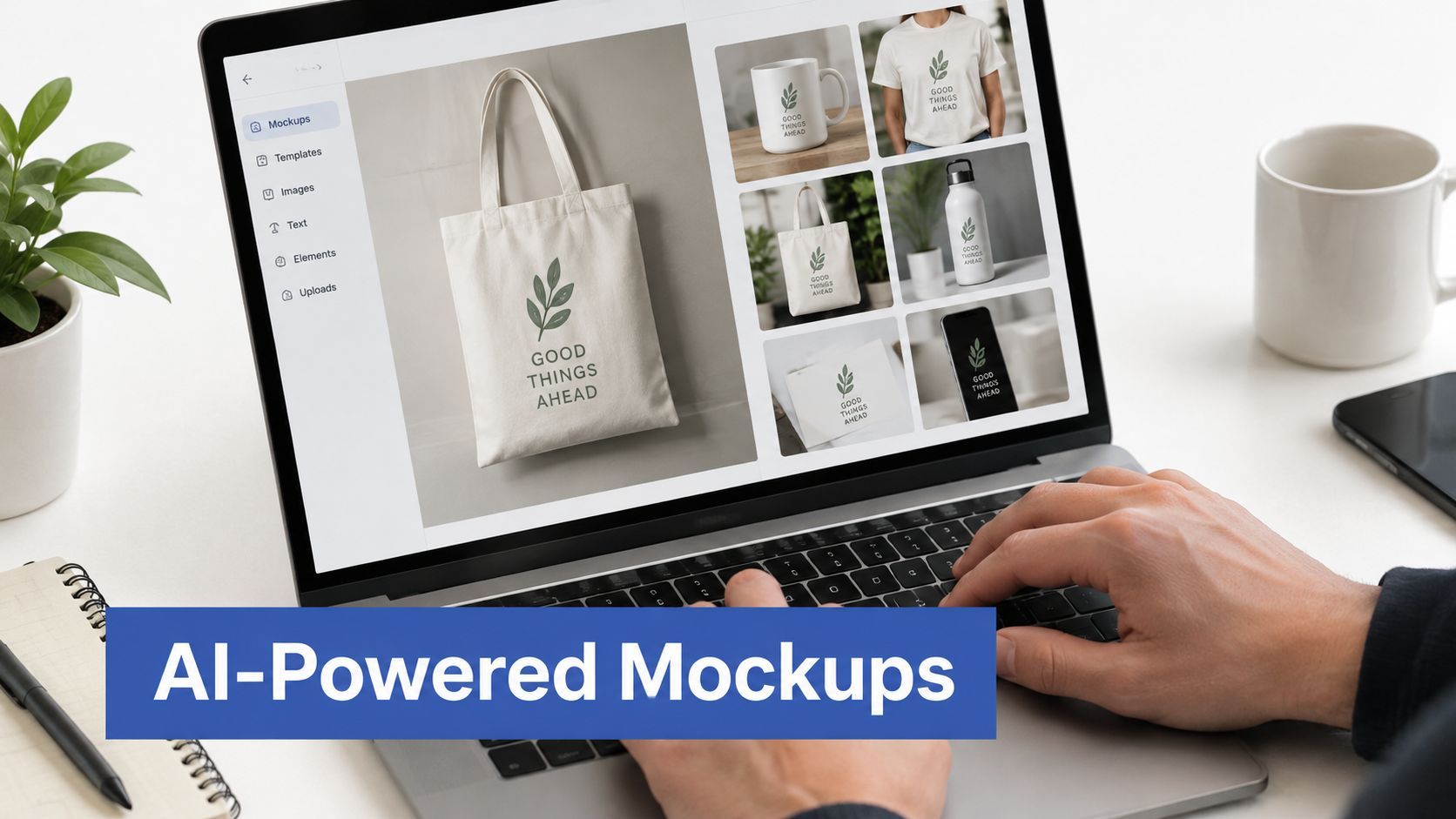
This side hustle works best for operators who already understand how products get sold online.
Here is the practical filter before you offer it:
- Time to earnings: Potentially fast if you show a focused portfolio and contact apparel operators with relevant samples.
- Startup cost: Low to moderate, mostly software access and time spent building a workflow you can repeat.
- Difficulty: Moderate. Fast generation helps, but taste, print-readiness, and consistency are what clients pay for.
- Monthly income potential: Variable, from one-off asset batches to recurring creative support.
- Ideal user: A visually minded operator who wants to support POD brands and related eCommerce sellers without taking over full store management.
Package the service around outcomes, not novelty. I would offer three clear options: a basic mockup set for a product launch, a variation pack for testing several angles, and a recurring monthly package for brands that need ongoing creative. That structure makes upsells easier and connects naturally to other services such as POD product testing, listing optimization, and ad creative support.
Keep production tight. Use a checklist for concept intake, audience notes, design review, mockup creation, export settings, and approval. Ask who the buyer is before you generate anything. For tool context, review best AI design tools, then present AvatarIQ as the center of your own workflow.
8. Niche Community Building and Audience Development
A strong niche community can become the asset that ties several side hustles together. Instead of finding a new audience every time you launch something, you build trust once and use it across sponsorships, affiliate offers, paid memberships, group coaching, digital products, or a small service business.
The catch is simple. Community income usually comes later.
People stay for relevance, consistency, and useful interaction. That means moderation, prompts, events, and clear standards from day one. Communities built around a shared profession, hobby, identity, or business problem tend to hold attention better because members already have a reason to talk, ask questions, and return.
Here is the practical screen I would use before starting one:
- Time to earnings: Usually slow at first because trust and participation need to exist before paid offers land well.
- Startup cost: Low to moderate, depending on the platform, content format, and whether you run live sessions.
- Difficulty: High, mainly because consistency and moderation matter more than the software.
- Monthly income potential: Variable, with multiple revenue paths once engagement becomes reliable.
- Ideal user: Someone who likes leading discussions, teaching, curating, and connecting people with each other.
Launch it in phases. First, define the shared identity and the recurring problem the group will help solve. Next, seed discussion with useful posts, specific questions, and a few early members who will contribute substance instead of noise. Then test one paid layer that fits the behavior you already see, such as workshops, expert Q&A sessions, curated resources, or early access.
Platform choice shapes the business model. Skool, Circle, and Mighty Networks each support different mixes of discussion, events, courses, and payments, so pick the one that matches how members want to participate. Keep promotions selective and clearly disclosed. If an affiliate offer or sponsor does not help members solve a real problem, it weakens trust.
This side hustle also connects well to POD. A community can help you validate phrases, product ideas, and design angles before building out a catalog. If members respond well, apparel, templates, coaching, or content products become natural extensions rather than disconnected offers.
9. Shopify Store Setup, Optimization and CRO
A good Shopify operator can turn messy store ideas into a cleaner buying path that owners can measure and improve. That makes this side hustle useful for brands that have products and traffic, but weak structure, confusing pages, or a checkout flow that leaks sales.
Store setup work sits between design, operations, and merchandising. The job includes theme configuration, product organization, collection logic, navigation, shipping and fulfillment details, app selection, analytics setup, and clear purchase expectations. Strong operators also review what happens after the order, because customer communication, tracking, and returns affect repeat purchase and support load.
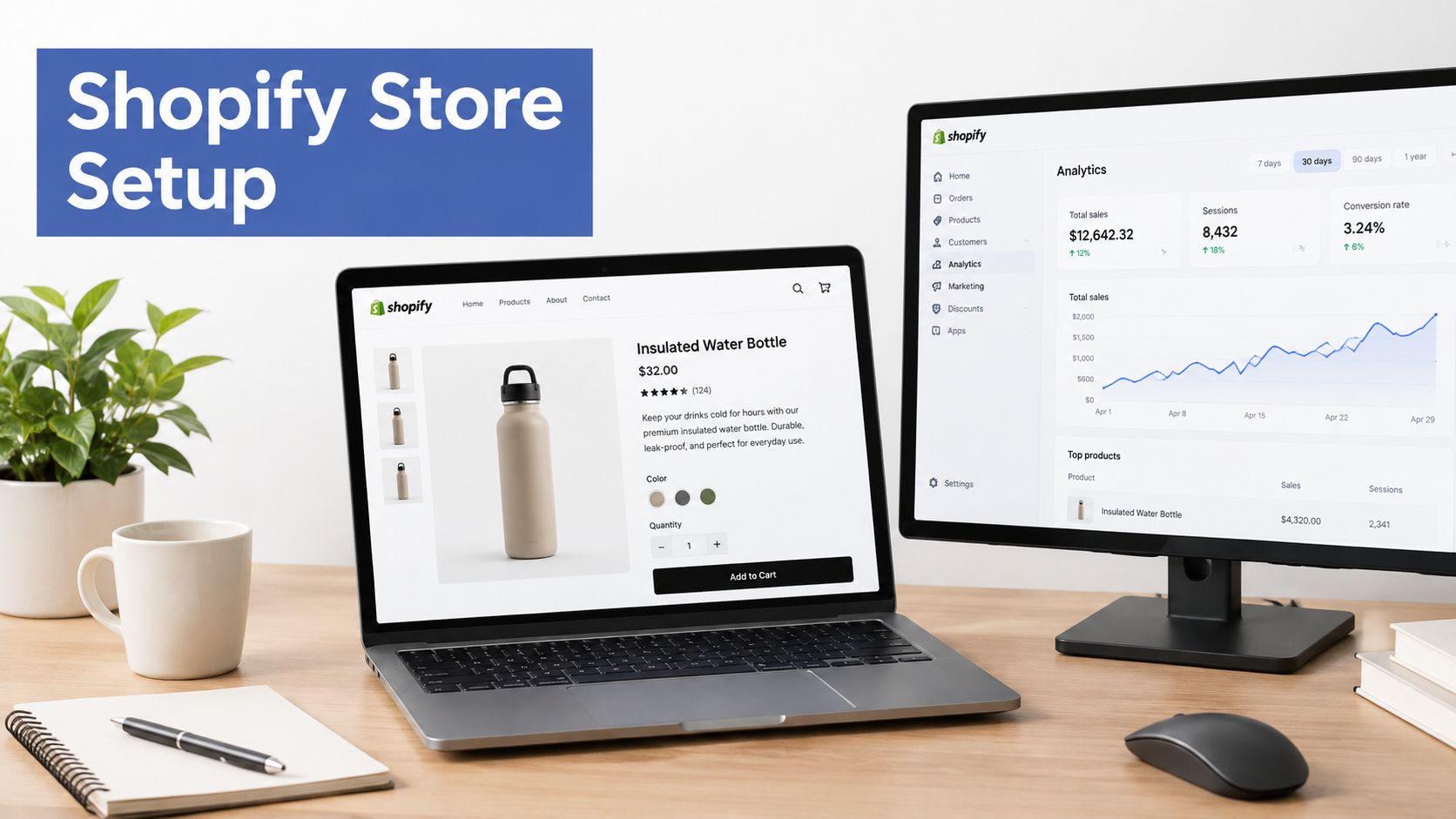
CRO makes the service more durable. Instead of guessing, review product pages, mobile layout, offer clarity, trust signals, shipping language, checkout steps, and post-purchase flow. Then rank changes by likely impact and ease of implementation. More apps do not automatically improve conversion. In many stores, they add clutter, slow pages, and create reporting noise.
The commercial angle matters too. Owners usually buy one of three outcomes: a store launch, a diagnosis of why sales are stalling, or ongoing testing support. That creates a practical path to earnings. Setup projects can bring in earlier revenue than content-led side hustles, while monthly retainers depend on proving that your changes were sound and that you can explain priorities clearly.
POD-adjacent stores are a strong fit because the workflow is more than page design. Product setup, supplier connections, order routing, customer emails, and return handling all affect margin and customer experience. I would standardize the parts that repeat, then customize by niche and catalog size. Before-and-after comparisons help, but only if you record a baseline and show exactly what changed.
For a practical implementation reference, review Cleffex Digital's Shopify setup guide. The best positioning is simple. Improve the store, explain the trade-offs, and tie every recommendation to how the business sells.
10. Niche-Specific Training and Coaching Programs
Training is the side hustle that turns your operating method into an asset. If you already know how to launch a dog-lover apparel brand, clean up email operations for a POD store, or run a disciplined product-testing process, you can package that skill into workshops, cohort programs, templates, and coaching instead of selling only one-off execution.
The market is large, but the earning curve is uneven. G2's 2025 creator-economy summary puts the global creator economy at more than $250 billion and notes that only about 4% of creators earn more than $100,000 annually. Treat that as a reminder to build this like a business. Start narrow, prove students can get a result, then expand the offer.
A useful way to judge this option is by how much proof you already have.
If you have repeatable wins, time to earnings can be reasonable with a paid workshop or short pilot. If your process still lives mostly in your head, expect a slower start while you document examples, tighten positioning, and learn where students get stuck. Startup cost usually stays low to moderate, but it rises once you add video production, hosting, a private community, live support, or review calls. Difficulty is high because people are not paying for information alone. They are paying for clarity, structure, feedback, and accountability. Income can range from a focused digital product to a broader coaching business. The best fit is a practitioner who can explain decisions clearly and show what good execution looks like.
I would launch this in three steps. First, interview potential students and identify one narrow outcome they will pay to reach. Second, run a small paid session before recording a large course, then watch where questions repeat. Third, build a simple value ladder: free educational content, one focused program, then optional coaching for people who want more support.
Skup's Apparel Cloning System is built around a specific POD operating method, and the Skup Incubator adds a higher-touch coaching format for entrepreneurs who want more guidance as they scale. That model works because it ties the teaching to a concrete workflow. Keep the same standard in your own program. Use real examples, show the work involved, and make sure testimonials, endorsements, and relationship disclosures reflect actual experience and FTC requirements.
For U.S. sellers, treat recordkeeping as part of the job from day one. The IRS guidance for gig-economy workers states that business income must be reported even if a platform does not send Form 1099-K. Track payouts, refunds, fees, production charges, ad spend, and other expenses from the first sale.
Top 10 Side Hustles: Quick Comparison
| Item | Implementation Complexity 🔄 | Resource Requirements ⚡ | Expected Outcomes 📊 | Ideal Use Cases 💡 | Key Advantages ⭐ |
|---|---|---|---|---|---|
| Print-On-Demand Apparel Business | Moderate 🔄, design, marketing, vendor selection | Low–Moderate ⚡, minimal startup capital; ad spend to scale | 30–50% margins; $10k–$100k+/mo possible 📊 | Side hustles, niche apparel brands, solopreneurs | Zero inventory; scalable across platforms; accessible to beginners ⭐ |
| Niche-Focused Digital Design Services | Low–Moderate 🔄, requires design skill or training | Low ⚡, computer, design tools, portfolio | $2k–$10k/mo typical; higher if productized 📊 | Designers serving fitness, pets, trades, hobbies | Premium pricing; strong referrals; recurring retainers ⭐ |
| Affiliate Marketing & Content Monetization | Moderate–High 🔄, consistent content + SEO & platform skills | Low ⚡, hosting, recording gear; high time investment | Slow start; $0–$2k first months; $2k–$50k+/mo long term 📊 | Bloggers, YouTubers, podcasters building audiences | Passive income; multiple monetization streams; brand authority ⭐ |
| Dropshipping & Product Research Consulting | Moderate–High 🔄, needs proven methods and case studies | Low–Moderate ⚡, research tools, sample stores, testimonials | $5k–$50k+/mo with productized services 📊 | Entrepreneurs validating niches; POD/dropship owners | High hourly/project rates; productizable reports; authority ⭐ |
| Email Marketing & List-Building Services | Moderate 🔄, copywriting + automation expertise | Low ⚡, email platform subscriptions; copy/time | $3k–$20k+/mo; immediate ROI improvements common 📊 | eCommerce and POD brands needing retention & LTV growth | Highest ROI channel; recurring retainers; measurable impact ⭐ |
| Facebook & Meta Advertising Management | High 🔄, continuous testing, scaling, platform changes | Moderate–High ⚡, ad budgets, analytics, creative assets | $5k–$50k+/mo managing multiple clients 📊 | eCommerce stores needing direct-response revenue | Direct ROI correlation; high demand; scalable services ⭐ |
| AI-Powered Design & Mockup Services | Low–Moderate 🔄, prompt engineering + tool mastery | Low ⚡, AvatarIQ/subscriptions, laptop, templates | $3k–$20k+/mo; fast turnaround (24–48h) 📊 | POD brands, non-designers needing rapid mockups | Rapid production; lower cost than traditional shoots; scalable ⭐ |
| Niche Community Building & Audience Development | High 🔄, moderation, engagement, culture management | Low–Moderate ⚡, platform fees, time, events | $2k–$30k+/mo at scale; long-term asset 📊 | Passionate niches (fitness, hobbies, identity) | Owned audience; multiple revenue streams; high engagement ⭐ |
| Shopify Store Setup, Optimization & CRO | Moderate–High 🔄, technical setup + CRO expertise | Moderate ⚡, Shopify account, apps, analytics tools | $3k–$30k+/mo combining projects & retainers 📊 | New eCommerce launches, POD stores, scaling brands | Measurable revenue uplift; repeatable frameworks; upsell opportunities ⭐ |
| Niche-Specific Training & Coaching Programs | High 🔄, curriculum creation, marketing, delivery | Moderate–High ⚡, recording tools, hosting platform, community | $5k–$100k+/mo at scale; high margins 📊 | Experts packaging validated outcomes for niche audiences | Scalable revenue; strong authority building; high margins ⭐ |
Turn One Strong Idea Into Your Next Move
The best side hustle ideas become easier to choose when you stop comparing fantasy outcomes and compare operating realities. If you need money quickly and already have a marketable skill, start with a service such as design, email, advertising, store setup, or product research. Services can create direct conversations with buyers and reveal problems people already pay to solve.
If you have more patience and want a scalable asset, choose POD, content, a community, digital products, or training. These models can take longer to validate, but they may build reusable designs, customer relationships, an email list, intellectual property, or a repeatable workflow. POD is particularly interesting because it combines creative work, online retail, niche research, and fulfillment without requiring you to purchase inventory before a customer orders.
Your available time should decide the operating model. If you have only 30 to 45 minutes on weekdays, choose work that can be paused and resumed, such as creating one design variation, writing one email, researching one niche, or recording one short educational piece. If your schedule is unpredictable, avoid a hustle that depends on being available for every customer message or delivery window.
Your first experiment should be deliberately small:
- Define one audience: Choose a specific group with a recognizable interest, identity, or problem.
- Create one offer: Make one service package, product concept, workshop, or content promise.
- Set a short validation window: Give yourself enough time to collect meaningful responses, but don't build endlessly before asking for a sale.
- Track evidence: Record conversations, orders, costs, revisions, refunds, repeat demand, and the time each task requires.
- Choose the next move: Keep, improve, or change direction based on customer behavior rather than excitement alone.
For aspiring POD sellers, Skup's Apparel Cloning System offers a focused way to learn product research, niche selection, original design development, and testing. AvatarIQ can accelerate design and mockup creation, while Skup Incubator support can become relevant when you're ready for more structured scaling guidance.
The opportunity in eCommerce is exciting because one small experiment can open several paths. A design service can reveal a product niche. A community can become a customer base. An email service can teach you retention. A POD store can become a catalog and a brand. You don't need to pursue all ten ideas. Choose the one that fits your life today and builds the asset you want tomorrow.
Skup offers practical education for building POD apparel businesses, along with AvatarIQ for design and mockup creation and Incubator support for entrepreneurs ready to scale. Visit Skup to explore the Apparel Cloning System and choose a focused next step for your eCommerce side hustle.