Best Print on Demand for Shopify: A 2026 Guide
You've installed your first Shopify POD app, opened the catalog, and now you're staring at dozens of T-shirts, mugs, hats, and hoodies wondering which provider deserves your first real customer order. That choice matters more than most beginners realize. The provider you select becomes the manufacturer, warehouse, packaging team, and shipping department behind your brand.
The best print on demand for Shopify isn't the app with the longest product list. It's the partner that matches your audience, product strategy, delivery promise, and stage of growth. This guide compares Printful, Printify, Gelato, Gooten, and SPOD, then maps each one to a specific Shopify seller profile so you can stop comparing features and choose with confidence.
Table of Contents
- Why the Right Print on Demand Partner Changes Everything
- The Eight Criteria That Predict POD Success
- Top Shopify POD Providers Compared Side by Side
- Best POD Provider for Every Type of Shopify Seller
- Connecting and QA Testing Your POD App in Shopify
- Busting the Biggest POD Myths Before You Start
- Your Next Steps to Build a Real Shopify Brand
Why the Right Print on Demand Partner Changes Everything
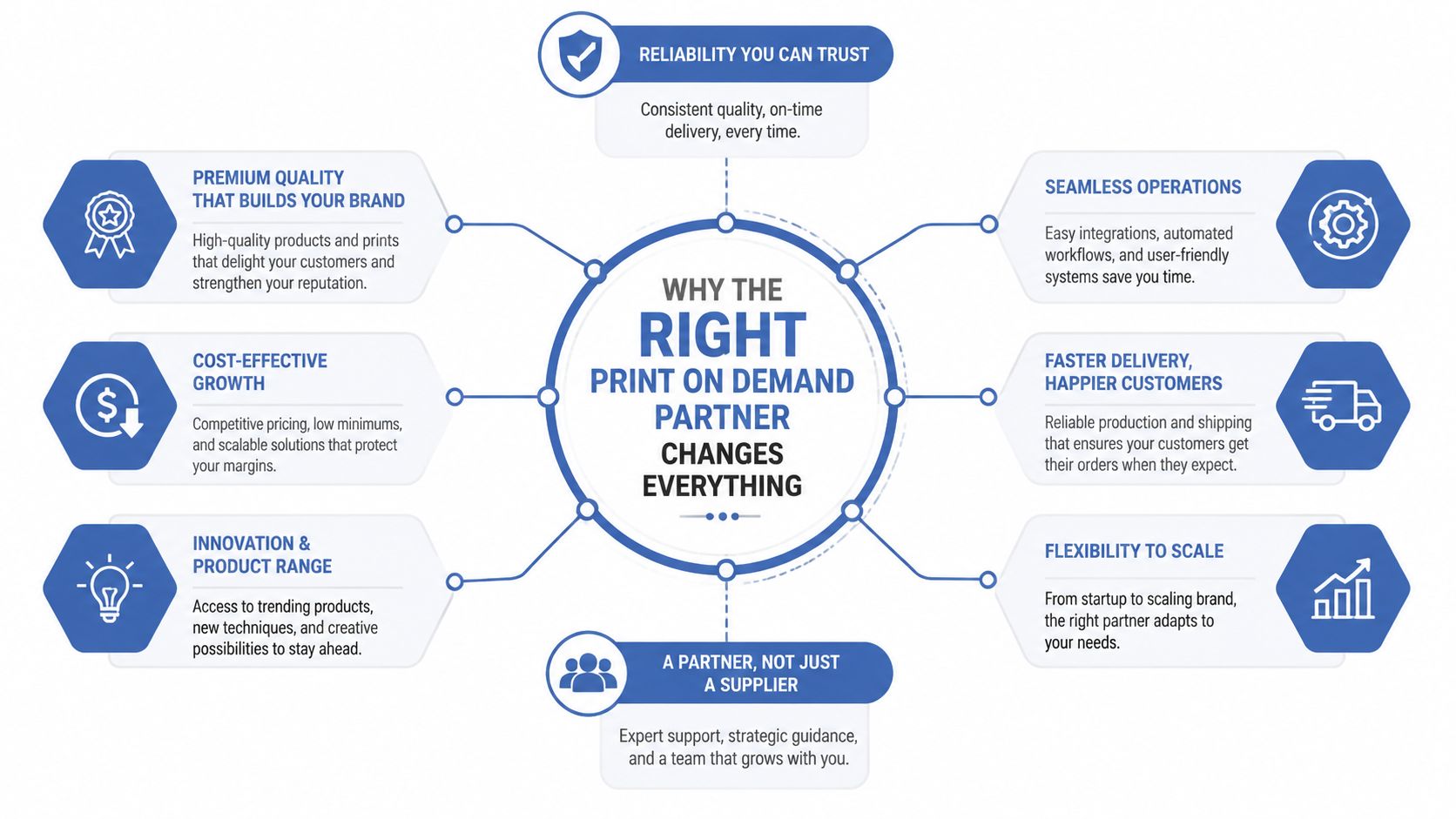
A POD provider becomes part of your brand the moment a customer places an order. Its print quality, garment feel, packaging, tracking updates, and delivery window shape the experience customers associate with your store. Your name may appear on the storefront, but the provider controls much of what happens after checkout.
Shopify's print-on-demand guide explains how on-demand production avoids inventory-heavy manufacturing. That model lets new founders test products without filling a garage or warehouse. Established brands can also expand collections without committing to large production runs.
POD has moved beyond its side-hustle reputation. Shopify's 2026 guide reports a global market of $13.1 billion in 2026 and projects a 23.6% annual growth rate through 2033. The category has room for serious brands, but growth also means more competition. Personalized products and accessible ecommerce infrastructure keep attracting sellers.
A 2026 industry summary reports that over 368,000 Shopify stores use at least one POD app, compared with roughly 2.85 million active Shopify stores worldwide, while Shopify handles about 62% of U.S. POD transactions. The industry summary makes the strategic point clear: you are entering a mature sales channel. Originality helps, but dependable execution earns repeat customers.
Your first brand decision
In the Apparel Cloning system, provider selection comes before creative volume. Study proven product and audience patterns, then build a differentiated offer around them. A provider with inconsistent garments or unreliable delivery can undermine strong positioning before your brand has earned trust.
Practical rule: Choose the provider that supports the brand you're building, not the product you're uploading today.
Printful fits quality-led brands. Printify suits early testers who need catalog breadth and supplier choice. Gelato supports geographically distributed customers, Gooten suits distinctive product categories, and SPOD prioritizes speed. Match the provider to your current stage, then reassess when your product mix, audience, or delivery promise changes. That decision protects the customer experience your brand is trying to build.
For a useful look at decoration methods for creative apparel, review these vibrant fabric projects with infusible ink. Skup's Shopify POD supplier guide also provides a practical framework for judging supplier fit before you commit.
The Eight Criteria That Predict POD Success
A provider can look impressive in Shopify's App Store and still weaken your brand. Judge the operation behind the interface across eight criteria, then choose the partner that fits your current Apparel Cloning stage.
| Criterion | What to Measure | Why It Matters |
|---|---|---|
| Print quality | Decoration method, color consistency, garment feel, embroidery detail | Customers judge the physical product, not the app |
| Fulfillment coverage | Production locations and order-processing workflow | Geography affects delivery expectations |
| Shipping and tracking | Carrier choices, tracking updates, regional routing | Clear delivery communication protects trust |
| Catalog and exclusivity | Apparel, gifts, home decor, accessories, unusual products | Product range supports testing and collection depth |
| Shopify integration | Product publishing, inventory sync, order routing, status updates | Reliable automation prevents avoidable manual work |
| Base pricing | Product cost, shipping, branding fees, subscription terms | Your retail price must support acquisition and support costs |
| Branding and mockups | Packaging, inserts, labels, mockup quality | Presentation helps turn a product into a brand |
| Customer support | Response quality, escalation process, issue resolution | Problems become expensive when nobody owns them |
Quality comes before catalog size
A large catalog has little value if your core products fail sample inspection. Check the decoration method for the items you plan to sell, not only the provider's general reputation. Graphic tees, embroidered hats, all-over-print leggings, and ceramic mugs each create different quality questions.
Printful uses a centralized model, owning its print and shipping process through company-owned fulfillment centers. Its typical fulfillment times are 2 to 7 business days for apparel and 2 to 5 business days for non-apparel, with most orders fulfilled in about 3 business days on average, according to Shopify's provider comparison. That makes Printful a strong fit for the quality-control stage of Apparel Cloning, when consistent samples and dependable repeat orders matter more than catalog breadth.
Printify connects stores to 100-plus third-party print companies across 12 countries, including the United States, Canada, the United Kingdom, Germany, Latvia, Poland, Czechia, and Australia. This gives early testers more supplier choices and local-routing options. Delivery depends on the selected provider and the customer's location, as explained in Shopify's Printful versus Printify comparison. Use that flexibility during the pattern-testing stage, then standardize suppliers once a product earns repeat demand.
Treat the economics as a system
The lowest base cost does not guarantee the highest profit. Add shipping, payment fees, refunds, customer service time, advertising, and branding expenses before setting your retail price. A cheaper blank can become expensive when poor quality creates replacements or negative reviews.
Production discipline starts with your product files. If you are developing apparel concepts from proven patterns, an AI product specification tool can organize construction details and other information a supplier needs. Clear specifications reduce ambiguity, but sampling remains the final quality check.
Test integration depth before sending traffic. Shopify's supplier workflow sends orders directly to the customer after purchase, reducing routine manual fulfillment. That automation earns its place only when inventory, variants, shipping profiles, order status, and tracking stay synchronized. Set up those checks before scaling a winning product into a full collection.
Top Shopify POD Providers Compared Side by Side
Choosing a POD provider is a brand decision, not a feature checklist. Printful prioritizes control, Printify prioritizes choice, Gelato emphasizes regional production, Gooten supports broader product experimentation, and SPOD focuses on fast production. Each fits a different stage of the Apparel Cloning system, from testing a proven product pattern to building a consistent collection.
| Provider | Best For | Strength | Weakness | Avg. T-Shirt Cost |
|---|---|---|---|---|
| Printful | Premium brand builders | Centralized production and consistent fulfillment | Higher base costs can reduce pricing flexibility | Verify current product cost |
| Printify | Margin-focused testers | Broad supplier network and catalog choice | Quality varies by selected printer | Compare selected provider |
| Gelato | International stores | Regional production and local routing | Smaller apparel emphasis | Verify regional product cost |
| Gooten | Distinctive product lines | Useful range beyond standard apparel | Less polished Shopify experience | Verify current product cost |
| SPOD | Speed-sensitive sellers | Fast production focus and sublimation capability | More limited branding options | Verify current product cost |
Printful
Printful is the strongest choice when brand consistency matters more than the lowest unit cost. Its centralized print and shipping operation gives you fewer supplier variables than a marketplace of independent printers. That makes it a strong match for the Apparel Cloning stage where a tested pattern becomes a repeatable product family.
The trade-off is pricing flexibility. Premium packaging, inserts, and brand details can support higher perceived value, but the finished economics must still work with your retail price and acquisition strategy. Choose Printful when a controlled customer experience supports the position you want your brand to own.
Printify
Printify is the practical choice for broad product testing. Its third-party printer network lets you compare products, routes, and suppliers while you identify which Apparel Cloning patterns deserve further investment. The same flexibility creates its main risk. Similar listings can produce different results in print quality, packaging, and delivery.
Sampling is required. Select a specific printer for each core product, record the results, and treat that printer as the supplier for your listing. Do not treat the wider Printify network as one uniform factory.
Gelato
Gelato fits stores whose buyers are spread across regions and whose delivery strategy depends on local production. Its distributed network can support different markets, but you must check which products are available in the countries that matter to your store.
Its apparel selection will not suit every clothing-led brand. It becomes more useful during the collection-building stage when apparel is combined with posters, wall art, cards, mugs, or other gift-oriented products.
Gooten and SPOD
Gooten deserves consideration when your concept needs products outside the standard T-shirt catalog. It can support a more distinctive collection, although you should spend extra time testing its Shopify workflow and recording product-specific quality before expanding a successful Apparel Cloning pattern.
SPOD is the focused speed option. Choose it when a clear production promise supports your advertising and customer expectations. Its more limited branding options make it a weaker fit for a premium label that depends on presentation.
For provider-specific observations before creating a shortlist, read these Shopify print-on-demand reviews. The comparison is straightforward: Printful favors control, Printify favors experimentation, Gelato favors regional reach, Gooten favors product range, and SPOD favors production speed. Your brand should choose the operating model that supports its current growth stage.
Best POD Provider for Every Type of Shopify Seller
Provider choice is a brand decision, not a feature checklist. The right partner should match your current stage in the Apparel Cloning system, from testing one winning design to building a consistent collection and customer experience.
| Seller Profile | Top Pick | Why It Wins | Watch Out For |
|---|---|---|---|
| Absolute beginner | Printful | Centralized workflow and straightforward brand control | Higher product costs |
| Scaling brand | Printful | Consistent production and stronger presentation options | Audit margins by collection |
| US-only seller | SPOD | Speed-focused production for delivery-led offers | Limited branding range |
| EU-heavy brand | Gelato | Regional production options, including Germany, France, and the UK | Confirm product availability by market |
| Budget tester | Printify | Broad selection and multiple supplier choices | Sample every chosen printer |
For the beginner
Choose Printful for a brand-first launch. In the first Apparel Cloning stage, publish one focused product family, such as oversized tees and embroidered hats. A smaller catalog makes it easier to judge the offer, creative, and audience before adding more variables. Printful's centralized workflow also gives beginners a clearer path to consistent presentation.
For the scaling apparel brand
Keep Printful when a winning apparel pattern is ready to become a real collection. Standardized production helps maintain a unified feel across garments and gives returning customers a more predictable experience. Its stronger presentation options also suit a label that is investing in packaging and repeat purchases. Audit margins by collection, because higher control can come with higher product costs.
For the geographically focused seller
SPOD fits a US-only store whose advertising depends on a clear delivery promise. Its speed-focused model supports that offer, but its limited branding range makes it less suitable for a premium label built around presentation.
Gelato is the better match for an EU-heavy brand serving Germany, France, and the UK. Use it during the collection-building stage when apparel expands into posters, wall art, cards, mugs, or other gift-oriented products. Confirm that each selected product is available through suitable regional facilities.
For the product tester
Printify is the practical choice for the testing stage of Apparel Cloning. Its broad selection and multiple supplier choices let you test a core T-shirt, mug, or all-over-print legging before committing meaningful advertising spend. Sample every chosen printer and keep only products that pass quality and delivery checks.
Gooten deserves consideration when the concept needs products beyond the standard T-shirt catalog. Test its Shopify workflow and product quality before expanding a successful pattern.
Your pick: Choose Printful for brand control and consistency, Printify for structured testing, Gelato for regional reach, Gooten for unusual products, or SPOD when speed leads the offer. For provider-specific observations, read these Shopify print-on-demand reviews.
Connecting and QA Testing Your POD App in Shopify
Your first POD order should be deliberate, not accidental. Connect one provider, publish one test product, and verify the complete customer journey before building the wider Apparel Cloning collection.
Connect the store
- Install the official app. Open the Shopify App Store, select your provider, and install its Shopify integration.
- Authorize the connection. Approve the requested permissions and confirm that the correct Shopify store is linked.
- Sync one product type. Import the first product you plan to test. Check sizes, colors, images, descriptions, and variant names.
- Publish a draft product. Send one item to a draft collection and inspect its product page before making it visible.
- Map operational settings. Review inventory synchronization, shipping profile assignment, tax treatment, and variant behavior.
Shopify supports automatic fulfillment for POD products while keeping physical products manual. Shopify Community guidance explains that an order containing both types can send the POD items for automatic fulfillment while leaving physical items unfulfilled in the dashboard.
Order the sample
Buy a sample and ship it to your own address. Inspect the print under natural light, feel the fabric, check seams and sizing, photograph the packaging, and compare the delivered item with the product page. Time the order from purchase through delivery. Customers experience the full window, not only production.
Build a repeatable inspection routine with this quality assurance procedures guide as your catalog expands. This protects the brand consistency that Apparel Cloning requires when you turn a tested product pattern into a larger collection.
Your 24-hour QA checklist
- Product page: Confirm the title, size chart, colors, photos, and care information.
- Sample quality: Inspect print placement, color, fabric feel, stitching, and packaging.
- Checkout: Complete a real test purchase and verify taxes, shipping, and confirmation emails.
- Fulfillment: Confirm the order reaches the provider without manual intervention.
- Tracking: Check that the tracking event returns to Shopify and displays correctly.
- Mixed cart: If you also sell physical products, test how Shopify separates fulfillment.
- Customer message: Ensure the delivery expectation matches the sample timeline.
Keep automatic fulfillment off until these checks pass. In the testing stage, this discipline exposes provider or product problems before they reach customers. Once the sample, checkout, fulfillment, and tracking all work, automation can remove repetitive handling without hiding setup errors.
Busting the Biggest POD Myths Before You Start
POD stores struggle for predictable reasons: weak product validation, unclear delivery expectations, and designs aimed at everyone. Choosing a provider should support the brand stage you are building, not just fill a feature checklist. Apparel Cloning works best when you test one clear product pattern, learn from the response, and expand only after the offer earns attention.
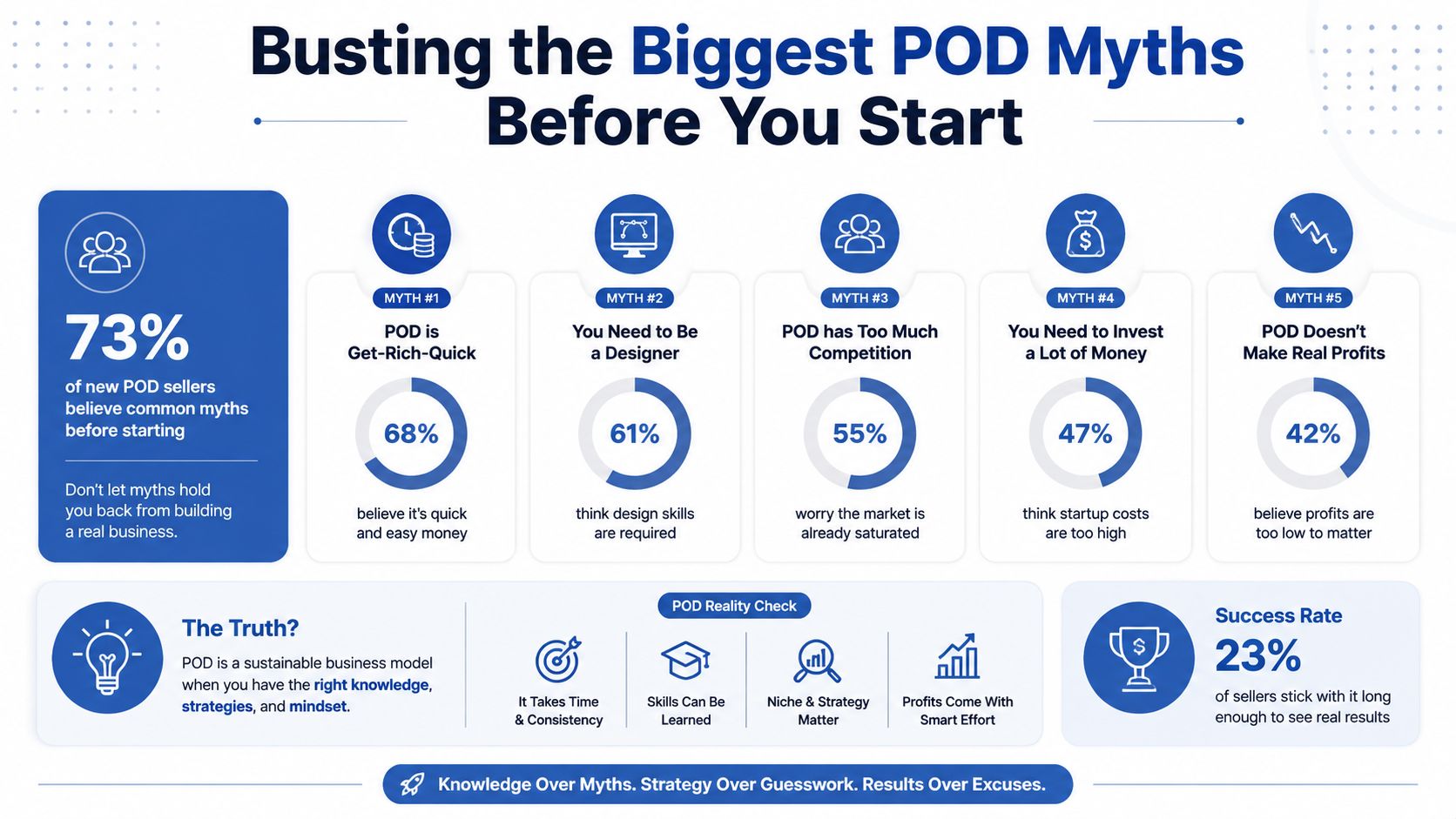
Myth one, margins are automatically too thin
Margins depend on the product, retail position, acquisition cost, refunds, and provider economics. A store with a suitable product and a focused audience has more control than one competing on the cheapest T-shirt.
Judge each product by one question: can its price cover operating costs while still making sense to the intended buyer? That answer should guide your provider choice during the testing stage of Apparel Cloning.
Myth two, every order takes weeks
Delivery depends on the provider, product, customer location, and production facility. Printful's typical fulfillment windows, cited earlier, show why a centralized provider can make delivery expectations easier to set. Printify's distributed model can offer regional choices, but the selected printer still determines the actual experience.
State the delivery expectation on the product page. A clear promise helps customers decide and gives your support team a standard for handling delays.
Myth three, POD always looks cheap
One poor sample proves that a product or supplier failed your test. It does not condemn every garment or decoration method. Compare the sample with your intended brand position, then remove anything that falls short. For an Apparel Cloning test, quality is part of the pattern you are validating, not an afterthought.
Myth four, the market is too saturated
Competition exists, but generic positioning creates the bigger problem. Apparel Cloning gives beginners a practical way to study proven product patterns and create distinct designs for less crowded audience angles. Find a clear buyer, relevant message, and product that delivers instead of trying to invent demand from nothing.
Myth five, a real brand needs inventory
Shopify POD suppliers can ship directly to customers, letting you build the storefront, offer, audience, and retention system before carrying physical stock. Inventory can make sense later for proven bestsellers, but it is not required to start a credible brand.
POD becomes a serious operating model when you treat product validation, positioning, and customer experience as brand decisions. Choose the provider that fits your current Apparel Cloning stage, then earn the right to expand.
Your Next Steps to Build a Real Shopify Brand
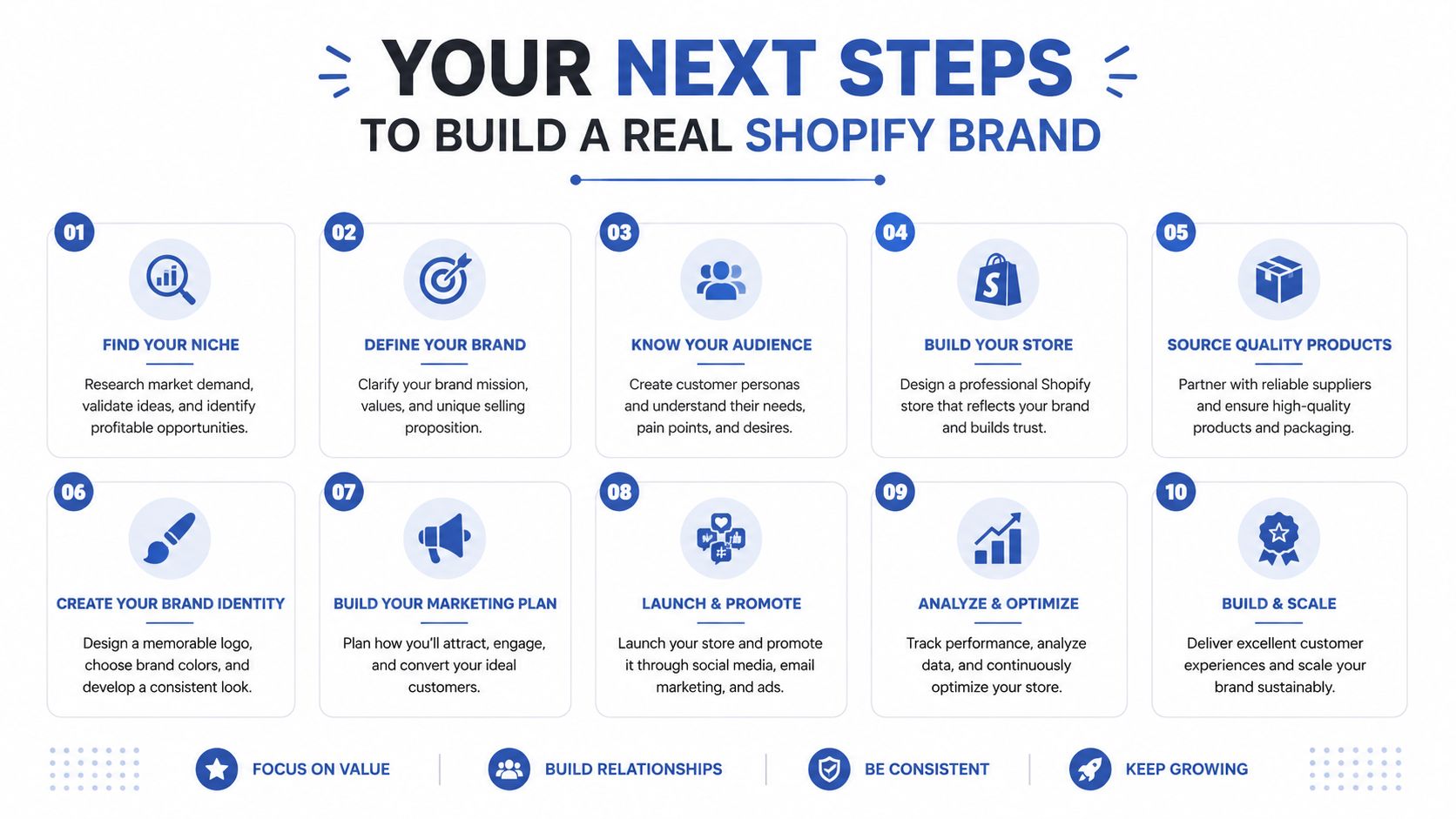
Provider selection is step one, not the business itself. Use the next month to turn that choice into a focused product test and a repeatable operating rhythm.
Week one
Install one POD app and connect it to Shopify. Publish two Apparel Cloning designs on one product type, order samples, and make the product pages specific to one audience rather than writing generic descriptions.
Run a $50 ad test and evaluate buy intent within 48 hours. The test isn't a promise of profitability. It's a controlled way to learn whether your audience responds to the product, message, and offer before you build a larger collection.
Week two
Use AvatarIQ to refine audience-facing creative, generate professional mockups, and improve the design-to-listing workflow without promoting generic design software. Compare the product presentation across your two offers, then improve the page that creates the clearest reason to buy.
If you're building coordinated products for a group, event, or niche community, a practical custom merch kit guide can help you think beyond one isolated garment and toward a cohesive product experience.
Month one
Review customer acquisition cost, return on ad spend, add-to-cart behavior, refunds, support questions, and fulfillment issues every 30 days. Keep the winning audience angle, remove weak products, and test new designs against the same positioning so you can tell whether the creative improved.
Use a simple operating calendar:
- Week one: Connect, sample, publish, and verify fulfillment.
- Week two: Refine creative and mockups with AvatarIQ.
- Weeks three and four: Review customer behavior, improve the offer, and decide whether to expand the collection.
- End of month one: Keep the product with the clearest demand signal and document the provider settings that worked.
The provider handles production, but your moat comes from positioning, creative quality, customer retention, and disciplined testing. You don't need a perfect catalog to begin. You need one provider, one product, one audience, and a real customer experience you can improve.
Pick your provider today, complete the sample order, and ship one product live this week. That single launch will teach you more than another afternoon of comparing app listings.
Skup offers practical Shopify POD education through the Apparel Cloning system, plus AvatarIQ for AI-powered apparel designs and product mockups. Visit Skup to choose a clear starting system and move from provider selection to your first focused product launch.