How to Find Facebook Ad Interests for Print on Demand (2026)
Quick Answer
To find Facebook ad interests for print on demand, start with your design’s core audience—think about who would wear the shirt, what hobbies they have, and what pages they follow. Use Facebook’s Audience Insights to discover related interests, then test 3-5 interest groups with small budgets to find your winners. The goal is matching your design’s message with people who already care about that topic.
Why Interest Targeting Makes or Breaks Your POD Ads
You can have the best design in the world, but if you show it to the wrong people, nobody buys. That’s the hard truth about Facebook ads for print on demand.
Interest targeting is how you tell Facebook who should see your ad. Get it right, and you’ll reach people who immediately connect with your design. Get it wrong, and you’ll burn through your budget showing fishing shirts to people who’ve never held a rod.
Matt Schmitt, co-founder of Skup, puts it simply in coaching calls: “Your design is the hook, but interests are the fishing hole. You need both.”
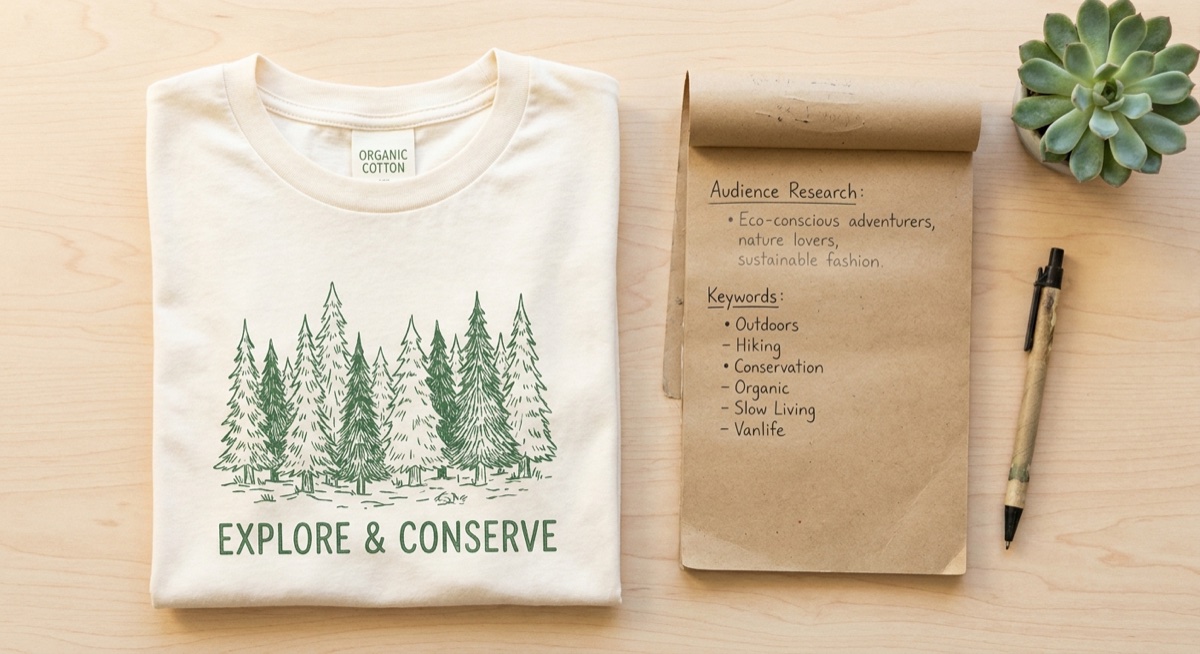
Step 1: Start With Your Design’s Story
Before you touch Facebook Ads Manager, ask yourself three questions about your design:
- Who would proudly wear this? Not everyone—get specific. “Dog owners” is too broad. “Golden Retriever owners who treat their dog like family” is targetable.
- What does this person care about? People who love their Golden Retrievers probably also follow dog training pages, pet brands, and breed-specific communities.
- What would they scroll past to stop for this? Understanding their daily feed helps you find adjacent interests.
Write down 10-15 words that describe your ideal customer’s interests, hobbies, and passions. This becomes your starting list.
Step 2: Use Facebook Audience Insights
Facebook gives you a free tool most beginners ignore. Here’s how to use it:
- Go to Facebook Ads Manager → Audience Insights
- Enter one of your starting interests (like “Golden Retriever”)
- Look at the “Page Likes” tab to find related interests
- Note the audience size—aim for 1-5 million for testing
The magic is in the “related pages” section. If Golden Retriever fans also follow specific pet brands, dog training channels, or outdoor lifestyle pages, those become new targeting options.

Step 3: Build Your Interest Groups
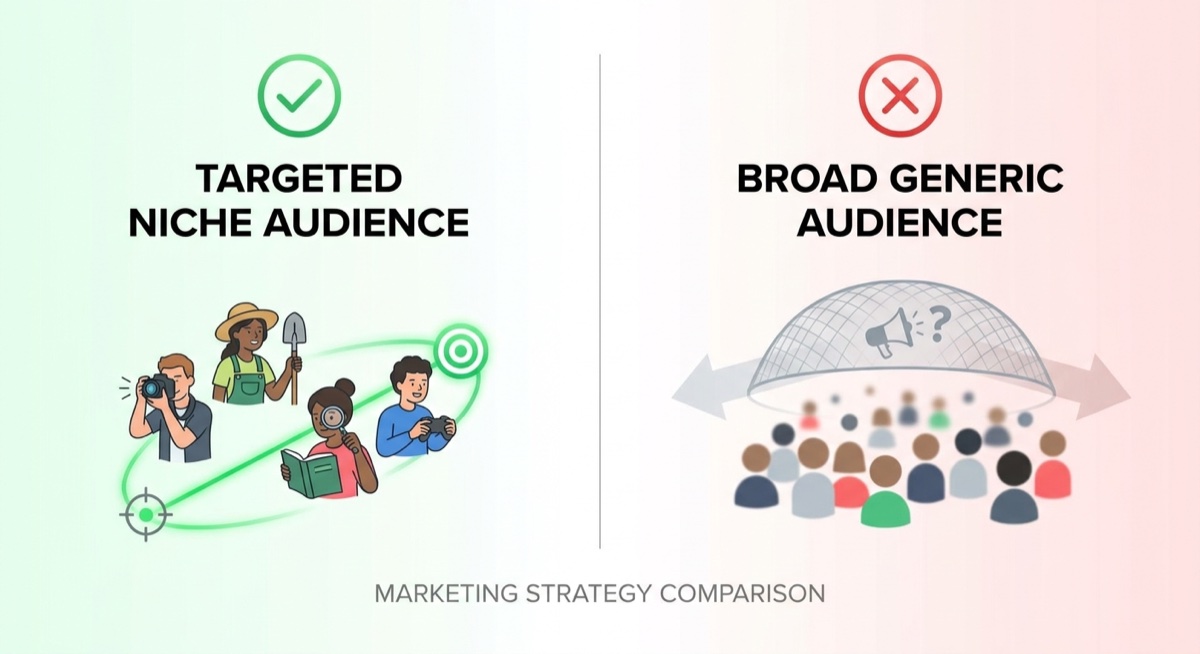
Don’t throw all your interests into one ad set. Instead, create 3-5 separate ad sets, each targeting a different interest cluster:
- Core Interest: The obvious one (Golden Retriever)
- Related Hobby: Activities your audience does (Hiking with dogs, Dog training)
- Adjacent Brands: Products they buy (Chewy, BarkBox)
- Lifestyle: How they see themselves (Dog mom, Pet parent)
Testing these separately shows you which angle converts best. Many Skup students discover their “related hobby” interests outperform the obvious ones.
Step 4: Let the Data Decide
Run each interest group with a small budget ($5-10/day) for 3-5 days. Look at:
- Click-through rate (CTR): Above 1% means the interest is resonating
- Cost per click (CPC): Compare across ad sets—lower is better
- Purchases: Ultimately, this is what matters
Kill the ad sets that aren’t performing. Double down on the ones that work. This isn’t gambling—it’s testing with data.
Common Mistakes to Avoid
- Targeting too broad: “Fitness” has 500 million people. “CrossFit enthusiasts” has 20 million who actually care.
- Stacking too many interests: Putting 15 interests in one ad set makes it impossible to know what’s working.
- Giving up too early: One bad day doesn’t mean the interest is wrong. Give tests time to collect data.
- Ignoring the design connection: Your interests should match your design’s message—not just be “good audiences.”
- Never testing new interests: Markets change. Keep discovering new pockets of buyers.
FAQ
How many interests should I target per ad set?
Start with 1-3 related interests per ad set. This keeps your audience focused while giving Facebook enough people to optimize. As you scale, you can expand or narrow based on results.
What audience size should I aim for?
For testing, aim for 1-5 million people. Too small and Facebook can’t optimize. Too large and you’re paying for people who don’t care about your specific design. Narrow as you learn what works.
Should I use detailed targeting expansion?
Keep it off when testing. You want to know if your specific interests work. Once you’ve found winners and you’re scaling, you can experiment with letting Facebook expand your reach.
The Bottom Line
Finding the right Facebook interests isn’t about luck—it’s about understanding your customer and testing systematically. Start with your design’s natural audience, research related interests in Audience Insights, test in small batches, and let the data guide your decisions.
Students in the Skup Incubator work through this process live on coaching calls with Matt Schmitt, getting real-time feedback on their targeting strategies. That hands-on guidance is why members like Sean Young have gone from zero to $10,000+ in sales.
Ready to stop guessing and start targeting? Learn more about Skup’s approach to Facebook ads for print on demand.