How to Scale Your Print on Demand Business to $10K/Month: The Complete 2026 Roadmap
You’ve made your first few sales in print on demand. Maybe you’re doing $500 a month, or $1,000, or even $2,000. But something’s changed. The excitement of those early sales has given way to a question that keeps you up at night: How do I actually turn this into real money?
Here’s the truth most “gurus” won’t tell you: Getting your first sale and scaling to $10K/month require completely different skill sets. What got you here won’t get you there. The scrappy tactics that landed your first customers will actually hold you back as you try to grow.
I’ve watched hundreds of students inside Skup go through this exact transition. The ones who scale successfully all do the same things. The ones who stay stuck? They keep doing what worked at $500/month and wonder why nothing changes.
This guide is the complete roadmap for scaling your print on demand business from wherever you are now to consistent $10K months. We’re going deep—not surface-level “post more designs” advice, but the actual systems, mindset shifts, and strategies that separate five-figure months from hobby income.

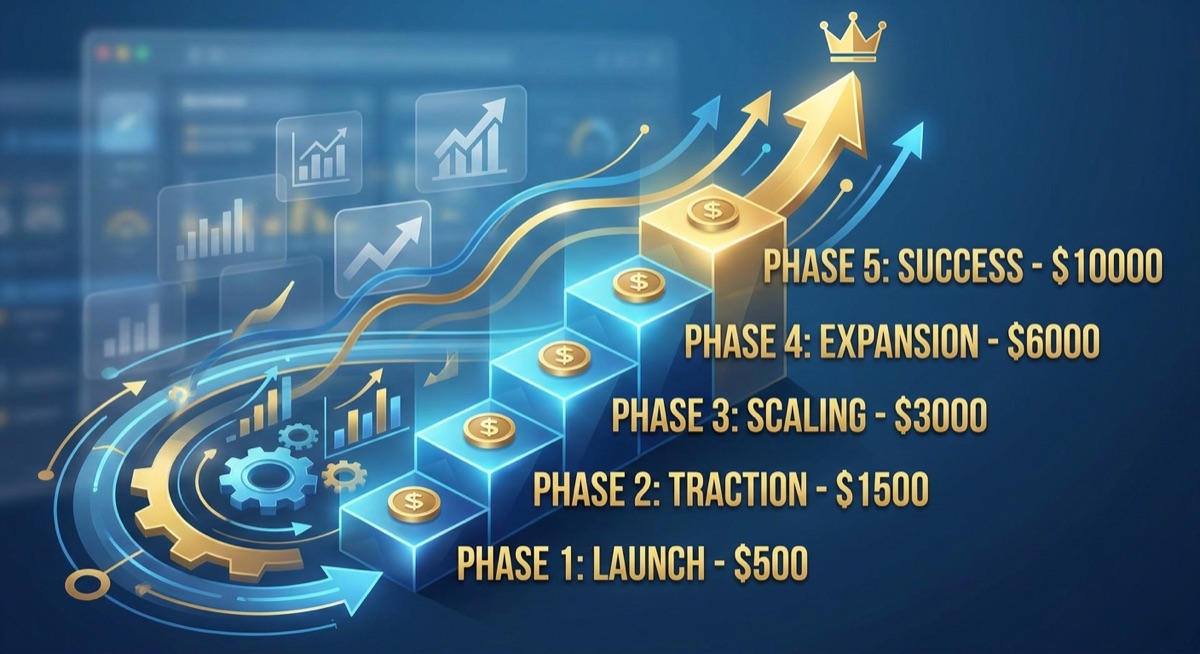
The Four Phases of POD Scale: Where Are You Now?
Before we talk about where you’re going, we need to be honest about where you are. Every print on demand business goes through four distinct phases, and the strategies that work in one phase can actively hurt you in another.
Phase 1: Discovery ($0-$500/month)
This is where you’re testing everything. Different niches, different products, different platforms. You’re throwing spaghetti at the wall and seeing what sticks. Revenue is inconsistent—you might make $200 one week and nothing the next. This phase is about learning, not earning.
If you’re in Phase 1, this guide will give you the roadmap for what’s coming. But don’t try to skip ahead. The discovery phase teaches you things that can’t be learned any other way.
Phase 2: Validation ($500-$2,000/month)
Something is working. You’ve found a niche or product that sells. Maybe it’s dog lover designs on t-shirts, or sarcastic mugs for nurses. You have proof of concept, but you’re still doing everything manually. Fulfillment, customer service, design creation—it all runs through you.
This is the most dangerous phase. Many people get stuck here for years because it feels like success but isn’t sustainable. You’re essentially working a job you created for yourself.
Phase 3: Systems ($2,000-$5,000/month)
You’ve started building systems. Maybe you hired a designer or started using templates. You’ve automated some customer service responses. Sales are more consistent, but growth feels slow. This phase is about removing yourself from the day-to-day without sacrificing quality.
Phase 4: Scale ($5,000-$10,000+/month)
The business runs without your constant attention. You have systems for design creation, marketing, customer service, and fulfillment. Your job shifts from doing the work to optimizing the systems. Growth becomes predictable because it’s based on inputs you can control.
Most people reading this are in Phase 2 or Phase 3. If that’s you, the next sections will show you exactly how to break through.
The Mindset Shift: From Seller to Business Owner
Here’s the hardest part of scaling, and it has nothing to do with tactics or tools: You have to stop thinking like a seller and start thinking like a business owner.
A seller asks: “What designs should I make today?”
A business owner asks: “What system will consistently produce winning designs?”
A seller asks: “How do I get more sales?”
A business owner asks: “What’s my cost per acquisition, and how can I improve it?”
A seller asks: “Which platform should I use?”
A business owner asks: “How do I build a brand that works across all platforms?”
This shift feels uncomfortable because it requires letting go of control. You got here by doing everything yourself. To get to the next level, you need to trust systems, processes, and eventually people to do what you used to do.
The Delegation Test
Ask yourself: If you went on vacation for two weeks with no phone or laptop, would your business still make money?
If the answer is no, you don’t have a business—you have a job. And that job has a ceiling. Your goal isn’t just to make $10K/month. It’s to make $10K/month while working fewer hours than you do now.
Every decision from here forward should be viewed through this lens: Does this move me toward a business that runs without me, or does it make me more essential?

The Foundation: Numbers You Must Know
You cannot scale what you don’t measure. Before we talk about growth strategies, you need to understand and track these numbers religiously:
Customer Acquisition Cost (CAC)
What it is: The total cost to acquire one customer, including ad spend, design costs, platform fees, and your time.
How to calculate it: Total marketing spend ÷ Number of new customers
Why it matters: This is the most important number in your business. If it costs you $15 to acquire a customer who spends $25, you have a scalable business. If it costs you $30 to acquire a customer who spends $25, you have a money-losing machine.
Average Order Value (AOV)
What it is: The average amount each customer spends per order.
How to calculate it: Total revenue ÷ Number of orders
Why it matters: Increasing AOV is often easier than acquiring new customers. If your AOV is $22 and you can increase it to $35, you’ve added significant profit without spending a dime on ads.
Customer Lifetime Value (LTV)
What it is: The total revenue you can expect from a customer over their entire relationship with your business.
How to calculate it: AOV × Average number of purchases per customer
Why it matters: This is the ceiling on what you can spend to acquire a customer. If your LTV is $75, you can afford to lose money on the first sale knowing you’ll profit over time.
Profit Margin Per Product
What it is: What you actually keep after production costs, platform fees, shipping, and returns.
How to calculate it: (Selling price – All costs) ÷ Selling price × 100
Why it matters: Revenue is vanity, profit is sanity. A $10K month at 20% margin puts $2,000 in your pocket. A $7K month at 40% margin puts $2,800 in your pocket. Margin matters more than revenue.
The Dashboard You Need
Create a simple spreadsheet that tracks these numbers weekly. Every Sunday, spend 15 minutes updating it. This single habit will tell you exactly what’s working and what isn’t. No guessing, no feelings—just data.

Product Strategy: The 80/20 Rule on Steroids
Here’s a pattern I see in almost every POD business that plateaus: They have too many products and not enough winners.
Look at your sales data from the last 90 days. I’m willing to bet that 20% of your designs generate 80% of your revenue. Maybe it’s even more extreme—10% of designs generating 90% of revenue.
This isn’t a problem. It’s an opportunity. Your scaling strategy isn’t to create more products. It’s to create more versions of what already works.
The Winner Expansion Framework
Take your top 5 selling designs and expand each one using this framework:
1. Variations: Different color schemes, different fonts, different layouts of the same core concept.
2. Formats: If it sells on shirts, put it on hoodies, tank tops, long sleeves, and sweatshirts. Same design, more product options.
3. Specificity: If “Dog Mom” sells, create “Golden Retriever Mom,” “Pit Bull Mom,” and “Beagle Mom.” Specificity almost always outperforms generic.
4. Seasonal: How can this design be adapted for holidays? Christmas, Valentine’s Day, Mother’s Day—the same winning concept with seasonal twists.
5. Related: What does someone who buys this also care about? A dog mom probably cares about her kids too. Or hiking. Or wine. Find the overlaps.
Kill Your Losers
For every winning design you expand, remove 5 designs that haven’t sold in 90 days. This isn’t failure—it’s focus. A catalog full of winners converts better than a catalog full of maybes.
The math is simple: A visitor who sees 50 winning designs is more likely to buy than a visitor who sees 10 winners buried among 200 duds.

Traffic Strategy: Beyond Organic Plateaus
If you’re stuck in the $1K-$3K range, you’re probably relying heavily on organic traffic from Etsy, Pinterest, or SEO. Here’s the uncomfortable truth: Organic traffic has a ceiling, and you’ve probably hit it.
Organic is great for validation. It’s low-risk and teaches you what people want. But it’s also unpredictable and plateaus quickly. Algorithm changes can wipe out months of work overnight.
To scale beyond organic ceilings, you need to add paid traffic. And before you object with “I can’t afford ads,” let me reframe: If your numbers are right, you can’t afford NOT to run ads.
The Paid Traffic Formula
Remember your numbers from earlier? Here’s how they determine if you’re ready for paid traffic:
Step 1: Calculate your profit per order (selling price – all costs = profit)
Step 2: Calculate your conversion rate (orders ÷ visitors × 100)
Step 3: Calculate your breakeven CPC (profit per order × conversion rate)
Example: If you profit $10 per order and convert at 2%, your breakeven CPC is $0.20. If you can get clicks for less than $0.20, you’re profitable from day one.
Starting with $10/Day
You don’t need a massive budget to start with paid traffic. Here’s the minimum viable ad strategy:
Budget: $10/day ($300/month)
Platform: Facebook/Instagram (best for visual products like apparel)
Targeting: Interest-based targeting around your niche (dog lovers, nurses, teachers, etc.)
Creative: Lifestyle photos of your products or mockups with real backgrounds
Goal: Purchase conversions (not traffic, not engagement)
Run this for 14 days without touching anything. After 14 days, analyze what’s working and what isn’t. Kill losing ads, scale winners. Rinse and repeat.
The Retargeting Layer
Once you have some traffic, retargeting becomes your highest-ROI activity. These are people who already visited your store but didn’t buy. They’re warm. They know you. They just need a nudge.
Create a separate campaign targeting:
– Website visitors in the last 30 days
– Add to cart but didn’t purchase
– Previous customers (for upsells)
Retargeting typically converts 2-3x better than cold traffic because trust is already established.

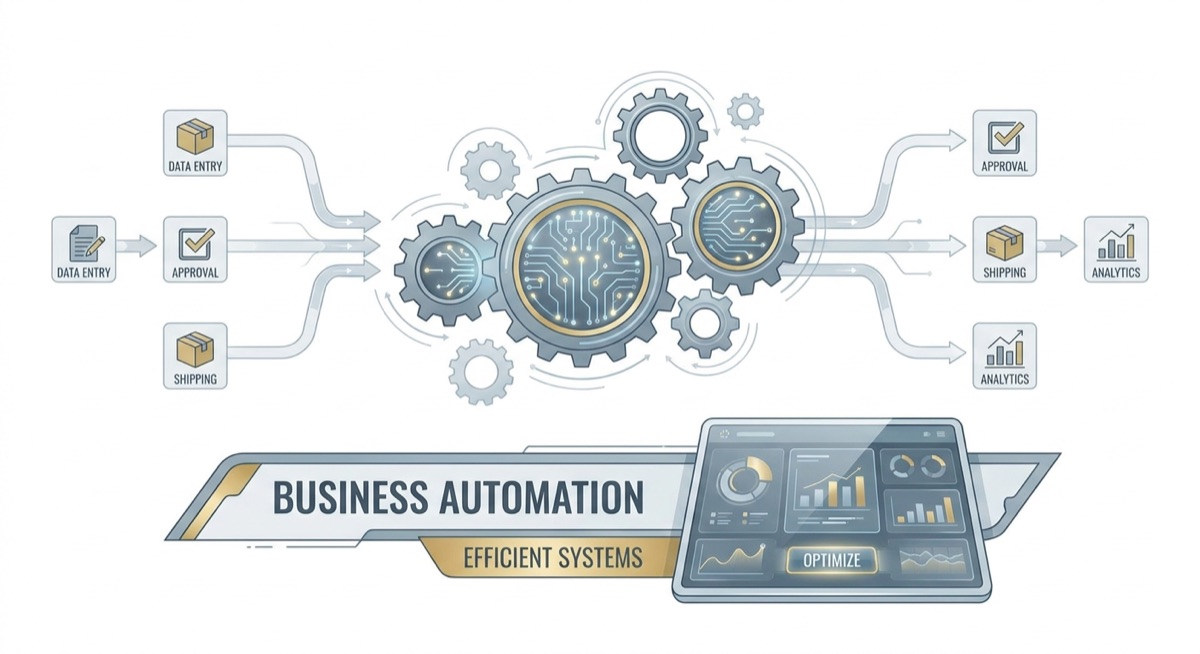
Systems That Scale: Automation Without Losing Quality
The difference between a $3K month and a $10K month isn’t working 3x harder. It’s building systems that multiply your output without multiplying your hours.
Design Production System
If you’re still creating every design yourself, you’re the bottleneck. Here are your options for scaling design production:
Option 1: Templates + AI
Create 10-20 templates in Canva or Photoshop. Use AI tools to generate copy variations. Mix and match to produce dozens of designs per hour instead of per day.
Option 2: Hire a Designer
A good designer on Fiverr or Upwork costs $5-15 per design. If your winning designs profit $100+ each, this is a no-brainer investment. Hire for quantity, train for your style.
Option 3: Design Marketplace
Platforms like Creative Fabrica offer unlimited design assets for a monthly fee. Combine elements to create unique designs without starting from scratch.
The key is choosing ONE system and committing to it. Switching constantly is its own form of procrastination.
Listing Optimization System
Every listing needs: title, description, tags, mockup images. If you’re doing this manually for every product, you’re wasting hours.
Create templates:
– Title formula: [Adjective] [Product] for [Audience], [Style] [Product Type] Gift
– Description template: 3 paragraphs that work for any product in your niche, with blanks to fill
– Tag bank: Master list of 100+ tags for your niche, grab 13-15 per listing
– Mockup presets: Saved settings in Placeit or your mockup tool of choice
A listing that took 20 minutes should take 5 minutes with templates.
Customer Service System
At scale, customer service becomes a significant time drain. Here’s how to handle it without losing the personal touch:
1. FAQ page: Address 80% of questions before they’re asked. Shipping times, return policy, sizing—put it all in one place and link to it everywhere.
2. Template responses: Create a document with 15-20 pre-written responses for common questions. Copy, personalize slightly, send. What took 10 minutes takes 2.
3. Auto-responders: Set up automatic replies acknowledging messages and setting expectations for response time. This reduces anxiety and repeat messages.
4. Virtual assistant: When customer service takes more than 1 hour daily, hire help. A VA in the Philippines costs $4-8/hour and can handle routine inquiries after training.
The Revenue Multipliers: AOV and LTV Strategies
Getting new customers is expensive. Getting existing customers to spend more is cheap. These strategies can increase revenue 30-50% without touching your ad budget.
Increasing Average Order Value
Bundle Offers: “Buy 2, Get 1 Free” or “Bundle and Save 15%.” Psychology loves a deal, and bundles increase AOV while making customers feel smart.
Upsells: After someone adds a shirt to cart, offer the matching hoodie at 10% off. Post-purchase upsells (on the thank you page) convert surprisingly well because the buying decision is already made.
Threshold Free Shipping: “Free shipping on orders over $50.” If your average order is $28, this incentivizes adding more to cart. Calculate your threshold carefully—it should be achievable but require adding at least one more item.
Premium Products: Offer a “premium” version of your top sellers—better quality blanks, embroidered instead of printed, or exclusive colorways. Some customers will always choose the premium option.
Increasing Lifetime Value
Email Collection: Get every customer on your email list. Platform changes can take away your access to customers overnight. Email is owned by you forever.
Post-Purchase Sequences: After someone buys, send a sequence: thank you + care instructions, request for review (day 7), related product recommendations (day 14), exclusive discount (day 30).
New Release Alerts: Build anticipation for new designs. “First access” to your email list makes them feel special and drives repeat purchases.
Loyalty Program: Points for purchases, reviews, referrals. Gamification keeps customers engaged and gives them a reason to come back beyond just needing another shirt.
The Math That Matters
Let’s say you have 100 customers per month:
Before optimization:
100 customers × $25 AOV × 1.2 purchases = $3,000/month
After optimization:
100 customers × $35 AOV × 1.8 purchases = $6,300/month
Same number of customers, double the revenue. This is why AOV and LTV matter so much.

The Scale Timeline: Your 90-Day Action Plan
Knowing what to do is useless without knowing when to do it. Here’s a realistic 90-day plan for scaling from where you are to $10K months.
Days 1-30: Foundation
Week 1: Set up your tracking dashboard. Know your CAC, AOV, LTV, and margins. No guessing.
Week 2: Analyze your sales data. Identify your top 20% of products. Begin winner expansion with 2-3 variations per winner.
Week 3: Create your systems documents. Design templates, listing templates, customer service templates. Write them down.
Week 4: Remove bottom performers. Delete anything that hasn’t sold in 90 days. Clean up your catalog.
Days 31-60: Traffic
Week 5: Set up Facebook Pixel on your store. Let it collect data even before you run ads.
Week 6: Create your first ad campaign. $10/day, purchase objective, interest targeting. Let it run.
Week 7: Analyze results. What’s your cost per click? Cost per purchase? Which audiences are performing?
Week 8: Kill losers, scale winners. Increase budget on profitable ad sets by 20%. Test new creative.
Days 61-90: Optimization
Week 9: Implement AOV strategies. Set up bundle offers, upsells, or threshold free shipping.
Week 10: Build email collection and automation. Welcome sequence, post-purchase sequence, abandoned cart recovery.
Week 11: Set up retargeting campaigns. Target site visitors and cart abandoners with specific messaging.
Week 12: Review all metrics. What’s working? What isn’t? Double down on winners and fix or eliminate losers.
Beyond 90 Days
By day 90, you should have:
– A catalog focused on proven winners
– Profitable paid traffic sources
– Systems that save you 10+ hours per week
– AOV and LTV improvements in place
– Clear data on what to do next
From here, scaling becomes predictable: invest more in what works, systematize what’s manual, and keep optimizing the numbers.
Common Mistakes That Kill Scale
I’ve seen these mistakes derail hundreds of POD businesses. Avoid them:
Mistake 1: Scaling Too Fast
If your foundation isn’t solid—if your numbers aren’t profitable—scaling just amplifies losses. Fix the unit economics before adding more volume.
Mistake 2: Ignoring Customer Experience
In the rush to scale, customer experience suffers. Longer response times, less attention to detail, more errors. This kills reviews, which kills conversion rate, which kills everything.
Mistake 3: Platform Dependence
If 100% of your business is on Etsy or Amazon, you’re one policy change away from zero. Diversify across platforms and build owned assets (email list, your own website).
Mistake 4: Chasing New Niches
The grass always looks greener in a new niche. But switching niches means starting over. Unless your current niche is truly dead, go deeper instead of wider.
Mistake 5: Doing Everything Yourself
Your time is limited. Spending 2 hours on a task a VA could do for $10 is a $50+/hour mistake. Calculate the true cost of your time and protect it accordingly.
The Truth About $10K Months
Let me be real with you: $10K months in print on demand are achievable, but they’re not easy. This isn’t a get-rich-quick play. It takes consistent effort, constant learning, and the willingness to fail forward.
But here’s what I’ve seen over and over again: The people who follow a system, track their numbers, and stay consistent almost always get there. It might take 6 months. It might take 18 months. But the math works if you work the math.
Inside Skup, we’ve watched students go from zero to $10K months. We’ve seen side hustles become full-time businesses. We’ve witnessed single moms replace their 9-to-5 income and students pay off their debt.
The common thread isn’t talent or luck. It’s process. The students who succeed treat this like a business from day one. They track, they test, they iterate. They ask questions when stuck and share wins when things work.
If you’re ready to stop guessing and start building a real POD business, the roadmap is here. The question is: will you follow it?
Frequently Asked Questions
How long does it realistically take to reach $10K months in print on demand?
Most successful POD sellers reach $10K months within 12-18 months of consistent effort. The timeline depends on your starting point, how much time you can dedicate, and how quickly you implement systems. Some students at Skup have achieved this in as little as 6 months with full-time focus, while others take 2+ years building part-time. The key variable isn’t time spent—it’s how effectively you use that time.
What’s the minimum budget needed to scale a POD business?
You can begin scaling with as little as $300/month for advertising plus $100-200/month for tools and design resources. However, having a $1,000/month budget gives you more room to test and iterate. The real requirement isn’t a large budget—it’s profitable unit economics. If your margins work, you can scale from small budgets because profitable ads fund their own growth.
Should I focus on one platform or multiple platforms when scaling?
Master one platform first, then expand. Trying to scale on Etsy, Amazon, eBay, and your own website simultaneously spreads your focus too thin. Get to consistent profitability on one platform (usually Etsy or your own Shopify store), systematize those operations, then add new channels. Each platform requires different optimization strategies, and doing all of them mediocrely is worse than doing one excellently.
]]>