Is Print on Demand Still Worth It in 2026? Here’s the Truth
Is Print on Demand Still Worth It in 2026? Here’s the Truth
You’ve probably heard the skeptics: “Print on demand is dead,” “The market is too saturated,” “It’s too late to start.” But here’s what those skeptics are missing—they’re looking at averages, not outcomes. And in any business, averages include the people who quit after two weeks.
The real question isn’t whether POD works. It’s whether you’re approaching it with the right strategy.
Quick Answer
Yes, print on demand is absolutely still worth it in 2026—if you treat it like a real business. Students at Skup have collectively generated over $50 million in sales, with many building consistent $5K-$15K/month income streams. The key difference? They use data-driven design research instead of guessing what will sell.

Why People Think POD Is “Dead” (And Why They’re Wrong)
Every year, someone declares print on demand is over. Here’s what’s actually happening:
The low-effort sellers are failing. People who upload random designs to Etsy and wait for magic are disappointed. That approach never worked well—it just worked slightly better when there was less competition.
The strategic sellers are scaling. Meanwhile, sellers who research winning designs, run targeted ads, and treat POD like a real business are hitting record numbers. The tools have gotten better. Ad targeting has improved. And AI design tools like AvatarIQ have eliminated the “I can’t design” barrier entirely.
The Real Numbers: What’s Actually Possible
Let’s talk specifics. Here’s what we see from real Skup students:
- First 90 days: Students following the Apparel Cloning System typically hit their first sales within weeks, not months
- 6-month mark: Consistent students often reach $2K-$5K/month
- 12-month mark: Dedicated sellers frequently scale to $10K-$20K/month
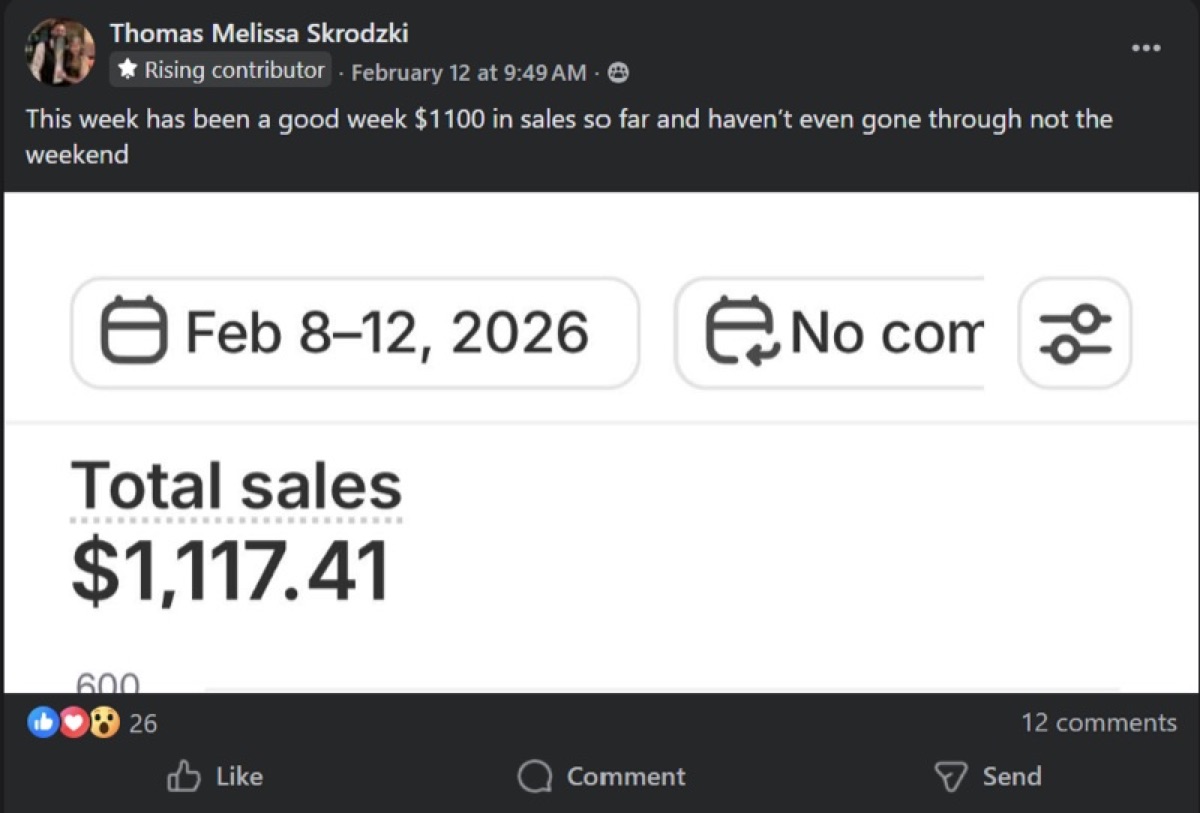
Adam Schneider hit $179K in his first 90 days. Simon generated $550K in three months. Sean Young recently celebrated his $10K total milestone with consistent $500+ days. These aren’t flukes—they’re the result of proven systems.
What’s Changed in 2026 (For the Better)
AI design tools have leveled the playing field. You no longer need design skills. Tools like AvatarIQ let you generate professional, print-ready designs in minutes. The “I’m not creative” excuse is officially retired.
Facebook ads are more sophisticated. Better targeting means less wasted ad spend. You can reach your exact customer for less money than ever before.
POD suppliers have improved. Faster shipping, better quality, more product options. Customers are happier, which means more repeat buyers.
The Real Success Factors
After seeing thousands of students go through Skup, here’s what separates winners from quitters:
- They research before designing. Winning sellers study what’s already selling, then create better versions. They don’t guess.
- They test quickly. Instead of perfecting one design for weeks, they test multiple designs fast and double down on winners.
- They treat it like a business. Consistent hours, tracking numbers, reinvesting profits. Not a lottery ticket.
- They get coaching. Learning from someone who’s already done it cuts the timeline dramatically.
Who Should NOT Start Print on Demand
Let’s be honest—POD isn’t for everyone:
- If you want overnight riches—this builds real income over months, not days
- If you won’t follow a system—freelancing your way through guarantees failure
- If you can’t invest $500-$1,000 to start—you need some ad budget to test designs
- If you quit when things get hard—every business has challenges
The Bottom Line
Print on demand in 2026 is more viable than ever—for people willing to approach it strategically. The market isn’t saturated; it’s more mature. That means the amateurs are filtering out, leaving room for serious sellers to thrive.
If you’re looking for a low-risk way to build real income without inventory, shipping headaches, or massive startup costs, POD remains one of the best options available. The question isn’t whether it works. It’s whether you’re ready to work the system.
FAQ
How much money do I need to start print on demand in 2026?
Most successful sellers start with $500-$1,000 for initial ad testing and design tools. Unlike traditional retail, you don’t need inventory—you only pay for products after customers order them.
Is print on demand too saturated to make money?
The market has more sellers, but also more buyers. eCommerce continues growing year over year. The saturation narrative applies to low-effort sellers uploading generic designs. Strategic sellers using research-based methods continue scaling.
Can I do print on demand with no design skills?
Absolutely. AI design tools like AvatarIQ create professional, print-ready designs from simple text prompts. Many successful Skup students started with zero design experience and now run profitable stores.