The Print on Demand Seasonal Marketing Calendar: Your Complete 2026-2027 Planning Guide
Why Seasonal Marketing Separates Six-Figure POD Sellers from Everyone Else
Here’s a truth that took me years to learn: the print on demand sellers who consistently hit $10K, $20K, even $50K months aren’t necessarily better designers. They’re not working harder. They’ve simply mastered the art of being in the right place at the right time—every single time.
Seasonal marketing in print on demand isn’t about slapping a pumpkin on a t-shirt in October and calling it a day. It’s about understanding the emotional rhythm of your customers’ lives and showing up with exactly what they need, exactly when they need it.
I’ve seen students go from struggling to make their first sale to banking $5,000 in a single weekend because they planned their Halloween collection three months in advance. I’ve watched POD entrepreneurs turn Valentine’s Day—a holiday most sellers ignore—into their most profitable month of the year.
The difference? A calendar. A plan. And the discipline to execute before everyone else even starts thinking about the season.
This guide is your complete seasonal marketing playbook. We’re going to walk through every major opportunity on the calendar, show you exactly when to start designing, when to launch ads, and how to maximize each window before it closes. Whether you’re selling on Shopify, Etsy, or Amazon, these principles will transform how you approach your business.
The Seasonal Marketing Mindset: Thinking Like a Retail Giant
Walk into any Target or Walmart right now, in September. What do you see? Halloween decorations have been out for weeks. Christmas items are already appearing on shelves. This isn’t accident—it’s strategy developed over decades by the world’s most sophisticated retailers.
These companies know something that most POD sellers don’t: customers start thinking about holidays long before they start shopping for them. And the brands that capture that early attention capture the sales.
Here’s what this means for your POD business:
- Design creation: 10-12 weeks before the holiday
- Product listing and SEO optimization: 8-10 weeks before
- Initial advertising and awareness: 6-8 weeks before
- Peak advertising push: 2-4 weeks before
- Last-call campaigns: Final shipping cutoff dates
Most sellers start thinking about Christmas designs in November. By then, the sophisticated sellers have already captured the early shoppers, built their retargeting audiences, and optimized their campaigns. The November starters are fighting for scraps.
Adopting the retail giant mindset means working on a rolling 90-day calendar. Right now, in September, you should be:
- Launching Halloween campaigns
- Finalizing Thanksgiving and Black Friday designs
- Creating your Christmas collection
- Researching Valentine’s Day trends
Sound overwhelming? It’s not once you have a system. And that’s exactly what we’re building today.
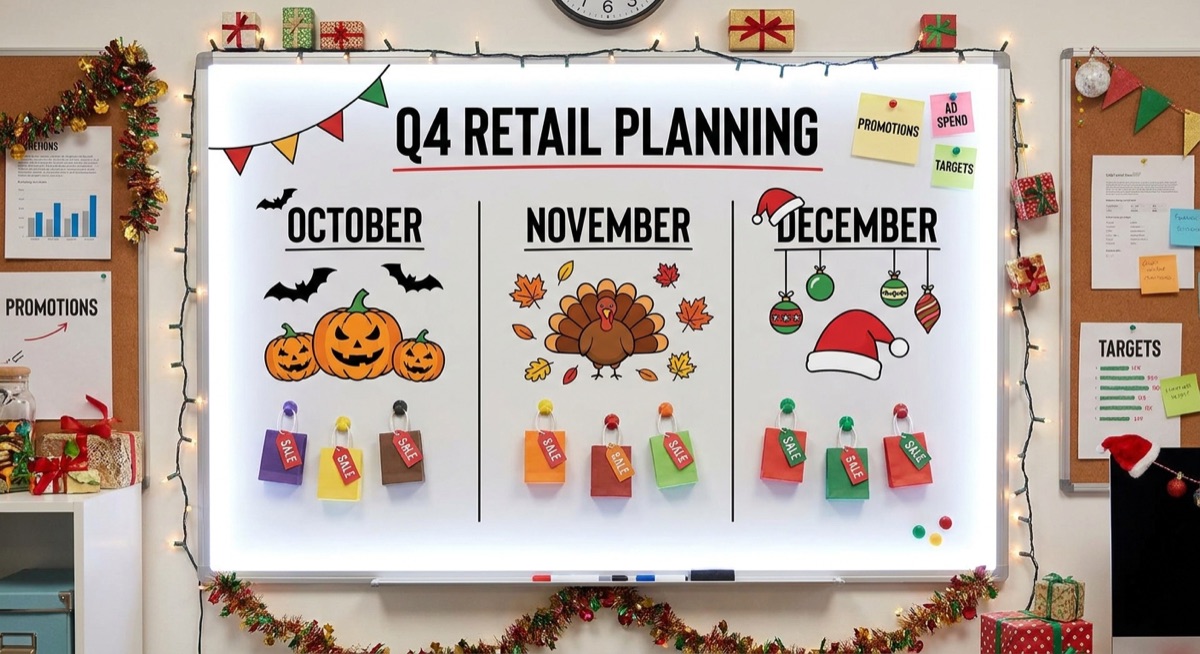
Q4: The Golden Quarter (October – December)
If you’re serious about print on demand, Q4 is your Super Bowl, World Series, and championship game all rolled into one. More than 40% of annual retail sales happen in the final quarter of the year, and for POD sellers, this percentage can be even higher.

Halloween (October 31st)
Planning timeline: Start designing in July, launch products in August, peak advertising in October
Halloween is unique because it’s not just one holiday—it’s an entire season. People start decorating, planning costumes, and shopping in early September. This gives you a longer runway than almost any other seasonal event.
What sells:
- Funny Halloween shirts for adults who don’t want to wear costumes
- Matching family Halloween apparel
- Profession-specific Halloween humor (“Scary good nurse,” “Haunted IT department”)
- Pet owner Halloween content (“My dog is my favorite pumpkin”)
- Horror movie references and nostalgic 80s/90s Halloween themes
Design strategy: The best Halloween designs often don’t look like typical Halloween shirts. Instead of orange and black with obvious imagery, consider subtle, wearable designs that reference the season without screaming “costume.” These sell better after Halloween too.
Pro tip: Create a “Halloween adjacent” collection for people who love fall but aren’t into horror—pumpkins, autumn leaves, cozy season messaging. This audience is often underserved.
Thanksgiving (Fourth Thursday of November)
Planning timeline: Start designing in August, launch in September, peak advertising first two weeks of November
Thanksgiving is often overlooked by POD sellers because it gets sandwiched between Halloween and Christmas. This is a mistake. Thanksgiving is actually a goldmine for several reasons:
- Families gather, creating demand for matching shirts
- Hosts want festive apparel for cooking and entertaining
- Humor sells exceptionally well (food comas, family drama jokes)
- The “friendsgiving” trend has created a whole new audience
What sells:
- Funny family matching sets (“The one who brings wine,” “The one who eats all the pie”)
- Thankful/grateful messaging that’s not too cheesy
- Turkey Day football combinations
- Food-focused humor
- Matching couple shirts for the holidays
Don’t forget: Canadian Thanksgiving is in October, creating an earlier sales opportunity if you target that market.
Black Friday / Cyber Monday
Planning timeline: Plan your promotional strategy in October, set up email sequences, prepare your ad creatives
This isn’t a design holiday—it’s a sales strategy holiday. Black Friday and Cyber Monday are when you capitalize on the audience you’ve been building all year.
Key strategies:
- Don’t discount too heavily—print on demand margins are already thin
- Use bundle deals instead of percentage discounts
- Create urgency with limited-time offers
- Prepare your email list with warming sequences starting November 1st
- Consider “early access” for email subscribers to spread out traffic

Christmas and Hanukkah (December)
Planning timeline: Start designing in August, launch in September, peak advertising November through mid-December
Christmas is the biggest single shopping event of the year, but it’s also the most competitive. Every POD seller in the world is pushing Christmas designs, which means you need to differentiate or drown in the noise.
What sells:
- Niche-specific Christmas designs (Christmas shirts for nurses, teachers, firefighters, specific hobbies)
- Matching family pajamas and apparel
- Ugly Christmas sweater alternatives
- Personalized-feeling designs (even though POD can’t truly personalize)
- Pet Christmas apparel for the pet-parent crowd
- Hanukkah designs (massively underserved market)
Critical dates:
- Hanukkah: Dates vary (check the current year’s calendar—in 2026 it starts December 26th)
- Last day for standard shipping: Usually around December 14-16
- Last day for expedited shipping: Usually December 19-21
Pro tip: Don’t stop advertising when the shipping cutoff passes. Many people buy gift cards, digital products, or are shopping for themselves in the post-Christmas period.
New Year’s Eve (December 31st)
Planning timeline: Design in October, launch with your Christmas collection
New Year’s is smaller than Christmas but has a dedicated audience. The key is creating designs that people want to wear to parties or post on social media.
What sells:
- Year-specific celebration designs
- “New Year, Same Me” ironic humor
- Goal-setting and motivation themes that bridge into January
- Matching couple and group designs for parties
Q1: New Beginnings (January – March)
After the Q4 rush, many sellers take their foot off the gas. This is when smart sellers separate themselves. Q1 has incredible opportunities hiding in plain sight.

New Year / Resolution Season (January)
Planning timeline: Design in November, launch late December
January isn’t about “New Year” designs—those are already outdated by January 2nd. It’s about resolution and goal-setting content that carries through the entire month.
What sells:
- Fitness and gym motivation (the January gym crowd is real)
- Ironic anti-resolution humor
- Year of intention/word of the year designs
- Organization and productivity themes
- Dry January and wellness content
Valentine’s Day (February 14th)
Planning timeline: Start designing in November, launch in January, peak advertising February 1-13
Valentine’s Day is consistently underestimated by POD sellers. It’s actually one of the most profitable holidays for apparel because people buy matching shirts, gifts for partners, and “Galentine’s” merchandise for friends.
What sells:
- Matching couple shirts (simple, not too cheesy)
- Anti-Valentine’s humor for singles
- Galentine’s Day (February 13th) friend group designs
- Pet Valentine’s designs (“My dog is my Valentine”)
- Occupation-specific Valentine’s humor
Underserved opportunity: The anti-Valentine’s market is huge. Many single people want to participate in the “holiday” with ironic or humorous designs. This audience is extremely engaged on social media.
St. Patrick’s Day (March 17th)
Planning timeline: Design in January, launch in February, peak advertising first two weeks of March
St. Patrick’s Day is a party holiday, which means bold, fun designs sell well. It’s also become an excuse for “drinking holiday” shirts even among people with zero Irish heritage.
What sells:
- Drinking and pub humor
- Irish heritage and pride designs
- Lucky/luck themed content
- Group and squad matching shirts
- City-specific St. Patrick’s Day designs (Boston, Chicago, New York)
Pro tip: The cities with major St. Patrick’s Day parades have dedicated customers looking for location-specific designs. Target them specifically.
Q2: Spring Celebrations (April – June)
Q2 brings some of the most gift-focused holidays of the year. Mother’s Day and Father’s Day are particularly valuable because people are shopping for others, which often means higher price tolerance.

Easter (Date Varies – March or April)
Planning timeline: Design in January, launch in February, peak advertising 2-3 weeks before Easter
Easter is family-focused, making matching family apparel highly successful. It’s also one of the few holidays where children’s apparel becomes particularly important.
What sells:
- Matching family Easter outfits
- Religious Easter designs for the faith-based market
- Bunny and egg secular designs
- Spring/rebirth themes
- Easter egg hunt coordinator/participant shirts
Mother’s Day (Second Sunday of May)
Planning timeline: Design in February, launch in March, peak advertising April through first week of May
Mother’s Day is a massive gift-giving holiday, and apparel is a popular choice. The key is creating designs that feel personal without being generic.
What sells:
- Niche-specific mom designs (dog mom, plant mom, boy mom, girl mom)
- Grandma/Nana/Grammy specific designs
- New mom and first Mother’s Day designs
- Matching mother-child sets
- Humorous “mom life” content
Key insight: People shopping for Mother’s Day gifts start earlier than you’d think. By May 1st, the serious shoppers have already purchased. Get your campaigns running by mid-April.
Memorial Day (Last Monday of May)
Planning timeline: Design in March, launch in April
Memorial Day is both a patriotic holiday and the unofficial start of summer. Both angles work for POD.
What sells:
- Patriotic and American flag designs
- Military family and veteran appreciation
- Summer kickoff designs
- BBQ and cookout humor
Father’s Day (Third Sunday of June)
Planning timeline: Design in March, launch in April, peak advertising May through early June
Father’s Day often gets less attention than Mother’s Day, but the opportunity is equally large. Dads are actually easier to design for in many ways because humor lands extremely well.
What sells:
- Dad joke and humor designs
- Niche-specific dad designs (grill master, fishing dad, golf dad)
- Grandpa/Papa specific designs
- New dad and first Father’s Day
- Matching father-child sets
Hot tip: “Dad bod” humor and self-deprecating dad content performs exceptionally well. Dads love wearing shirts that make people laugh.
Q3: Summer and Back-to-School (July – September)
Summer can feel slow for apparel, but there are hidden opportunities. Back-to-school season is particularly valuable because it’s one of the biggest shopping periods of the year after Q4.

Independence Day / Fourth of July
Planning timeline: Design in April, launch in May, peak advertising June
The Fourth of July is America’s biggest summer party. People want red, white, and blue everything.
What sells:
- Patriotic designs (flags, eagles, America themes)
- Fireworks and celebration imagery
- Drinking and party humor
- Family reunion and gathering shirts
- Matching couple and family patriotic sets
Design note: American flag imagery has specific guidelines for respectful use. Research flag code if you’re not familiar—some designs that seem fine actually violate these guidelines, which can upset customers.
Back-to-School Season (August – September)
Planning timeline: Design in May-June, launch in July, peak advertising August
Back-to-school isn’t just for kids. Teachers, parents, and school staff all shop during this season.
What sells:
- Teacher appreciation and occupation designs
- Grade-specific designs (first day of kindergarten, senior year)
- School subject humor (math, science, reading)
- Parent of student designs
- School staff appreciation (bus drivers, lunch staff, counselors)
Underserved niches: School support staff are often overlooked. Designs for bus drivers, cafeteria workers, school nurses, and administrative staff have dedicated audiences with less competition.
Labor Day (First Monday of September)
Planning timeline: Design in June, launch in July
Labor Day is smaller but represents the end of summer and a sale opportunity.
What sells:
- Blue collar and trade appreciation
- Union pride designs
- End of summer celebration
- Occupation-specific pride
Evergreen Seasons That Print Money Year-Round
Beyond the calendar holidays, there are seasons and events that create predictable demand throughout the year. Smart POD sellers build collections around these evergreen opportunities.

Sports Seasons
Football (September – February): NFL, college football, and Super Bowl create massive apparel demand. You can’t use team logos, but you can design around cities, generic football themes, and fan behaviors.
Baseball (April – October): Opening day, playoff runs, and World Series drive sales. City-based designs work particularly well.
Basketball (October – June): NBA and college basketball, especially March Madness, create passionate audiences.
Hockey (October – June): Dedicated fan base, often underserved in the POD space.
Key strategy: Don’t use team names or logos (trademark issues), but DO target cities. “Chicago basketball fan” or “Dallas football” designs skirt the legal issues while capturing the audience.
Wedding Season (May – October)
Weddings drive significant apparel purchases beyond just the couple.
What sells:
- Bridal party matching shirts (bachelorette, bachelor parties)
- Wedding party role designs (bridesmaid, groomsman, mother of bride)
- Honeymoon apparel
- Engagement announcement shirts
Graduation Season (May – June)
High school, college, and graduate school graduations create dedicated shopping periods.
What sells:
- Class of [year] designs
- Graduate family member designs (proud mom of graduate)
- Degree-specific celebration
- School transition designs (off to college)
Birthday Market (Year-Round)
Birthdays happen every day, making this an evergreen opportunity.
What sells:
- Milestone birthday designs (30, 40, 50, etc.)
- Birth month/zodiac designs
- Birthday squad and group shirts
- Decade celebration (hello 30s, goodbye 20s)
Building Your Seasonal Calendar: The Practical System
Understanding the seasons is one thing. Actually executing a year-round strategy is another. Here’s how to build a system that works without burning you out.
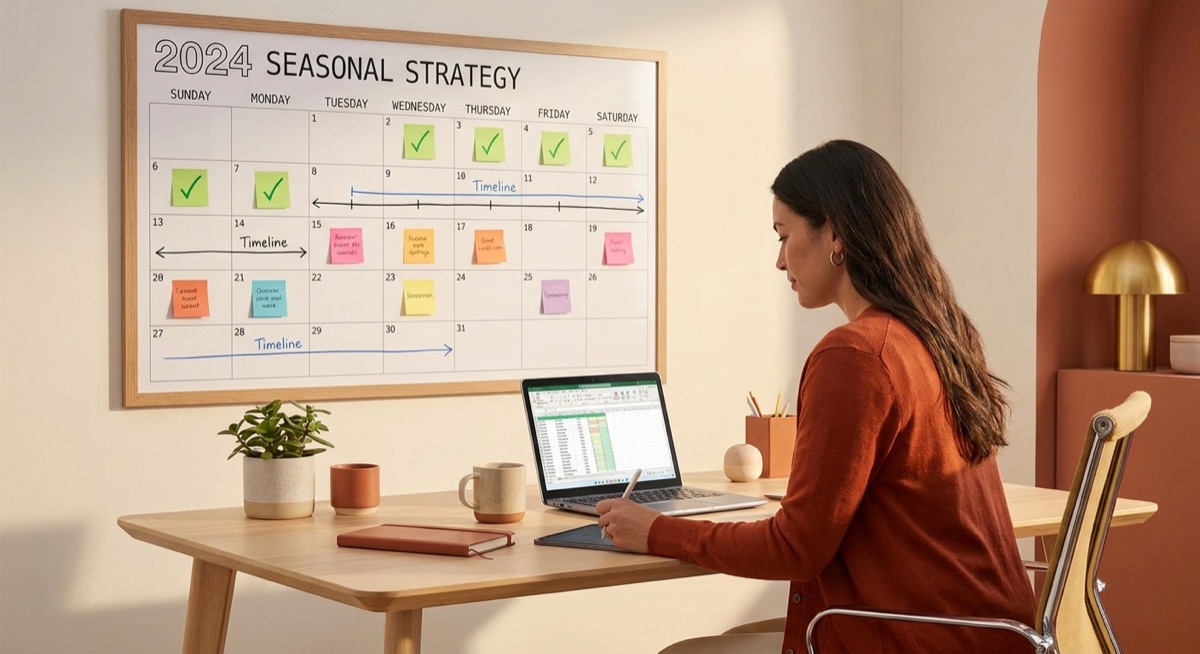
The 90-Day Rolling Window
At any given time, you should be working in three time horizons:
Immediate (0-30 days): Actively marketing and optimizing current seasonal products. Adjusting ads, responding to trends, maximizing the current window.
Launch Mode (30-60 days): Products are live, SEO is building, early advertising is testing. You’re gathering data and preparing for the push.
Creation Mode (60-90 days): Designing, researching, and building the next seasonal collection. This is your creative phase before the execution pressure hits.
Weekly Planning Rhythm
Monday: Review last week’s performance, identify winning products, kill underperformers
Tuesday-Wednesday: Design work for upcoming seasons (60-90 day horizon)
Thursday: Launch new products, optimize listings
Friday: Advertising review and optimization
Weekend: Research and trend analysis
The Seasonal Planning Template
For each seasonal event, create a simple planning document:
- Event: [Holiday/Season name]
- Date: [Specific date or date range]
- Design deadline: [10-12 weeks before]
- Launch deadline: [8-10 weeks before]
- Ad start date: [6-8 weeks before]
- Peak advertising: [2-4 weeks before]
- Last shipping date: [Account for production + transit]
- Number of designs: [Target quantity]
- Target niches: [Specific audiences to target]
- Budget: [Advertising allocation]
Realistic Design Targets
How many designs should you create per season? It depends on your capacity, but here are realistic targets:
Beginner (1-3 months in): 5-10 designs per major holiday
Intermediate (3-12 months in): 15-25 designs per major holiday
Advanced (1+ years in): 50+ designs per major holiday, across multiple niches
Quality matters more than quantity. Five well-researched, niche-targeted designs will outperform fifty generic ones every time.
Common Seasonal Marketing Mistakes (And How to Avoid Them)
After coaching thousands of POD sellers through seasonal campaigns, I’ve seen the same mistakes repeated over and over. Here’s how to avoid them:
Mistake #1: Starting Too Late
This is the number one killer of seasonal profits. If you’re launching Christmas designs in November, you’ve already lost. The sophisticated sellers started in August. Their products have reviews, their ads are optimized, and they’ve built retargeting audiences. You’re starting from zero when they’re at cruising altitude.
Fix: Use the timelines in this guide religiously. Set calendar reminders 12 weeks before each major holiday to begin your design phase.
Mistake #2: Going Too Generic
“Merry Christmas” on a red shirt is not a strategy. Neither is a basic heart for Valentine’s Day. Generic designs compete against millions of other generic designs, often from sellers with bigger budgets and more reviews.
Fix: Always add a niche angle. “Merry Christmas” becomes “Merry Christmas from the night shift nurses.” A Valentine’s heart becomes “My plants are my Valentine.” Specificity wins.
Mistake #3: Ignoring Shipping Deadlines
Nothing tanks your reviews faster than customers not receiving their orders in time for the holiday. POD production plus shipping can take 7-14 days or more. When you’re selling Christmas shirts on December 20th, you’re setting yourself up for angry customers.
Fix: Know your fulfillment partner’s production times. Communicate shipping deadlines clearly in your listings. Stop advertising for gifts after the realistic last-ship date (switch to gift card messaging instead).
Mistake #4: Abandoning Post-Season
Most sellers turn off their seasonal ads the day after the holiday. But there’s still money to be made. Post-Christmas sales, gift card redemptions, and people shopping for themselves continue for weeks.
Fix: Taper your advertising gradually rather than stopping abruptly. Create specific post-holiday campaigns (“Treat yourself” messaging, clearance angles, next-year-prep positioning).
Mistake #5: Not Learning From Data
Every season generates valuable data about what works for your brand and audience. Most sellers never look at it. They run the same generic campaigns year after year, wondering why results don’t improve.
Fix: After each season ends, do a formal review. What designs sold best? Which niches performed? What ad creatives had the best metrics? Document everything and use it to improve next year’s strategy.
Advanced Seasonal Strategies for Scaling
Once you’ve mastered the basics, these advanced strategies can multiply your seasonal profits.
Strategy #1: The Pre-Season Email Build
Start building your email list months before major seasons. Run contests, offer early access, create valuable content. When the season hits, you have a warm audience ready to buy—often at higher margins than cold traffic.
Strategy #2: The Bundle Approach
Instead of selling individual products, create seasonal bundles. A “Halloween Horror Pack” with three shirts at a bundled price increases average order value and creates perceived value that justifies premium pricing.
Strategy #3: The Recurring Customer Campaign
Your past Christmas buyers are your best Christmas prospects. Segment your customer list by past seasonal purchases and create dedicated campaigns for these warm audiences. The conversion rates will dramatically outperform cold traffic.
Strategy #4: The Cross-Seasonal Bridge
Design products that span multiple seasons. A “cozy season” design can sell from September through February. A “celebration” design works for multiple holidays. These evergreen-seasonal hybrids extend your selling windows.
Strategy #5: The Inventory Bet
For your proven winners from past seasons, consider ordering inventory instead of pure POD. The margin improvement and faster shipping times can significantly boost profitability. Only do this with designs that have proven track records.
Your Next 90 Days: The Action Plan
Reading about seasonal marketing is worthless without action. Here’s exactly what to do in the next 90 days to transform your POD business:
Week 1-2: Audit and Plan
- List every seasonal opportunity in the next 6 months
- Create a planning document for each
- Review last year’s performance (if you have data)
- Identify your top 3 priority seasons to focus on
Week 3-6: Design Phase
- Research each priority season deeply
- Identify 3-5 niches per season to target
- Create 5-10 designs per niche
- Have designs reviewed for quality and market fit
Week 7-10: Launch Phase
- Create optimized listings for all products
- Build out SEO and keywords
- Set up advertising campaigns (start with low budgets)
- Create email sequences for your list
Week 11-12: Optimization Phase
- Review early performance data
- Kill underperforming products
- Double down on winners
- Begin planning for the next 90-day window
The Seasonal Marketing Mindset Shift
Here’s the truth that separates struggling POD sellers from those building real businesses: seasonal marketing isn’t extra work—it’s the work.
Random designs uploaded randomly will sometimes get random sales. But building a systematic, calendar-driven business with planned product launches, strategic timing, and continuous optimization—that’s how you build a print on demand business that generates consistent income.
The calendar is your competitive advantage. While other sellers are scrambling to create Halloween designs in October, you’ll have already captured the early shoppers and optimized your campaigns. While they’re launching Christmas products after Thanksgiving, you’ll be enjoying the peak season you prepared for months earlier.
Print on demand rewards the prepared. It rewards the systematic. It rewards those who understand that this isn’t a get-rich-quick game—it’s a build-something-real game.
Take this guide. Implement it. Build your seasonal calendar. And watch how the consistency transforms your business over the next year.
The seasons are coming. Will you be ready?
Frequently Asked Questions
How far in advance should I start creating seasonal designs?
The ideal timeline is 10-12 weeks before the holiday or season. This gives you time to design, list, optimize SEO, and begin advertising before the peak shopping period. For major holidays like Christmas, starting even earlier (August for December sales) provides a competitive advantage.
What if I’m just starting out and can’t create designs for every season?
Focus on 2-3 major seasons your first year. Q4 (Halloween through Christmas) should be priority one, followed by either Valentine’s Day or Mother’s Day/Father’s Day. Master these before expanding to cover the full calendar.
Should I remove seasonal products after the holiday passes?
Not necessarily. Some customers shop post-season for clearance or next-year planning. However, do pause advertising and consider whether the listing clutter is worth maintaining. Some sellers create separate seasonal stores to keep their main store clean.
How do I handle different shipping zones and international holidays?
If you sell internationally, create separate collections and campaigns for different regions. Canadian Thanksgiving (October), Boxing Day (UK/Canada), and other regional holidays represent additional opportunities. Account for longer international shipping times in your deadline planning.
What’s the biggest seasonal opportunity most sellers miss?
Micro-niches within major holidays. Everyone creates generic Christmas shirts, but few create “Christmas shirts for night shift nurses” or “Hanukkah designs for dog lovers.” These specific niches have dedicated audiences with less competition.
How much should I budget for seasonal advertising?
A general rule is to allocate 50-70% of your annual advertising budget to Q4. For other seasons, budget based on the opportunity size—Mother’s Day and Valentine’s Day typically deserve higher budgets than smaller holidays like St. Patrick’s Day.