Long Sleeve Polos with Pockets That Actually Work
You're in a fitting room, ready to buy a long sleeve polo, and reach for the chest pocket out of habit. Your phone doesn't fit. The pocket is a shallow welt, the stitching looks flimsy, or worse, it's only decorative. That small disappointment tells you exactly what many product pages fail to explain: a pocketed polo isn't useful because it has a pocket. It's useful when the pocket carries what you need without pulling the shirt out of shape.
I've sold apparel long enough to see the same regrets repeatedly. Buyers choose a soft fabric with weak pocket reinforcement, a stylish pocket that can't hold a pen, or a long sleeve cut that rides up whenever they reach. The fix is simple, but it requires looking at pocket construction, fabric, and fit as one system. Use this guide to choose long sleeve polos with pockets that work for workwear, golf, travel, layering, and everyday wear.
Table of Contents
- The Pocket Moment That Changes How You Shop
- Anatomy of a Long Sleeve Polo With Pockets
- Fabrics That Decide How the Polo Performs
- Pocket Placement and Construction Decoded
- Fit Checks Most Buyers Skip
- Matching the Polo to Real Use Cases
- Your Pocket Polo Buying Playbook
The Pocket Moment That Changes How You Shop
The pocket moment usually happens after the purchase. You're driving, working at a counter, walking across a course, or carrying groceries, and you need somewhere for a phone, card, pen, or scorecard. The polo looks polished in the mirror, but the pocket either sags under the load or can't hold the item at all.
That's why I treat the pocket as a tool, not a styling detail. A chest pocket should have enough depth for its intended item, a pocket mouth should resist stretching, and the attachment points should survive repeated loading. If the garment will carry anything heavier than a pen, a decorative welt is the wrong choice.
Practical rule: Decide what the pocket must carry before you decide whether you like the shirt.
The category itself has plenty of room for useful variations. The global polo shirt market was estimated at USD 5.0 billion in 2025 and projected to reach USD 7.54 billion by 2032, with a 6.1% compound annual growth rate over that period, according to Polo Shirts Market. That scale matters because a long sleeve polo with a pocket isn't a strange niche experiment. It's a functional variation inside a durable basic-apparel category.
The historical silhouette supports that point. Ralph Lauren's 1991 Big Fit Polo shirt was described as longer and looser, with a chest pocket for men, showing how the polo moved beyond its original short-sleeve, sport-oriented shape. A relaxed cut can work, but only when the pocket, shoulder construction, and fabric support it.
Before buying, ask three questions. What will I carry? Where will I wear it? Will the fabric hold the pocket flat? If the product description answers none of them, you're probably evaluating appearance instead of performance. For a deeper look at why shoppers make emotional and practical apparel decisions, see this guide to the psychology of T-shirt buying.
Anatomy of a Long Sleeve Polo With Pockets
A product page becomes much easier to judge once you know the garment's vocabulary. Start at the top and work downward.
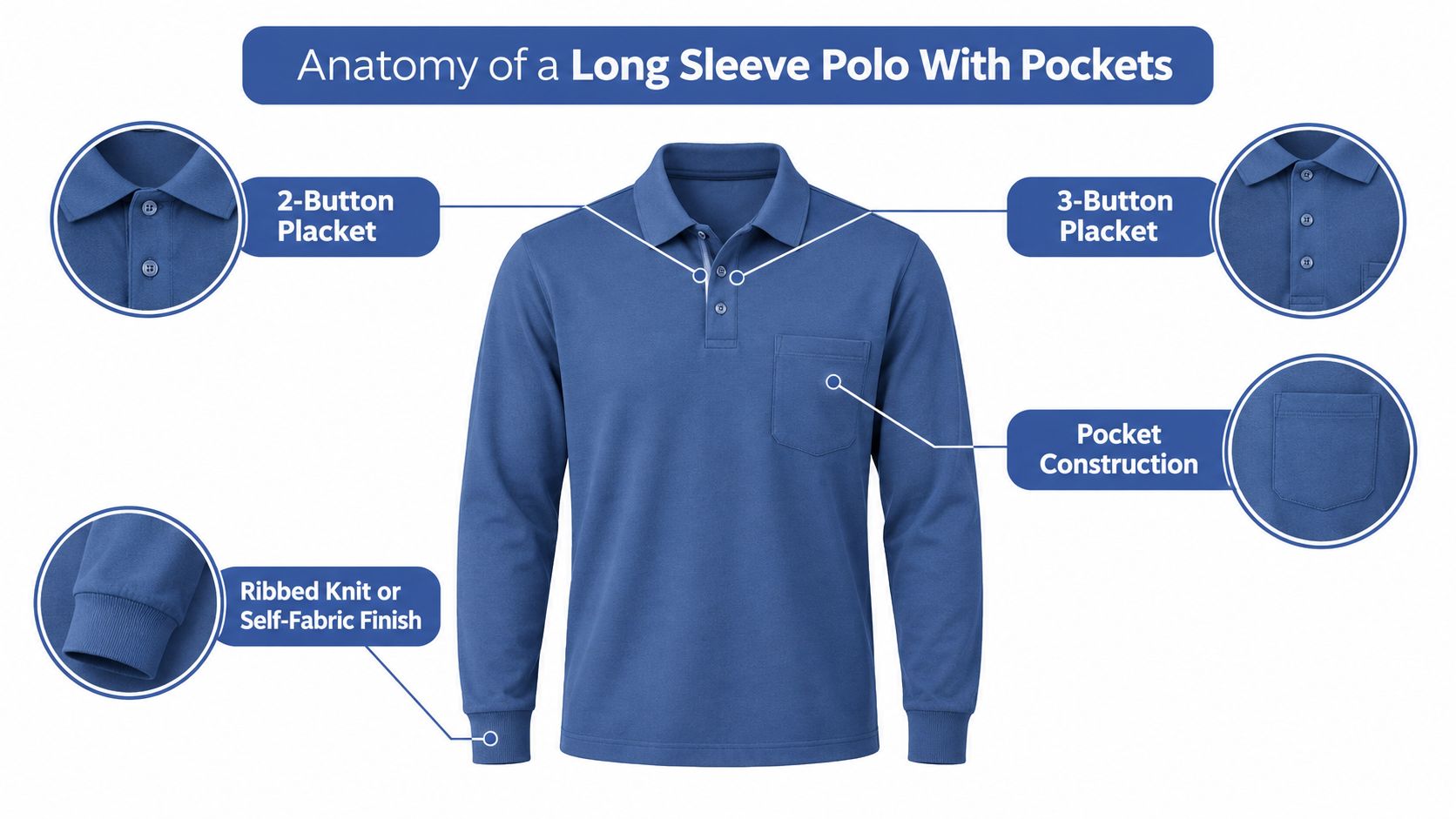
Collar and placket
The collar should hold its shape without curling. A 2-button placket gives the shirt a cleaner, lighter look, while a 3-button placket offers more adjustment and usually reads slightly more traditional. Check whether the placket bottom has reinforcement. That area takes stress whenever you open the shirt or pull it over your head.
Sleeves and cuffs
Long sleeves usually finish with either a ribbed knit cuff or a self-fabric cuff. Ribbed knit grips the wrist and helps block drafts, while self-fabric creates a flatter, shirt-like finish that can layer neatly under a blazer or jacket. Neither is automatically better. Choose the cuff based on whether you prioritize warmth and hold or a cleaner office silhouette.
Body and hem
Look at the yoke, the panel spanning the shoulders. A stable yoke helps distribute movement and reduces strain across the upper back. At the bottom, a straight hem works well untucked, a side-vented hem improves movement, and a drop-tail hem gives more coverage when you bend or reach.
Pocket construction
A welt chest pocket is low-profile and polished, but it needs a firm top edge and strong internal support. A patch pocket sits on top of the fabric, provides more usable volume, and suits heavier workwear fabrics. A hidden zip pocket protects small valuables, though the zipper can add bulk. A dual inner-and-outer pocket gives quick access outside and more secure storage inside.
Look for bar tacks at pocket corners, dense stitching along the pocket mouth, and reinforcement at the placket bottom. Those details tell you more than a product photograph. If you want a broader view of garment construction, this guide to how a shirt is made gives useful production context.
Fabrics That Decide How the Polo Performs
Fabric choice controls comfort, structure, drying speed, and how the shirt reacts when the pocket is loaded. Don't choose based on softness alone. A soft, lightweight knit can feel excellent on day one and still fail as soon as you put a phone in the chest pocket.
Cotton piqué is the best all-round classic. Its textured knit breathes well, holds a structured shape, and supports a patch or stable welt pocket. Choose it for office-to-casual wear, everyday work, and mild-weather layering.
Cotton-linen blends suit warm-weather work because they feel airy and dry comfortably against the skin. Their lighter hand works best with a simple welt or lightly structured patch pocket. Don't load them heavily, or the pocket can pull the front panel downward.
Merino wool earns its place in travel and polished cool-weather dressing. It regulates temperature and resists odor, while a merino blend can sit comfortably beneath a blazer. Use a hidden zip pocket or a carefully reinforced welt. Heavy external pockets can undermine the fabric's clean drape.
Performance polyester and recycled polyester blends win for golf, outdoor work, and active commuting. Moisture-wicking designs move sweat from the skin to the fabric surface for evaporation, and polyester-based versions are commonly marketed as quick-drying, wrinkle-resistant, and pill-resistant, as described in this performance-wear fabric guide. A technical knit pairs well with a low-profile zip pocket or reinforced chest pocket.
Brushed cotton and interlock knits are the cold-weather choices. They feel warmer and smoother, and their stable structure supports a patch pocket or practical lower hand pockets. They're the right answer when the polo needs to function as a light middle layer.
| Fabric | Typical Weight | Best Pocket Type | Best Use Case |
|---|---|---|---|
| Cotton piqué | Midweight | Patch or reinforced welt | Office, everyday work, casual wear |
| Cotton-linen blend | Lightweight | Low-profile welt | Warm-weather work |
| Merino or merino blend | Lightweight to midweight | Hidden zip or reinforced welt | Travel, office, blazer layering |
| Polyester or recycled polyester blend | Lightweight to midweight | Zip or stable chest pocket | Golf, outdoor use, active work |
| Brushed cotton or interlock | Midweight to heavier | Patch or lower hand pocket | Cool-weather layering |
A verified performance example uses 100% polyester with a 6.5 oz fabric weight, one pocket, button closure, and antimicrobial, fade-resistant, shrink-resistant, snag-resistant, and wrinkle-resistant properties, as shown in this First Tactical performance polo listing. For more context on how fabric weight affects apparel behavior, use this practical guide to T-shirt weights.
My direct picks are cotton piqué for workwear, polyester stretch for golf, merino for travel and office layering, and brushed cotton or interlock for cool weather. Those choices match the fabric to the job instead of forcing one polo to do everything.
Pocket Placement and Construction Decoded
Pocket position changes how much you can carry and whether the garment stays comfortable while moving. A left chest pocket sits above the belt line, so it remains accessible while seated or driving. It's the classic choice for a pen, card, glasses, or another small item.
Lower hand pockets behave more like trouser pockets. They're better for a phone, keys, or a scorecard, especially when you're standing or walking. The tradeoff is visual and structural. They can alter the shirt's silhouette and need stronger attachment to prevent the front from sagging.
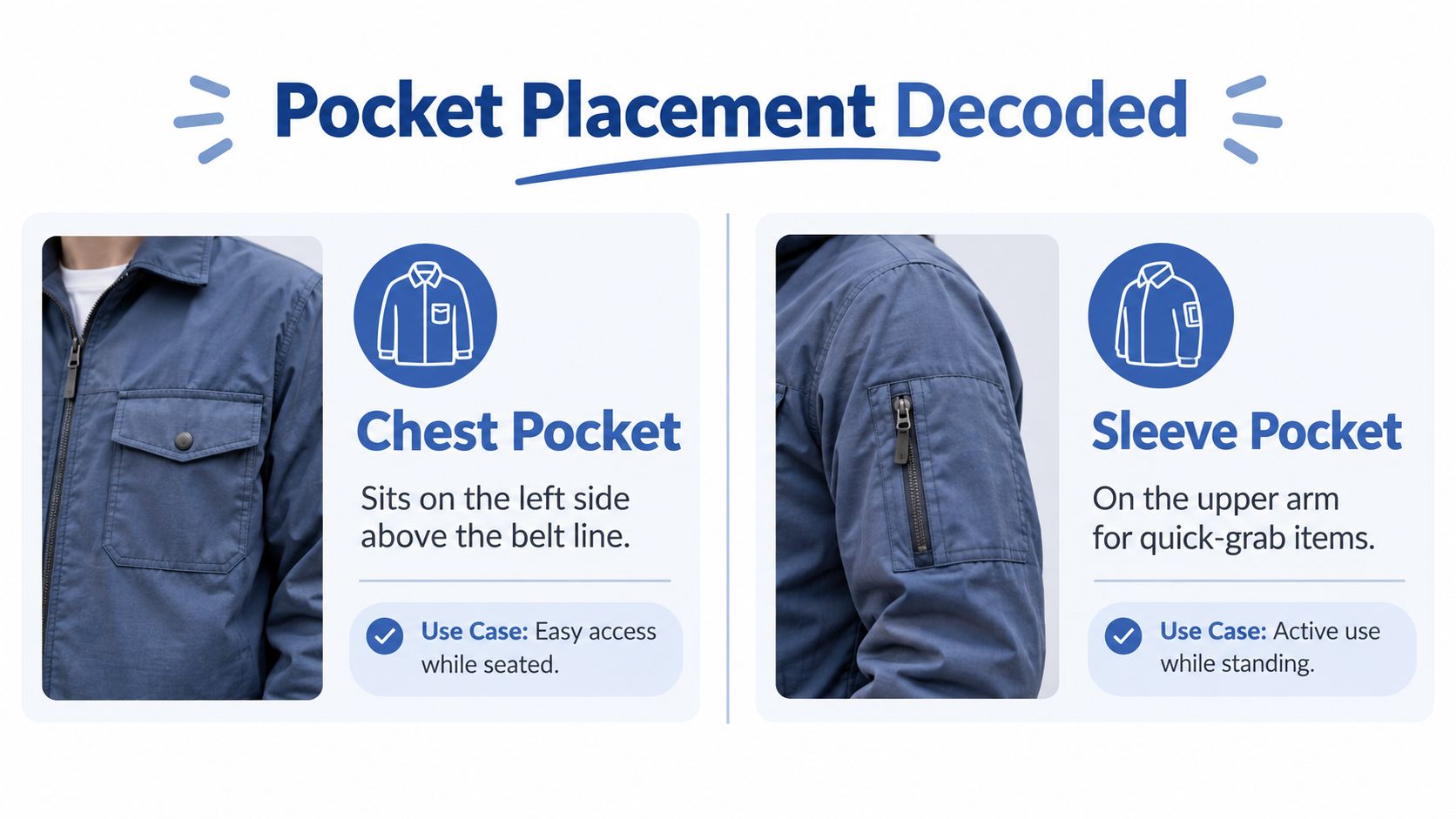
Construction details that matter
Bar tacks at pocket corners reinforce the spots most likely to tear. Double-needle hems add stability at the bottom edge, while a reinforced pocket mouth helps prevent stretching. A welted top edge keeps slim objects from snagging, making it useful for pens and transit cards.
A hidden zip pocket secures valuables, but the zipper adds thickness and can create a visible ridge under a jacket. Flap pockets have a stronger workwear character and shed debris more effectively, though the flap must remain easy to open with one hand.
Technical polos often add stay-flat collars, anti-snag construction, and UPF 40+ to UPF 50+ UV protection, features discussed in this long sleeve pocket polo guide. Those details matter outdoors, but they don't replace sound pocket construction.
Match the pocket to the load
A chest welt is excellent for a pen and poor for a bulky phone. A patch pocket handles more volume but can look too casual under a blazer. A zip pocket protects cards and keys but becomes annoying if the zipper catches or the opening is too narrow.
One premium example uses a left-chest mesh zippered pocket with a tee holder, vented back shoulders, and quick-dry two-way stretch fabric made from 89% polyamide and 11% elastane, shown in this PXG performance pocket polo. That combination makes sense because the pocket serves a specific active-use purpose rather than acting as decoration.
Fit Checks Most Buyers Skip
A pocket can be perfectly constructed and still feel useless if the shirt fits badly. Long sleeves expose fit problems quickly, especially when you reach, drive, or layer beneath a jacket.
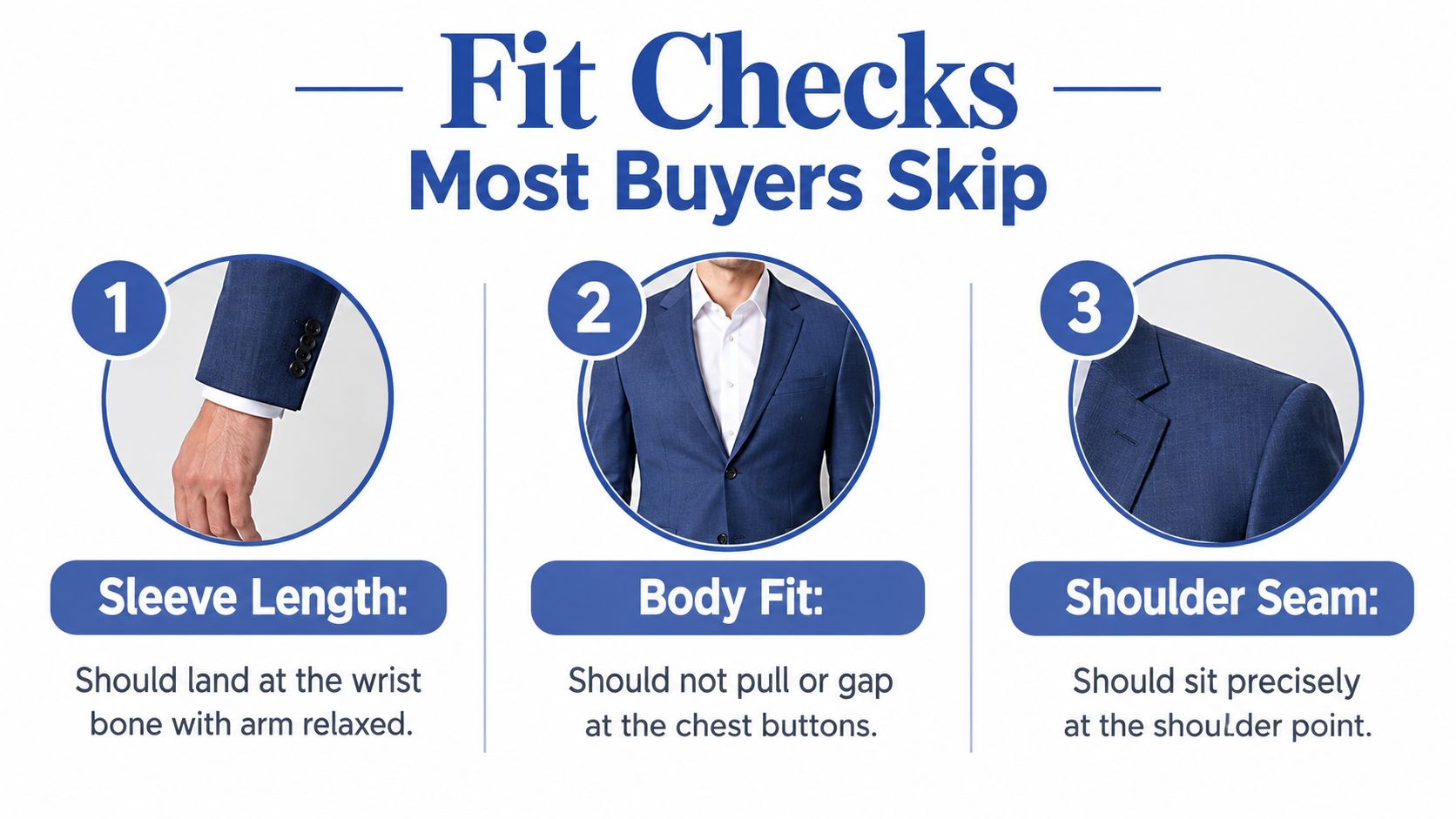
Start with the sleeves. With your arm relaxed, the cuff should land at the wrist bone. If it bunches toward the thumb, it's too long. If it floats above the wrist, you'll lose coverage and the shirt will look undersized.
The body should fall past the belt line so it stays tucked during reaching and lifting. It should still be short enough to wear untucked without looking like a tunic. A pocket adds visual weight to the front, so excess length or volume makes the whole shirt look sloppy faster than it would on a plain polo.
Check the upper body
The shoulder seam should sit at the edge of the shoulder bone. A seam that falls beyond it creates a droopy oversized shape, while one that cuts inward restricts movement. Check the chest by pinching fabric at the widest point. One to two inches of slack gives you room to layer without creating a billowing front.
Then close the top button. The collar points should lie flat, not flare or curl. Cuffs should grip the wrist without binding, and the hem should fall evenly without pulling at the side seams.
Test the shirt in motion
Raise both arms, reach forward, sit down, and simulate the movement you'll use at work or on the course. Watch the pocket. If it opens, twists, or drags the fabric diagonally, the fit or reinforcement is wrong.
A good pocket stays usable when the wearer stops standing still.
Don't let a loose torso disguise narrow shoulders or short sleeves. Those problems become obvious after a full day, not in a quick mirror check. Measure a shirt you already like and compare sleeve, body, and shoulder dimensions before ordering online.
Matching the Polo to Real Use Cases
The right long sleeve polo depends on the job, not the product category. A golf shirt, workshop shirt, and office layer can all have collars and pockets, but they need different fabrics and pocket placements.
For golf, choose a polyester-spandex knit with a low-profile left chest pocket. It can hold a rangefinder, ball marker, or scorecard without adding bulk across the swing. Two-way stretch and vented back shoulders are especially useful when the shirt must move with the torso.
For a workshop or jobsite, choose heavier cotton or a cotton-rich blend. Reinforced hand pockets and bartack stitching make more sense than a sleek chest welt when the wearer needs small tools and abrasion resistance. A workwear cotton polo with an internal breast pocket, button fastener, 3-button bar, side slits, elasticated cuffs, and machine-wash care at 60°C shows how the category can combine shirt utility with polo styling, as illustrated by this Strauss cotton pocket polo.
For office-to-evening wear, merino or a merino blend looks cleaner beneath a blazer. Use a hidden zip pocket for a phone or wallet, then pair the polo with well-fitted trousers, chinos, loafers, or a structured jacket. Avoid oversized pockets and overtly athletic finishes if the setting expects business-casual polish.
| Use Case | Best Fabric | Pocket Type | Key Feature |
|---|---|---|---|
| Golf | Polyester-spandex knit | Low-profile chest zip | Stretch and movement |
| Workshop or jobsite | Heavy cotton or cotton-rich blend | Reinforced hand or patch pocket | Abrasion resistance |
| Office to evening | Merino or merino blend | Hidden zip pocket | Clean layering under a blazer |
| Cool-weather layering | Heavy piqué or brushed jersey | Low-bulk chest pocket | Warmth without excessive bulk |
| Travel | Wrinkle-resistant performance knit | Secure zip pocket | Protection for cards and documents |
Travel deserves special attention. A pocket that closes securely is more useful than a large open pocket, and wrinkle-resistant fabric reduces the maintenance burden between stops. When researching visual references or comparing similar garments, reverse image search clothes can help you identify comparable pocket layouts and construction details before you buy.
Your Pocket Polo Buying Playbook
Use this sequence every time. It keeps you from being distracted by color, branding, or a flattering product photo.
1. Lock in the primary use
Write down the main job: office, casual wear, outdoor work, golf, travel, or layering. One polo can cover nearby use cases, but it won't excel everywhere. A golf shirt's stretch and drying speed are valuable on the course, while a work polo needs stronger pocket attachment and abrasion resistance.
2. Select fabric for the climate
Choose cotton piqué when breathability and structure matter most. Choose polyester or a recycled blend for moisture management and easy care. Choose merino for temperature control and polished layering, then reserve brushed cotton or interlock for cooler conditions.
The broader category has substantial manufacturing volume. One market report estimated more than 1.2 billion polo shirts manufactured worldwide in 2023, including about 650 million men's, 370 million women's, and 180 million kids’ polos, according to this polo shirt market report. That large base gives shoppers plenty of product variation, but it also makes careful filtering essential.
3. Verify the pocket against the load
Need a pen? Choose a reinforced chest welt. Need a phone or keys? Look for a deeper patch, hand pocket, or secure zip pocket. Need quick access while standing? A sleeve pocket can work, provided it doesn't interfere with arm movement.
A workplace uniform example uses 100% certified recycled PET polyester at 155 GSM and adds a left-chest pocket reinforced with a pen insert, as shown in this uniform pocket polo specification. That's the kind of detail worth searching for because it explains the pocket's job.
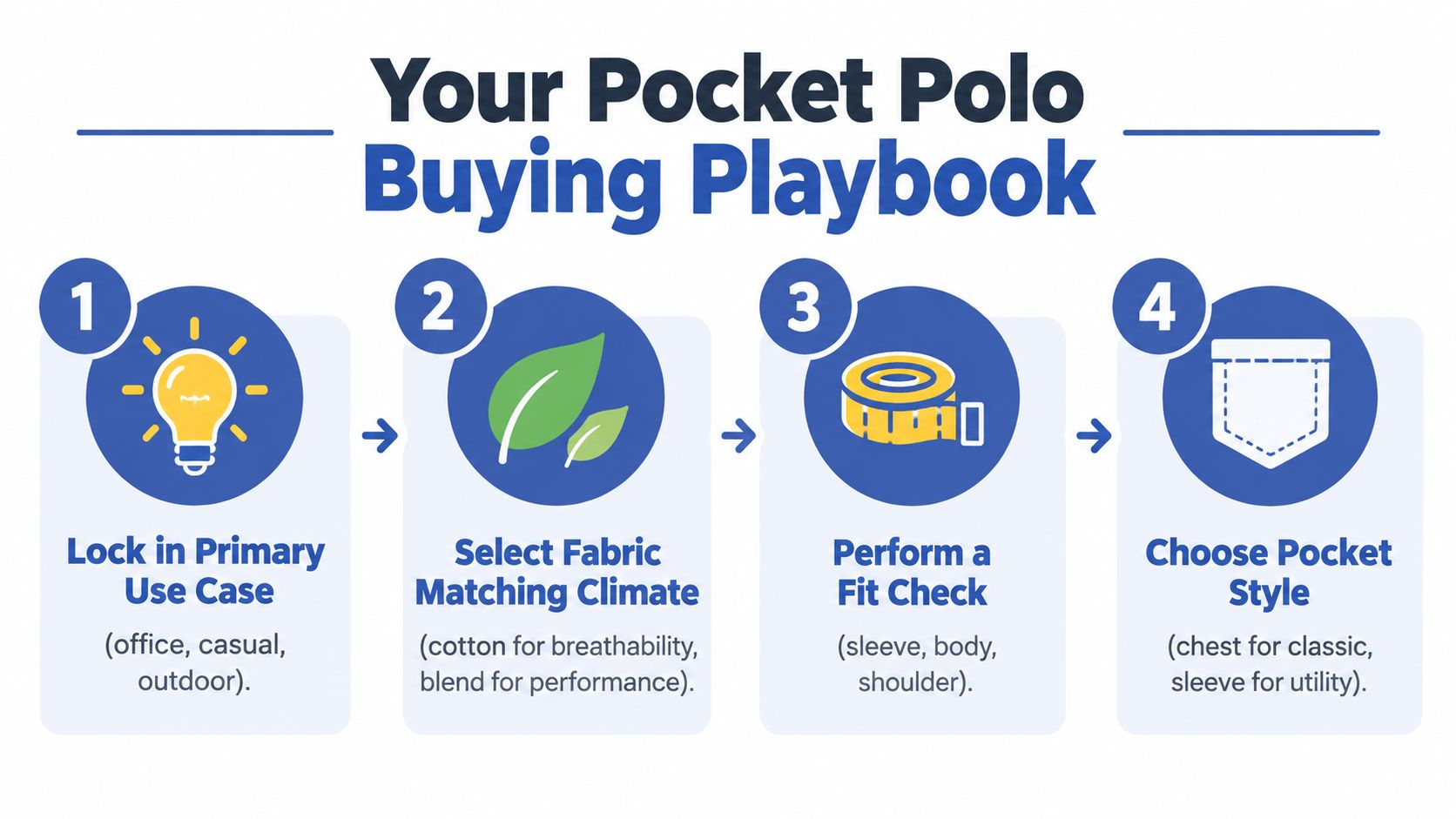
4. Confirm fit and inspect quality
Check sleeve length at the wrist bone, body length past the belt line, and shoulder seams at the shoulder point. Then run a quick fitting-room inspection:
- Pocket seam: Look for dense, even stitching and reinforced corners.
- Button tension: Pull the placket gently. Buttons shouldn't feel loose or strain the fabric.
- Collar recovery: Stretch the collar slightly and release it. It should return to shape.
- Movement: Sit, reach, and lift your arms. The pocket should stay flat and accessible.
Buy heavier knits when you're preparing for fall layering, and look for thermal blends as cool-weather stock appears. Technical fabrics are often worth checking during end-of-season clearance, especially when the pocket design is sound and the fit is right. Don't buy a poor garment just because the price dropped.
The market outlook also supports a practical, seasonal approach. One analysis projects the broader polo-shirt market from USD 8.9 billion in 2025 to USD 14.9 billion by 2034, at a 6.1% CAGR, while noting demand for athleisure, hybrid styles, and customization. Separate analysis points to winter search spikes, fall and early-winter demand, and gifting periods around Father's Day, back-to-school, and holidays, as described in this polo shirt market overview. That makes timing useful, but use case should still lead the decision.
A well-designed long sleeve polo with a pocket has a clear place in modern apparel. It extends the polo into cooler weather, supports work and outdoor routines, and gives eCommerce sellers a product angle built around real utility rather than another vague claim of versatility. Choose the job first, then the fabric, pocket, and fit, and you'll end up with a garment people are excited to wear because it solves a problem.
If you're building an apparel business around practical products like functional pocket polos, Skup gives you a structured path through the Apparel Cloning System, while AvatarIQ helps you create original designs and professional mockups faster. Visit Skup to explore the tools and guidance for turning useful apparel ideas into stronger eCommerce listings.