T Shirt Weights Explained: A Practical Guide for Sellers
What if the “better” t-shirt blank is the wrong choice for your customer? A new POD seller can stare at two nearly identical shirts, notice that one costs more, and assume the heavier option must deliver a better experience. The decision is more practical: which blank gives the right feel, print result, fit, and margin for the person who'll wear it?
T-shirt weight affects how much skin or design shows through in daylight, how the fabric hangs over the torso, how substantial the garment feels, and how decoration sits on the surface. It also influences shipping, customer expectations, and whether a product feels appropriate for a hot climate, a gift purchase, or a premium streetwear drop.
By the end, you'll be able to read GSM and ounces, match weight to DTG, DTF, screen printing, or embroidery, and choose a blank by climate, customer, and price tier. You won't need to pay a premium for an overbuilt shirt when a balanced blank would serve the product better.
Table of Contents
- Why the Weight on the Label Matters More Than You Think
- GSM and Oz Explained Without the Jargon
- Lightweight, Midweight, and Heavyweight Tees Compared
- How Weight Changes the Print, the Feel, and the Fit
- Picking the Right Weight by Climate, Customer, and Price
- Weight and Your Margins, Shipping, and Returns
- Your Simple Weight Picker for Any POD Niche
Why the Weight on the Label Matters More Than You Think
Could the heavier blank make your product less suitable for its customer? Two shirts can share similar photos, colors, and cuts while serving very different buying decisions. If one costs $2 higher, the extra fabric needs to improve the wearing experience, print result, or price-tier signal enough to justify that cost.
Fabric weight is one of the clearest predictors of drape, opacity, and perceived quality in a t-shirt. Everyday tees commonly sit around 150 to 180 GSM, or approximately 4.4 to 5.3 oz/yd². Heavier fashion and workwear shirts generally begin around 180 GSM and move upward, as explained in this t-shirt weight guide.
What the customer notices first
A lighter jersey often feels airy and flexible. It may also sit closer to the body or reveal more shadowing under strong light. A denser jersey usually provides more coverage and a cleaner outline, but it can feel warmer and hang with less movement. Climate, styling, and the customer's expected price tier all affect whether those traits feel like benefits.
Weight also changes the printed surface. On a thin blank, a large decoration may feel more prominent. A structured blank can give the design a steadier base, though the final result still depends on the decoration process and fabric construction. Treat weight as a selection filter, then confirm the choice with a physical sample and test print.
Practical rule: Choose the blank for the customer's wearing experience first, then confirm that the fabric supports the decoration method.
Why production details matter
A t-shirt is more than fabric with artwork placed on top. Knit, yarn, finishing, cutting, construction, printing, and inspection all affect the garment that reaches the buyer. Reviewing how a shirt is made helps connect supplier specifications with the result your printer delivers on the first run.
Weight also belongs in the unit-economics decision. A heavier blank can support a premium product promise, while a lighter one may suit warm-weather apparel or a lower entry price. Added material can affect the blank cost and shipping weight, so the customer's preferred feel must earn its place in the margin.
Promotion should match that promise. For event apparel, community merchandise, or a local campaign, The Print Warehouse's guide to marketing with leaflets offers ideas for directing attention from a physical message to a collection or event.
The strongest blank is not automatically the heaviest. It is the weight that keeps the design comfortable, the garment credible, and the economics workable for the audience you want to reach.
GSM and Oz Explained Without the Jargon
What does a number such as 180 GSM tell you about the shirt a customer will wear and the blank your printer will decorate? It describes fabric mass, not the complete quality or value of a product.
GSM means grams per square meter. A 180 GSM fabric weighs 180 grams per square meter before the garment's cut, seams, trims, and other components are included. More GSM generally means more mass in the jersey, which can contribute to greater opacity, structure, and substance. Lower GSM usually produces a lighter, airier hand-feel. Treat the figure as a filter for customer experience and product cost, not as a quality score.
Reading ounces on a US catalog
US blank catalogs often show fabric weight in ounces per square yard, written as oz/yd² or oz. International suppliers commonly use GSM. The practical conversion is 1 oz/yd² ≈ 33.9 GSM, so 160 GSM is about 4.7 oz/yd², while a 5 oz shirt is about 170 GSM. The t-shirt weight guide from Printful also helps place catalog figures in context.
Some planning notes use a rougher conversion of 1 ounce equaling about 43 GSM, but that does not match the apparel conversion used here. For comparing blanks, keep the fixed relationship of approximately 33.9 GSM per oz/yd².
Quick translations:
- 4 oz is roughly 136 GSM.
- 5 oz is roughly 170 GSM.
- 6 oz is roughly 203 GSM.
These figures compare fabric specifications. They do not guarantee that every finished shirt will have the same drape, softness, or print result.
Finding the number on any spec sheet
Search for fabric weight, weight, GSM, or oz/yd². The figure may appear beside fabric content, blend, fit, stitching, and finishing details. Catalogs for Gildan, Bella+Canvas, and Next Level commonly organize blanks this way, although construction still varies by style.
A typical t-shirt falls approximately between 130 and 220 GSM, or about 3.5 to 6.5 oz/yd². A broader guide places lightweight tees around 120 to 150 GSM, everyday tees around 150 to 180 GSM, and heavyweight tees around 180 to 220+ GSM, as outlined by Looped In Looks.
Two shirts with the same number can feel different. Yarn count, knit density, fiber content, washing, dye, and finishing affect softness, stretch, drape, and surface texture. Use GSM or ounces to narrow the catalog, then order samples and test the decoration method. This POD t-shirt guide can help compare blanks while balancing the customer's expected feel with the product's price tier and production requirements.
Lightweight, Midweight, and Heavyweight Tees Compared
Which t-shirt weight fits the customer, the climate, and the order economics? The three broad bands turn a spec-sheet number into a likely wearing experience. They are practical labels rather than universal legal categories, so suppliers may classify the same fabric differently. Use them as a starting point, then confirm the actual blank through sampling.
| Weight Band | GSM Range | Oz Equivalent | Feel & Best Use |
|---|---|---|---|
| Lightweight | 120 to 150 GSM | About 3.5 to 4.4 oz/yd² | Airy, flexible, suited to hot weather, athletic use, layering, and promotional basics |
| Midweight | 150 to 180 GSM | About 4.4 to 5.3 oz/yd² | Balanced drape, coverage, and versatility for everyday retail |
| Heavyweight | 180 to 220+ GSM | About 5.3 to 6.5+ oz/yd² | Denser, more structured, and useful for premium blanks, workwear, and streetwear |
Lightweight fabric
A lightweight tee usually suits heat because its thinner knit allows more airflow and packs easily for travel. It can work well for summer activity, layering, athletic designs, and promotional basics. The ultra-light range of 90 to 120 GSM is often chosen for hotter regions or lower-cost products, while 120 to 150 GSM remains a common lighter-shirt range.
The customer experience is airy and flexible, with a looser drape. The trade-off is less coverage and structure. The fabric may cling, show more outline, or allow shadows beneath dark artwork in strong daylight. For a gym, surf, festival, or summer lifestyle niche, that lightness may be the product's appeal. For a premium price tier, it may instead make the garment feel too thin.
Lightweight blanks can also affect your unit economics. They may reduce material and shipping weight, but a lower perceived value can increase dissatisfaction if the product page suggests a substantial tee. Match the blank to what the buyer expects to feel, not to the lowest catalog cost.
Midweight fabric
Midweight is the practical workhorse for a broad catalog. The 150 to 180 GSM area supports everyday retail, while the more focused 160 to 190 GSM range is commonly treated as an all-rounder. It offers a useful balance of coverage, drape, and seasonal flexibility without making a warm-weather shirt feel overly heavy.
That balance makes midweight a sensible testing ground when you have not yet learned which silhouettes your customers prefer. It can suit gifts, souvenirs, core retail graphics, and several climate types. The added body may also give printed artwork a steadier surface, although the final result still depends on the blank, decoration method, artwork, and settings.
Heavyweight fabric
Heavyweight tees bring density, opacity, and structure. A 200 to 240 GSM shirt can feel boxier and more premium, while 240+ GSM may become noticeably dense or rigid. This range fits streetwear, heritage-inspired collections, cooler climates, and workwear, especially when customers want the shirt to hang away from the body.
The cost is warmth, reduced fluidity, and usually more material to ship. Choosing the heaviest blank can therefore raise fulfillment costs without improving the experience for a tropical or activewear audience. Compare the fabric feel with the intended price tier and production method. For more blank comparisons, this guide to best quality tee shirts for printing helps assess fabric feel alongside decoration needs.
How Weight Changes the Print, the Feel, and the Fit
What does a customer notice first, the artwork or the shirt beneath it? Fabric weight affects both. It shapes how a print sits, how the garment feels against the body, and whether the finished product matches its price tier. A design can look sharp on screen yet feel unbalanced if the blank is too thin, too dense, or poorly matched to the decoration method.
A 120 to 150 GSM tee feels airy and usually drapes loosely. That suits faded summer graphics and warm-weather products, but a large DTG print may sink into the knit and lose some visual crispness. Dark artwork can also show more of the body beneath the fabric. On thin jersey, a screen-printed layer may feel more obvious because there is less material around it.
Midweight as the flexible production choice
The 160 to 190 GSM range gives common POD methods a steadier foundation. DTG and DTF artwork can sit on a more stable surface, while screen printing can retain a balanced hand-feel without making an everyday graphic seem overly heavy. For a new seller testing several designs, this can reduce the risk of choosing a blank that feels too delicate or too warm.
Embroidery gains support from the added body as well. Thin jersey may let dense stitching pull the knit inward or create puckering around the design. A midweight blank resists that movement better, although backing, stitch density, design size, and machine settings still affect the result.
Production check: Do not approve a print method from a catalog description alone. Test the actual artwork on the actual blank, then inspect the front, reverse side, seams, and post-wash appearance.
What changes on heavyweight blanks
At 200 to 240 GSM, the fabric creates a deeper, denser base. Heavy embroidery can draw the fabric inward as stitch tension builds, yet the effect may look deliberate and premium when the design is sized correctly. The backing inside the shirt also feels more substantial.
Discharge and water-based inks can soak into a deeper fiber bed and produce a soft hand-feel on suitable heavyweight cotton. The outcome depends on the ink, pretreatment, fabric content, curing, and printer settings. Treat heavyweight fabric as a compatibility direction, not a guaranteed result.
Independent apparel guidance places 180 GSM near a standard tee benchmark and 220 GSM near a thicker, more substantial quality benchmark, as summarized by Garment Calc.
| Weight Band | Best Print Methods | Common Misprint |
|---|---|---|
| Lightweight, 120 to 150 GSM | Light DTG, simple DTF, low-density screen print | Using a thin blank for a large, multi-color front and back print can make the garment feel unbalanced |
| Midweight, 160 to 190 GSM | DTG, DTF, screen print, moderate embroidery | Treating the blank as universal without testing opacity, curing, and stitch density |
| Heavyweight, 200 to 240+ GSM | Screen print, discharge, water-based ink, structured embroidery | Using a dense heavyweight for a tiny left-chest embroidery can make needle penetration and fit feel excessive |
Weight also affects the customer's experience after purchase. Repeated washing may make a thin blank reveal more transparency or lose its intended drape. A dense blank may hold its structure longer but feel too warm for the niche. Run the finished item through your normal care instructions before scaling the listing, because one successful sample does not prove that the blank, artwork, and decoration method work together.
Picking the Right Weight by Climate, Customer, and Price
Which shirt should a customer receive when the catalog offers several weights? Start with the buying situation, not the highest GSM number. A heavyweight tee may feel premium to a streetwear buyer in a cool climate, yet uncomfortable for someone choosing summer activity apparel. Weight shapes the customer's experience and your price tier at the same time.
Match the blank to the climate
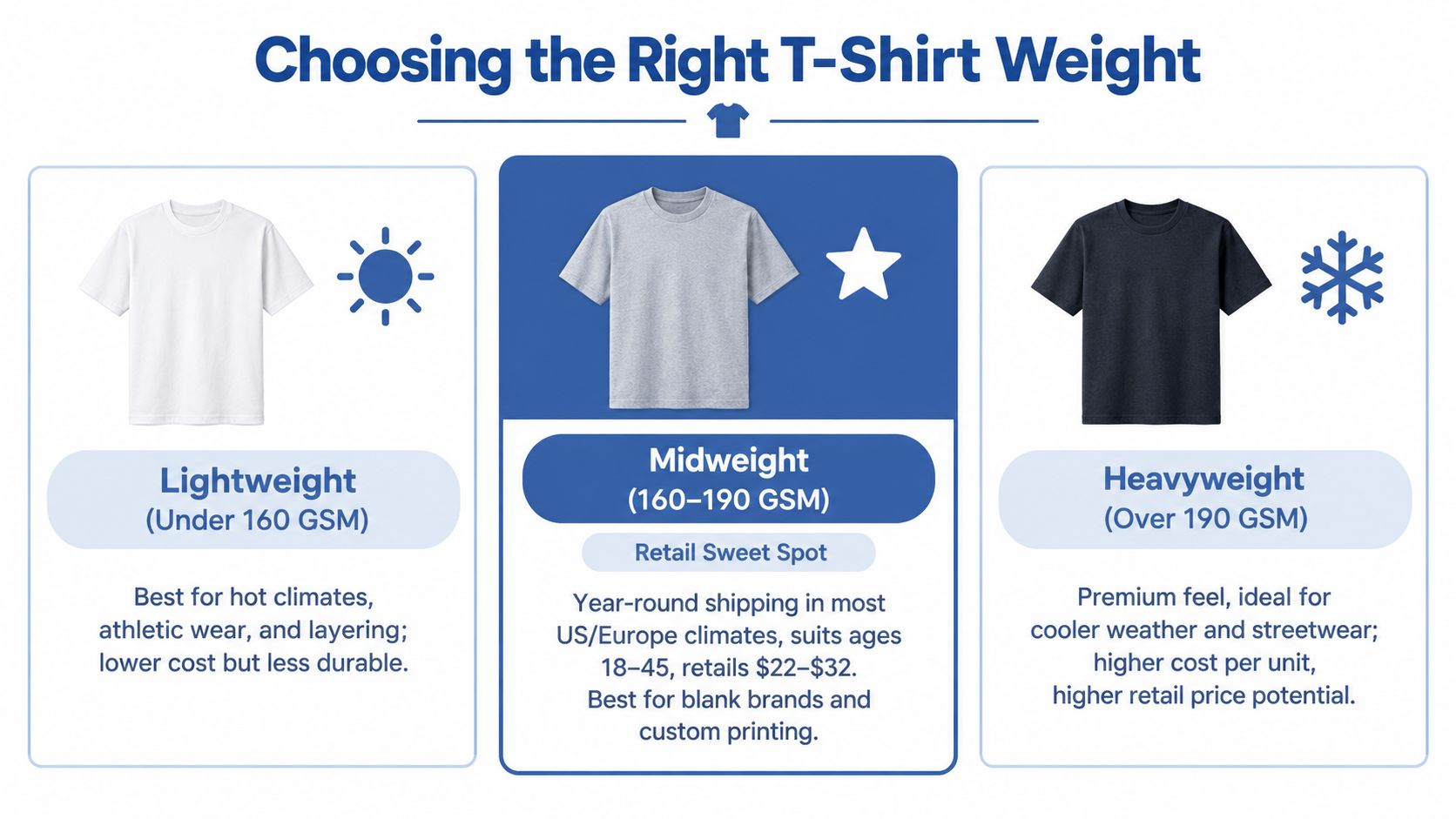
Lightweight tees around 120 to 150 GSM suit tropical and subtropical regions, including Southern California, Florida, Southeast Asia, the Gulf, and Latin America, where warm conditions dominate much of the year. They work well for lower-priced basics, event merchandise, gym clothing, and products where airflow matters more than structure.
Midweight tees around 160 to 190 GSM offer a practical year-round option for many US and European customers. A shirt in this range can feel substantial without becoming overly warm, making it useful for broad audiences and accessible retail positioning.
Heavyweight blanks around 200 to 240 GSM fit cooler regions and premium positioning. Streetwear and boutique customers in the US Northeast, the UK, Northern Europe, and parts of Australia may prefer a denser silhouette during cooler buying seasons. They are paying for a different wearing experience, not more fabric.
Match the blank to the buyer
Customer expectations change with the use case:
- Gym and surf buyers usually value an airy drape and easy movement.
- Office and uniform buyers often prefer more structure and dependable coverage.
- Gift and souvenir buyers generally want a midweight shirt that feels like a real present.
- Streetwear collectors may look for heavyweight density, a strong neckline, and a labeled neck rib.
Price positioning should follow that experience. Lightweight basics can support sub-$20 budgets, midweight products commonly fit a $22 to $32 retail band, and premium heavyweight drops can sit around $32 to $48. These ranges are general positioning references, not automatic pricing rules. Decoration, branding, fulfillment, and audience expectations still determine whether the offer makes economic sense.
The common inventory mistake is choosing a weight for the wrong season. A warm-weather audience may delay or reject a dense shirt, while a cooler-weather streetwear audience may see an ultra-light blank as unfinished. Test the intended climate, customer, and print method together before committing to a larger catalog.
Weight and Your Margins, Shipping, and Returns
Fabric weight affects more than the blank's purchase price. It can influence the packed product, the customer's fit expectations, the shipping experience, and the kinds of complaints that reach your inbox.
A lighter blank generally uses less material and may occupy less shipping mass than a denser one. That doesn't automatically guarantee a lower carrier charge, because packaging dimensions, destination, fulfillment partner, and rate structure also matter. Treat shipping as a measured input in your own contribution margin model, not as an assumption based only on GSM.
Build the calculation around the finished order
Start with the complete product cost:
- Blank garment
- Decoration and fulfillment
- Packaging
- Shipping
- Marketplace or payment fees
- Refunds, replacements, and customer service allowance
Then compare the result with your selling price. A contribution margin calculation guide can help you separate revenue from the costs that move with each order.
Midweight blanks often give sellers a useful balance between perceived quality and cost. They can feel substantial enough for a retail product without forcing the customer to pay for a premium streetwear construction. Heavyweight products may justify a higher selling price, but only when the niche recognizes the denser fit and the rest of the product experience supports that positioning.
Returns often begin with mismatched expectations
Thin tees can create complaints about transparency, cling, or a less substantial feel. Heavy tees can cause different objections, including excessive warmth, stiffness, or an unfamiliar boxy fit in a warm-weather niche. Neither result means the weight category is bad. It means the product promise, photos, description, and audience weren't aligned.
Show the fit clearly, describe the fabric, and order samples before launch. The right blank protects margin because it reduces the chance that customers feel misled after delivery.
Your Simple Weight Picker for Any POD Niche
You can narrow the choice quickly by applying three filters in order: print method, niche, and climate. Start with the decoration because the artwork needs a compatible foundation. Then use the customer's environment and style expectations to choose between the remaining options.
Start with the print method
For DTG and DTF, begin around 160 to 200 GSM when you want a stable surface and balanced coverage. Screen printing can work across approximately 140 to 220 GSM, depending on the design, ink system, and desired hand-feel. Embroidery generally benefits from 200 GSM or higher when the design carries meaningful stitch density.
Those ranges are selection starting points, not production guarantees. A small left-chest logo behaves differently from a full-front graphic, and a simple one-color print places different demands on a blank than a dense design.
Add the niche and climate
| Niche | Climate | Print Method | Recommended GSM | Why It Works |
|---|---|---|---|---|
| Gym, surf, and summer lifestyle | Hot or humid | DTG or DTF | 130 to 160 GSM | Keeps the garment airy and flexible for active use |
| Broad retail and gifts | Mixed or year-round | DTG, DTF, or screen print | 160 to 190 GSM | Balances coverage, drape, comfort, and product value |
| Office, uniform, and practical workwear | Mixed or cooler | Screen print or embroidery | 180 to 220 GSM | Adds structure and supports a more substantial presentation |
| Streetwear and heritage collections | Cool or seasonal | Screen print, discharge, or embroidery | 200 to 240 GSM | Creates density, structure, and a premium oversized feel |
For hot regions, stay below 150 GSM unless the customer specifically wants a heavier silhouette. For mixed climates, 160 to 190 GSM is a dependable starting range. For cold regions or structured streetwear, start at 200 GSM and above.
Choose one midweight blank, run one controlled sample, wash it according to the care label, and inspect the print, seams, fit, and hand-feel. Customer feedback can then guide your next catalog move without tying up cash in several untested weights.
Skup helps POD sellers make practical product decisions like this through its Apparel Cloning System, hands-on eCommerce education, and AvatarIQ for creating apparel designs and professional mockups faster. Visit Skup to explore the tools and guidance for building a focused, profitable POD apparel brand.