8 Student Case Study Examples POD Beginners Can Copy
You don't need luck, professional design skills, or a big inventory budget to start testing print-on-demand products. You need a repeatable method and evidence that buyers want what you're offering. The opportunity is substantial: the U.S. Census Bureau estimated retail e-commerce sales at $310.3 billion in the third quarter of 2025. That doesn't guarantee your next shirt will sell, but you don't have to create demand for online shopping from scratch.
The useful question is smaller: which audience can you serve with an original product they'll want? Apparel Cloning gives you a starting point by studying proven demand, then developing your own designs for a relevant niche.
These eight student case study examples turn that approach into practical playbooks for beginners learning with Skup. They're illustrative scenarios, not verified accounts of individual students or promises of earnings. Each breaks down a problem, an Apparel Cloning approach, the results worth measuring, and tactics you can apply to your store this week.
Read them with your own schedule, budget, and experience in mind. A parent working around school pickup needs a different workflow from someone ready to scale an established store.
Copy the decision process, not someone else's artwork or income expectations. You'll still need to research, publish, answer customers, and improve. The encouraging part is that you can make those jobs manageable instead of trying to master everything before you begin.
Table of Contents
- 1. The Apparel Cloning Method Without Copying Someone Else's Work
- 2. The Evening Launcher Building Around a Full-Time Job
- 3. The Parent's Flexible Income Store
- 4. The Designer-Turned-Seller Improving the Design-to-Listing Workflow
- 5. The Niche Specialist Going Deep Instead of Broad
- 6. The Test-and-Learn Advertiser Protecting a Small Budget
- 7. The Incubator Graduate Preparing for Full-Time Business
- 8. The Mockup-Driven Brand Building Buyer Confidence
- 8 Student Case Study Examples at a Glance
- Your Turn Turning These Examples Into Your First Launch
1. The Apparel Cloning Method Without Copying Someone Else's Work
A beginner finds a popular hiking shirt and immediately starts sketching mountain graphics. That's a reasonable instinct, but a broad hiking audience gives the beginner little direction about language, imagery, or differentiation.
The problem: starting from a blank page encourages guesswork. Starting from another seller's exact artwork creates a different problem, because you haven't built anything distinctive.
The Apparel Cloning approach: study several products that show signs of demand, then identify the underlying appeal. Is the buyer expressing pride, sharing an inside joke, or buying a gift for someone with a specific interest?
Turn the Buying Motive Into an Original Product
Say the beginner notices strong interest in hiking humor. Rather than recreating an existing shirt, they investigate birdwatchers who hike and develop original concepts around trail sightings, binoculars, and patient observation.
The transferable insight is the buying motive, not the graphic, slogan, brand name, or layout. Check marketplace activity, customer language, competing listings, and relevant intellectual-property restrictions before committing.
The Apparel Cloning examples guide offers a practical starting point for thinking through that distinction.
Results to measure: whether the focused listings attract relevant visitors, produce orders, and leave money after fulfillment and selling costs. An attractive design alone isn't proof of demand.
- Research the audience: Write down the expressions and interests that make this group distinct.
- Find a meaningful gap: Look for underserved preferences, not merely an empty search result.
- Track individual listings: Record views, orders, costs, and customer questions before making changes.
This week's takeaway: build a research sheet that connects each original concept to a clear buyer and a reason to purchase.
2. The Evening Launcher Building Around a Full-Time Job
An office worker doesn't need another exhausting shift after dinner. They need a store-building routine that still works when their day job gets busy.

The problem: the beginner spends each evening deciding what to do, jumping between research, store settings, and unfinished designs. They're busy, but nothing reaches customers.
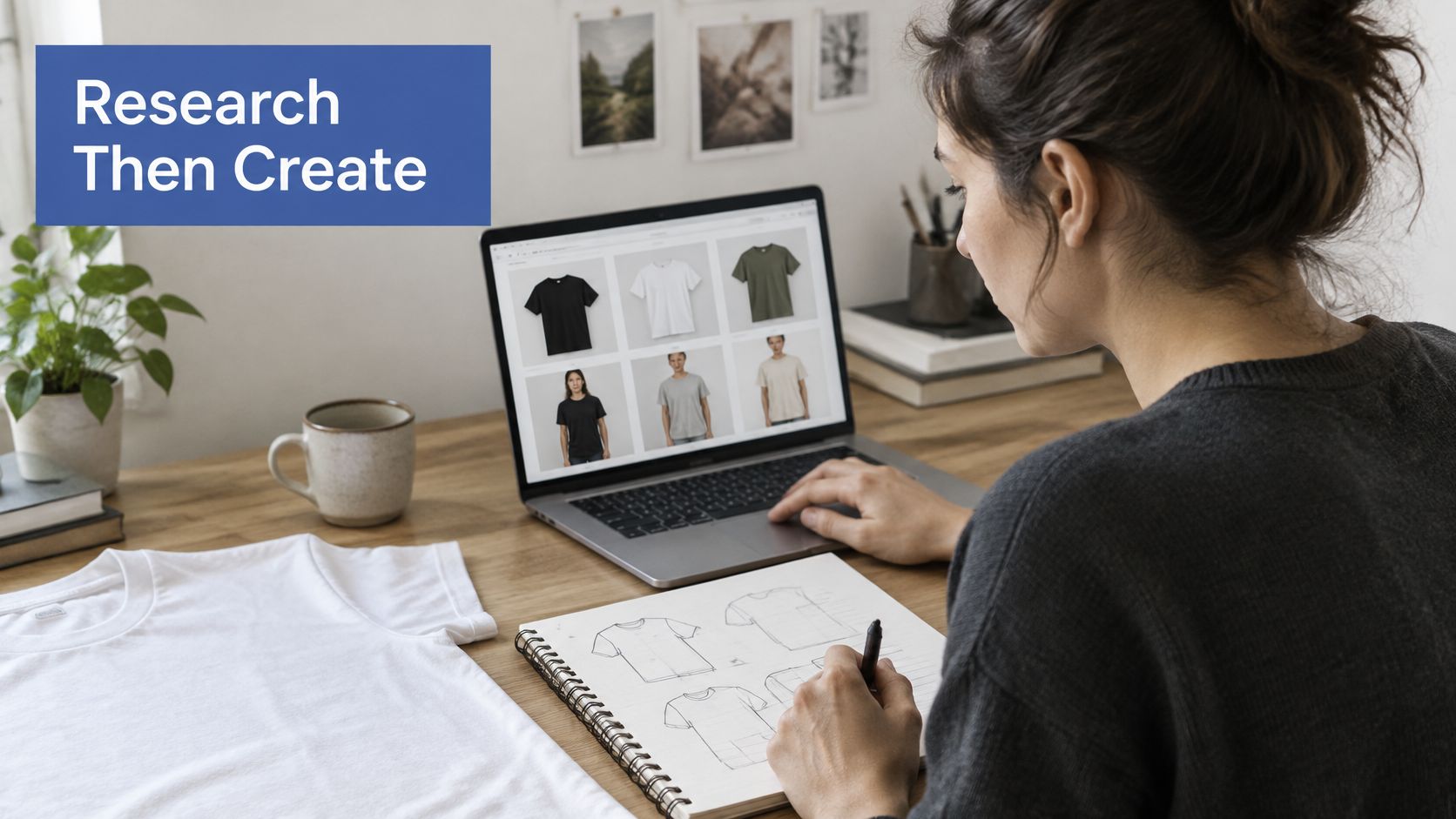
The Apparel Cloning approach: choose a narrow audience, research relevant products, and separate the work into scheduled sessions. Research belongs in one session, design and listing preparation in another, and performance review in another.
POD removes the need to purchase a stockroom of shirts before testing. It doesn't remove sample costs, software expenses, customer service, or the need to understand when fulfillment charges reach your account.
Practical rule: Finish a publishable task before opening another learning tab.
Measure Finished Work, Not Screen Time
There's a useful operational lesson in the Coffee Voyage student venture case study: more than 80% of selling-related tasks were completed within 24 hours. That's not a POD earnings benchmark, but it illustrates why execution speed deserves attention alongside sales.
For the evening launcher, meaningful results include completed listings, a working checkout, customer inquiries answered, and orders fulfilled correctly. Keep the initial catalog focused enough that reviewing it doesn't consume every free evening.
The guide to starting an online business while working full-time can help you fit those tasks around employment.
This week's takeaway: put recurring work appointments on your calendar and give each a concrete deliverable. Celebrate a first sale or positive review, but also recognize the less visible win of publishing consistently without abandoning your existing responsibilities.
3. The Parent's Flexible Income Store
A school call can break an afternoon in half. For a parent or caregiver, the work routine needs clear stopping points, so interruptions don't turn into lost decisions and unfinished tasks.
The problem: a schedule built around quiet afternoons falls apart when family needs take priority. The next work block then starts with figuring out where the last one ended.
The Apparel Cloning approach: research a focused niche, prepare original concepts in batches, and break production into tasks that can pause cleanly. Use AvatarIQ to create designs and mockups within a short session, rather than switching between unrelated tools.
Build a Workflow You Can Pause
A school-day afternoon may leave room for a few short work blocks. One can cover design selection, another mockups, and a third listing details. End each block with a written next step, such as checking print placement or filling in size information.
That note makes it easier to resume without retracing decisions. Keep it specific enough to act on right away.
- Batch similar tasks: Set aside separate blocks for research, design, and listing work.
- Leave a restart note: Write down the next action before closing your laptop.
- Protect customer care: Reserve a predictable window for messages and order exceptions.
- Keep the queue visible: Mark which products are ready to publish and which ideas still need work.
Results to measure: completed tasks, customer response times, spending, and profit relative to the time available. Track these together; a growing queue of listings matters less if customer messages go unanswered or costs outrun sales.
Fulfillment handles the order handoff after setup. You still own customer messages and restocking decisions. This week's takeaway: build a routine that fits an ordinary family week, including the interruptions.
4. The Designer-Turned-Seller Improving the Design-to-Listing Workflow
A folder of polished concepts does not make a store. The designer's bottleneck is choosing which ideas fit the audience and getting those designs into publishable listings.
The problem: Revisions keep piling up because the seller has no clear rule for deciding when a design is ready. Limited technical confidence makes each change feel like another reason to delay launch.
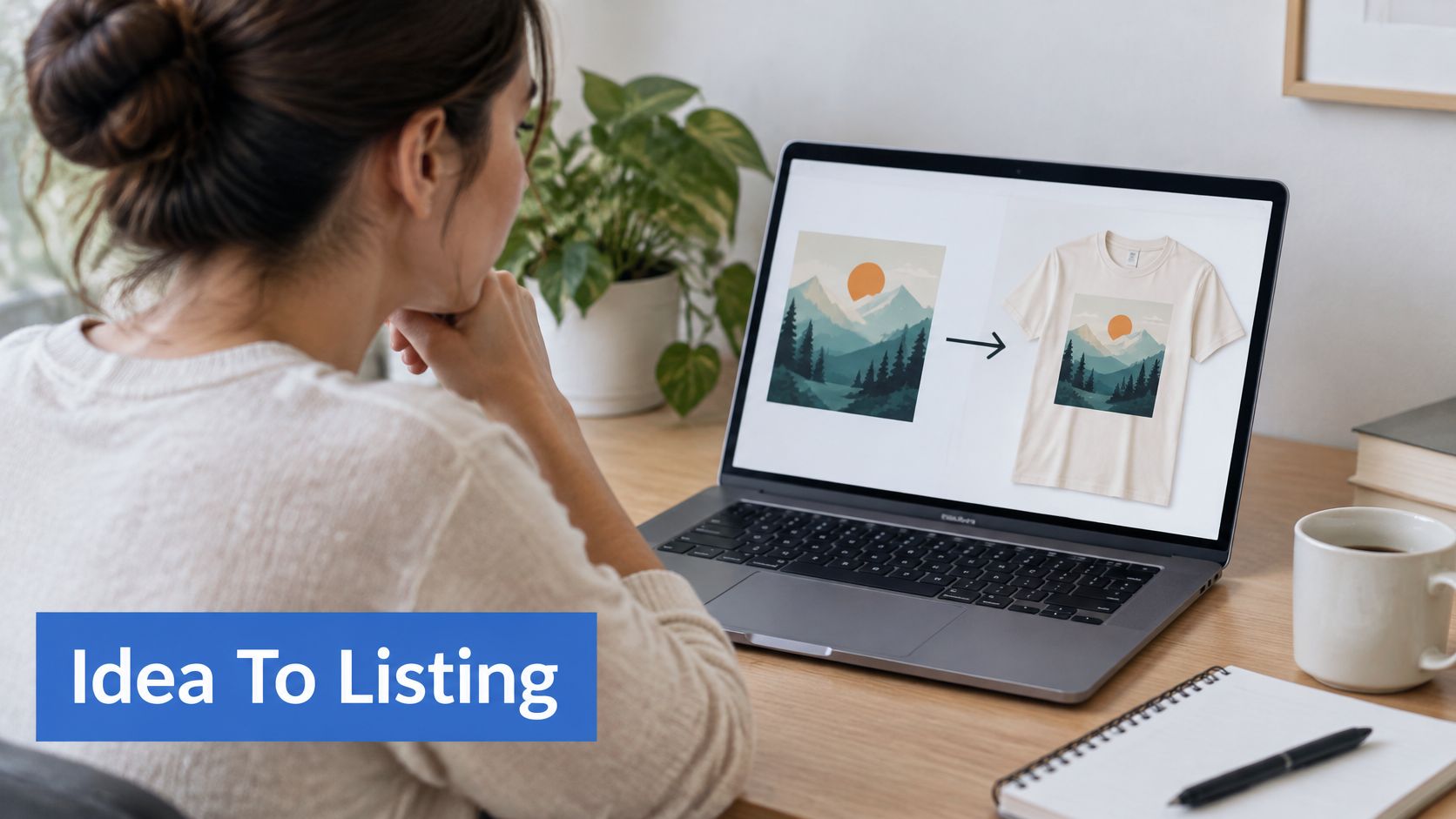
The Apparel Cloning approach: Let the researched niche set the creative brief. Use AvatarIQ at the concept-generation stage, then select a small group of original designs that share a clear audience and style. Move the chosen designs into listings instead of continuing to polish every idea in the folder.
Give Every Design a Clear Job
For a mountain-gardening collection, each design should speak to that audience through recognizable interests, readable wording, and a consistent visual style. That gives the collection a practical filter: if a concept does not fit the customer or the product range, leave it out.
Once the concepts are selected, focus on the handoff from artwork to listing. Check spelling, artwork details, and the fulfillment provider's file requirements. Keep print placement and thumbnail checks to the store's product-image review, so the design workflow does not repeat that step.
Results to measure: time from approved concept to published listing, correction work, listing visits, and orders. Faster publishing helps only if it makes useful designs easier to test without sending avoidable errors live.
- Select before polishing: Choose concepts that fit the niche before refining them.
- Set a ready-to-list standard: Check spelling, artwork details, and file requirements before building the listing.
- Compare the collection: Keep colors, tone, and image quality consistent across related products.
- Track the handoff: Note where revisions delay a design, then tighten that step.
This week's takeaway: choose a small themed collection, define what makes each design ready, and carry every approved concept through to a finished listing.
5. The Niche Specialist Going Deep Instead of Broad
A store selling shirts for everyone makes the owner answer the same hard question repeatedly: who is this next product for?
The problem: the beginner chases unrelated trends and ends up with a catalog that has no recognizable customer. Writing descriptions, selecting imagery, and creating ads becomes harder because each product needs a different message.
The Apparel Cloning approach: commit to an audience with enough depth to support related original designs. An outdoor store might focus on birdwatching rather than mixing fishing jokes, gym slogans, and office gifts.
Demand still needs checking. A niche can feel personally meaningful without providing enough purchase intent for the products you want to sell.
Specialize Without Boxing Yourself In
A birdwatching seller could explore backyard observation, trail outings, gift buying, and seasonal interests while keeping a recognizable identity. Expansion follows the customer's interests rather than the owner's urge to add unrelated categories.
The Etsy 2024 Annual Report reported 89.6 million active buyers on the Etsy marketplace in 2024. That describes marketplace scale, not demand for any particular niche, so your own listing evidence still matters.
A focused audience gives you clearer product decisions. It doesn't excuse skipping demand checks.
Results to measure: which sub-themes attract purchases, what customers ask for, and whether related designs sell without needing completely different positioning.
- Learn the vocabulary: Use terms the audience recognizes without forcing insider language.
- Keep a consistent identity: Align illustration style, descriptions, and mockup presentation.
- Expand from a response: Add adjacent themes after buyers show interest in your core offering.
This week's takeaway: write a plain-language customer description and remove concepts that don't belong. A focused launch makes it easier to learn why someone bought, which gives you a stronger basis for the next collection.
6. The Test-and-Learn Advertiser Protecting a Small Budget
One audience, two original designs, and a fixed spending limit give a small-budget advertiser a clear starting test. Clicks can look promising while an ad loses money, so track orders and costs before increasing spend.

The problem: the seller launches Meta ads for unrelated shirts, changes the audience and creative together, and can't tell what caused the result.
The Apparel Cloning approach: research designs for the same audience, set a spending limit you can afford, and change one variable at a time. Keep a simple log of each test.
Compare the two designs with the audience and offer held steady. If one draws stronger purchase interest, test its presentation separately. Short video can also help compare creative formats. Use a tool to create videos with AI for an ad test, while keeping the product and offer consistent.
Know What You Can Afford to Acquire a Customer
Before spending, calculate what remains from an order after product costs, shipping you absorb, transaction charges, and other variable expenses. That contribution sets a practical ceiling for the advertising cost an order can support.
Compare ROAS against contribution margin before scaling. Check that purchase events match order records, since tracking errors can distort campaign reports.
- Watch cost per sale: Cheap clicks don't help if visitors don't buy.
- Record each change: Log the creative, audience, offer, and outcome.
- Scale deliberately: Increase spending only when the order economics support another test.
Results to measure: purchases, acquisition cost, contribution after advertising, and whether performance holds as spending changes. If orders are sparse, keep testing rather than drawing a firm conclusion from one sale.
This week's takeaway: calculate your allowable acquisition cost before opening Ads Manager. Choose one audience, two designs, and a spending limit. Then run the test and record what changed.
7. The Incubator Graduate Preparing for Full-Time Business
Replacing a salary takes more than reaching an exciting revenue milestone. The store needs dependable operations, usable cash, and enough margin to support its owner.
The problem: a profitable side-hustle seller adds products and advertising faster than they improve fulfillment oversight, customer care, and financial tracking. The business grows, but the owner becomes the bottleneck.
The Apparel Cloning approach: expand proven collections before entering unrelated niches. Document the work that already produces results, then use coaching and accountability to examine the next constraint.
A student preparing for advanced Incubator coaching might document product research, listing approval, advertising review, and customer-service procedures. The point is to arrive with a working business that can be examined, not just an ambitious revenue target.
Scale the Economics and the Operating Process
A useful real-world comparison comes from the peer-reviewed CuCo student venture case study: monthly revenue rose from Rp4.5 million to Rp9 million during April–September 2024, alongside higher gross profit and positive net cash flow. CuCo was a pastry venture, not a POD store, but the financial distinction applies: higher sales deserve attention alongside profit and liquidity.
For the illustrative apparel seller, the important results are sustainable contribution, cash available for fulfillment, reliable customer care, and documented work that doesn't depend on memory.
Before scaling: Make sure you can explain where the profit comes from and how the next orders will be handled.
- Document repeatable work: Write clear steps for listing, support, and performance reviews.
- Review cash timing: Account for supplier charges, advertising bills, and marketplace payouts.
- Grow from proven products: Build complementary collections before broadening the audience.
- Use accountability: Bring actual decisions and financial records to coaching conversations.
This week's takeaway: document the process you repeat most often, then identify the operational constraint that would become painful if orders increased.
8. The Mockup-Driven Brand Building Buyer Confidence
A new store can look coherent before it has a long sales history. That starts with helping shoppers understand what they'll receive, not making the product look more impressive than it is.
The problem: the seller mixes inconsistent backgrounds, unclear shirt colors, and awkward print placements. Customers have to work too hard to compare products.
The Apparel Cloning approach: keep the niche and original designs, then develop a consistent presentation system using AvatarIQ. Match lifestyle settings, styling, and visual tone to the intended buyer.
For a birdwatching collection, outdoor lifestyle imagery might make sense. But shoppers also need clear product views, readable artwork, size information, and accurate garment details.
Make Presentation Useful on a Phone
A benchmark cited in Shopify's mobile-versus-desktop conversion guide reports that mobile generated 70% of e-commerce traffic. That isn't a prediction for your store, but it's a good reason to inspect product pages on a phone rather than approving everything from a desktop screen.
Look for cropped artwork, tiny lettering, distracting backgrounds, and images that make the shirt difficult to see. Keep the garment prominent and make essential buying information easy to find.
The guide to making product mockups can help you organize that workflow.
- Keep images consistent: Use a recognizable visual style across the collection.
- Represent products accurately: Match garment options, print placement, and available colors.
- Check the physical product: Use samples to evaluate print quality and garment expectations.
- Test presentation separately: Avoid changing imagery, price, and product copy together.
Results to measure: product-page engagement, add-to-cart activity, orders, and questions about appearance or fit.
This week's takeaway: review your collection on your phone and replace the images that make buying harder. Professional presentation should create clarity, not disguise missing product information.
8 Student Case Study Examples at a Glance
Choose a playbook by the constraint you need to solve first. Use the metric in the final column to check whether that approach is working.
| Situation | First Playbook to Use | Metric to Watch |
|---|---|---|
| You need a starting point for product ideas | The Apparel Cloning Method: study demand signals, then create original designs for an underserved niche | Product-page visits and orders |
| You have a full-time job and limited work hours | The Evening Launcher: build through focused sessions and steady iteration | Work sessions completed and listings published |
| Family routines make your schedule unpredictable | The Parent's Flexible Income Store: plan work in adaptable blocks, while keeping an eye on fulfillment and customer needs | Orders handled on time |
| Design and listing work are slowing you down | The Designer-Turned-Seller: improve the design-to-listing workflow with AI tools, then check quality and market fit | Time from design to listing |
| You're drawn to a specific audience or topic | The Niche Specialist: focus on one audience and build a consistent brand | Orders from the target audience |
| You want to try paid advertising without overspending | The Test-and-Learn Advertiser: run small ad-spend tests and change one variable at a time | Ad spend compared with sales |
| Your store works, and you're preparing to grow | The Incubator Graduate: document operations and expand proven products | Whether documented processes support added sales |
| Buyers need a clearer sense of how products look | The Mockup-Driven Brand: use consistent mockups and lifestyle images to clarify presentation | Product-page engagement and buyer questions |
Your Turn Turning These Examples Into Your First Launch
A useful first launch answers three questions: who is the product for, what evidence supports the idea, and what will you change if the store gets little response? Apparel Cloning gives you a way to research demand and develop original concepts for a specific audience.
Choose one playbook to fit your current constraint. If you have limited time, set a schedule you can repeat around work or family responsibilities. If your store already has products, review the niche, offer, and advertising costs before adding more listings.
Your Week-One Action Checklist
- Set a launch target: Decide how many original products you can publish this week without rushing the research or setup.
- Set a review point: Pick a date to assess visits, orders, spending, and profit together. Record the figures in one place.
- Define a design-review trigger: If a design gets 10 sales, review its audience, product page, and margin before making related products. If it gets visits but no orders, examine the offer before expanding the collection.
A simple record is enough. Track the figures consistently so you can compare products and spot whether the issue is interest, conversion, or margin.
Sales give you a reason to inspect what is working. No sales after a useful test can point to a different problem. Decide whether to adjust the audience, the concept, or the offer, and change one thing at a time.
Skup offers Apparel Cloning training for product research and launching, AvatarIQ for apparel designs and mockups, and Incubator coaching for sellers developing their businesses. Choose support based on the task you need help with, then write down your first week's product target and review date. At the end of the week, measure visits, orders, spending, and profit against that starting plan.
Visit Skup to explore the support that fits your stage, then turn one of these playbooks into a concrete launch plan.