All Over Print Sweatshirt: A Complete POD Seller’s Guide
You've just seen a bold sweatshirt covered in a pattern that flows from the torso across the sleeves, and now you're wondering how to build one for your store. A conventional chest graphic is straightforward to picture. An edge-to-edge design feels more like a piece of wearable art, but it also raises practical questions: what fabric works, how do you keep the pattern looking intentional, and what should the product page say?
An all-over print sweatshirt can become a distinctive product in a print-on-demand catalog when the blank, artwork, and presentation work together. The Apparel Cloning approach gives beginners a way to move from a proven visual direction to an original product listing, then test the offer with real buyers. By the end, you'll have a launch plan that covers production, design, mockups, pricing, care, and labeling, without treating the sweatshirt as just a larger version of a printed tee.
Table of Contents
- Why All Over Print Sweatshirts Stop the Scroll
- What Exactly Makes a Sweatshirt All Over Print
- Tuning the Press for Consistent Results
- Designing Patterns That Print Beautifully
- Mockups and Listings That Convert
- Pricing for Real Margins
- Labeling, Care, and Sustainability Basics
- Your 14 Day AOP Launch Plan
Why All Over Print Sweatshirts Stop the Scroll
The ad appears between posts: a sweatshirt with bright flowers flowing across its chest, sleeves, and back. You can see why someone pauses. A small chest print asks the customer to notice one graphic; a continuous pattern makes the whole garment the graphic.
That difference gives a seller room to build a product around a visual idea rather than a single logo. A botanical print can wrap across the sleeves. A repeating pet motif can turn a familiar theme into a full garment design. Gradients and photographic artwork can fill the fabric in ways a localized print can't. The opportunity isn't that every bold sweatshirt will sell. It's that the product gives you more visual territory to make a niche-specific idea feel considered and memorable.
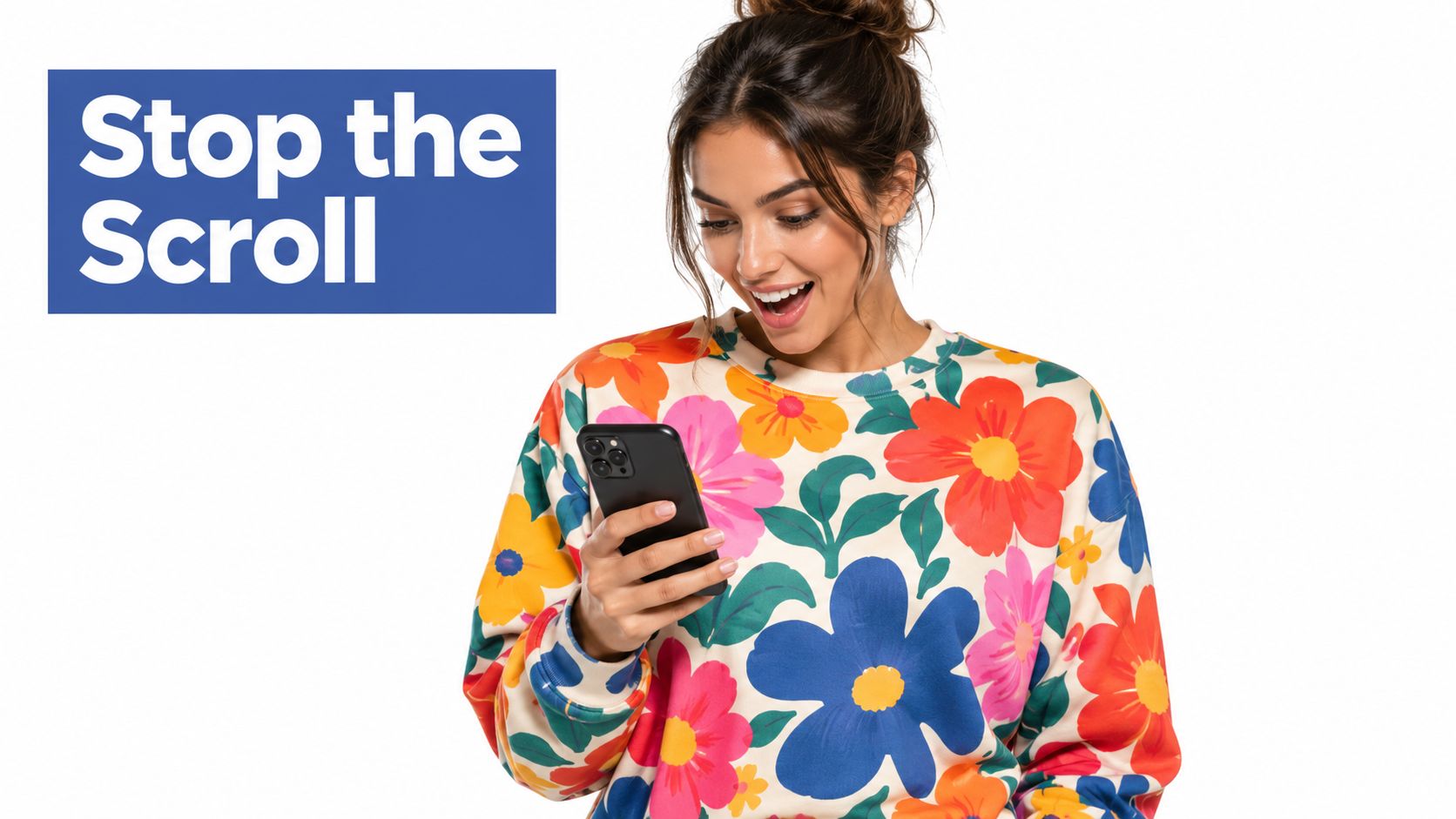
The seller still has to earn the purchase. A full-coverage design can support a more premium presentation, but perceived value comes from the complete offer: the fabric feel, fit, print quality, clear product photos, and accurate expectations. A customer who loves the artwork but receives a garment that feels unlike the sweatshirt they expected may be disappointed, even if the print looks sharp.
The Apparel Cloning playbook starts with a visual direction customers already understand, then adapts it for a specific audience instead of copying a product outright. From there, you choose a compatible blank, create artwork that suits its panels, and build a listing that answers the buyer's questions. That's a practical route from blank canvas to live product, and a real opportunity to test a more distinctive apparel offer.
What Exactly Makes a Sweatshirt All Over Print
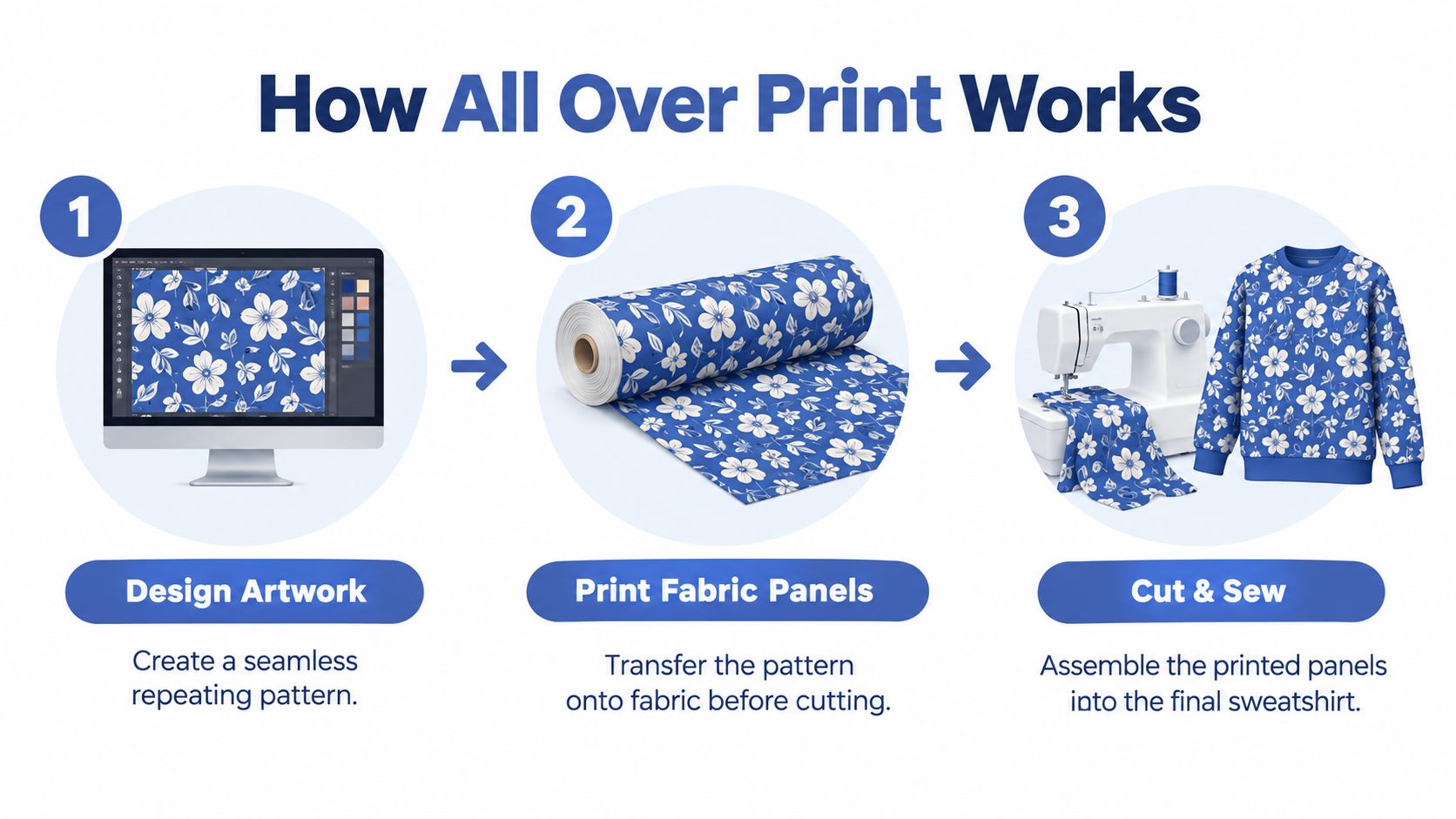
An all-over sweatshirt isn't made by enlarging a chest graphic. In conventional printing, a maker decorates a finished garment, leaving most of the fabric untouched. In full-coverage production, the design is printed onto fabric panels before the sweatshirt is cut and sewn. That's how artwork can carry across the torso and sleeves, though seams and construction still affect how well separate panels meet.
For many polyester-based sweatshirts, the process is dye sublimation. The artwork is printed onto transfer paper, then heat and pressure turn the dye from a solid into a gas. The dye penetrates compatible polyester fibers, so the color becomes part of the fabric rather than sitting as a raised ink layer on top. This gives the finished surface little or no added hand feel and makes it less vulnerable to cracking or peeling than many surface-print methods.
The fabric sets the limits
Sublimation works best on white or light-colored polyester and polyester-rich blends. Cotton doesn't bond with sublimation dye in the same way, so a seller can't assume that a standard cotton sweatshirt will produce the same bright, full-coverage result. The garment's construction and fiber blend also influence the final color.
A useful production reference is a working range of approximately 195–205°C, 35–60 seconds, and 40–50 psi, with settings depending on fabric weight and equipment (sublimation printing on polyester). Those aren't universal presets. The practical takeaway is to check the supplier's specifications and test the actual blank before publishing the product.
For customers, keep the explanation simple: an all-over print sweatshirt gets its continuous design because fabric is printed before assembly, and the common sublimation route needs polyester or a polyester-rich surface. That clarity helps set expectations about both the visual result and the feel of the garment.
Tuning the Press for Consistent Results
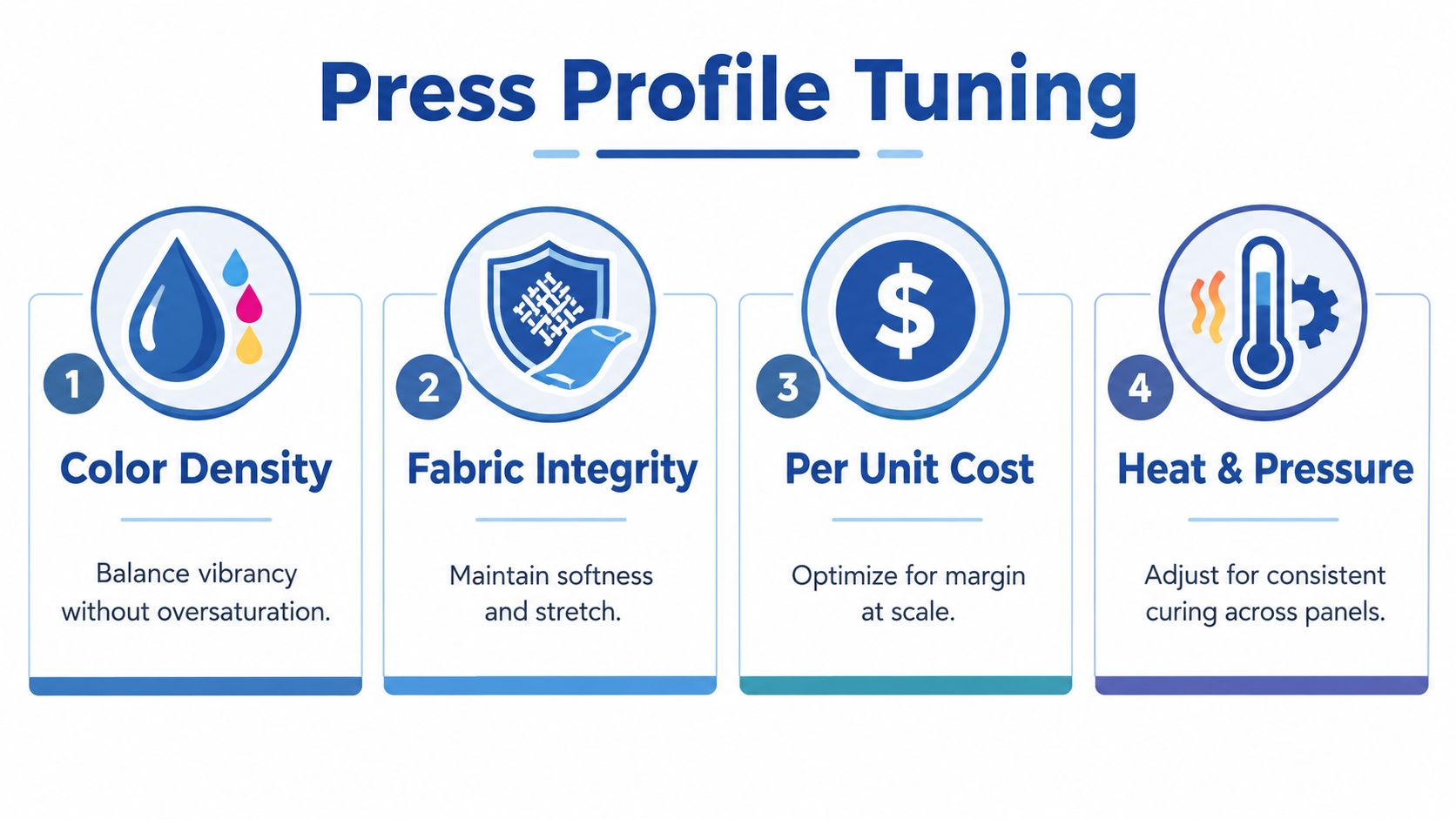
Press settings are a balancing act between color density, fabric integrity, and production cost. A higher temperature or longer dwell time isn't automatically better. The right profile depends on the fabric construction, and an unsuitable setting can undermine the garment even when the transfer looks vivid.
A textile-printing study reported an optimum near 200°C, 45 seconds, and 3.5 bar pressure for its tested construction, with strong color reproduction while avoiding thermal damage to a cotton component. A separate study found that 30 seconds produced washing-fastness results comparable to 60 and 120 seconds under certain polyester conditions (textile-printing process research). Treat those findings as reasons to test, not as a guaranteed profile for every sweatshirt.
Build a profile for each blank
Start with a supplier-recommended profile. If there isn't one, use a relevant published baseline as a starting point, then make controlled adjustments on the exact substrate you intend to sell. Record what changes when you adjust the heat, time, or pressure. That record is more useful than copying a preset intended for another fabric or press.
Check each sample in a consistent order:
- Temperature and dwell: Confirm the transfer produces even color without overheating the fabric.
- Pressure: Look for consistent results across the panels, not just the center.
- Color density: Check whether the pattern looks clear without becoming oversaturated.
- Dimensions and alignment: Inspect for unwanted shrinkage, seam mismatch, or panel movement.
- Durability: Launder the sample and check for crocking, the transfer of color through rubbing.
Standardized laundering comparisons can help assess settings; AATCC's accelerated test information describes a method intended to approximate five hand launderings. Keep the blank and profile details with the sample results. When you compare another polyester fabric, you'll have a repeatable tuning routine rather than a press-brand guess. For a broader introduction to the process, see this guide to sublimation fabric printing.
Designing Patterns That Print Beautifully
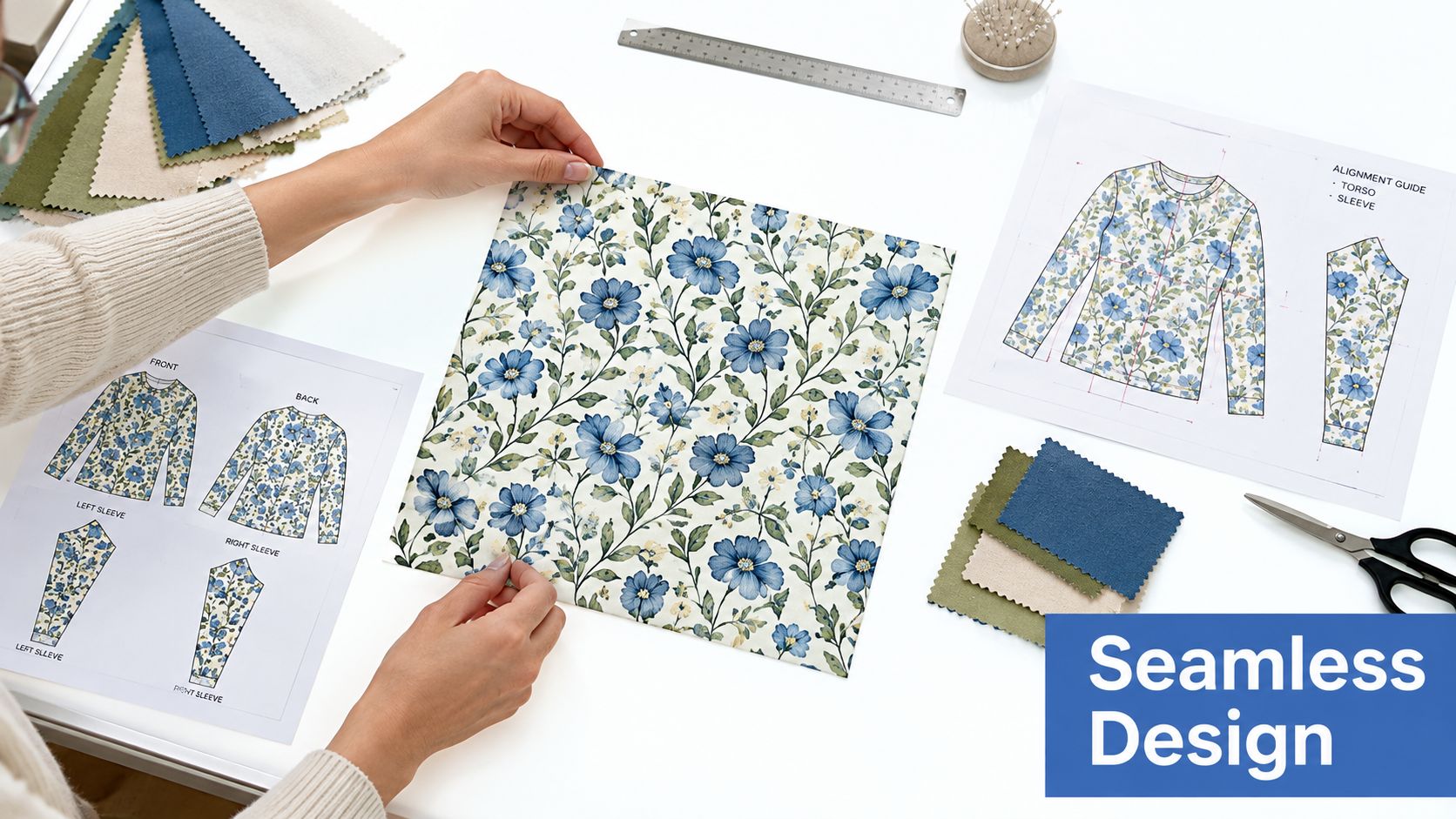
A design for an all-over sweatshirt has to work across separate pieces of fabric, not just inside a neat rectangle. A pattern that looks balanced on a flat canvas can become awkward when a large motif lands near a sleeve seam or gets split across the torso. Repeating patterns, gradients, and photographic artwork are natural fits for sublimation's full-color coverage, but the layout still needs to respect how the garment is assembled.
Design for the garment, not the flat file
Begin by reviewing the supplier's panel templates. Check where the front, back, sleeves, cuffs, and other pieces sit, then decide which parts of the pattern need to flow together. A repeat should look deliberate when it restarts; a large focal element should have enough breathing room that a cut or seam won't make it look accidental.
The Apparel Cloning method is useful here: study the visual language of products that already attract your target audience, then make a fresh version for a narrower niche. A bold floral pattern, for example, can be reworked around a particular aesthetic or buyer interest rather than reproduced as-is. The point is to borrow a proven direction, then bring your own theme, color choices, and pattern arrangement. For more practical ideas on composition, review these shirt design tips.
Speed of iteration matters more than starting with expert illustration skills. AvatarIQ is Skup's AI-powered design and mockup software, which can help generate apparel artwork and create product imagery for listings. Use it to explore pattern directions quickly, then judge each output against the panel layout and the kind of sweatshirt you're selling. A design that looks striking on a screen can still fail when it breaks at the shoulder or places its main feature where a seam cuts through it.
Make the first pass visually simple enough to read from a distance. Once the repeat and panel flow work, refine the colors and detail. That approach keeps the design process practical: test the idea on the garment, not just as a standalone image.
Mockups and Listings That Convert
A strong pattern won't sell itself if the buyer can't understand how it looks on the finished garment. Your listing should show full coverage, explain the fabric, and make sizing and care easy to find. That matters especially for made-to-order apparel, where customers can't handle the sweatshirt before buying.
Build a repeatable mockup set through the same AvatarIQ workflow you use to develop the artwork. Start with a front hero image that shows the overall pattern, then add views that answer specific questions:
- Front view: Make the all-over coverage easy to see at a glance.
- Back view: Show how the design carries across the rear panel.
- Detail view: Make the print texture and interior finish clear, where the product imagery supports it.
- Lifestyle view: Show the sweatshirt worn so customers can judge its shape and styling.
The same pattern should appear consistently across those images. Don't let a lifestyle mockup suggest a different color or placement from the product a buyer will receive. For more ideas on building a clean visual workflow, see this apparel mockup generator guide.
Give buyers the details they need
Use a short copy structure that's easy to maintain across listings:
- Opening hook: Describe the design or the buyer it's made for, rather than making a generic claim about quality.
- Three benefits: Explain the edge-to-edge artwork, garment details, and any useful styling or gifting angle that the actual product supports.
- Size and care block: State the available sizing information, fabric composition, garment weight, and care instructions.
If you use a model image, include the model's height and the size worn. Show or describe the inside texture, and list the fiber content rather than relying on the word "sweatshirt" to communicate how it feels. Customers should be able to tell whether they're buying the familiar feel of cotton fleece or a lighter polyester-based garment before they add it to their cart.
Pricing for Real Margins
The price has to cover more than the blank. A practical cost stack includes the garment, sublimation setup, transfer paper, production time, packaging, platform fees, shipping, a returns reserve, and paid advertising if you use it. Review those costs for each product and sales channel, then set a price that leaves room for the customer experience you want to provide.
The example below uses made-up planning figures, not supplier quotes or industry benchmarks. Replace every input with your own costs before you decide whether a product can support your margin target.
| Margin Reality at Three Retail Price Points | Retail price | All-in product cost | Estimated ad cost | Gross margin |
|---|---|---|---|---|
| Value-led test | $40 | $24 | $8 | $8, or 20% |
| Mid-range offer | $45 | $24 | $8 | $13, or 28.9% |
| Premium presentation | $55 | $24 | $8 | $23, or 41.8% |
These figures subtract only the example product and ad costs from the retail price, so they aren't net profit and don't include every possible expense. The table shows why discounting to compete with a basic printed hoodie can leave little room for fees, returns, and other operating costs. A higher ticket price can create more room, but only if the design, blank, presentation, and customer experience justify it.
Price for the buyer who wants a distinctive full-coverage garment, not for someone shopping exclusively for the cheapest sweatshirt. Bundles can also give buyers a useful reason to add another item, provided the offer still covers fulfillment and channel costs. If you're refining how you value creative work and pricing decisions, this Mazurly freelance pricing guide offers a helpful framework for thinking about price beyond hours worked. Build your own cost sheet before launch and update it when supplier or advertising costs change.
Labeling, Care, and Sustainability Basics
A polished listing and a compliant garment label have different jobs. For clothing sold in the United States, the product generally needs to disclose its fiber content, country of origin, and the identity of the responsible manufacturer, importer, or business. The FTC's Care Labeling Rule also requires manufacturers and importers to provide cleaning instructions (FTC clothing and textiles guidance). Confirm the actual blank specifications before publishing a product page or preparing a label.
Fiber percentages must be listed by weight in descending order of predominance. The FTC allows a 3% tolerance for fiber-content claims, and the applicable generic fiber names should be used (FTC textile and wool labeling guide). That matters when a sweatshirt combines a polyester body with different materials in details such as ribbing or cuffs. For products marketed in the EU, textile fiber disclosure is mandatory when the product contains at least 80% textile fibers by weight; the composition must appear clearly, in decreasing order, and on a label firmly attached to the garment (EU textile labeling requirements).
Make care instructions easy to follow
A practical care guide for an all-over print sweatshirt can recommend cold machine washing, washing with like colors, avoiding bleach, and air drying or using low heat when the garment's care guidance permits it. Avoid dry-cleaning if the applicable care instructions advise against it, and don't iron directly over the printed areas. Always check the supplier's instructions for the actual blank before publishing care advice.
Be precise when discussing sustainability. Sublimation can reduce water use and some aggressive chemical steps at the printing stage, but that doesn't make a polyester garment automatically sustainable. Printing impacts and fiber impacts are separate questions. Explain the material, share its verified care guidance, and avoid broad environmental promises you can't substantiate.
Your 14 Day AOP Launch Plan
A focused launch works best when each decision builds on the one before it. Use this sequence to move from niche research to a live offer, while leaving room to check the actual blank and product imagery before sending buyers to the listing.
| Days | Focus | What to complete |
|---|---|---|
| 1–3 | Niche and blank | Use Apparel Cloning to choose a buyer and visual direction. Compare available blanks, confirm fiber composition, and select one that suits the intended design and customer. |
| 4–7 | Artwork and production | Create several fresh pattern directions with AvatarIQ, check each against the garment panels, then test and document the supplier-recommended press profile. |
| 8–10 | Listing preparation | Build front, back, detail, and lifestyle mockups. Write the product copy, add accurate sizing, material, and care information, and check labeling details for your sales markets. |
| 11–14 | Launch and feedback | Publish the offer, assemble your campaign creative, pace your budget within what you can afford to test, and watch for questions or objections that show where the listing needs improvement. |
Don't treat a first campaign as a verdict on the whole business. Pay attention to what shoppers respond to: the design, the fabric information, the price, or the way the listing presents the garment. Then use those signals to refine the offer instead of making changes at random.
This is the kind of structured product-to-listing workflow the Apparel Cloning method is designed to teach. For sellers ready to scale beyond an initial launch, the Skup Incubator offers coaching and mentorship; treat that as a next step, not a prerequisite for testing a sweatshirt idea.
Skup offers the Apparel Cloning System for learning a repeatable POD product research and launch process, while AvatarIQ helps create apparel designs and mockups for product listings. If you're ready to turn an all-over print sweatshirt idea into a considered test, explore Skup and choose the support that fits your next step.