8 Before and After Examples for POD Apparel
A promising POD product rarely needs a complete reinvention. In many cases, sharper niche positioning, clearer presentation, stronger messaging, and repeatable systems can change how shoppers understand and respond to the same basic offer.
The opportunity is larger than many beginners assume. One 2026 projection estimates the global print-on-demand market at USD 15.19 billion in 2026, rising to USD 46.43 billion by 2031, while another projects growth from USD 13.1 billion in 2026 to USD 57.5 billion by 2033. The estimates differ, but both market outlooks project sustained expansion, which gives focused sellers room to build practical, differentiated brands.
The eight before and after examples below cover design, mockups, listings, product expansion, audience building, creative systems, advertising, and operations. Read each comparison as a working template. The “before” is a common obstacle, the “after” is a more focused operating choice, and the action steps show how to test the change without rebuilding your entire business. Apparel Cloning provides the strategic thread, while AvatarIQ can help you produce design variations and mockups faster when the creative workload starts slowing you down.
Table of Contents
- 1. Generic Apparel Design to Niche-Specific Winner
- 2. Amateur Photography to Professional Mockup Gallery
- 3. Cluttered Product Listing to Optimized Sales Page
- 4. Single-Design Store to Multi-Niche Product Line
- 5. Cold Traffic Ads to Warm Audience Engagement
- 6. Basic Design to Systematic Design Framework
- 7. Generic Ads to Niche-Specific Messaging
- 8. Solo Operation to Systematized Systems
- 8 Before-and-After Transformations
- Turn Better Examples Into Your Next Test
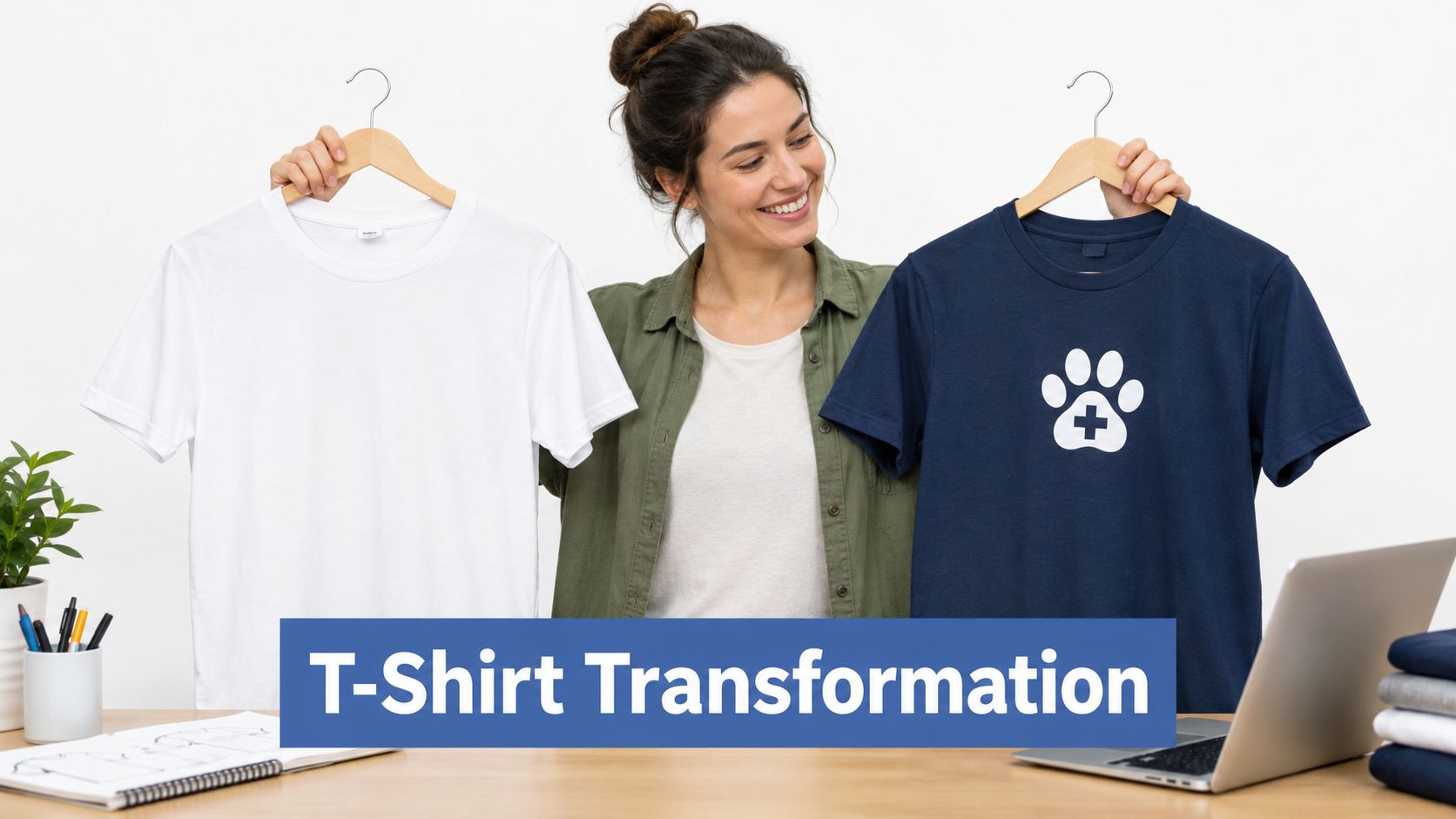
1. Generic Apparel Design to Niche-Specific Winner
A shirt aimed at everyone often gives shoppers no strong reason to choose it. “Coffee Lover” may describe a large audience, but it doesn't necessarily tell a barista, café owner, or specialty coffee enthusiast that the product reflects their daily life.
The before version might use a broad motivational phrase, a familiar typeface, and a general product description. The after version keeps the useful design elements but gives them a sharper identity, such as “Barista Professional” apparel with language drawn from the rhythm, humor, and pride of café work. The product hasn't become unrecognizable. It has become easier for the right buyer to recognize as theirs.
The same approach works across several niches:
- Nurse apparel: Replace general encouragement with language that reflects shift work, patient care, or professional pride.
- Dog lover apparel: Move from a generic paw print to a design built around a specific breed, rescue experience, or dog-owner identity.
- Fitness apparel: Separate CrossFit athletes, yoga instructors, and runners instead of treating all fitness buyers as one audience.
Practical rule: Specificity should narrow the message, not make the product harder to understand.
Build the niche before scaling the catalog
Study how people in the niche describe themselves. Facebook groups, Reddit communities, customer comments, and competitor reviews can reveal phrases and concerns that broad market research misses. Use those observations to create several message directions, then test the designs and product pages before committing heavily to a campaign.
AvatarIQ can support rapid variation testing, but the tool won't decide whether a phrase feels authentic. A design that looks polished can still miss the community's language. Review every variation through the buyer's perspective and track which niche segments show the strongest engagement and sales response.
A focused product line also makes follow-up easier. Segment email subscribers by interest, such as nurses, dog owners, or runners, and send relevant product updates rather than one generic promotion to everyone. The graphic tee guidance can help you turn a rough concept into a more deliberate apparel offer.
2. Amateur Photography to Professional Mockup Gallery
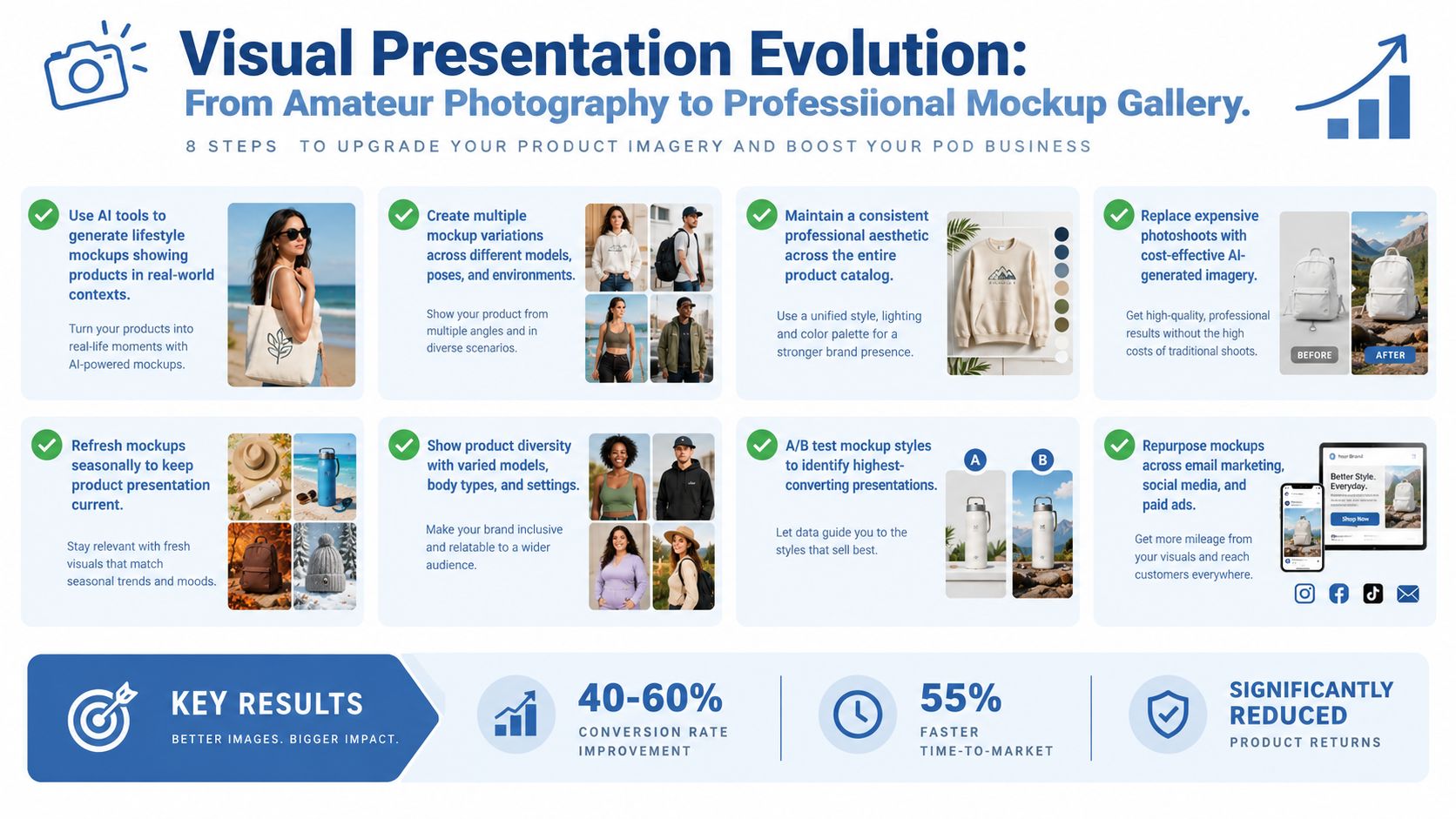
A product can be well designed and still look unconvincing if shoppers see it in a dim room, against a distracting background, or in only one inconsistent image. Poor presentation makes buyers work too hard to understand the fit, scale, and lifestyle surrounding the product.
The before version might show a shirt against a plain wall with uneven lighting. The after version uses a coherent gallery with the same product shown on varied models, in relevant settings, and in situations that match the niche. A nurse-focused design could appear in a professional environment, while a coffee-themed hoodie might be shown in a café or relaxed weekend setting.
This isn't about making the product look unrealistic. It's about answering the questions shoppers already have. What does the garment look like on a person? How does the design sit on the chest? Does the product fit the buyer's style and daily routine?
Create a gallery with a job for every image
AvatarIQ can help create multiple mockup directions without requiring a separate photographer or model for every concept. Build each image around a specific purpose:
- Hero image: Show the design clearly with minimal distraction.
- Lifestyle image: Place the product in a setting that fits the niche.
- Fit image: Show how the garment appears on different body types.
- Detail image: Make print placement, fabric appearance, and design quality easier to inspect.
- Seasonal image: Adapt the setting or styling when the audience's buying context changes.
Don't create variations just to fill space. A gallery with several nearly identical images adds less value than a smaller set where each image answers a different objection. Keep model diversity consistent with the customers you want to reach, and test casual versus professional contexts based on actual shopper behavior.
You can reuse the strongest mockups across product pages, email campaigns, social posts, and paid ads. That consistency helps shoppers connect the same design across channels. For practical ideas on creating apparel visuals, see this free t-shirt mockup resource.
3. Cluttered Product Listing to Optimized Sales Page
A product listing can lose the sale before the shopper reaches the checkout. One image, a short description, and technical specifications may identify the item, but they leave key questions unanswered: who is it for, when would someone wear it, and why does it belong in their wardrobe?
An optimized sales page answers those questions in a deliberate order. For a nurse hoodie, start with the identity behind the design, then show the garment in a work or off-duty context. Add accurate product information, a size guide, care guidance, answers to common concerns, and genuine customer feedback. The page should make the buying decision easier without burying the product under unnecessary copy.
Use this sequence as a repeatable beginner template:
- Identity-led headline: Name the audience the product is designed for.
- Benefit-focused introduction: Connect the design to a feeling, use case, or customer problem.
- Visual proof: Show the exact design in realistic contexts, so shoppers can judge its appearance.
- Product specifications: State the material, fit, care requirements, and print placement accurately.
- Size guidance: Provide clear measurements and, where possible, photographs showing varied body types.
- Objection handling: Address shipping, exchanges, sizing, and garment feel before they become reasons to leave.
- Customer evidence: Use real testimonials and customer images only with permission.
- Focused call to action: Give shoppers one clear next step instead of competing messages.
The order matters. Relevance earns attention, proof supports interest, and practical details reduce hesitation. Adding more text will not fix a page that makes shoppers search for basic answers.
A redesign case study reported a +3.9% conversion-rate increase, +52% revenue increase, and +93% site-speed improvement after UX and order-flow changes. Those results apply to that specific case, not every store. They do show why teams should measure the buying experience alongside the design itself. The ecommerce landing page best practices resource provides a framework for page structure, while this guide to converting visitors into customers adds conversion-focused context.
4. Single-Design Store to Multi-Niche Product Line
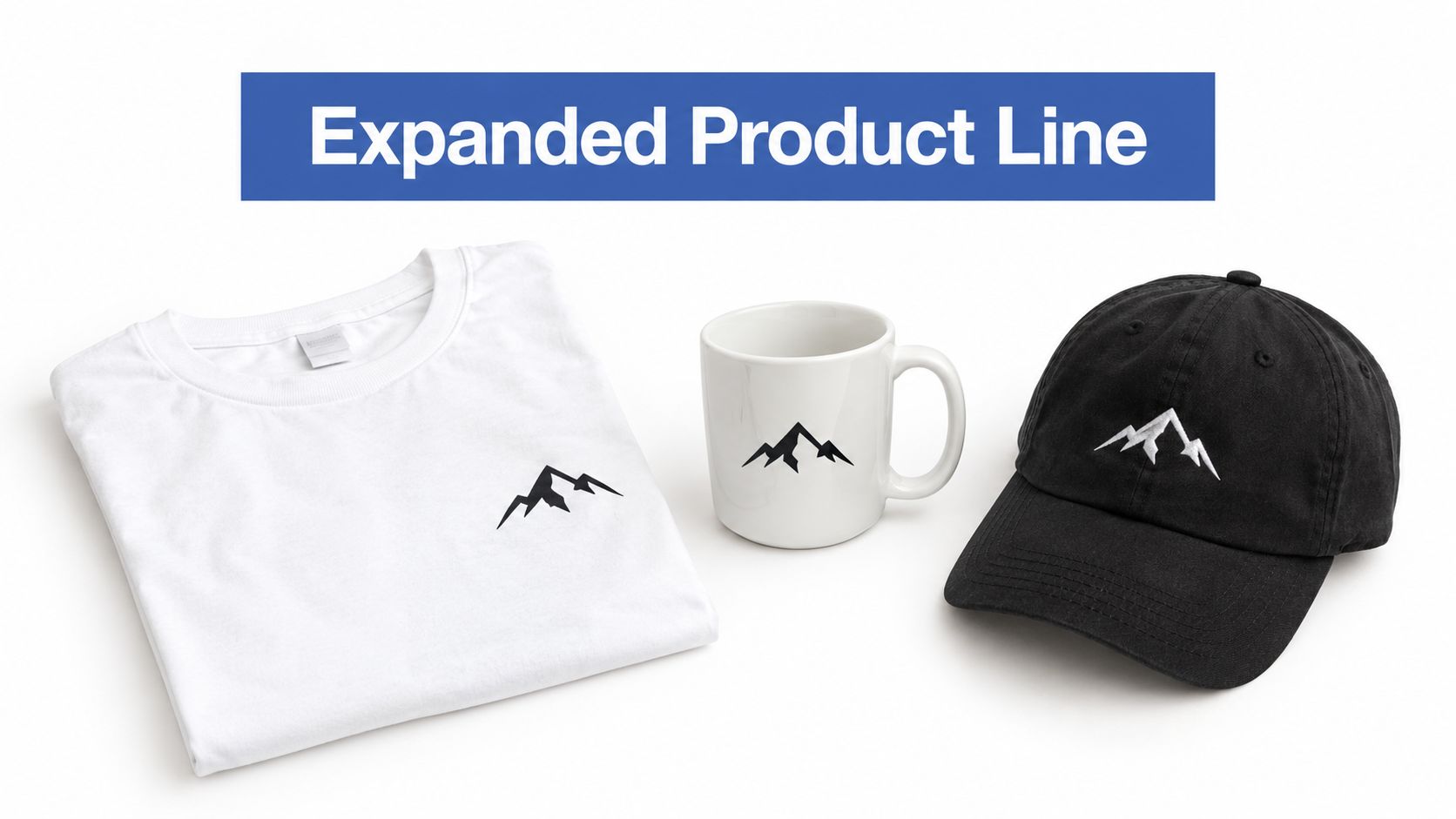
A single winning design can support a product line, but only when expansion follows the audience rather than the catalog. A shopper who likes a shirt may also want a hoodie, hat, mug, or tote. If those options are missing, the store loses relevant buying occasions before the customer has a reason to browse further.
The repeatable transformation starts with one proven niche and builds outward within its identity. A dog-lover brand could begin with a t-shirt, then add a coordinated hoodie, hat, drinkware, and tote bag. A nurse-focused store could express professional pride through apparel and practical accessories. Each category serves a different use case while the brand keeps a recognizable visual language.
A product line works when customers can identify the connection immediately. Repeat colors, illustration styles, phrases, or icon systems across categories. Unrelated designs spread across every available product create catalog size without creating a stronger brand.
Use the product-line template
Begin with the design and niche already attracting meaningful interest. Choose the next product because it solves a clear customer need or suits a specific occasion, such as gifting, layering, drinking, or carrying. Adding products based on personal restlessness creates inventory and presentation work without proving demand.
AvatarIQ can help adapt a successful design concept across categories. Review every adaptation for print placement, readability, and context. A design that works on a shirt may need a different scale or position on a mug, hat, or tote.
Use category pages and product recommendations to connect related items. A shirt page can present the matching hoodie or tote. After someone buys a gift item, a relevant product update gives the customer a logical next option.
A practical test cycle is:
- Choose one proven concept: Confirm that the niche responds before broadening.
- Add a small related group: Keep the design language recognizable.
- Review product-level behavior: Compare clicks, add-to-cart activity, sales, and customer feedback.
- Promote strong pairings: Bundle products when the offer fits the buying occasion.
- Remove weak additions: A larger catalog can make shopping harder without improving choice.
The goal is a focused line that gives one audience more useful ways to express its identity.
5. Cold Traffic Ads to Warm Audience Engagement
Cold ads often ask one interaction to do too much: introduce the brand, explain the product, build trust, and generate a purchase. Some shoppers will convert immediately. Others need more context, a second visit, or a reason to remember the store.
A stronger POD setup captures attention even when the first visit does not produce a sale. Email subscribers, social followers, returning visitors, and relevant community members create more chances to explain the product and reconnect with the original interest. The improvement is measurable in the customer journey: paid traffic still brings new people in, while owned channels continue the conversation.
Give visitors a useful next action.
Offer a niche-specific lead magnet, such as a design idea, short guide, sizing resource, or practical reference. Follow with a brief email sequence that introduces the brand, explains the product's identity, shares relevant content, and presents a clear, restrained offer. Keep the sequence helpful enough to earn attention, not just another series of sales prompts.
Social content needs the same discipline. Lifestyle advice, community stories, customer-submitted images, behind-the-scenes design decisions, and useful niche content can earn a follow before a purchase happens. Product posts still have a place, but every update should not read like an advertisement.
Build the system around a few deliberate actions:
- Segment email subscribers: Group people by niche, product interest, and purchase behavior.
- Retarget product viewers: Reconnect with visitors who considered an item but left without buying.
- Request referrals: Ask satisfied customers to share with friends who have similar interests.
- Participate in communities: Contribute to relevant Facebook and Reddit discussions without spamming.
- Reuse useful content: Adapt strong emails into social posts and customer education.
Track more than the final conversion. Meta's May 12 to 25, 2025 Hot Sale campaign case study for Farmacity reported a 12.8-point lift in purchases, a 6.1-point lift in paid search traffic, a 5.9-point lift in organic search traffic, and a 23-point lift in ad recall. These results belong to that campaign, not to every POD store. The Farmacity campaign results still support a practical measurement lesson: monitor demand signals beyond the last click.
6. Basic Design to Systematic Design Framework
A design system turns personal taste into a set of testable decisions. Personal preference can start an idea, but it cannot show whether a niche wants the message, whether the artwork stands out in a feed, or whether the product suits a real buying occasion.
Start with the market before opening your design software. Review competing stores, marketplace listings, customer language, color patterns, typography, product positioning, and recurring themes. Look for patterns in what earns attention, then create an original interpretation for an underserved audience. The goal is informed adaptation, not copying.
Use each promising concept as a short design brief:
Audience: Identify the people who should feel recognized by the design.
Message: State the belief, experience, or identity the product expresses.
Visual language: Choose colors, symbols, and type treatments that fit the niche.
Product context: Decide whether the idea belongs on a shirt, hoodie, hat, or accessory.
Market gap: Define what current products fail to communicate.
Test variable: Select one element to change in the next version.
That brief gives the next design a clear job. It also limits random expansion. Record what each test teaches you, then use those observations to guide the next variation instead of publishing every idea that seems appealing.
AvatarIQ can generate variations from a base direction, but faster production does not replace judgment. Change one meaningful element at a time when possible, such as wording, color, layout, or illustration style. Changing several elements together makes the result difficult to interpret because you cannot identify which adjustment affected performance.
Keep a swipe file of recurring phrases, themes, and visual patterns from the niche. Review your products against it for relevance, originality, and clarity before publishing. The Apparel Cloning method works as disciplined adaptation: find a pattern that appears effective, then build a distinct product for a carefully chosen audience. The repeatable template is simple: research, brief, vary one element, record the lesson, and apply it to the next design.
7. Generic Ads to Niche-Specific Messaging
Generic copy sells a product. Niche-specific messaging gives the right person a reason to care. “Cool T-Shirt Available Now” could target a nurse, dog rescuer, or CrossFit athlete, yet it tells none of them that the product understands their world.
A stronger ad connects the item with identity and lived experience. For nurses, one direction is “Designed by a nurse, for nurses. Wear your pride.” Other versions can address long shifts, professional commitment, or the relief of feeling understood by colleagues. Product details still support the sale, but the message earns attention first.
Build the message from customer language, not stereotypes. Read community discussions, review comments, and customer messages. Interview early buyers when possible. Mark phrases tied to pride, belonging, humor, resilience, rebellion, and transformation. Those phrases become raw material for several ad concepts promoting the same product.
Build a message test around one audience
Use one product and vary the reason to care:
- Belonging: Speak to the shared identity of a specific training community.
- Pride: Highlight commitment, discipline, or professional achievement.
- Humor: Reflect a recognizable experience without mocking the audience.
- Gift intent: Position the item for someone who lives the niche every day.
- Transformation: Connect the product with a milestone or personal journey.
A fitness shirt might therefore need separate creative for community identity, personal discipline, or gift buyers. Each angle should have its own campaign or ad group when the audiences differ. Combining them under one broad audience makes performance harder to interpret.
Track the path beyond the click: impression, product engagement, purchase, and later demand. The trade-off is speed versus learning. One broad campaign may launch faster, while separate angles show which motivation attracts qualified buyers.
The Mi Electro case study reported 211 incremental conversions, a 7.78x return on ad spend, a 2x increase in brand searches, and 2.4x growth in direct website traffic after campaign exposure. Those results do not predict what a POD campaign will achieve. They do show why post-exposure demand deserves attention alongside last-touch attribution.
Use this repeatable template: identify the niche's language, choose one emotional angle, create several versions, separate distinct audiences, and measure the full customer path.
8. Solo Operation to Systematized Systems
A one-person POD business cannot grow if every task depends on the founder. Design, mockups, listings, advertising, customer service, analytics, and fulfillment may all begin with one person, but keeping every responsibility there limits output and decision quality. Early hands-on work builds useful operating knowledge. The next stage turns that knowledge into repeatable systems.
The after version gives each recurring task a documented process, owner, tool, or trigger. Customer service follows approved templates. Email campaigns run through defined automations. Fulfillment follows a recorded sequence. Design and mockup production use consistent steps, so each new product does not begin with a blank screen.
The founder remains involved where judgment creates value: niche selection, product direction, customer insight, and campaign strategy. Systemization protects that attention instead of removing the founder from daily operations overnight.
Build an operating system around repetition
Begin with the three tasks consuming the most time. Record their inputs, exact steps, quality checks, and finished outputs. For each task, choose one path: automate it, delegate it, simplify it, or keep it as a founder responsibility.
Use this workflow:
- Document the workflow: Record how a design becomes a live product, including approvals and handoffs.
- Create response templates: Prepare accurate replies for recurring customer questions and revise them when gaps appear.
- Automate customer communication: Set up welcome, post-purchase, and re-engagement sequences.
- Centralize reporting: Review store, product, and campaign data on a consistent schedule.
- Use AvatarIQ selectively: Speed up design and mockup production while keeping human quality control.
- Delegate repeatable work: Assign tasks that do not require your product judgment.
- Review systems regularly: Remove bottlenecks before adding more tools or process layers.
Apply the same structure to product testing. A documented launch process lets you publish, observe results, record lessons, and iterate without rebuilding the workflow for every design. It also makes handoffs clearer when outside help joins the business.
The trade-off is control versus capacity. Doing everything yourself preserves immediate oversight, while documented systems create room for more products and better strategic decisions. Consistent output becomes possible without relying on the founder's memory.
8 Before-and-After Transformations
| Transformation | Complexity 🔄 | Resource Requirements ⚡ | Expected Outcomes ⭐ / 📊 | Ideal Use Cases 💡 | Key Advantages ⭐ |
|---|---|---|---|---|---|
| Generic Apparel Design to Niche-Specific Winner: The T-Shirt Transformation | 🔄 Moderate, niche research + messaging tests | ⚡ Low–Medium, design tweaks, mockups, niche research | ⭐ Very high conversion uplift (200–400% reported); 📊 higher AOV & lower returns | 💡 Single/underperforming designs needing clearer audience fit | ⭐ Specificity drives profitability; stronger loyalty; premium pricing |
| Amateur Photography to Professional Mockup Gallery: Visual Presentation Evolution | 🔄 Moderate, learn AI mockup tools & prompt craft | ⚡ Low, subscription/tools instead of photoshoots; quick turnaround | ⭐ High visual quality; 📊 40–60% conversion improvement; faster time-to-market | 💡 Brands lacking professional imagery or with limited photo budgets | ⭐ Consistent aesthetic; lower cost than traditional shoots; versatile assets |
| Cluttered Product Listing to Optimized Sales Page: Copywriting and Layout Transformation | 🔄 Moderate–High, copywriting, layout rebuild, CRO testing | ⚡ Medium, copywriter/design time, possible templates | ⭐ Strong conversion gains (30–80%); 📊 reduced returns, higher AOV, better SEO | 💡 Listings with low engagement or unclear value proposition | ⭐ Persuasion-focused pages convert; reduces support load; enables upsells |
| Single-Design Store to Multi-Niche Product Line: Strategic Expansion Evolution | 🔄 High, catalog strategy, category structure, scaling plan | ⚡ Medium–High, more SKUs, design replications, possible inventory complexity | ⭐ Higher lifetime value (3–5x CLV); 📊 increased repeat purchases & AOV | 💡 Proven niche with repeat buyers ready for complementary products | ⭐ Cross-sell economics; stronger brand perception; scale via replication |
| Cold Traffic Ads to Warm Audience Engagement: Audience Building Transformation | 🔄 High, sustained content, community & email systems | ⚡ Medium, content creation, email/CRM tools, time investment | ⭐ Big CAC reduction (60–80%); 📊 email conv 3–10x; predictable recurring revenue | 💡 Businesses over-dependent on paid acquisition seeking long-term growth | ⭐ Builds owned assets; compounding audience value; improves margins |
| Basic Design to Systematic Design Framework: Creative Process Transformation | 🔄 Moderate, research, template & testing framework setup | ⚡ Medium, analytics, AI tools, competitor research | ⭐ Faster design-to-profit (60–80% reduction); 📊 higher % of profitable designs (50%+) | 💡 Teams/designers with high creative waste or inconsistent results | ⭐ Repeatable winning formulas; faster scaling; lower design cost |
| Generic Ads to Niche-Specific Messaging: Campaign Transformation | 🔄 Moderate, audience research & segmented campaign structure | ⚡ Low–Medium, targeted creatives, multiple ad sets | ⭐ Higher CTR & conversions (CTR 2–4x; conversions +40–60%); 📊 CAC down 50–70% | 💡 Underperforming broad campaigns needing relevance lift | ⭐ Improved ROAS; stronger brand positioning; reduced ad fatigue |
| Solo Operation to Systematized Systems: Business Scaling Transformation | 🔄 High, document SOPs, automate, hire/outsource | ⚡ Medium–High, automation tools, initial implementation time, hires | ⭐ Scalable operations; 📊 reduced founder hours with maintained/increased revenue | 💡 Solopreneurs facing burnout or hitting capacity limits | ⭐ Time freed for strategy; consistent quality; transferable business model |
Turn Better Examples Into Your Next Test
The strongest before and after examples don't promise that one change will solve every store problem. They show how a seller can make one decision more precise, then measure whether the customer response improves. That discipline keeps the process encouraging without turning it into guesswork.
Use this workflow for your next transformation:
- Choose a specific niche. Start with a group whose language, habits, and identity you can understand.
- Study proven patterns. Review competing products, customer comments, visual styles, and common buying occasions.
- Select one customer touchpoint. Improve the design, mockup gallery, listing, ad, audience flow, or operational process.
- Create a focused variation. Change the message, visual context, product format, or workflow without changing everything at once.
- Measure the relevant signal. Use product engagement and purchases for a listing test, response and traffic quality for an ad test, or time saved for an operations test.
- Document the result. Record what changed, what stayed the same, what customers did, and what you'll test next.
A compact selection checklist can keep the next step practical:
- The bottleneck is visible: You know where shoppers or your workflow currently struggle.
- The change is achievable: You can complete the test without rebuilding the whole store.
- The audience is specific: The message has a clear group in mind.
- The metric matches the change: You won't judge a mockup test only by revenue if traffic or timing changed too.
- The learning is reusable: A successful result can inform another design, product, or campaign.
Beginners don't need a large catalog before they start learning. One niche-specific product with a clear message, useful mockups, and a focused product page can provide more insight than a large collection of disconnected designs. Once you understand what attracts the right audience, you can adapt the pattern across related products and channels.
That's the practical value of Apparel Cloning. It gives you a method for studying what works, creating an original version for another opportunity, and improving through structured testing. AvatarIQ is an optional way to speed up design and mockup production, especially when you want to explore several creative directions without slowing your launch process.
POD remains an energizing opportunity because the work is concrete. You can refine a phrase, improve a product image, clarify a page, build an audience, or document a task today. Choose one before and after comparison, make the change carefully, and let the next piece of customer evidence guide you.
Skup offers practical education for building POD apparel businesses, including the Apparel Cloning System and tools such as AvatarIQ for design and mockup production. Visit Skup to explore relevant next steps and choose one transformation to test in your store.