10 Funny Shirt Sayings for Guys to Sell
The surprising part of funny shirt sayings for guys is that the biggest opportunity isn't a joke that makes everyone laugh. It's a phrase that helps one person say, instantly, “That's me.” Slogan T-shirts became a mass communication medium through antiwar and counterculture messaging in the 1960s, then expanded into music, humor, and lifestyle statements during the 1970s and 1980s, as documented by this history of slogan shirts.
That same identity signal drives modern POD collections. A shirt can represent a side hustle, a gym habit, a beard, a pet, a remote-work mood, or a very specific kind of social exhaustion. The global graphic tee market was estimated at $5.2 billion in 2025 and is projected to reach $8.3 billion by 2034, with men's graphic tees representing 24.2% of the market, according to market research on graphic tees.
The ten categories below turn recognizable identities into apparel opportunities. Each one includes audience fit, placement, mockup direction, seasonal timing, and validation ideas. Use funny ink inspiration with AI to spark directions, then use AvatarIQ to create original designs and polished mockups. Use Apparel Cloning to research proven product angles without copying existing artwork, wording, or brand identifiers.
Table of Contents
- 1. The Self-Deprecating Hustle Slogan
- 2. The Tech Bro Parody Slogan
- 3. The Dad Joke and Dad Bod Slogan
- 4. The Gym and Fitness Humor Slogan
- 5. The Millennial and Gen-Z Irony Slogan
- 6. The Professional Slacker Slogan
- 7. The Relationship and Dating Humor Slogan
- 8. The Niche Hobby Obsession Slogan
- 9. The Introvert and Antisocial Humor Slogan
- 10. The Pet Lover Humor Slogan
- 10-Item Funny Shirt Slogan Comparison
- Turn One Funny Idea Into a Sellable Collection
1. The Self-Deprecating Hustle Slogan
Entrepreneur humor works because the audience already understands the pressure. A side-hustle buyer may be handling customer service after work, packing orders late at night, or trying to understand why an algorithm changed again. The strongest slogan doesn't pretend the grind is glamorous. It acknowledges the chaos while giving the wearer a little pride.
Try directions such as “Currently Overthinking My Business Plan,” “My Side Hustle Has a Side Hustle,” or “Shipping Delays Build Character.” Keep the wording short enough to read while someone is standing in a coffee line. A small front-chest print can carry the setup, while a larger back print delivers the punchline.
Practical rule: Make the joke specific to a recognizable business problem, not generic motivation.
Create a collection around separate frustrations, including tax-season anxiety, customer messages, inventory decisions, shipping problems, and endless platform testing. A clean heavyweight tee with a restrained type treatment may appeal to business-casual buyers, while a softer oversized shirt can fit creators and home-based sellers. AvatarIQ can help you build mockups showing the product in a desk, packing-station, or coffee-shop setting without relying on generic studio imagery.
Validate each angle with separate listings and consistent mockups. Watch which phrases earn clicks, saves, comments, and sales, then expand the winning pain point into related designs. For additional direction, compare your ideas with t-shirt saying ideas for apparel sellers, while keeping every final phrase original.

2. The Tech Bro Parody Slogan
Tech parody gives you two audiences at once. People who work in technology may enjoy insider language, while everyone else can enjoy the absurdity of startup jargon from the outside. That makes this category useful for shirts that feel clever without requiring the buyer to be a software engineer.
Build two lanes. The first should be evergreen, with ideas like “I'm Pivoting,” “Please Circle Back to My Startup,” or “My Personal Brand Needs a Meeting.” The second can respond to current conversations around crypto, artificial intelligence, funding announcements, or workplace terminology. Trend-led designs can attract quick attention, but evergreen designs provide a more stable foundation when the news cycle moves on.
Placement changes the tone. A small chest mark can make a phrase feel like premium office apparel, while a large back print can make the joke more obvious and social. Use AvatarIQ to create polished mockups in a modern workspace, on a commuter, or under a casual blazer. The buyer should be able to imagine wearing the shirt at a coworking space, conference, or relaxed office.
Test insider language against broad humor
Avoid slogans that require a long explanation. If a phrase depends on a specific announcement or a narrow technical reference, it may have a short selling window. Pair it with broader ideas about meetings, productivity, remote work, and corporate language.
Reach people through tech communities, startup discussions, professional networks, and creator partnerships. Don't treat the audience as one giant “tech” niche. Software developers, founders, product managers, designers, and remote employees each have different frustrations, so build separate collections and compare their response.
3. The Dad Joke and Dad Bod Slogan
Dad humor is a gift-friendly category because the buyer and wearer are often different people. A partner, child, friend, or relative may purchase the shirt for a birthday, Father's Day, a family gathering, or a holiday. The design has to make the recipient feel recognized, not just label him as old or out of shape.
Start with role-based angles. “Grill Supervisor,” “Dad's Loading,” “Professional Snack Distributor,” and “World's Okayest Adventure Guide” can support different collections without relying on one broad dad identity. You can also build sub-niches for coffee dads, gaming dads, fitness dads, entrepreneur dads, and dads who take backyard grilling seriously.
A front print works well for a simple title, while a back print can add a supporting line or small illustration. For example, a subtle “Grill Department” chest mark can pair with a larger spatula or barbecue joke on the back. AvatarIQ mockups should show believable family settings, such as a cookout, school pickup, garage project, or weekend breakfast. The context helps gift buyers understand the joke.
Make the gift occasion clear
Father's Day is an obvious timing opportunity, but it isn't the only one. Family vacations, birthdays, new-baby announcements, retirement gifts, and back-to-school routines can all support targeted collections. Prepare seasonal listings early enough to allow design review, production, and delivery, and make the product page explain who the shirt is for.
Use clear personalization options only when they improve the gift. A child's nickname, family role, or hobby can add relevance, but too many custom fields can make ordering feel difficult. Test standard versions first, then add personalization to the designs that already attract attention.
4. The Gym and Fitness Humor Slogan
Fitness humor succeeds when it reflects the buyer's actual experience. Beginners may laugh at soreness, intimidating equipment, and inconsistent motivation. Experienced lifters may prefer jokes about rest days, protein, gym etiquette, or the gap between a training plan and real life.
Separate the audience before writing the slogans. A beginner collection could use “I'm Just Here for the Warm-Up” or “My First Set Was a Mistake.” A more advanced collection might focus on rest-day pride, progressive overload, or refusing to skip leg day. You can also build community-specific lines for powerlifting, running, CrossFit, cycling, yoga, and general gym culture, but don't use insider terminology unless the target audience uses it.
Design placement should match the activity. A compact chest print works on athleisure and layering pieces, while a bold back print suits a gym tee. AvatarIQ can create mockups in training spaces, locker rooms, outdoor running environments, and casual post-workout settings. Avoid making every image look like a professional athlete. A believable beginner or recreational lifter may connect more strongly with the product.
A fitness joke sells better when the buyer recognizes the situation before reading the punchline.
Time collections around New Year motivation, warmer-weather activity, and periods when people prepare for vacations or outdoor events. Validate by comparing beginner humor with advanced-athlete humor, then use the strongest response to determine your next sub-niche. For practical design direction, review how to make graphic tees without treating generic fitness wording as a finished product.
5. The Millennial and Gen-Z Irony Slogan
Irony-driven apparel moves quickly because online humor changes quickly. A phrase can feel perfectly timed in one community and stale soon after, so the best store combines short-lived trend designs with evergreen lines about burnout, awkwardness, digital life, and everyday absurdity.
Try phrases built around recognizable emotional signals, such as “Emotionally Still Loading,” “I'm In My Avoidance Era,” or “Please Don't Perceive Me.” The wording should be immediately readable and visually simple. A complicated meme reference may perform well with a narrow audience, but it can also become difficult to search, explain, or wear outside that moment.
Build a trend layer and a foundation layer
Create limited drops for current meme language, but keep a permanent collection of broader ironic slogans. This approach lets you respond to cultural moments without making the entire store dependent on them. Use AvatarIQ to test mockups that feel native to social feeds, such as casual streetwear, relaxed indoor scenes, or layered outfits.
Your validation should include more than sales. Track saves, comments, shares, and the language people use when they react. Those responses can reveal whether buyers like the exact phrase, the identity behind it, or the visual style. Collaborations with small meme creators can work when the creator genuinely understands the audience, but forced promotion usually makes the design feel like an advertisement.
Use quotes for shirts to explore variation methods, then apply them to original concepts. For channel-specific promotion ideas, the meme marketing guide from Scheduler.social offers useful background. Keep trademarked phrases, protected characters, and recognizable brand identifiers out of the collection unless you have the necessary rights.
6. The Professional Slacker Slogan
The professional slacker is not necessarily incompetent. He may be capable, employed, and amused by how much workplace theater surrounds ordinary tasks. That distinction gives you a more wearable angle than jokes that say the wearer hates work.
Build separate collections for entry-level employees, remote workers, managers, software teams, salespeople, and office generalists. Useful directions include “Available After My Second Coffee,” “I'm Here in a Professional Capacity,” and “This Meeting Could Have Been an Email.” Industry specificity makes the product more relevant, but the phrase still needs to make sense to someone outside the department.
Placement affects risk and wearability. A small front print can pass as corporate casual, while a large back message is better for weekends, commuting, or team events. AvatarIQ mockups should show clean, polished outfits in realistic office and home-work environments. Avoid making every model look disengaged. The buyer wants to appear self-aware, not unreliable.
Keep the joke safe for public wear
Workplace humor has a broad audience, but overly aggressive slogans can eliminate gift buyers and professional use cases. Test mild sarcasm against sharper versions. If you're advertising, use professional communities and interest groups carefully, and make the landing page clarify the intended setting.
Seasonal timing can include Monday routines, return-to-office conversations, project deadlines, and post-holiday fatigue. Those moments give the collection a reason to appear in front of buyers. Create a small group of related designs rather than uploading dozens of loosely connected phrases, then expand only after one audience segment shows clear interest.
7. The Relationship and Dating Humor Slogan
Relationship humor gives you a wide range of emotional tones. A married buyer may want a playful inside joke, a single buyer may prefer independence humor, and a friend may purchase a shirt for a bachelor event or anniversary. Treating all of these people as one audience produces generic designs.
Organize the collection around life context. Married-couple humor can use “I Do What I'm Told,” while dating designs can reference app fatigue, first-date nerves, or the challenge of choosing a restaurant. Single-life collections can celebrate freedom without insulting people in relationships. Divorced or breakup humor needs extra care because buyers may want confidence and solidarity rather than a harsh punchline.
Matching designs are a natural opportunity. One shirt can carry the setup and the other can complete the joke, but each item should still be wearable independently. Use AvatarIQ mockups with couples in ordinary settings, such as a kitchen, a casual restaurant, or a weekend walk. Show the relationship between the products without making the photos look staged.
Design for the purchase occasion
Valentine's Day, anniversaries, engagements, weddings, and bachelor weekends create strong reasons to buy. Build occasion-specific product pages, but don't rely on a romantic holiday alone. Evergreen designs can serve birthdays, date nights, and casual couple gifts throughout the year.
Test sincere, cynical, and self-aware versions separately. One audience may want affectionate teasing, while another wants sharper sarcasm. Keep the language original and avoid slogans that imitate a recognizable entertainment property or brand. Copyright protects original creative works, while trademarks protect identifiers such as brand names, logos, and slogans used in commerce, as explained in Printful's copyright and trademark guide.
8. The Niche Hobby Obsession Slogan
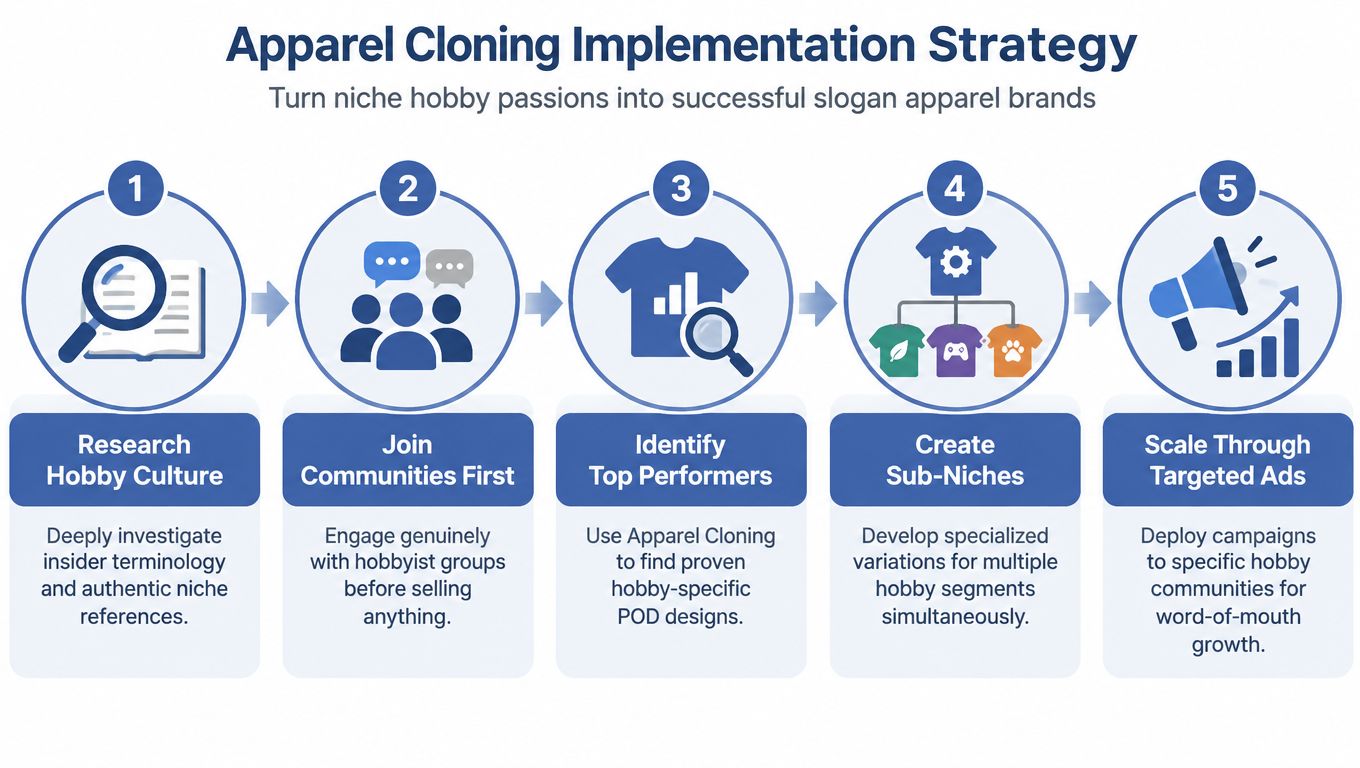
Hobbyists buy identity, not just fabric. A coffee enthusiast, golfer, woodworker, gamer, photographer, cyclist, or bearded outdoor fan may have a vocabulary and set of rituals that outsiders don't understand. That insider knowledge lets you create a more defensible collection than a generic “funny guy” design.
Start with a narrow hobby and learn how people describe it. A coffee collection might use “My Blood Type Is Cold Brew,” while a woodworking collection could joke about unfinished projects and tool purchases. Outdoor designs can reference weather, gear, trails, or the difference between planning an adventure and leaving the house. The best line feels like something a real hobbyist might say to a friend.
Use escalation as a collection structure. Begin with casual participation, move into committed enthusiasm, then finish with obsessive behavior. That creates multiple buying options for the same audience and gives shoppers a reason to collect more than one design.
Earn credibility before promoting
Join hobby discussions and listen to how participants talk before publishing products. Don't copy community jokes or lift phrases from creators. Instead, identify recurring situations and write your own angle around them.
AvatarIQ can place the product in a garage workshop, trailhead, coffee bar, gaming setup, or outdoor campsite. The mockup should confirm that the shirt belongs in the hobby's world. Partner with small creators or community leaders only when they actively use and understand the activity.
9. The Introvert and Antisocial Humor Slogan
Introvert humor works best when it validates the wearer instead of treating social discomfort as a defect. A shirt can say “I'm Not Ignoring You, I'm Recharging,” “Booked and Staying Home,” or “My Weekend Plans Are None of Your Business.” These lines create recognition while remaining light enough for everyday wear.
Separate proud solitude from genuine social anxiety. The first group may want bold, self-assured messaging. The second may respond better to gentle humor about quiet routines, headphones, reading, coffee, and recovery after social events. Avoid turning serious mental-health experiences into cheap punchlines. If a design touches on anxiety, keep the message respectful and avoid presenting apparel as treatment or professional support.
AvatarIQ mockups should feel calm and authentic. A person reading at home, drinking coffee, working in peace, or walking alone can communicate the product's mood better than a crowded party scene. Use comfortable silhouettes and soft color combinations if they fit the audience, then test bolder graphics against more subdued typography.
Make the shirt a low-pressure conversation starter
The wearer may want the design noticed, but not necessarily discussed. Short copy and clear lettering help the message land without requiring an explanation. A small front print can feel discreet, while a larger design gives the buyer a stronger identity signal.
Build sub-niches for introverted professionals, parents, entrepreneurs, and remote workers. Each group shares the solitude theme but faces different situations. Validate those contexts separately, and use supportive language in product descriptions. The collection should leave buyers feeling understood, not exposed.
10. The Pet Lover Humor Slogan
Pet humor turns daily behavior into a shared identity. Dog owners understand early walks, muddy paws, barking at nothing, and the constant negotiation over the couch. Cat owners understand judgment, disappearing acts, and the feeling that the animal owns the home. Those experiences create specific, wearable product directions.
Choose a pet type before choosing the joke. Dog designs can branch into breed-specific humor, rescue ownership, dog sports, and professional walking. Cat designs can focus on household authority, feeding schedules, and mysterious behavior. Bird owners, reptile keepers, and owners of other less common pets may offer smaller audiences with stronger identity signals.
Try phrases such as “My Dog Has a Better Social Life,” “Cat Staff,” or “Powered by Walks and Treats.” Show the product in a real pet setting with AvatarIQ, using a man and his dog, a relaxed home with a cat, or an outdoor walk. The mockup should make the relationship visible without relying on a generic animal graphic.

Turn pet behavior into collections
Build around moments such as early-morning walks, three-in-the-morning energy, shedding, rescue adoption, grooming, and breed-specific quirks. Seasonal campaigns can connect with adoption awareness, holiday pet gifts, outdoor activity, and pet health conversations. If you promise a charitable contribution, state the terms clearly and document where the money goes.
Pet communities can provide useful validation, but approach them as communities rather than advertising lists. Listen first, collaborate with relevant creators, and test designs that reflect actual experiences. The same process works for breed groups, dog sports communities, cat accounts, and rescue supporters.
10-Item Funny Shirt Slogan Comparison
| Slogan | 🔄 Implementation complexity | ⚡ Resource requirements | 📊 Expected outcomes (⭐) | Ideal use cases | 💡 Key advantages |
|---|---|---|---|---|---|
| The Self-Deprecating Hustle Slogan | Medium, requires authentic entrepreneur nuance | Low–Medium, copywriting + mockups + targeted ads | High ⭐ deep engagement, strong conversions & repeat buyers | Entrepreneur communities, side‑hustle audiences, Facebook groups | Emotional resonance, evergreen shareability |
| The Tech Bro Parody Slogan | Medium–High, needs trend monitoring and fresh angles | Medium, premium mockups, influencer outreach, research | High ⭐ high virality, higher AOV when positioned premium | Tech events, Twitter/LinkedIn/TikTok, affluent buyers | Cultural relevance, premium positioning |
| The Dad Joke / Dad Bod Slogan | Low–Medium, straightforward but needs good writing | Low, seasonal campaigns, simple mockups | High ⭐ predictable gift spikes, exceptional repeat purchases | Father's Day, birthday gifts, family-focused marketing | Reliable seasonality, loyal customer base |
| The Gym / Fitness Humor Slogan | Medium, requires fitness-culture authenticity | Medium, influencer partnerships, gym-style mockups | High ⭐ year‑round sales with seasonal peaks (New Year, summer) | Fitness communities, gyms, supplement partnerships | Wide demographic appeal, cross-sell potential |
| The Millennial / Gen‑Z Irony Slogan | High, fast-moving meme culture; rapid iteration | Medium–High, social-first creatives, trend monitoring | Variable 📊 viral spikes; exceptional organic reach when timed | TikTok/Instagram launches, limited drops, meme marketing | Massive shareability, collectible designs |
| The Professional Slacker Slogan | Low–Medium, balance humor with workplace appropriateness | Low, polished mockups, LinkedIn/office targeting | Medium 📊 steady repeat buys; workplace-appropriate sales | Remote workers, corporate gifts, office casual wear | Broad professional appeal, conversation starter |
| The Relationship / Dating Humor Slogan | Medium, needs sensitivity and varied angles | Medium, couple mockups, seasonal ad spend | High 📊 strong gift market; matching designs lift AOV | Valentine's Day, anniversaries, couple gifting | High gift-purchase potential, complementary/matching sales |
| The Niche Hobby Obsession Slogan | High, deep, hobby-specific research required | Medium–High, community engagement, many sub-niches | High ⭐ loyal customers, high lifetime value per niche | Hobby forums, niche influencer partnerships, targeted ads | Passion-driven buyers, strong word-of-mouth |
| The Introvert / Antisocial Humor Slogan | Medium, needs sensitive, validating tone | Low–Medium, cozy mockups, mental‑health partnerships | Medium–High 📊 loyal base, steady repeat purchases | Personality communities, mental health–aware marketing | Emotional validation, growing mainstream acceptance |
| The Pet Lover Humor Slogan | Low–Medium, requires pet-specific authenticity | Medium, pet mockups, influencer & charity tie-ins | High ⭐ passionate repeat buyers; strong WOM | Breed groups, pet holidays, rescue/adoption campaigns | High loyalty, gift purchases, mission-driven appeal |
Turn One Funny Idea Into a Sellable Collection
The strongest funny shirt sayings for guys usually begin with one recognizable person, not one broad keyword. “Men's humor” is too wide to guide a design, mockup, product description, and promotion strategy. “Remote-working father who loves coffee and makes jokes about meetings” gives you a buyer, a setting, a visual direction, and several collection ideas.
Start with one audience from the list. Choose the category where you understand the language and daily situations. If you're a side-hustle seller, begin with entrepreneurial frustration. If you spend weekends at the gym, start with fitness culture. Personal familiarity helps you write jokes that feel observed rather than manufactured.
Write several original variations around one situation. Change the tone, length, placement, and level of specificity. For a remote-work idea, you might test a quiet front-chest phrase, a larger sarcastic back print, and a design that uses a role-based identity. Don't assume the first line is the best line. The collection should give the buyer related choices while keeping a recognizable visual and emotional thread.
Use the three-second test. Someone should understand the basic message quickly while scrolling a product page or passing the wearer in public. Short, visually simple copy generally has an advantage because it doesn't force the buyer to read a setup paragraph. If the joke needs an explanation, it may work better as a product description than as the main shirt text.
Check the legal side before publishing. Create original artwork and wording, use public-domain or properly licensed material where appropriate, and search trademarks before selling. Parody doesn't automatically remove risk. A parody can still create problems if buyers might confuse its origin or if the design damages the original brand's image, as outlined in this print-on-demand parody guidance.
Create your designs and mockups with AvatarIQ, then review the product as a buyer would. Does the print look readable on the chosen garment? Does the mockup show a realistic use setting? Would the intended customer give this as a gift, wear it on a weekend, or share it with friends? A polished presentation helps the audience understand the product before they make a decision.
Use Apparel Cloning to study proven product patterns and discover underserved variations, but don't copy another seller's design. Look for the underlying structure, such as identity plus short phrase, hobby plus escalation, or role plus everyday frustration. Then apply that structure to your own audience, wording, artwork, and visual system.
Test a small collection before expanding. Keep the audience consistent, use comparable mockups, and give each design a clear product page. Review clicks, saves, comments, conversions, customer questions, and repeat interest. A design that receives attention but no purchases may need a stronger mockup, clearer positioning, or a better product page. A design that sells can become the foundation for more colors, related roles, gift versions, and seasonal releases.
POD makes this experimentation accessible because you can explore ideas without committing to a large inventory order. Fulfillment timing still varies by provider, so check production and shipping expectations before making seasonal promises. One provider reports most orders process and ship within 24 hours, while another reports an average production-to-ship time of 23 hours and says over 80% of orders ship within 24 hours, according to their respective POD fulfillment information. Treat those as provider-specific claims, not universal delivery guarantees.
The opportunity is exciting because humor gives you endless entry points, but sustainable growth comes from disciplined execution. Choose a real identity, write a sharp original phrase, present it in the right context, validate the response, and build around what buyers really want. That process can turn one funny idea into a focused apparel brand with room to grow.
Skup offers practical education for building POD apparel businesses, including the Apparel Cloning System for researching proven product patterns and AvatarIQ for creating original designs and polished mockups. Explore Skup to turn your next funny shirt collection into a focused eCommerce test.