10 Handmade Stuff to Sell in 2026
The strongest handmade business is rarely built by making something for everyone. It starts with one specific buyer, one recognizable need, and a product that feels personal enough to earn attention in a crowded feed.
That matters because handmade products now sit inside a global category measured in hundreds of billions of dollars. One market estimate valued the global handicrafts market at USD 739.95 billion in 2024 and projected USD 983.12 billion by 2030, with a 4.9% CAGR from 2025 to 2030. The same analysis connects demand with unique, handmade, culturally significant, and eco-friendly goods rather than generic mass-produced products. Grand View Research's handicrafts market analysis
The opportunity is real, but the product idea alone won't build the store. Below, you'll compare 10 handmade stuff to sell opportunities through the same beginner-friendly lens: production effort, price positioning, customer niche, selling channels, fulfillment, and the path from handmade testing to scalable print-on-demand or digital delivery.
Start with a single audience in mind. Create a focused collection, test the offer, and expand only after buyers respond. POD and digital fulfillment can make experimentation more accessible, but you'll still need strong positioning, useful products, polished listings, and consistent customer understanding.
Table of Contents
- 1. Custom Niche Apparel With Print-On-Demand
- 2. Personalized Home Décor and Wall Art
- 3. Niche-Specific Mugs and Drinkware
- 4. Digital Products and Design Templates
- 5. Custom Artwork and Illustrations
- 6. Handmade Jewelry and Accessories
- 7. Niche-Specific Educational Products and Guides
- 8. Handmade Vintage and Upcycled Fashion
- 9. Subscription Box and Recurring Delivery Products
- 10. Print-On-Demand Books, Journals, and Stationery
- Top 10 Handmade Products Comparison
- Turn One Handmade Idea Into a Focused Store
1. Custom Niche Apparel With Print-On-Demand
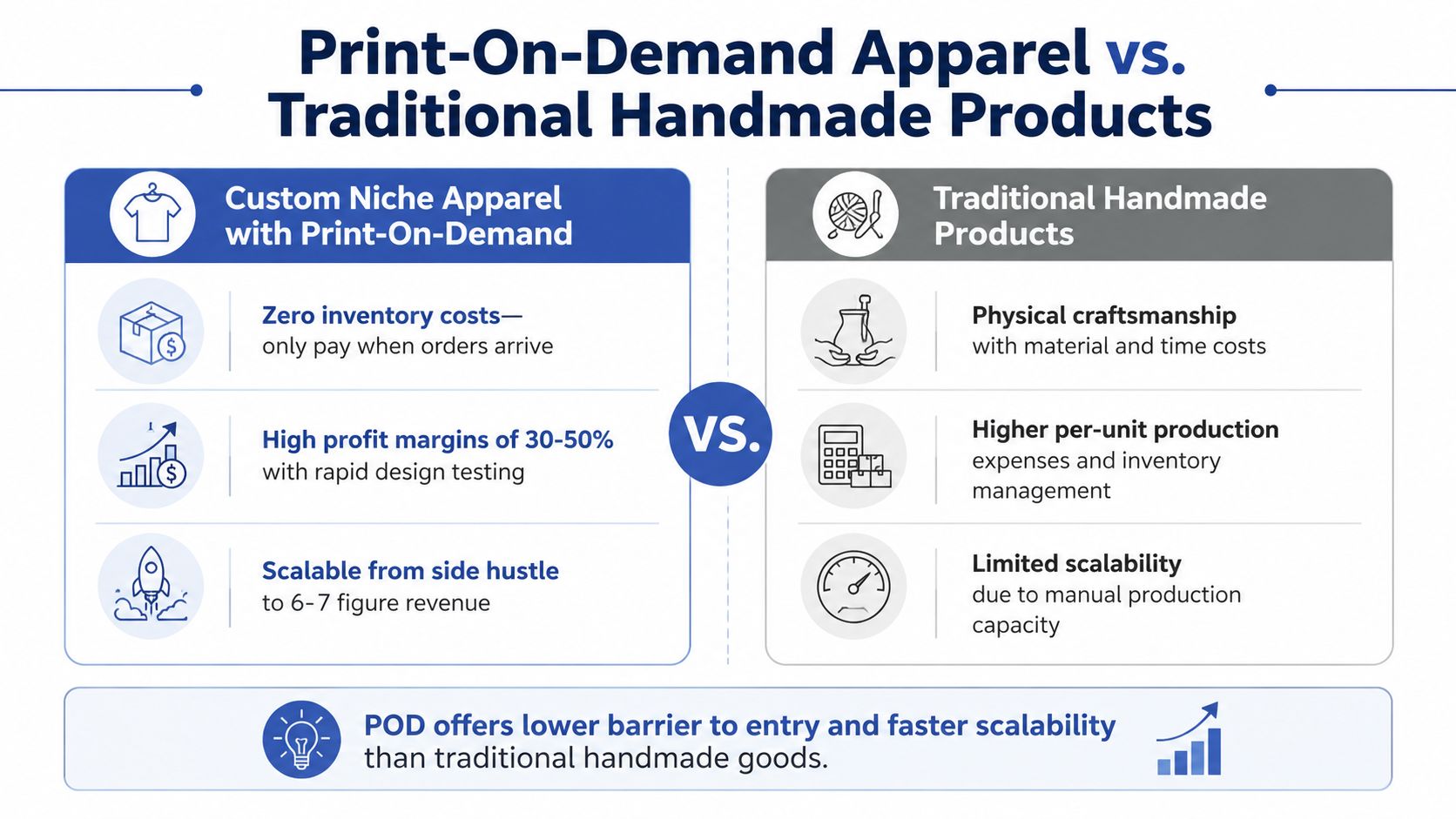
Custom apparel is one of the clearest ways to turn a handmade concept into an eCommerce brand. The product is familiar, but the value comes from the message, visual identity, and audience connection. A shirt for “dog lovers” is broad. A shirt for owners of a particular breed, rescue volunteers, or a specific dog-sport community gives you a sharper starting point.
You can test designs through print-on-demand without purchasing a batch of inventory in advance. A production partner prints and ships after the customer orders, so you can spend more energy on niche research, original design, product pages, and customer feedback. Etsy's seller policy allows items made or designed by the seller, including products created with tools such as a 3D printer, CNC machine, or Cricut, provided the seller is involved in the permitted creation process. Review Etsy's seller policy before listing
Where the model works best
Strong audiences include nurses, teachers, tradespeople, new parents, fitness communities, gamers, crafters, and hobby groups. The best designs usually express identity, inside humor, pride, or belonging instead of relying on a generic slogan.
- Production cost: You avoid holding finished inventory, but you still need to account for base product cost, fulfillment, platform fees, refunds, and advertising.
- Price positioning: Premium positioning depends on design originality, garment quality, niche relevance, and brand presentation.
- Best channels: Etsy, your own storefront, social media content, and paid traffic can all work, but each requires clear niche messaging.
- Scalable path: Begin with a small collection for one audience, then move winning concepts into additional apparel styles or related products.
Practical rule: Test the audience before expanding the catalog. A focused collection teaches you more than a large store filled with unrelated designs.
Use this guide to starting a print-on-demand business for the operational details, and use AvatarIQ to generate original designs and professional mockups without relying on Canva or Photoshop.
2. Personalized Home Décor and Wall Art
Personalized home décor sells because buyers aren't only purchasing an object. They're buying a reminder of family, a milestone, a place, or a relationship. Custom family signs, wedding-date prints, nursery artwork, pet portraits, and anniversary pieces all give customers a reason to pay for something that feels made for them.
This category works particularly well when you show the product in context. A plain image of a wall print leaves the buyer guessing. A polished room mockup helps them understand scale, style, and how the piece might look in their own home. AvatarIQ can help create those lifestyle mockups while you focus on the offer and personalization process.
Build around moments, not just materials
The strongest niches are connected to clear occasions:
- Family identity: Names, locations, important dates, and family milestones.
- Gift buying: Weddings, engagements, anniversaries, new homes, and new babies.
- Pet ownership: Custom illustrations or portraits based on the customer's animal.
- Home styling: Coordinated prints, signs, and décor collections in a consistent aesthetic.
Production can begin with handmade signs or custom illustrations, then expand into printed posters, canvases, or other fulfilled products. Learn more about print-on-demand posters before choosing formats, finishes, and fulfillment partners.
Offer clear personalization fields rather than forcing customers into a long back-and-forth. Let them choose names, dates, colors, sizes, and styles where practical. Plan collections around gifting seasons, but don't depend only on holidays. Wedding, nursery, pet, and housewarming products can support demand across the year.
3. Niche-Specific Mugs and Drinkware
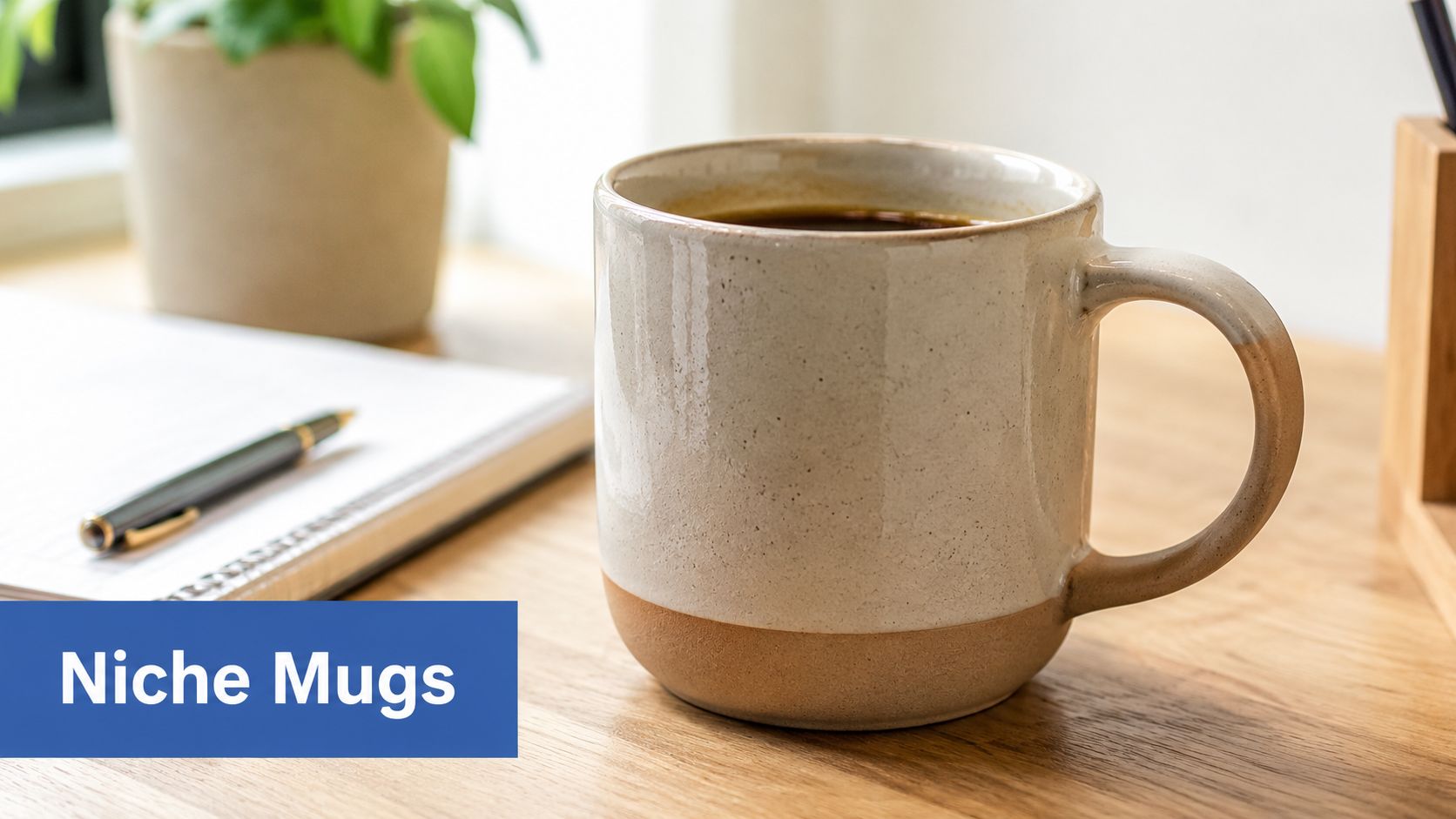
Mugs are simple products with strong emotional and practical appeal. People use them every day, display them at work, and buy them as easy gifts. That combination makes drinkware a useful testing ground for a beginner who wants to learn product positioning without managing a complex handmade item.
The winning angle is rarely “a funny mug.” It's a funny mug for a recognizable person. A nurse, engineer, attorney, dog owner, book lover, retiree, coffee enthusiast, or new employee can immediately understand why the product belongs to them.
Turn one mug into a collection
Create related designs instead of relying on a single listing. A nurse-themed collection might include shift humor, coffee references, and professional pride. A dog-lover collection could use breed-specific language, pet-parent jokes, or personalized names.
- Production cost: POD reduces inventory handling, while handmade ceramic or painted pieces require materials, equipment, time, and careful packing.
- Price positioning: Perceived value increases when the design feels specific, giftable, and well presented.
- Best channels: Etsy, social content, gift guides, and niche communities are natural starting points.
- Fulfillment approach: Use POD for repeatable designs, and reserve handmade versions for premium or highly customized orders.
- Scalable path: Test mugs first, then extend successful themes into shirts, journals, stickers, or wall art.
Use this resource on printing on coffee mugs to understand the production side. AvatarIQ can create lifestyle mockups showing the mug on a desk, kitchen counter, or office workstation, which gives shoppers a stronger reason to visualize ownership.
4. Digital Products and Design Templates
Digital products remove the physical fulfillment problem entirely. Once you've created a useful template, planner, printable, or resource pack, you can deliver it repeatedly without sourcing materials, packing orders, or coordinating shipping. That makes this one of the most accessible forms of handmade stuff to sell online.
The opportunity depends on solving a narrow problem. A generic planner faces broad competition. A planner for freelance photographers, a meal organizer for busy parents, or a client onboarding pack for coaches gives the buyer a clear reason to choose your product.
Make the file useful immediately
Useful categories include:
- Business templates: Presentations, email sequences, client forms, pricing guides, and social content packs.
- Planning tools: Budget sheets, meal planners, fitness trackers, habit logs, and goal workbooks.
- Events and milestones: Invitations, wedding stationery, party materials, and printable gifts.
- Professional resources: Real estate templates, photographer documents, coach worksheets, and creator toolkits.
Your production cost is mostly time, research, design, and customer support. Price bundles around the outcome they help the buyer achieve, not just the number of pages included. Add instructions, demonstration videos, and clear file descriptions to reduce confusion and support requests.
Test demand with a small product or free lead magnet, then create related bundles. A successful printable can become a planner, workbook, email series, or POD journal. Unlike physical handmade products, digital delivery scales quickly, but it also makes clarity and usability essential. Buyers won't value a beautiful file that's difficult to edit or poorly explained.
5. Custom Artwork and Illustrations
Custom artwork works when the buyer wants something no generic catalog can provide. Pet portraits, family illustrations, wedding artwork, childhood homes, favorite locations, and character designs all carry personal meaning. Your distinctive style becomes the product's main differentiator.
This category has a different trade-off from POD. Custom commissions can command stronger prices and create memorable customer experiences, but they also require direct communication, revisions, deadlines, and careful expectation management. A creator who accepts unlimited changes can quickly turn a profitable commission into a stressful service job.
Protect your creative capacity
Set clear commission tiers before accepting orders. You might offer a simple sketch, a detailed illustration, color or black-and-white options, and different delivery formats. Explain what the customer receives, how many revisions are included, and when the final file or product will arrive.
Show the transformation from reference photo to finished artwork through short process videos and portfolio posts. Customers pay more confidently when they understand the labor and creative judgment behind the result. Strong presentation also helps you attract buyers who value your style rather than asking you to copy someone else's.
AvatarIQ can create mockups that show artwork framed in a home, displayed on a desk, or adapted to a product. Once a commission style proves popular, you can create print-on-demand versions that generate additional revenue without repeating the full custom process.
A practical fulfillment path is simple: begin with digital delivery, add printed art for buyers who want a physical piece, and later build collections around the styles and subjects that receive the strongest response. That sequence preserves personalization while giving the business more capacity.
6. Handmade Jewelry and Accessories
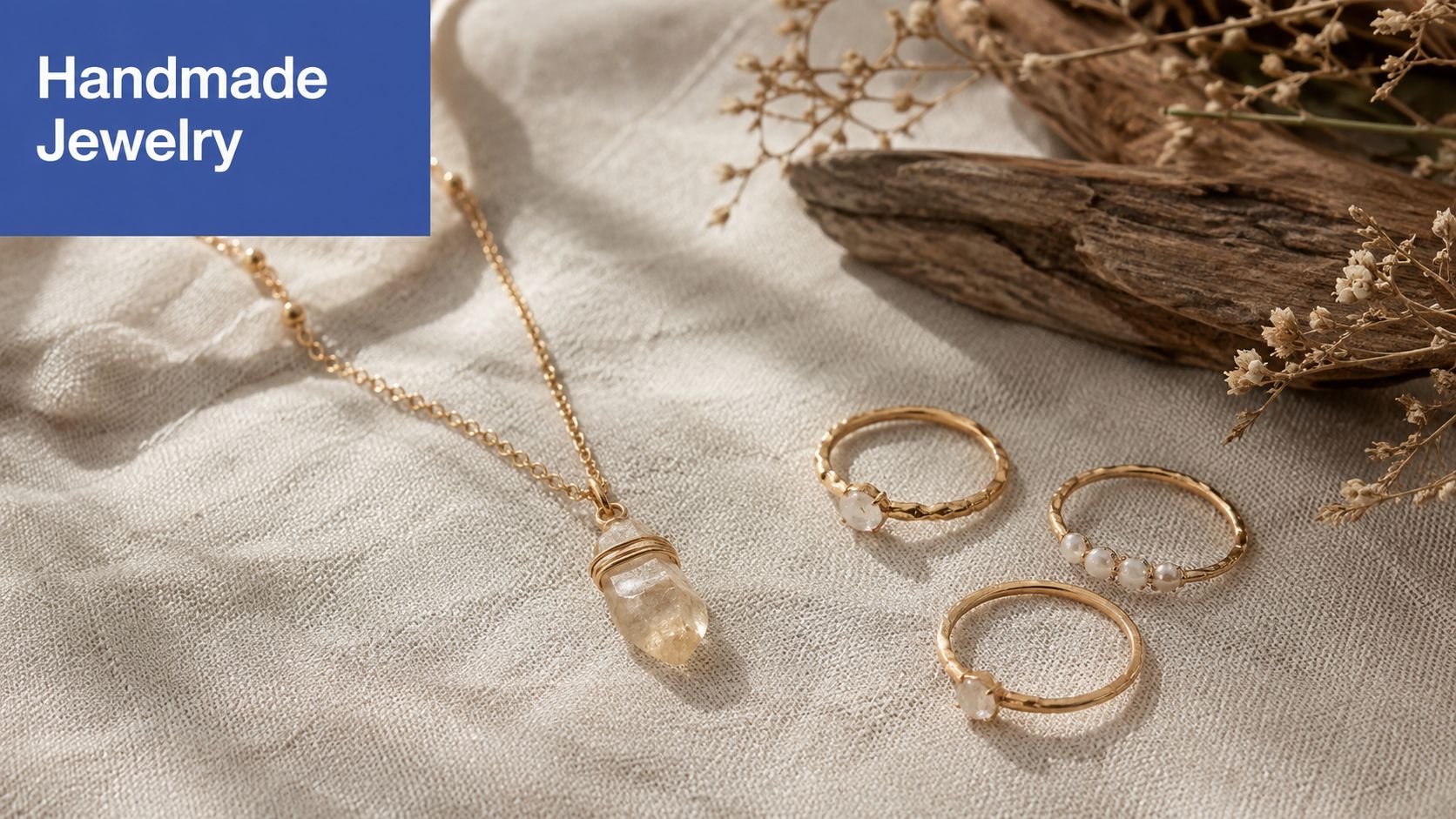
Jewelry and accessories remain attractive because buyers use them to express personal style. Rings, necklaces, earrings, bracelets, bags, belts, card holders, and textile accessories can all work when the design language feels cohesive. The category supports both one-of-a-kind craftsmanship and repeatable collections.
The challenge is that visual products compete heavily on photography, styling, and trust. A strong piece can underperform if the photos don't show its scale, finish, texture, or appearance when worn. Buyers need enough detail to judge quality before they purchase.
Choose a recognizable aesthetic
A minimalist collection should look intentional across every product. A bohemian line, vintage-inspired range, resin collection, or bold statement series needs the same consistency. Your style helps customers recognize the brand and makes a new product feel connected to something they already like.
- Materials and labor: Calculate the cost of findings, stones, metals, packaging, tools, and the time required to assemble each item.
- Price positioning: Explain craftsmanship, material choices, personalization, and limited availability instead of competing only on low price.
- Best channels: Instagram, TikTok, Pinterest, Etsy, pop-up events, and a dedicated storefront suit visual accessories.
- Fulfillment approach: Handmade production works well for limited collections, while repeatable designs can later move into supported manufacturing or related POD products.
- Customer niche: Focus on a style community, gift buyer, profession, occasion, or identity rather than “everyone who likes jewelry.”
Personalization can create a stronger offer through engravings, birthstones, colors, initials, or coordinates. Use this guide to pricing handmade jewelry as a reference point, then adapt your pricing to your actual materials, labor, positioning, and channel fees.
7. Niche-Specific Educational Products and Guides
Knowledge becomes sellable when it helps a defined buyer complete a defined task. A broad guide about “business” is difficult to position. A workbook for freelancers setting their first rate, a resource pack for parents handling a specific routine, or a beginner guide for a focused hobby gives the customer a clearer outcome.
This category can include written guides, checklists, workbooks, video lessons, templates, and resource bundles. The production cost is concentrated in research, organization, recording, editing, and support. Digital delivery keeps fulfillment simple, but the content must be useful and easy to apply.
Solve one painful problem
Validate before building a large product. Ask potential buyers what they're struggling with, publish a short educational resource, or create a small beta version. Their questions will show you what needs more explanation and which parts of the offer matter most.
Add actionable tools instead of relying on information alone. A guide for freelancers could include pricing worksheets. A hobby product could include practice prompts. A professional preparation resource could include revision plans, examples, and progress tracking.
If you want a structured path into POD apparel, the Apparel Cloning System is a relevant example of a focused educational product. It teaches a method for identifying proven product patterns and developing original designs for underserved audiences, rather than treating apparel as a random design exercise.
Avoid unsupported income promises in your own educational products. Show the process, limitations, examples, and decisions clearly. A strong product earns trust by helping customers make progress, not by promising that the work will be effortless.
8. Handmade Vintage and Upcycled Fashion
Vintage and upcycled fashion gives buyers two reasons to care. They receive a distinctive garment, and they can participate in a more individual approach to clothing consumption. Curated vintage streetwear, altered denim, patched jackets, vintage band tees, designer pieces, and transformed secondhand garments all offer room for a clear point of view.
The operational burden is different from POD because every item may have a unique size, condition, measurement, and source. You'll need a reliable sourcing process and detailed product photography. Inventory can sit longer when your curation is too broad or your styling doesn't communicate who the item is for.
Make your curation the brand
Choose an era, silhouette, subculture, color palette, or styling direction. A customer who loves your taste should recognize the product before reading every detail. Show garments from multiple angles, include exact measurements, disclose flaws, and style each piece in a way that demonstrates versatility.
Video content is especially useful here. A transformation clip can show an ordinary secondhand item becoming a finished piece. A styling guide can show how one jacket works across several outfits. These assets communicate labor, creativity, and practical value at the same time.
Begin with handmade alterations and carefully curated one-off pieces. Once certain graphics, phrases, or visual themes attract attention, extend those concepts into repeatable POD apparel or digital styling products. That gives you a way to preserve the brand's aesthetic without depending entirely on irregular sourcing.
AvatarIQ can support lifestyle mockups for design-led extensions, but it shouldn't replace honest photography for a one-of-a-kind vintage item. Buyers need to see the actual garment they'll receive.
9. Subscription Box and Recurring Delivery Products
Subscription boxes turn handmade selling into an ongoing customer relationship. The product might be a craft supply collection, tea or coffee selection, self-care package, book club bundle, gardening kit, or themed assortment with handmade elements. The value comes from curation, anticipation, and a consistent experience.
The model is more demanding than a standard product listing. You must source reliably, forecast demand, manage packaging, handle cancellations, and keep each delivery fresh. A box that feels repetitive or arrives inconsistently will lose trust quickly.
Design the experience before the box
Start with a clear promise. A hobbyist might receive materials for a specific project. A reader might receive a carefully chosen title with discussion prompts. A self-care customer might receive a coordinated collection rather than unrelated products.
- Production cost: Account for product sourcing, assembly, packaging, postage, damaged orders, and customer service.
- Price positioning: Use tiers only when each level has a clear difference in quantity, exclusivity, or experience.
- Best channels: Social video, email, creator partnerships, and niche communities are strong for demonstrating unboxing.
- Fulfillment approach: Begin with a manageable delivery schedule and build supplier relationships before increasing frequency.
- Scalable path: Move from handmade curation to repeatable inserts, POD merchandise, and digital companion content where it improves consistency.
A quarterly model can be easier to manage than a frequent schedule while you learn what subscribers value. Ask customers why they stay, skip, or cancel. Those answers are more useful than vanity engagement because they reveal whether the recurring offer remains worth paying for.
10. Print-On-Demand Books, Journals, and Stationery
Books, journals, planners, notebooks, and stationery combine tactile products with scalable production. They're especially effective when designed for a specific life stage, profession, hobby, or interest. A guided journal for new parents, a business planning workbook, a coffee-focused book, or a personalized children's story gives the product a clear audience.
Print-on-demand removes the need to store large quantities of finished books. That lets you test a concept, improve the interior, and develop companion products without committing to a large print run. The main work shifts to content quality, layout, cover design, metadata, and audience building.
Build a connected product line
A single journal can become the first product in a broader ecosystem. Add a matching planner, printable worksheet, digital companion, or related book. A customer who likes one useful format may appreciate another product that supports the same goal.
- Materials or production cost: Digital creation takes time, while POD adds per-order printing and fulfillment costs without requiring stored inventory.
- Price positioning: Buyers need to understand the transformation, structure, prompts, or personalization inside the product.
- Best channels: Amazon KDP can provide discoverability, while Etsy can serve niche and personalized audiences.
- Fulfillment approach: Use POD for books and journals, and digital delivery for companion files.
- Scalable path: Create series, bundles, and related products around one audience instead of publishing unrelated titles.
AvatarIQ can help create lifestyle mockups that show a journal on a desk, in a bag, or beside related stationery. Promote through reader communities, niche social accounts, email, and content that demonstrates the product's actual use.
Top 10 Handmade Products Comparison
| Item | Implementation (🔄) | Resource requirements (⚡) | Expected outcomes (⭐📊) | Ideal use cases (💡) | Key advantages (⭐) |
|---|---|---|---|---|---|
| Custom Niche Apparel with Print-On-Demand | Low 🔄, easy platform setup, design & marketing focus | Low–Medium ⚡, design time, POD integrations, ad budget ($200–500/mo) | ⭐⭐⭐⭐ 📊 30–50% margins; scalable to 6–7 figures with winning designs | Niche hobby/professional apparel, rapid market testing | ⭐ Low startup cost, no inventory, fast iteration |
| Personalized Home Décor and Wall Art | Medium 🔄, design + customization & customer comms | Medium ⚡, design skill, personalization workflows, seasonal marketing | ⭐⭐⭐⭐ 📊 Premium pricing (2–3×); strong seasonal spikes; repeat buyers | Gifts, weddings, nursery art, personalized presents | ⭐ Emotional value drives premium pricing and loyalty |
| Niche-Specific Mugs and Drinkware | Low 🔄, simple designs and POD-friendly | Low–Medium ⚡, vet POD quality, higher shipping/fragility costs | ⭐⭐⭐⭐ 📊 40–60% margins; high gift/collector potential; repeat purchases | Profession/hobby gifts, collectors, everyday-use merchandise | ⭐ High perceived value, easy to photograph and market |
| Digital Products and Design Templates | Low–Medium 🔄, creation requires skill but simple delivery | Low ⚡, time and design skill; no shipping or inventory costs | ⭐⭐⭐⭐⭐ 📊 80–100% margins; unlimited scalability; passive income potential | Passive income, creator tools, B2B templates, lead magnets | ⭐ Highest margins, instant delivery, easy updates |
| Custom Artwork and Illustrations | High 🔄, skill-intensive and client management | Medium–High ⚡, artist time, portfolio building, optional print fulfillment | ⭐⭐⭐⭐ 📊 High per-piece revenue ($200–$2,000+); limited scalability | Commissioned portraits, premium gifts, gallery sales | ⭐ Unique, premium-priced, strong brand/portfolio value |
| Handmade Jewelry and Accessories | Medium–High 🔄, craft skill, tight quality control | Medium–High ⚡, materials (metals/stones), tools, photography | ⭐⭐⭐⭐ 📊 50–70% margins possible; repeat collectors; seasonal peaks | Personalized/bridal pieces, fashion niches, limited editions | ⭐ High perceived value, strong visual marketing potential |
| Niche-Specific Educational Products & Guides | Medium 🔄, requires subject expertise and production | Low–Medium ⚡, content creation time, recording/editing tools, platform fees | ⭐⭐⭐⭐⭐ 📊 High margins; scalable passive income; upsell opportunities | Professional training, niche skill courses, certification prep | ⭐ Authority-building product with strong CLV potential |
| Handmade Vintage & Upcycled Fashion | Medium–High 🔄, sourcing, refurbishment, curation | Medium ⚡, sourcing time, upcycling materials, photography | ⭐⭐⭐ 📊 Good per-item margins; one-of-a-kind inventory limits scale | Sustainable fashion, vintage curation, unique statement pieces | ⭐ Authentic uniqueness and sustainability appeal |
| Subscription Box & Recurring Delivery | High 🔄, logistics, curation, subscription ops | High ⚡, consistent sourcing, fulfillment, subscription platform costs | ⭐⭐⭐⭐ 📊 Predictable recurring revenue; high CLV; churn management required | Curated hobby boxes, self-care, niche collector subscriptions | ⭐ Recurring revenue and strong community/loyalty potential |
| Print‑On‑Demand Books, Journals & Stationery | Medium 🔄, writing/design + POD setup | Low–Medium ⚡, content/design time, POD partner, marketing | ⭐⭐⭐⭐ 📊 40–60% margins; strong gift appeal; discoverability challenge | Niche journals, planners, personalized books, companion products | ⭐ Tangible, premium-feel products with no inventory risk |
Turn One Handmade Idea Into a Focused Store
The fastest way to make these ideas feel overwhelming is to launch all 10 at once. A beginner doesn't need a giant catalog. You need a product category that matches your skills, a clearly defined audience, and a fulfillment model you can manage consistently.
Start by choosing one niche with a visible reason to buy. “People who like home décor” is too broad. “New parents buying personalized nursery gifts” gives you a product direction, a visual style, seasonal opportunities, and an audience you can reach through relevant content. “POD apparel” becomes more actionable when narrowed to a professional group, hobby community, or identity-based niche.
Then outline a small collection. Choose related products that serve the same buyer rather than adding random items because they're easy to make. A focused apparel collection might begin with shirts and expand into mugs or journals only after the message and audience show traction. A pet portrait business might begin with digital illustrations, then add printed wall art and POD products based on the strongest styles.
Calculate real costs before setting a price. Include materials, labor, packaging, fulfillment, transaction fees, returns, customer support, and promotion. Handmade production gives you control and authenticity, but it can become difficult to scale when every order requires extensive manual work. POD and digital delivery can improve speed and capacity once you know what customers want. POD is not a shortcut around product quality, niche selection, or marketing. It's a practical production model that lets you test and fulfill repeatable products without carrying finished inventory.
Create polished listings and mockups before sending traffic. AvatarIQ is the permitted tool to use for accelerating design creation and product mockups. Strong visuals should show the product clearly, demonstrate its use, and make personalization easy to understand. Your listing should answer the buyer's questions about size, materials, delivery, customization, and care.
Choose the most natural channel for the product. Etsy remains a major specialized marketplace, with 96.3 million active buyers in Q1 2026 and 5.4 million active sellers, while sellers generated $12.6 billion in GMV during the prior year, according to the marketplace summary in this Etsy seller guide. That scale creates access to demand, but it also means competition is serious. Your niche, product-page quality, photography, customer service, and differentiation matter.
Track what people do. Record which listings receive attention, which designs earn saves or clicks, which products generate questions, and which offers produce orders. Don't confuse compliments with validation. A buyer who pays, returns, recommends, or joins your email list gives you stronger evidence.
If apparel is your chosen direction and you want a structured process, the Apparel Cloning System can help organize product research, niche selection, original design development, and launch decisions. If your category is jewelry, use these embroidery business startup tips as a reminder that hands-on production also requires planning around equipment, workflow, and customer demand.
The broader market supports optimism, but it also rewards discipline. A separate estimate placed the handicrafts market at USD 906.8 billion in 2024 and projected USD 1.94 trillion by 2033, with an 8.83% CAGR from 2025 to 2033. The published market outlook uses different assumptions from other market estimates, but the direction is consistent. Handmade is no longer limited to local fairs or tourist traffic. Digital storefronts, marketplaces, POD, and downloadable products let individual creators reach buyers far beyond their immediate area.
Choose one audience this week. Build the smallest credible collection, calculate the economics, publish the listings, and invite real feedback. Consistent testing and customer understanding can turn a small creative product line into a sustainable eCommerce brand, and the path can begin with one product that makes a specific buyer feel understood.
Skup helps aspiring entrepreneurs build print-on-demand apparel businesses through practical training, structured guidance, and tools such as AvatarIQ for original designs and professional mockups. Visit Skup to explore the Apparel Cloning System and see how you can turn a focused handmade product idea into a scalable online store.