7 Apparel Cloning Examples: Before-and-After Breakdowns
You're probably in the exact spot most apparel sellers hit sooner or later. You spot a bestseller in a broad niche, maybe a teacher tee, a dog parent design, or a retro camping shirt, and you can feel there's room around it that nobody has claimed well yet. The theme is proven, the buyers already exist, but the angle still feels open.
That's why starting from a proven winner is smart. Cloning successful themes lowers the guesswork around what people already want to wear, while giving you room to build something original for a tighter sub-niche, a better visual style, or a stronger gift angle. You're not starting from zero. You're starting from demand, then shaping it into something that fits your own catalog.
The best cloning examples aren't literal copies. They're before-and-after moves. One design proves the concept, then the next version sharpens the audience, improves the wording, or changes the art direction enough to make it feel fresh. Below, you'll find seven practical cloning examples you can use in apparel, plus what to copy, what to adapt, and how to turn each one into a repeatable product line.
Table of Contents
- 1. Profession-Based Identity Cloning
- 2. Pet Lover Cloning
- 3. Retro and Vintage Style Cloning
- 4. Humor and Sarcasm Slogan Cloning
- 5. Outdoor and Hobby Lifestyle Cloning
- 6. Seasonal and Holiday Matching Collection Cloning
- 7. Faith and Inspirational Message Cloning
- 7-Category Cloning Comparison
- Your Next Winning Clone Starts With One Niche
1. Profession-Based Identity Cloning

Profession-based designs sell identity. A broad winner such as “Teacher Life” gives buyers a clear way to show what they do, and its simple format provides a useful starting point for a more specific product.
The practical move is to keep the professional identity while narrowing the audience. “Teacher Life” can become “Kindergarten Teacher Survival Crew” or “Preschool Chaos Coordinator.” “Nurse Mode” can become “Night Shift Nurse.” The original proves that the identity resonates. The new version targets a smaller group with its own routines, language, and buying occasions.
Before and after clone move
Start with the proven winner: a clean, text-led “Nurse Mode” shirt. Build the after version around night-shift work, using a dark palette, moon icons, and humor about late hours or hospital routines. The core identity remains recognizable, while the design feels made for a specific schedule.
A broad trades design such as “Electrician Things” can take two useful paths. “Apprentice Electrician” speaks to someone early in the profession, while “Foreman Life” targets experience and responsibility. Each variation preserves the occupational theme but changes the audience, wording, and gifting angle.
The same pattern works across professions. Keep the role buyers are proud to claim, then adapt the details that make one subgroup recognize itself. Specialty, shift, grade level, tenure, tools, workplace jargon, and insider frustrations can all create a distinct version.
Practical rule: Copy the buyer identity and proven format. Adapt the sub-role, wording, art style, and insider reference.
Skup's guide to how the cloning process works provides a useful way to map a winning design into controlled variations. For production, AvatarIQ can help organize multiple illustrations and mockups for teacher specialties, nursing shifts, or trade ranks, so each listing does not have to be built from scratch.
- Copy this: The profession, emotional identity, readable structure, and gifting use case.
- Adapt this: Specialty, shift, grade level, tenure, jargon, color palette, and visual style.
- Avoid this: Generic wording that sounds disconnected from the profession.
Before publishing, check whether the narrower version adds a real reason to buy. A new title alone may be too weak. Pair it with a recognizable routine, symbol, or phrase that makes the audience feel accurately represented.
2. Pet Lover Cloning

A broad “Dog Mom” shirt already gives you a proven starting point. The buyer sees family identity in a simple phrase, while the design offers a wearable way to show it. Pet products benefit from that immediate emotional connection.
The practical move is to keep the winning structure and build a sharper audience around it. “Dog Mom” can become “Greyhound Mom,” “Rescue Dog Mama,” or “Trail Dog Dad.” “Cat Dad” can become “Rescue Cat Dad” or “Black Cat Dad Club.” Each version preserves the clear pet-parent role while adding a breed, background, or activity that gives the buyer a stronger reason to choose it.
Build the clone around a specific pet story
Start with the proven winner: broad wording, readable type, and a clear gift or identity angle. Then create the new niche and design twist. For example, “Dog Mom” becomes “Rescue Dog Mama,” paired with a paw-print heartbeat icon and adoption-day gift framing. The phrase stays easy to understand, while the artwork speaks to a more specific experience.
A second route is “Dog Mom” to “Trail Dog Dad.” Keep the concise parent title, then add a hiking dog silhouette, trail markers, or a practical outdoor palette. The adaptation should reflect the owner's routine, not replace “Mom” with “Dad.”
- Copy this: The pet-parent identity, readable structure, emotional appeal, and gifting use case.
- Adapt this: Breed features, adoption background, activity, wording, icon choice, and visual style.
- Avoid this: A generic animal graphic that could belong to any pet niche.
Breed accuracy can make the difference. A Greyhound design needs recognizable ears, muzzle, and posture, while a rescue-focused design may gain more from a heart, paw print, or adoption reference than from a detailed breed portrait.
Pet identity can also extend into novelty products. A specific concept such as golf attire for your dog shows how an ordinary pet interest can become a focused lifestyle angle. The opportunity is strongest when the design captures what the owner does with the animal.
The more specific the pet identity, the less your design has to fight generic competition.
Use AvatarIQ to produce breed-specific illustration variants and lifestyle mockups. That keeps the catalog consistent while letting each listing feel made for a particular pet story.
3. Retro and Vintage Style Cloning
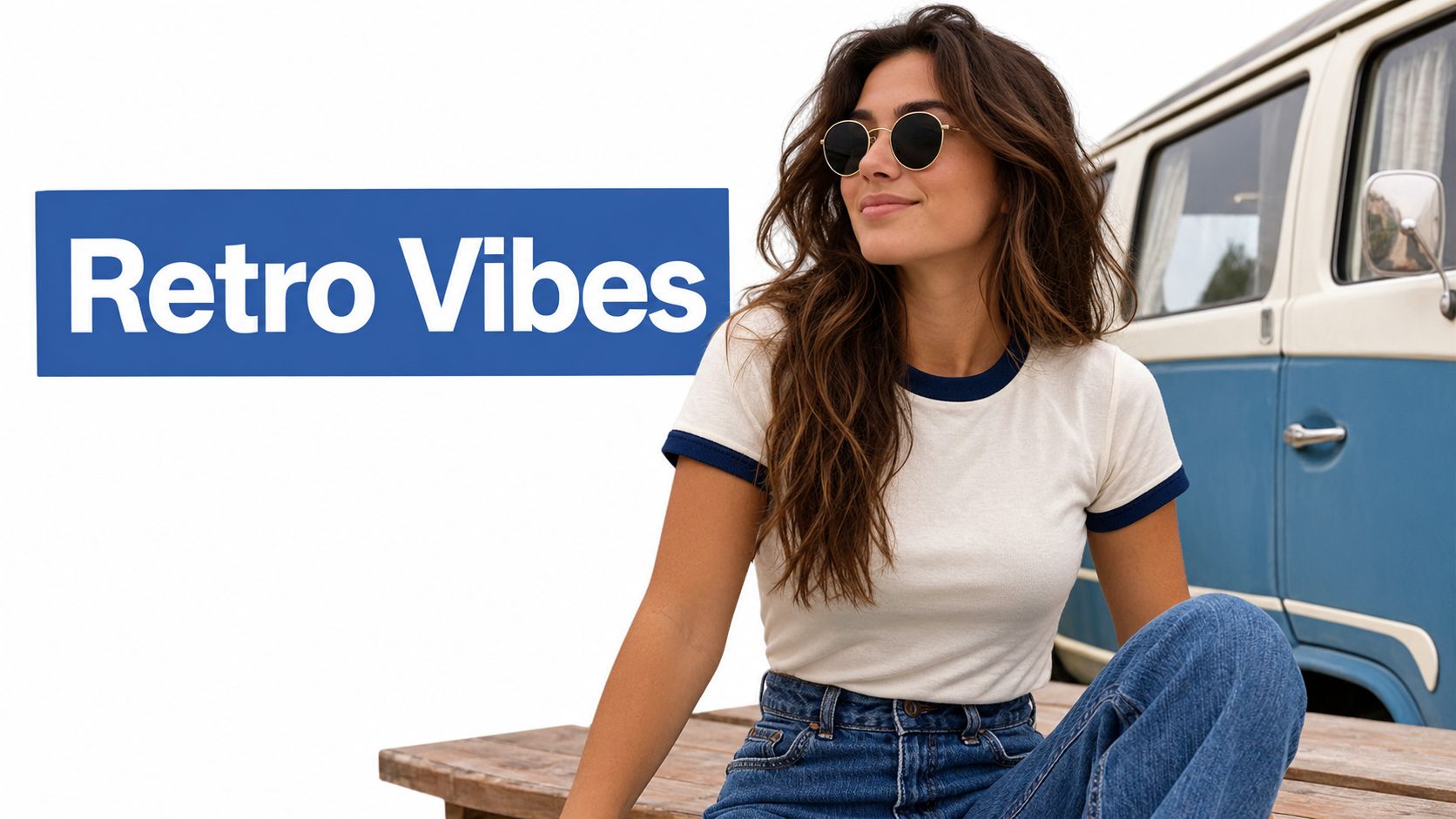
Retro cloning starts with a visual language, not a copied phrase. A vintage sunset stripe, distressed type, faded ink, or groovy 70s palette can make a shirt recognizable before shoppers read the slogan.
The before is the proven era-inspired design. The after applies its style system to a new niche, with fresh wording and relevant graphics. If a retro camping shirt performs, the same direction can support coffee, motherhood, beach, or hobby products without rebuilding the catalog from scratch.
Lock the style DNA
Keep three elements consistent: the palette, the texture, and the layout rhythm. The palette might use muted sunset tones, the texture might mimic worn screen printing, and the layout might repeat stacked type with horizontal stripes. Change the phrase, icons, and audience reference.
For example, take a sunset-stripe camping design built around “Camp More, Worry Less.” The coffee clone could read “Brew More, Worry Less,” replace the tent and pine trees with a mug and coffee leaves, and retain the same stripe order, faded ink, and relaxed lettering. Copy the composition and print treatment. Adapt the subject and phrase so the new product speaks to coffee buyers rather than campers.
Other focused variations include “Camping Mom,” “Lake Weekend Club,” and “Beach Life Social Club.” A 90s distressed layout can shift from a music concept into a coffee phrase or work-from-home shirt. For a Y2K or late-90s direction, Skup's overview of Y2K fashion trends can help identify recognizable details before you build the next variation.
- Copy this: Palette, texture, decade cues, layout rhythm, and compositional feel.
- Adapt this: Phrase, niche, illustration subject, and collection theme.
- Build next: Matching mockups and adjacent listings in the same era style using AvatarIQ, so the catalog feels cohesive without making every product identical.
Retro cloning works when the new niche is clear. Preserve the visual proof that attracted buyers, then make the wording and imagery specific enough to earn attention from a different audience.
4. Humor and Sarcasm Slogan Cloning
A joke shirt has one job in a grid view. The line has to land quickly, and the buyer has to see themselves in it almost immediately.
Humor cloning works best when you copy the joke structure, then swap in a new audience. A proven line like “Coffee Before Talkie” shows how a short rhyme and a familiar attitude can sell. From there, the next version should narrow the target. “Coffee Before Spreadsheets” fits office workers. “Coffee Before Homeschool” speaks to parents. “Coffee Before Report Cards” shifts the same pattern toward education.
What to copy and what to rewrite
Keep the skeleton. That may be a two-part phrase, a fake warning label, or a dry contradiction. Rewrite the situation, the audience, and the object of the joke. “I'm Not Arguing, I'm Explaining” can become a version for teen parents, gym fans, or project managers without losing the original rhythm.
A practical testing rule helps here. Draft ten variations from one proven format, keep the two that read at thumbnail size in under one second, and kill the rest within 48 hours of ad spend. Humor design needs that kind of discipline because weak lines burn attention fast.
Most joke concepts will miss, and that is normal. The task is to find the ones that are instantly legible, slightly sharp, and easy to wear without extra explanation.
Field note: Write more jokes than you think you need. The first clever line usually is not the strongest listing.
Use that process with a tight workflow. Build a small batch from one format, keep the clearest two or three, and test them against one audience at a time. If you need headline patterns that already fit apparel, Skup's list of funny shirt sayings for guys is useful for spotting rhythm, brevity, and layout-friendly phrasing.
Use AvatarIQ to test multiple text layouts quickly. Humor often wins or loses on spacing, font hierarchy, and whether the line still reads cleanly at thumbnail size.
5. Outdoor and Hobby Lifestyle Cloning
Outdoor niches reward specificity. “Fishing Dad” can sell, but “Bass Fishing Lake Life” gives the buyer a clearer identity: a largemouth bass silhouette, a lake-name personalization field, and a small tackle-box icon set. The proven winner is the broad fishing theme. The clone keeps that appeal while adapting it for anglers who care about one species, setting, and style of fishing.
A practical split might look like this:
Fishing Dad → Bass Fishing Lake Life
Generic camping slogan → Car Camping Club
General hiking design → Trail Sign and Boot Print Series
Each version needs its own visual language. Bass fishing can use lure shapes, lake outlines, and boat details. Car camping can feature a vehicle, camp chair, cooler, and coffee mug. Backpacking designs should signal distance, elevation, and lightweight gear rather than borrow cues from a campsite.
Copy the structure, adapt the sub-hobby
Start with the broad design that already attracts outdoor buyers. Keep its readable layout, attitude, and product type. Then rewrite the audience, setting, and symbols around one specific activity. “Campfire Coffee Society” might suit relaxed weekend campers, while “Weekend Trail Camp Crew” speaks to people who plan short hiking trips. The opportunity comes from preserving the winning format while making the details feel earned.
Vocabulary and visual honesty matter in these markets. Anglers notice incorrect terminology. Campers recognize generic gear cues. Hikers respond poorly to artwork that feels like a stock image rather than a real trail culture. Check the terms buyers use, then match the illustration to the activity before producing a larger batch.
Scene-based mockups can guide both research and creative direction. AvatarIQ helps test outdoors-style visuals without arranging a location shoot. For angling context, browsing material about fishing trips and gear can reveal useful sub-hobby themes, equipment references, and settings buyers already recognize.
A focused niche may require more design work, but it also gives each listing a clearer reason to exist. Copy the broad winner's structure. Adapt the language, symbols, and setting until the new design speaks directly to one outdoor community.
6. Seasonal and Holiday Matching Collection Cloning
Seasonal collections are some of the easiest to clone well because the buying intent is already there. Families looking for matching Christmas tops, Halloween group shirts, or birthday sets are shopping with a specific event and a full group in mind.
That shifts the goal from a single winning shirt to a theme that can support a full lineup. A strong “Christmas Family Crew” concept can become adult tees, kids tees, baby onesies, pet bandanas, and a matching pajama version, all tied together by the same icon set and palette. A “Birthday Squad” design can branch into birthday queen, party crew, auntie, grandma, and best friend variants without losing the core idea.
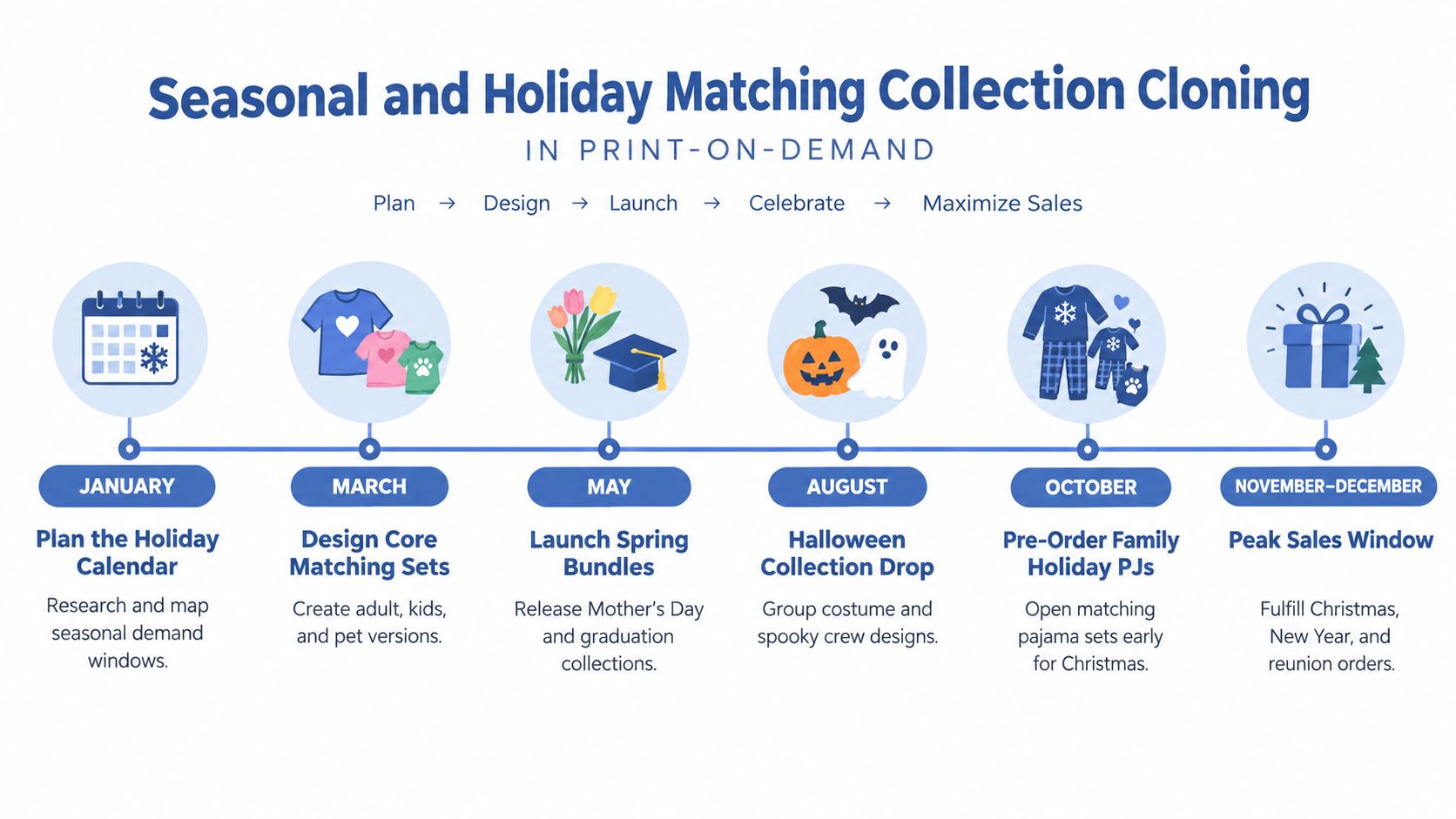
Matching sets beat one-offs
The practical move is to design for the set first. Keep the event, then vary the roles, ages, and product types so the collection feels made for a family order instead of a lone tee. That usually lifts cart size because shoppers can add more than one item without having to think too hard.
The best seasonal clones also keep the same visual logic across formats. A print that works on a shirt should still read cleanly on pajamas, a baby bodysuit, or a pet accessory. If the artwork gets crowded, the whole collection feels less intentional.
A useful reference for family-focused seasonal framing is the Little Venture Co. family guide. The value there is not the exact design, but the way matching products are tied to togetherness and occasion-based buying. Use that same approach in your own catalog, then build the variants early and check them in family mockups so the set looks complete at a glance.
A seasonal collection takes more coordination than a single shirt. It also gives you a clearer path to repeat sales, because one strong theme can support multiple products as long as the design stays consistent and the roles feel natural.
7. Faith and Inspirational Message Cloning
Faith and inspirational designs often win in a quiet way. A shopper is buying a shirt for a friend who is struggling, a baptism gift, or something they want to wear on an ordinary hard week. In that moment, the design has to feel honest fast. If it looks busy, generic, or too clever, the message loses weight.
That is why this category responds well to before-and-after cloning. Start with a proven winner such as hope, grace, strength, prayer, or perseverance. Then shift the niche and the visual treatment without losing the emotional center. A bold block-type “Hope Warrior” shirt can become a minimalist version for a hard season, with a single dove icon, a muted palette, and gift-card framing aimed at someone who needs encouragement. The same core idea can also be adapted for graduation, baptism, or a baby shower by changing the layout, pacing, and tone.
Respect the message, change the framing
Use restraint here. Clean type, simple symbols, and strong spacing usually work better than layered graphics because the buyer needs to understand the message in a thumbnail and still want to wear it in real life.
The practical trade-off is clarity versus expression. Decorative script may feel emotional, but if the words are hard to read on a phone screen, the design starts losing clicks. Rich illustrations can add warmth, but too many visual elements can make a faith-based shirt feel less sincere and more merch-driven. The better clone keeps the message intact and changes the wrapper.
I usually look at four parts separately: the proven message, the new life moment, the visual twist, and the gift context. That makes it easier to replicate a winner across a catalog without repeating the exact same product.
- Copy this: The emotional need behind the message.
- Adapt this: Occasion, typography, illustration style, and gift framing.
- Use with care: Original wording, respectful tone, and clean mockups made in AvatarIQ so the design feels polished, not overworked.
A good faith clone does not try to say more. It says the right thing, in the right tone, for a more specific person. That takes judgment, but it is very workable once you treat each design as a before-and-after move instead of a brand-new idea every time.
7-Category Cloning Comparison
| Niche | Implementation Complexity (🔄) | Resource Requirements (⚡) | Expected Outcomes (📊) | Ideal Use Cases (💡) | Key Advantages (⭐) |
|---|---|---|---|---|---|
| Profession-Based Identity Cloning | Moderate 🔄🔄, research wording & sub-niches | Low–Moderate ⚡⚡, text-driven designs, targeted ads | Consistent seasonal spikes 📊, high relevance ⭐⭐ | Gifts, workplace events, profession storefronts | Clearly defined audience; easy ad targeting ⭐ |
| Pet Lover Cloning | Low 🔄, breed/personality focus | Low–Moderate ⚡⚡, illustrations, mockups, cross-sells | Strong repeat purchases 📊, loyal buyers ⭐⭐ | Breed-specific lines, rescue & pet-parent bundles | Emotional connection; high LTV & cross-sell ⭐ |
| Retro & Vintage Style Cloning | Moderate–High 🔄🔄🔄, style system & originality | Moderate ⚡⚡⚡, licensed fonts, textures, cohesive palettes | Good visual differentiation 📊, brand-building ⭐⭐ | Collections across niches (coffee, camping, motherhood) | Reusable aesthetics; recognizable brand look ⭐ |
| Humor & Sarcasm Slogan Cloning | Low 🔄, text-first, rapid iteration | Low ⚡, quick to design & test | Variable, occasional viral hits 📊, depends on fit ⭐ | Quick tests, social campaigns, gift shirts | Fast to iterate; highly shareable content ⭐ |
| Outdoor & Hobby Lifestyle Cloning | Moderate 🔄🔄, authenticity & sub-hobby research | Moderate ⚡⚡, lifestyle mockups, niche imagery | Steady catalog growth 📊, high purchase intent ⭐⭐ | Niche hobby communities, seasonal collections | Engaged audiences; repeat purchases ⭐ |
| Seasonal & Holiday Matching Collection Cloning | Moderate 🔄🔄, requires calendar planning | Moderate–High ⚡⚡⚡, multi-SKU sets, bundle assets | High AOV & predictable peaks 📊, strong seasonal sales ⭐⭐⭐ | Family matching, group events, limited editions | Predictable demand windows; bundle uplift ⭐ |
| Faith & Inspirational Message Cloning | Low–Moderate 🔄🔄, sensitivity and accuracy required | Low ⚡⚡, typography-led, simple art | Loyal audience, steady repeats 📊, emotional value ⭐⭐ | Church groups, milestone gifts, encouragement apparel | Emotionally invested buyers; simple production ⭐ |
Your Next Winning Clone Starts With One Niche
Every strong example here follows the same pattern. Start with something that's already proven, then make one meaningful shift. Tighten the audience. Change the art direction. Build around a sub-niche. Turn a single winner into a collection instead of another lookalike listing.
That's also the lesson behind the most famous cloning example in science. Dolly was born on July 5, 1996, at the Roslin Institute in Scotland, and her existence was announced publicly in February 1997. She lived until February 14, 2003, when she was euthanized after developing progressive lung disease, at about six and a half years old (Roslin Institute's Dolly timeline). Her significance wasn't that cloning became easy. It was that one successful result proved a path forward and triggered a much bigger conversation about possibility, limits, and responsible use.
That's a useful mindset for apparel cloning. Your first winning clone doesn't need to become your entire store. It needs to prove a path. Once one sub-niche responds, you can build around it with more confidence and much less wasted effort.
If you want the simplest next step, keep it tight. Pick one niche from this list. Study the best sellers. Identify the repeated theme behind them. Then write one sub-niche twist and turn it into three to five designs with different wording, art direction, or buyer angles before you expand into a full collection.
If you want support beyond idea generation, Skup is one relevant option in this space because it teaches an Apparel Cloning approach built around studying proven products and creating original variations for untapped apparel niches. Pair that method with AvatarIQ for design and mockup production, and you've got a practical workflow that keeps momentum high without making the process feel overwhelming.
Skup helps print-on-demand sellers learn how to find proven winners, adapt them into fresh niches, and build repeatable apparel catalogs with a system that matches the cloning examples in this guide. If you want training, strategy, and tools that connect research with execution, visit Skup and see how their Apparel Cloning approach and AvatarIQ can support your next launch.