The Best Shopify Apps to Increase Sales and Grow Your Store
It's easy to get lost in the Shopify App Store. Thousands of options, all promising to be the magic bullet for your sales. But what if I told you the secret to explosive growth isn't about installing more apps?
It's about picking a strategic few that plug the leaks in your sales funnel. This transforms your app stack from a random collection of tools into an automated sales engine that works for you 24/7. This is your chance to build something truly incredible, and the journey is absolutely thrilling!
Choosing the Right Apps to Fuel Your Growth
Feeling overwhelmed? You’re not alone. Let’s cut through the noise.
For a print-on-demand (POD) business, the opportunities are endless, but the challenges are usually pretty clear. See if any of these sound familiar:
- You get visitors, but they browse and leave (low conversion rates).
- Customers buy, but it's always just one thing at a time (small order values).
- You make a sale, but that customer is never seen again (few repeat buyers).
The most successful eCommerce brands, including our own 8-figure POD stores, don't have a hundred apps running. They have a curated toolkit. They pinpoint a bottleneck—like cart abandonment—and find the one specific app to fix it. This is how you build a powerful, streamlined business.
From Trial and Error to Targeted Strategy
Forget the guesswork. The "best" app for your store is simply the one that solves your biggest revenue leak right now.
If you have steady traffic but the sales aren't matching up, your first move might be an app for customer reviews or social proof to build trust. On the other hand, if your sales are consistent but profit margins feel thin, an upsell app could instantly boost your Average Order Value (AOV).
The goal is to build a high-performance app stack where each tool has a clear job. One app brings them in, another convinces them to buy, and a third keeps them coming back for more. This synergy is what separates struggling stores from high-growth brands.
When you're ready to focus on that last piece—keeping customers coming back—loyalty programs are a powerful tool. In fact, this guide reviews the 12 best Shopify loyalty app options to help you pick the right fit.
It's time to feel empowered, not intimidated, by the world of Shopify apps. Let's build a more profitable business, one smart choice at a time. The opportunity in front of you is immense, and you're about to take the next big step.
Apps That Turn Browsers Into Buyers
Your product designs are killer, especially if you're using tools like AvatarIQ to create those one-of-a-kind, scroll-stopping pieces of apparel. But here’s the exciting part: you can amplify the power of those great designs. If your visitors aren't hitting 'Add to Cart' and actually checking out, you’re just running an art gallery, not a business.
This is exactly where Conversion Rate Optimization (CRO) apps come into play. These tools are your sales team on autopilot, designed to do one thing exceptionally well: convince shoppers that your product is the one they need, right now.
Think about it. What if you could launch your print-on-demand store and see conversions climb just by adding a single, simple app? This is a reality for countless entrepreneurs. Some merchants have seen conversion rates jump by up to 250% just by adding tools that offer 3D product images. This isn't just hype; it’s a reality in the Shopify ecosystem where the average merchant has six apps installed. If you want to dive into the numbers, you can explore more Shopify app statistics from uptek.com and see for yourself.
Here's a quick look at the app categories you absolutely need to be thinking about to get more customers over the finish line.
Essential CRO App Categories for Your POD Store
| App Category | Core Function | Why It Increases Sales |
|---|---|---|
| Social Proof & Reviews | Displays customer reviews, star ratings, and user-generated photos/videos. | Builds instant trust and credibility, showing new visitors that others love your products. |
| Urgency & Scarcity | Adds countdown timers, low stock alerts, and real-time sales notifications. | Creates a fear of missing out (FOMO) and encourages immediate purchases instead of "I'll come back later." |
| Product Visuals | Enables 3D models, high-res zoom, and video previews on product pages. | Lets shoppers see your product from every angle, reducing uncertainty and making it feel more tangible. |
| Personalization | Shows personalized product recommendations based on browsing history or items in the cart. | Improves the shopping experience and increases Average Order Value (AOV) by suggesting relevant items. |
These app categories work together to create a shopping environment that guides browsers toward a purchase without being pushy or aggressive. Let's dig into a couple of the most important ones.
Building Trust Through Social Proof
The first hurdle with any new visitor is trust. They don't know your brand, your quality, or your service. Social proof apps are the fastest way to bridge that gap by showing that real people have bought from you—and loved what they got.
These apps pull in all that juicy customer-generated content like photo reviews, star ratings, and written testimonials. When a potential buyer sees a picture of someone else looking great in your t-shirt, it makes your product feel real and trustworthy.
- Photo & Video Reviews: Apps like Loox or Judge.me are brilliant at this. They automate collecting visual reviews, which are infinitely more powerful than plain text.
- Star Ratings: Slapping star ratings right under your product titles gives an instant visual stamp of approval. It’s a tiny detail that influences buying decisions in a split second.
The psychology here is dead simple: we're social creatures. We follow the herd. If a product has hundreds of glowing reviews, the perceived risk of buying it plummets. This is one of the quickest wins for boosting your store's conversion rate.
Creating Urgency and Scarcity
Once you've built that foundation of trust, you need to give people a reason to buy now instead of "later." Let's be honest, "later" usually means never. Procrastination is the silent killer of online sales. Urgency apps provide that gentle (or not-so-gentle) nudge to take action.
These tools leverage time-sensitivity and scarcity to light a fire under your customers. A simple countdown timer for a flash sale or a low-stock alert can work wonders.
For instance, a banner screaming "Sale ends in 02:15:34" sets a hard deadline. A little note saying "Only 3 left in stock!" triggers that powerful fear of missing out (FOMO). This isn't about being manipulative; it's about framing the purchase as a smart, timely opportunity.
When you combine powerful product visuals, genuine social proof, and a dash of urgency, you create an unstoppable sales machine. This is how you build a store that not only looks fantastic but sells even better.
Maximizing Order Value with Smart Upsells

Getting that first "Add to Cart" is a huge win, but the journey shouldn't stop there. The most profitable eCommerce businesses have this down to a science: they know how to increase what each customer spends in a single transaction.
This is where a specific category of Shopify apps becomes your secret weapon: upsell and cross-sell tools.
This isn’t about being pushy or annoying. It's about being helpful. You're simply showing customers more of what they might love at the exact moment they're ready to buy.
Imagine someone buys a hoodie with one of your killer designs. A smart upsell app could instantly recommend the matching hat or joggers. That simple, automated suggestion can turn a $45 sale into a $90 sale with practically zero extra effort on your part. This is how you seriously boost your Average Order Value (AOV).
The Power of the Post-Purchase Offer
One of the most effective tactics in the playbook is the one-click post-purchase upsell. This is a total game-changer because the initial sale is already locked in. The customer has already entered their payment info and trusted you with their purchase.
At this point, you can hit them with an irresistible, limited-time offer on a complementary product. Since their details are saved, they can add it to their order with a single click. There's no friction, no risk to the original conversion, and a massive opportunity for more revenue.
This strategy alone can tack on an extra 10-15% to your store's total revenue. It’s like finding a hidden profit lever you never knew you had, turning a good sales day into a record-breaking one.
Different Types of Smart Offers
To really get the most out of your upsell strategy, you need to use different types of offers that catch customers at various points in their buying journey. Each one has a specific job to do.
- Product Bundles: On the product page itself, apps can create "Frequently Bought Together" bundles. This encourages shoppers to buy a curated set of items, like a t-shirt, hat, and sticker pack, often with a small discount to sweeten the deal.
- In-Cart Recommendations: When a customer is looking at their cart, an app can suggest small, relevant add-ons. Think of it as the digital version of the candy at the grocery store checkout lane; it's an easy impulse buy that adds up quickly across thousands of orders.
- One-Click Post-Purchase: As I mentioned, this is your home run. Offer a premium version or a matching product immediately after they complete their order.
Putting these tactics to work isn't just about making more money on each sale. It’s about creating a better, more complete shopping experience for your customers. To go deeper, you can explore the various ways to master the upsell advantage and maximize your profits in our detailed guide. These methods can transform a store from simply making sales to building a highly profitable brand, one smart offer at a time.
Building Loyalty with Email and SMS Marketing
Getting that first sale feels great, but let's be real—the secret to long-term, sustainable growth is getting that same customer to buy from you again. This is where predictable profit lives in eCommerce, and it’s all powered by smart email and SMS marketing.
Think of these channels as your direct line to your biggest fans. While you might use paid ads to find new people, email and SMS are how you build a real community. It’s how you turn one-time buyers into loyal advocates who feel connected to what you're doing. This is honestly one of the most exciting parts of building a print-on-demand business.
The best Shopify apps to increase sales in this space make it almost ridiculously easy to automate the whole process. You can build relationships and drive revenue on autopilot.
Must-Have Automated Marketing Flows
Every successful POD store needs a core set of automated campaigns—often called "flows"—that kick in based on what a customer does. Think of them as your 24/7 sales assistants, working in the background to pull back lost sales and build loyalty.
Here are the absolute essentials you need to set up right away:
- The Abandoned Cart Reminder: This one is non-negotiable. A simple, automated email or text reminding a shopper about the items they left behind can claw back a huge percentage of otherwise lost sales. It’s often the single most profitable automation you'll ever run.
- The Welcome Series: When someone new subscribes, you have their undivided attention. A series of 3-5 welcome emails is your chance to introduce your brand's story, show off your best-sellers, and maybe offer a small discount to lock in that first purchase.
- The Post-Purchase Follow-Up: The job isn't done after a customer buys. This flow is for thanking them, asking for a review, and maybe even suggesting a few complementary products. It's the perfect way to pave the road for their next order.
Setting up these core automations is like building a revenue safety net for your store. They ensure no opportunity is missed and create a professional, engaging experience that makes customers feel valued from day one.
Segmenting Your Audience for Maximum Impact
Once your basic flows are humming along, the next level is segmentation. Blasting the same generic message to your entire list is a surefire way to get ignored. The real magic happens when you start grouping customers based on their behavior.
For instance, you could create a "VIP" segment of customers who have spent over a certain amount and give them exclusive early access to new designs. Or, you could target anyone who bought a specific hoodie with an offer for matching joggers. To really nail this and build lasting relationships, you should explore proven strategies to improve customer satisfaction for Shopify and DTC brands.
This kind of personalization makes customers feel seen and understood, not just marketed to.
If you want to go deeper on setting up these powerful campaigns, our guide on email marketing for Shopify breaks down the whole process. By combining sharp automation with smart segmentation, you create a marketing machine that drives consistent revenue and builds a list of fans who can't wait to see what you launch next.
Crafting a Personalized Shopping Experience
In a world drowning in options, personalization is what makes your store stand out. It’s the critical difference between a generic, one-size-fits-all storefront and a place that speaks directly to each customer. The real goal is to make every visitor feel like your store was built just for them, and the right apps make this happen.
This is how you build a shopping experience that feels both smart and exciting. Picture a returning customer landing on your site and instantly seeing your latest hoodie designs because that’s what they’ve bought before. At the same exact moment, a first-time visitor gets a pop-up offering a small discount on their first purchase. This isn't magic—it's just smart marketing, powered by top-tier Shopify apps.
Tailoring the Journey for Every Shopper
So how does it work? Personalization apps analyze shopper behavior—what they click on, what they've already bought, even where they’re located—to serve up the most relevant products imaginable. This simple act of showing people what they're most likely to want can have a huge impact on your sales.
For print-on-demand stores, this is the secret sauce. In fact, an incredible 89% of online retailers who use personalization report a direct increase in sales. This isn’t some far-off concept; it’s happening right now in Shopify's App Store, which is home to over 11,000 apps from more than 7,000 vendors. If you want to dig into the numbers behind this trend, you can discover more insights about Shopify marketing statistics on brentonway.com.
These apps are the engine behind several key features that can completely change your store's dynamic:
- Dynamic Product Recommendations: Suggesting items based on a user's browsing history or what's already in their cart.
- Personalized Quizzes: Guiding shoppers to their perfect product through a series of fun, engaging questions.
- Targeted Pop-Ups: Displaying unique offers to different visitor segments, like first-timers versus repeat buyers.
When your store feels more relevant to each person, you're not just selling a product; you're building a relationship. This is how you turn one-time buyers into genuine brand fans who can't wait to see what you create next.
Moving Beyond the Generic Storefront
The true power of personalization is its ability to make shopping feel less like a transaction and more like a conversation. You're anticipating what your customer wants and showing them you get their style.
Think about it: if someone adds a t-shirt to their cart, an app can automatically recommend a matching hat or phone case. Just like that, you've boosted your Average Order Value.
This level of intelligent suggestion is absolutely crucial for growth. When you're ready to get your hands dirty and see how these systems work, our guide on how to use smart recommendations to increase revenue breaks down the actionable steps. Putting these tools to work is one of the most exciting opportunities available to store owners today, letting you create a world-class shopping experience that drives sales and builds loyalty that lasts.
Building Your Perfect App Stack for Success
Alright, we've walked through the different types of apps out there. Now comes the fun part: actually building your toolkit. This is where your strategy gets real, where you hand-pick the tools that will power your business's growth. The opportunity in eCommerce is massive, and assembling the right app stack is how you stake your claim.
But let’s be real—choosing the right partners is everything. Not all apps are created equal. Some will bloat your site and slow it down, others will just burn through your cash. Before you even think about hitting that "install" button, you need to vet every single one.
Your Vendor Evaluation Checklist
Think of this as a quick pre-flight check before you let any new tech touch your store. It helps ensure you’re partnering with solid developers who will be an asset, not a liability.
- Check Recent Reviews: Don't just glance at the star rating. Filter reviews to see what people have been saying in the last 3-6 months. Is the app still performing well? Are users happy with the latest updates or is there a pattern of complaints?
- Test Their Support: This is non-negotiable. Send a pre-sales question to their support team and see what happens. How fast do they get back to you? Is the answer actually helpful? When an app is tied directly to your revenue, you need to know someone will pick up the phone (or answer an email) when things go wrong.
- Confirm Compatibility: Does the app play nice with your theme and the other critical apps you're already running? Check the app store listing for a "Works With" section to avoid nasty surprises later.
Onboarding and Measuring Your ROI
Here’s the most important piece of advice I can give you for building out your stack: start small and test one thing at a time.
Seriously. If you install five new apps at once, you’ll have absolutely no idea which one is actually moving the needle. It's a classic rookie mistake.
Instead, install your highest-priority app and just let it run for a couple of weeks. While it's active, keep a close watch on your key performance indicators (KPIs) to see what actually changes.
The goal here is simple: establish a clear cause-and-effect relationship. By isolating each new app, you can directly attribute any lift (or dip) in your metrics to that specific tool. This is how you prove its ROI and justify its cost.
This is especially true for tools like personalization apps. They work by tracking user behavior, serving up relevant recommendations, and guiding the customer toward a conversion.
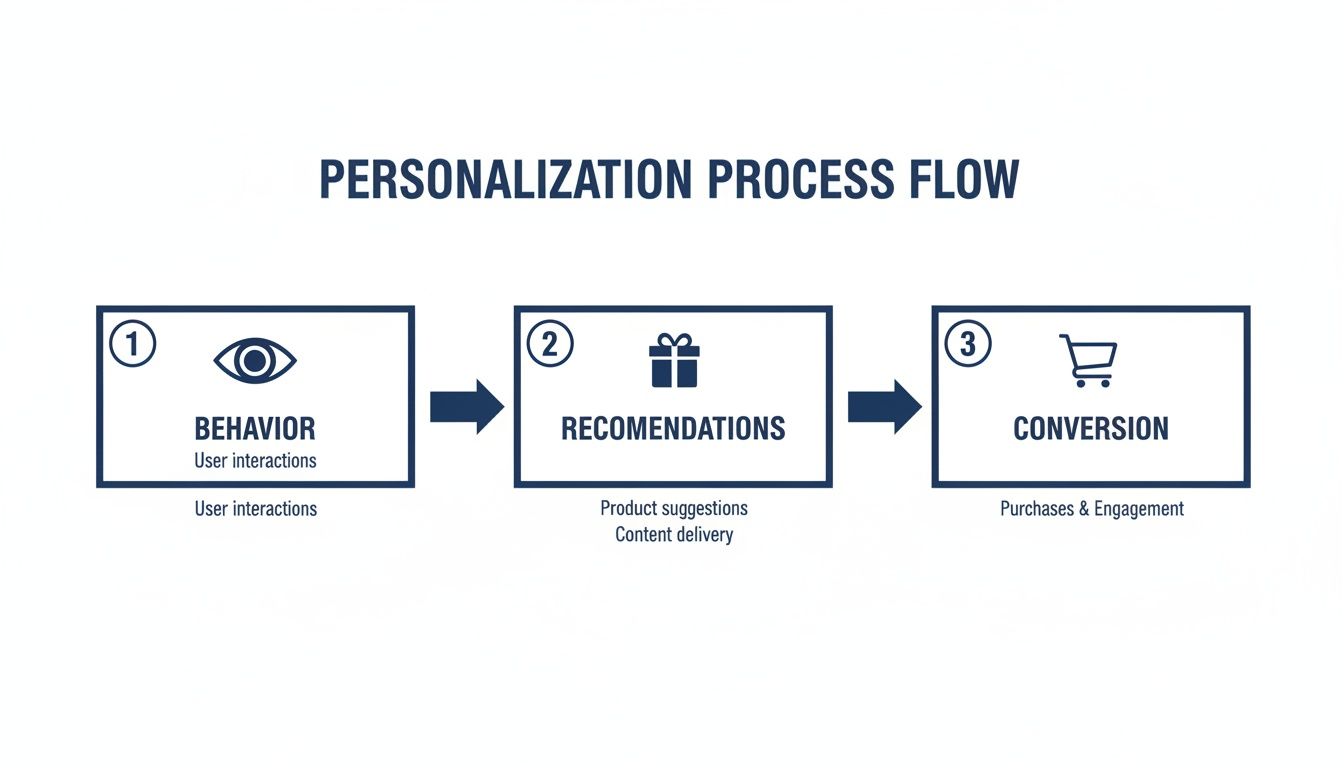
When you understand what your customers are looking for, you can put the perfect products in front of them and drive more sales. It's that simple.
This entire process gets a massive boost when you have the right foundation. It all starts with the proven strategies we teach in our Apparel Cloning system, which gives you the blueprint for a profitable business from day one. Then, you can leverage a powerful design tool like AvatarIQ to create incredible, unique products that your new app stack will help you sell more effectively. It’s an ecosystem designed to help you build a powerful and profitable POD business from the ground up.
Frequently Asked Questions
Jumping into the world of Shopify apps can feel like a huge task, but honestly, it's one of the most exciting parts of dialing in your business. Here are a few of the most common questions I hear from entrepreneurs when they're picking out the best tools to boost their sales.
How Many Apps Should I Install?
This is a classic, and my answer is always the same: as few as possible, but as many as necessary.
It's not about racking up a high number of apps. It's about quality and the strategic purpose behind each one. I see a lot of store owners make the mistake of "app bloat"—installing so many that their site slows to a crawl and their backend becomes a tangled mess.
Start by plugging your biggest revenue leaks. Are people abandoning carts? Is your average order value too low? Find an app for that, prove it works, and then consider adding another.
Can Apps Hurt My Store's Speed?
Absolutely. A poorly coded or just plain heavy app can drag your page load times through the mud. That's bad for user experience and a killer for your SEO.
Before you even click "install," scroll through the recent reviews. Are people complaining about site speed? That's a huge red flag. A reputable developer will always prioritize clean, efficient code.
A good habit to get into is testing your site speed before and after you install a new app. It's the only way to know its true impact.
The opportunity in eCommerce is immense, and the right tools make all the difference. Think of your app stack as a high-performance engine for your store; every part needs to work together seamlessly to help you win the race.
How Much Should I Budget for Apps?
You need to shift your mindset here. Your app budget is an investment, not an expense.
Plenty of the best apps have free plans or generous trials, which are perfect when you're just starting out. For the paid ones, the math is simple: the app has to make you more money than it costs.
If a $20/month upsell app consistently adds an extra $200 in sales, it's a no-brainer. That's not a cost; that's a money-making machine.
Ready to build a powerful and profitable print-on-demand business from the ground up? At Skup, we provide the ecosystem you need for success, from the foundational knowledge in our Apparel Cloning course to the creative power of AvatarIQ.
Discover how Skup can help you build your dream business today!