How to Build an Email List for Print on Demand
Quick Answer
To build an email list for print on demand, add a popup offering 10-15% off the first order in exchange for an email address. Use Klaviyo or Mailchimp for automation, send a welcome sequence, and follow up with new designs and promotions. Email subscribers convert 3-4x better than cold traffic and become repeat customers—the real profit center for POD businesses.
Why Email Matters More Than You Think
Most print-on-demand sellers obsess over Facebook ads while ignoring their biggest profit lever: email marketing. Here’s the math that changes everything.
A new customer from Facebook ads might cost $15-25 to acquire. That first sale often barely breaks even after ad costs. But when that customer joins your email list? You can sell to them again and again—for free.
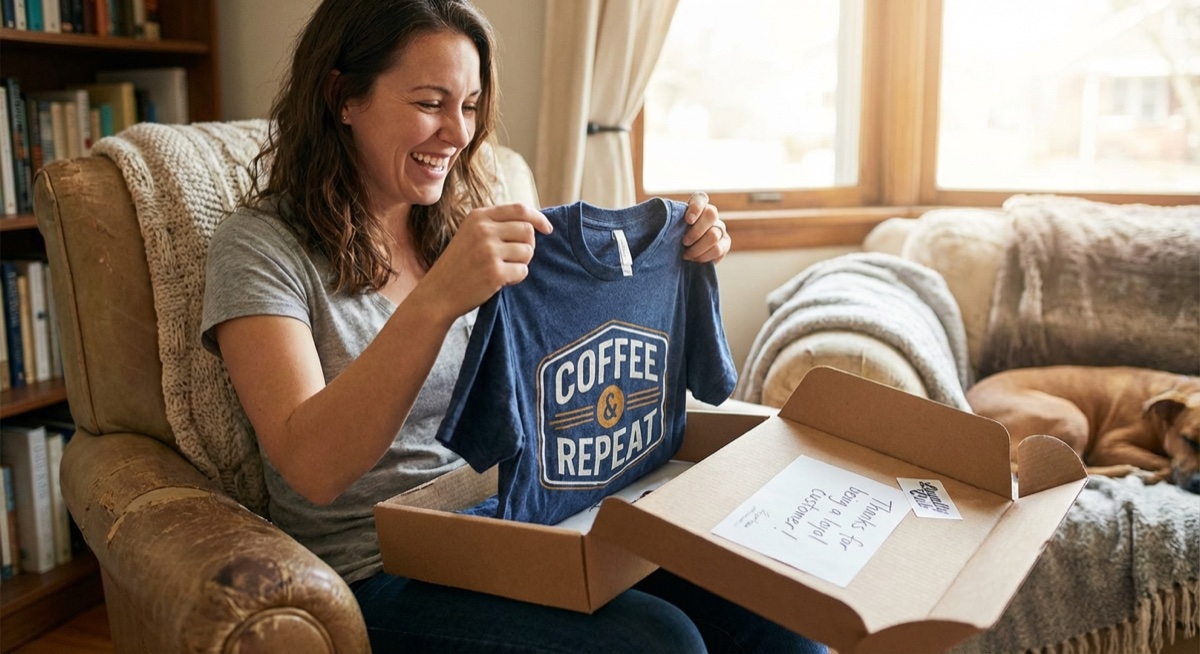
Students in the Skup Incubator who build email lists consistently see higher lifetime customer value. One student, Audrey Groothuis, celebrated her first repeat customer in February 2026—that’s money that didn’t require a single ad dollar.
Catherine Chege experienced the same thing: multiple orders from a previous customer in December 2025. These repeat buyers are your real profit margin.
Setting Up Your Email Capture
The foundation is simple: offer something valuable in exchange for an email address.
The 10% Welcome Discount
The most effective approach for POD stores is a first-purchase discount. When someone lands on your store, a popup appears offering 10-15% off their first order if they enter their email.
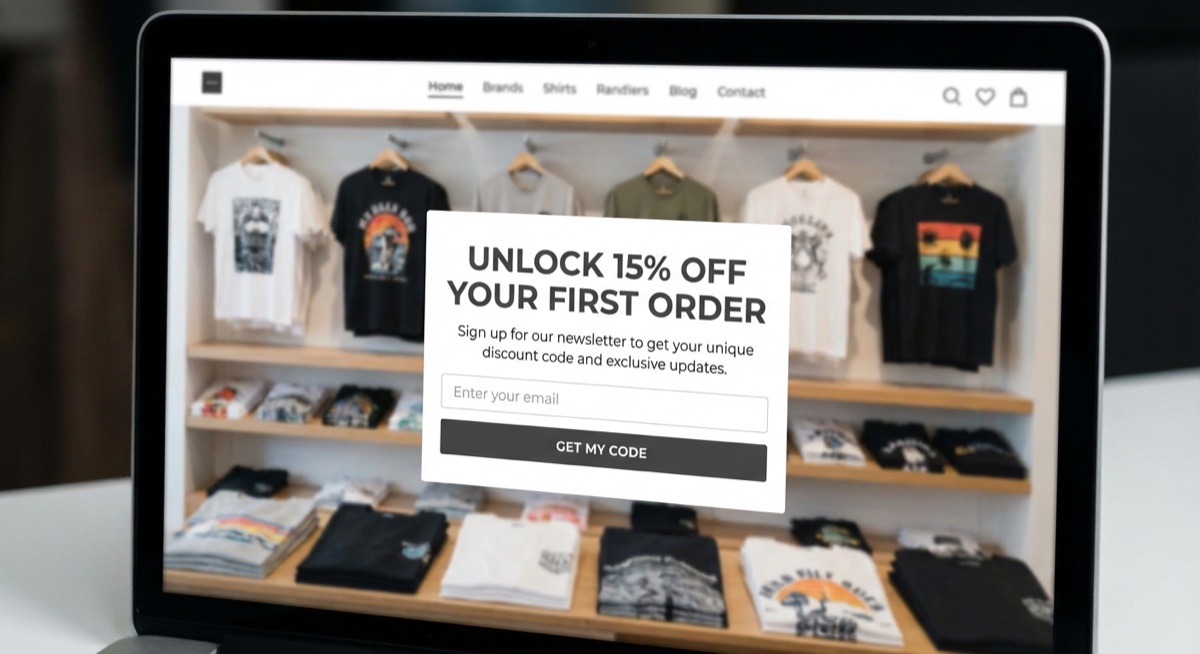
This works because:
- It’s an immediate, tangible benefit
- It increases first-purchase conversion rates
- It captures leads even if they don’t buy today
- The discount is worth less than the lifetime value you gain
Best Email Platforms for POD
Klaviyo is the gold standard for ecommerce email. It integrates directly with Shopify, tracks purchase behavior, and automates sequences based on what people buy. Free up to 250 subscribers.
Mailchimp works well for beginners and offers a free tier. Less powerful than Klaviyo for ecommerce but easier to learn.
Omnisend is another solid choice with strong automation and SMS capabilities built in.
The Welcome Sequence That Converts
Once someone joins your list, don’t leave them hanging. Set up an automated welcome sequence that runs over 5-7 days:
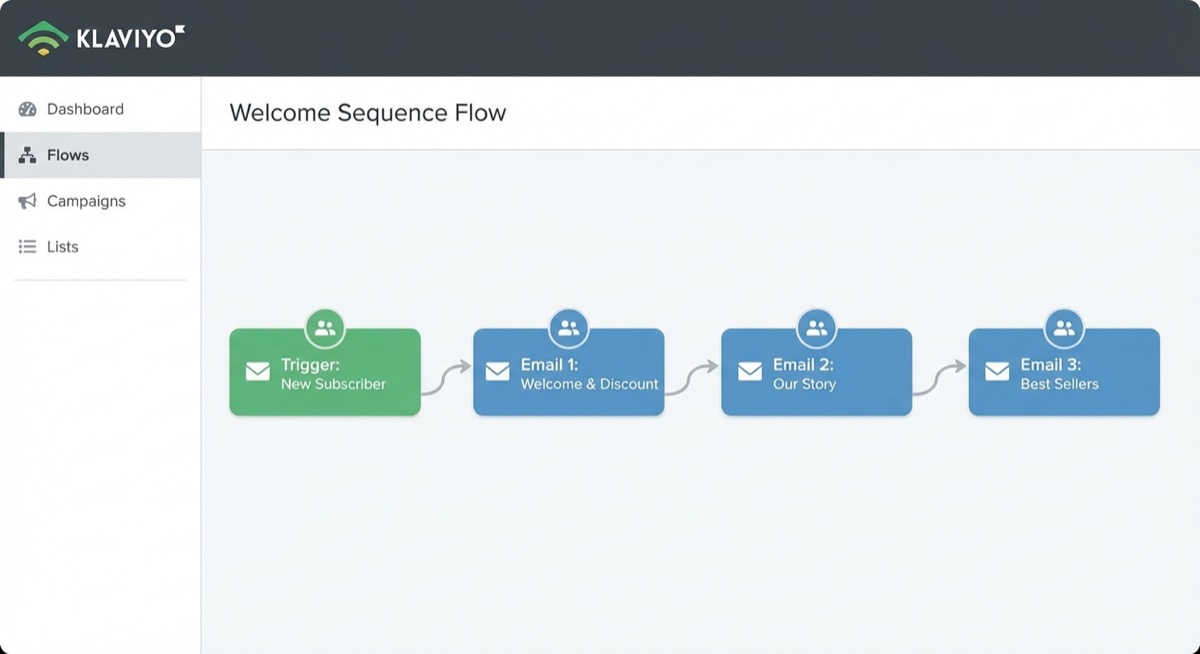
Email 1 (Immediate): Deliver the discount code. Keep it simple—here’s your 10% off, here’s how to use it, here are our bestsellers.
Email 2 (Day 2): Tell your brand story. Why did you start this? What makes your designs different? People buy from brands they connect with.
Email 3 (Day 4): Social proof. Show your best reviews, customer photos wearing your products, or testimonials.
Email 4 (Day 6): Reminder about the discount expiring. Create urgency without being pushy.
Email 5 (Day 7): Last chance email. Final reminder that the discount expires today.
This sequence runs automatically for every new subscriber, converting browsers into buyers while you focus on other parts of your business.
What to Email After the Welcome Sequence
The welcome sequence gets people to buy once. Regular emails turn them into repeat customers. Here’s what actually works for POD:
New Design Drops
Every time you add new designs, email your list first. Make them feel like insiders getting early access. This is the easiest email to write—here’s what’s new, here’s why we made it, here’s the link.
Limited-Time Promotions
Run exclusive sales for your email list. Even a small discount (15% off this weekend only) drives purchases. Kirsten Brown returned as a customer in January 2026—that repeat purchase likely came from staying in touch.
Seasonal Content
Holidays, seasons, and events are natural reasons to email. Valentine’s Day, summer vibes, back to school—connect your designs to what’s happening in your customers’ lives.
Common Mistakes to Avoid
- Emailing too rarely: If you only email once every few months, people forget who you are. Aim for at least 2-4 emails per month.
- Only sending sales pitches: Mix promotional emails with value—styling tips, behind-the-scenes content, or just connecting with your audience.
- Ignoring mobile: Most people read email on phones. Keep designs simple, buttons big, and text scannable.
- Not segmenting: Someone who bought a dog-lover shirt probably wants to see more dog designs. Use your email platform’s segmentation to send relevant content.
- Skipping the popup: Some sellers worry popups are annoying. They’re not—they’re expected. And they work. Just make sure the popup doesn’t fire until someone’s been on your site for 5-10 seconds.
FAQ
How many emails per week should I send for a POD store?
Start with one email per week. As your list grows and you get comfortable, you can increase to 2-3 per week during promotions. Watch your unsubscribe rate—if it spikes above 0.5% per email, you’re sending too often or your content isn’t relevant.
What’s a good email open rate for print on demand?
Industry average for retail/ecommerce is around 15-20%. POD stores often see 20-30% because the audience is niche and engaged. If you’re below 15%, work on your subject lines and send timing.
Should I use SMS marketing too?
SMS can work well for flash sales and shipping notifications, but start with email first. It’s less intrusive and easier to manage. Once your email system is running smoothly, consider adding SMS for your most engaged customers.
The Bottom Line
Building an email list isn’t sexy, but it’s one of the highest-ROI activities in print on demand. Every subscriber is someone who raised their hand and said “I’m interested”—and you can reach them anytime without paying for ads.
Start simple: add a popup offering 10% off, set up a 5-email welcome sequence, and email your list whenever you drop new designs. Students in Skup’s Incubator program learn these exact strategies as part of building sustainable POD businesses that don’t depend entirely on paid traffic.
The sellers who build real businesses—not just stores—are the ones who own their customer relationships through email.