Home » Blog » Are Ecommerce Courses Worth It? An Honest Assessment for 2026
Quick Answer
Yes, the right ecommerce course can be worth it—but only if it meets three criteria: proven student results, ongoing support (not just videos), and a system you can realistically follow. Most courses fail on at least one of these. The real question isn’t whether courses work—it’s whether you’ll do the work the course teaches.
Why People Ask This Question
If you’ve been burned by online courses before, you’re not alone. The ecommerce education space is flooded with Instagram gurus selling $997 courses filled with recycled YouTube content. It makes sense to be skeptical.
But here’s the thing: the skepticism itself can become an excuse. Some people spend months “researching” courses to avoid the discomfort of actually starting. Meanwhile, people who picked a course and executed are already seeing results.
The question to ask isn’t “are courses worth it?”—it’s “what would it cost me to figure this out alone?”
The Real Cost of Learning Alone
Let’s do the math. Say you spend 6 months testing strategies from free YouTube videos:
Wasted ad spend on bad targeting: $500-2,000
Products that don’t convert: $200-500 in samples and testing
Time lost to confusion: 100+ hours of trial and error
Opportunity cost: 6 months of potential sales = $6,000-30,000
A structured course compresses that learning curve. Instead of spending months discovering what doesn’t work, you start with what does. The right course isn’t an expense—it’s buying back time and avoiding expensive mistakes.
What Separates Good Courses from Bad Ones
Red Flags to Watch For
Lifestyle shots but no student results with real numbers
No community or support—just video access
Vague promises like “6 figures” without showing the path
Heavy upsells immediately after purchase
Content that’s available free on YouTube
What Good Courses Include
Verified student results: Real names, real numbers, recent wins
Live support: Access to coaches who answer questions
A proven system: Step-by-step methodology, not random tactics
Active community: Students helping each other
Updates: Content that evolves with the market
Real Results from Structured Training
At Skup, we track student wins obsessively—not for marketing, but because it tells us what’s working. Here are examples from students who followed the system:
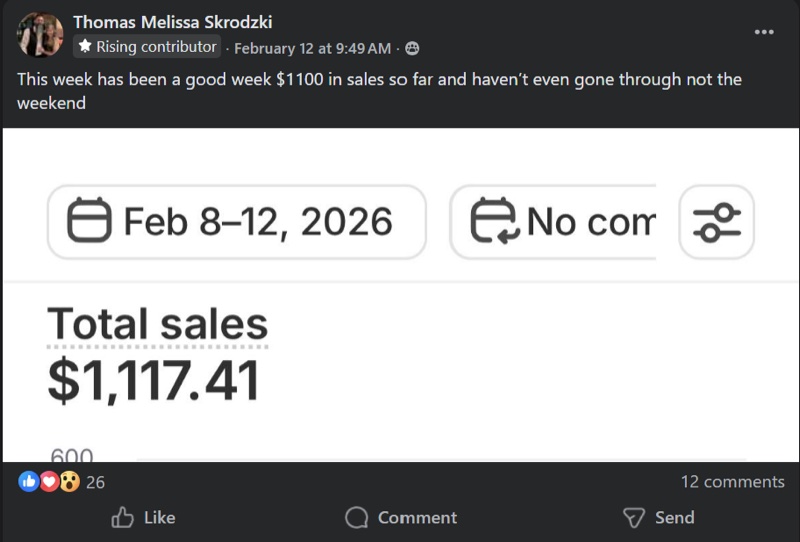
Thomas Skrodzki hit $1,100 in a single week after following the Apparel Cloning System
Adam Schneider: Hit $179K in 90 days, including a $5K single-day record
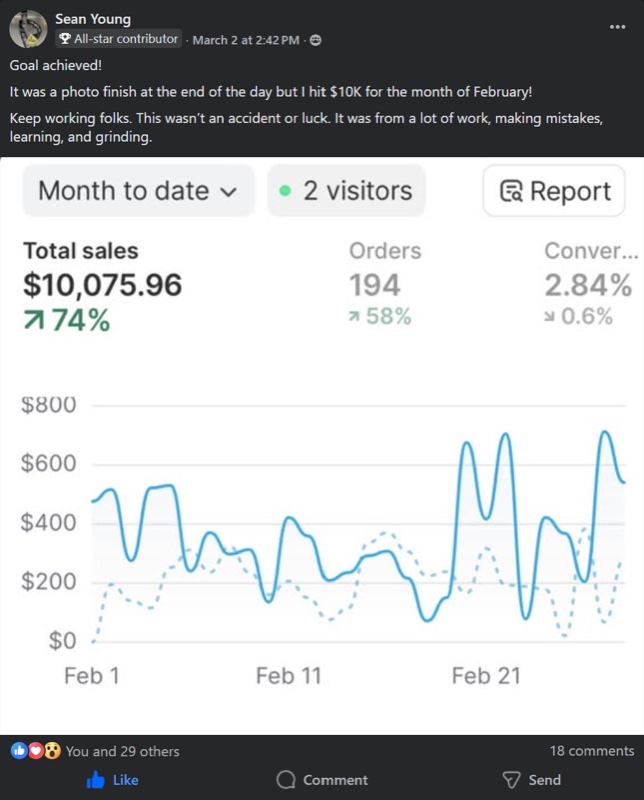
Sean Young: Crossed $10K total sales in February 2026 with a $522 record day
Thomas Skrodzki: Made $1,100 in one week—his strongest period yet
Ernso Marcelin: Consistent 5-6 order days, averaging $2.7K/month
Holly Mitchamore: Got her first sale the same night she launched ads
Sean Young crossed $10K in total sales—proof that consistent execution pays off
These aren’t outliers. They’re typical results from people who followed a system instead of guessing.
When Courses Are NOT Worth It
Let’s be honest—courses don’t work for everyone. Skip the investment if:
You’re looking for a “done for you” business (spoiler: it doesn’t exist)
You won’t commit at least 5-10 hours per week
You expect results without running paid ads
You’re not willing to follow a system—you want to “do it your way”
You can’t afford to lose the course investment
No course will work if you don’t. A $2,000 course with zero implementation is worthless. A $200 course with 100% execution can change your life.
How to Choose the Right Course
Step 1: Check Recent Student Results
Look for dated screenshots from the last 30-60 days. Old testimonials mean nothing—the market changes too fast.
Step 2: Evaluate the Support Structure
Can you ask questions? Is there live coaching? A Slack or Discord community? If it’s just videos, you’re buying information—not transformation.
Step 3: Understand the Business Model
Make sure the course teaches a business model that matches your situation. If you have $500 to invest, don’t buy a course teaching Amazon FBA that requires $10K in inventory.
Step 4: Look for Transparency
Good programs tell you who it’s NOT for. They address price objections directly. They show failures alongside wins. Transparency builds trust.
The Bottom Line
Ecommerce courses are worth it if you choose wisely and execute fully. The right course compresses years of trial and error into weeks. The wrong course—or no course at all—costs you time you can’t get back.
If you’re considering print-on-demand specifically, Skup’s Apparel Cloning System teaches a proven method for finding winning designs without graphic design skills. Our students have generated over $50 million in combined sales—and we track every win to prove it.
But whether you choose Skup or another program, stop researching and start doing. The best course in the world is worthless if it stays in your bookmarks.
FAQ
How much should I pay for an ecommerce course?
Expect to pay $500-$2,000 for a quality course with live support. Anything under $200 is usually recycled content. Coaching programs with 1-on-1 calls range from $5,000-$10,000+. Focus on ROI, not sticker price—a $1,500 course that generates $10,000 in sales is a 6x return.
Can I learn ecommerce for free on YouTube?
You can learn basics, but free content is scattered and often outdated. YouTube creators make money from views, not your results—so they optimize for clicks, not outcomes. Paid courses have skin in the game: they need you to succeed for testimonials and referrals.
How do I know if an ecommerce course is a scam?
Check for: recent student results with specific numbers, an active community you can preview, transparent refund policies, and content that goes beyond what’s free online. Avoid anyone who promises “passive income” or “no work required.”
The smartest beginners in print on demand don’t start with the most crowded product. They start where buyers already assign value fast. Caps do that. The category sits inside a market that’s projected to grow to $57.49 billion to $102.99 billion by 2033 to 2034, which means the broader print-on-demand market could multiply 5 to…
You’re at the point where your store is proving the model works. Orders are coming in. A few designs are carrying more than the rest. Your ads are finding buyers. But your fulfillment partner is starting to feel like the ceiling, not the engine. Turnaround slips. Print quality varies. Margin gets thinner every time a…
A lot of people start looking up how to sell print on demand at the same moment in life. Work feels fixed. Income feels capped. You want something you can build after hours that does not require buying piles of inventory, renting a warehouse, or guessing how many units to order. That is why POD…