Home » Blog » How to Write Facebook Ad Copy That Converts for Print on Demand (2026)
You’ve got a winning design. Your targeting looks solid. But your Facebook ads aren’t converting—and you can’t figure out why. The problem might be staring you in the face: your ad copy.
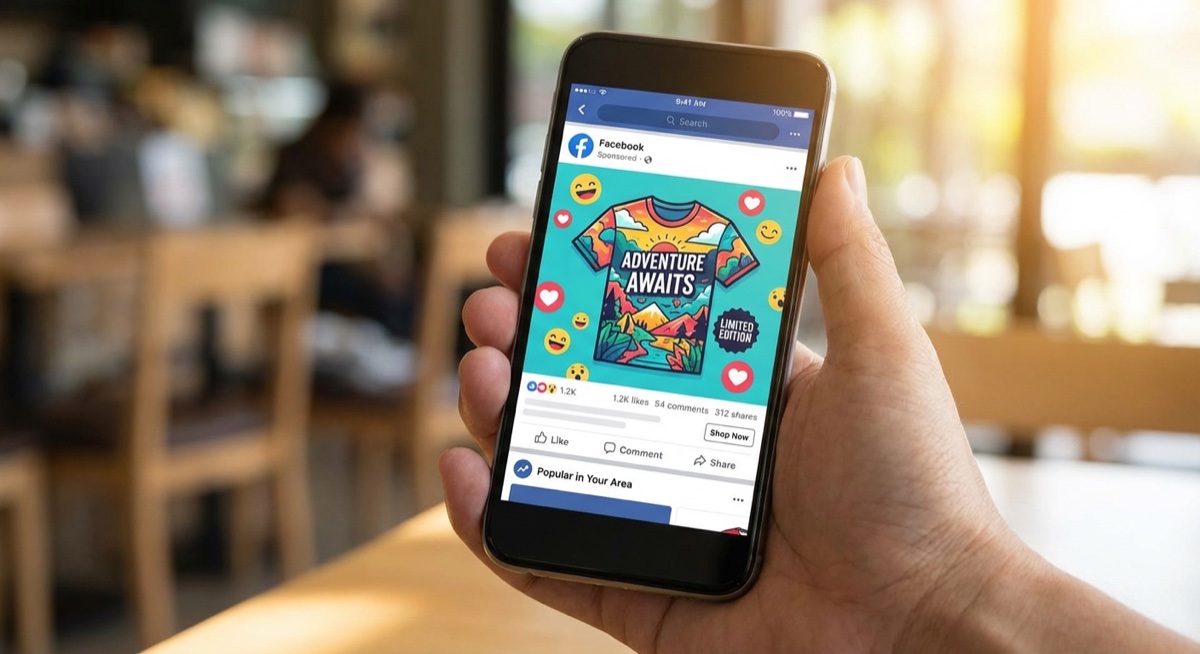
Most print-on-demand sellers obsess over images and audiences while treating their ad text as an afterthought. But the words you choose can make or break your campaign. Here’s how to write Facebook ad copy that actually converts.
Quick Answer
Great Facebook ad copy for print on demand follows a simple formula: lead with emotion or identity, keep it short (under 125 characters for primary text), and include a clear call to action. Focus on who your customer IS rather than what your product does. Test multiple variations and let the data decide.
Your ad copy determines whether a scroll becomes a sale
Why Ad Copy Matters More Than You Think
Your ad image stops the scroll. Your ad copy closes the sale.
Facebook’s algorithm actually reads your ad text to help determine who sees your ad. Strong copy with clear intent signals to Facebook exactly who wants your product—which means better targeting and lower costs per click.
Students in the Skup Incubator often see dramatic improvements just by rewriting their copy. One student, Judy Padgett, went through four ad campaign tests before landing her first sale—and the breakthrough came when she simplified her messaging.
The POD Ad Copy Formula That Works
Forget everything you’ve read about long-form storytelling ads. For print on demand, shorter almost always wins. Here’s the formula:
1. Lead With Identity
Your customer isn’t buying a shirt. They’re buying a way to express who they are. Start your copy by speaking directly to their identity:
“Dog moms know the struggle 🐕”
“Only true coffee addicts will understand ☕”
“This one’s for the night shift warriors 🌙”
This immediately signals to your ideal customer: “This is for ME.”
2. Keep Primary Text Under 125 Characters
Facebook truncates longer text on mobile, which is where most people see your ads. If your main message gets cut off, you’ve lost them. Say what you need to say quickly.
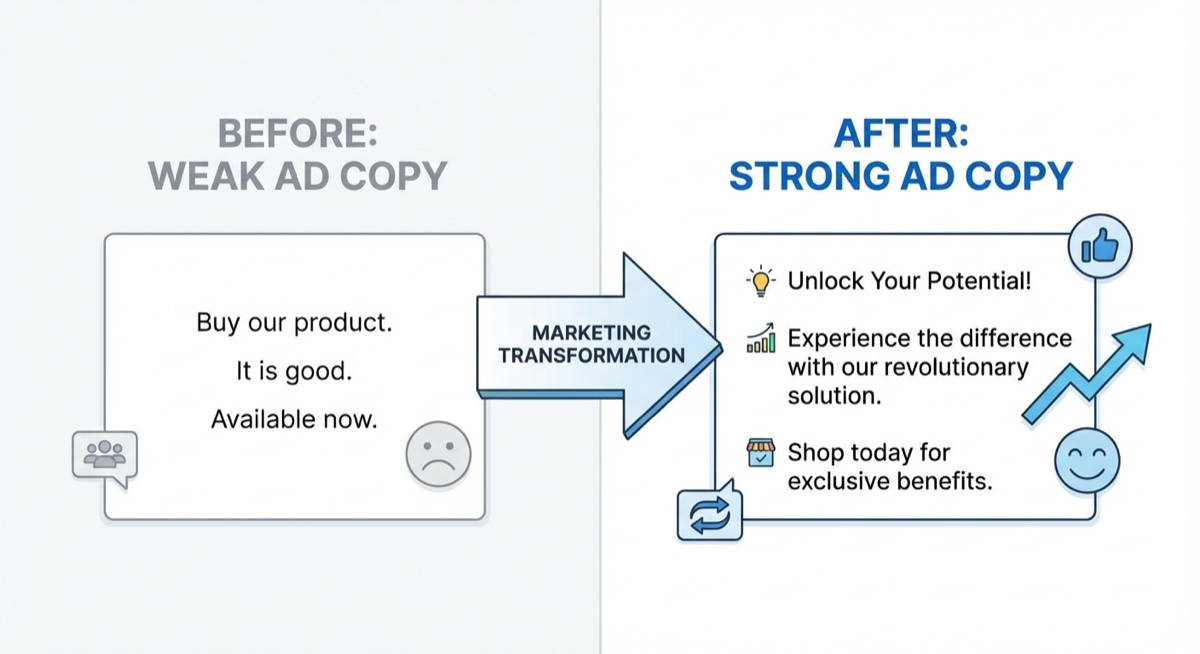
Bad copy: “High-quality cotton blend t-shirt with funny design”
Good copy: “Finally, a shirt that says what you’ve been thinking 😂”
Features don’t sell apparel. Feelings do.
4. End With Action
Tell them what to do next. Simple calls to action work best:
“Grab yours before they’re gone”
“Shop now 👉”
“Get yours today”
Common Ad Copy Mistakes That Kill Conversions
After reviewing thousands of student ads in Skup coaching calls, these mistakes come up again and again:
Being too generic. “Great gift for someone special” could describe literally anything. Get specific about WHO and WHY.
Overselling the product. Nobody believes your $25 t-shirt will “change their life forever.” Keep claims realistic.
Forgetting the emoji. Ads with relevant emojis consistently outperform plain text. They add personality and break up the visual monotony of a feed.
Writing for everyone. If your ad could appeal to anyone, it will appeal to no one. Niche down in your language.
Ignoring the headline. Your headline (the text below your image) is prime real estate. Use it to reinforce your message or add urgency, not repeat your primary text.
Testing Your Copy: A Practical Approach
Never assume your first attempt is your best. Here’s how to test like a pro:
Write 3-5 variations of your primary text
Test one variable at a time—don’t change the image AND copy simultaneously
Give each version at least $10-20 in spend before judging
Look at CTR (click-through rate) as your main copy metric
Kill losers fast, scale winners slowly
Frank Lacy, a Skup student, landed a sale with a new ad after testing fresh creative—proof that iteration pays off.
Testing and iterating your copy leads to winning ads
FAQ
How long should my Facebook ad copy be for print on demand?
Keep your primary text under 125 characters to avoid truncation on mobile. Your headline should be 5-10 words max. If you need to say more, save it for your product page.
Should I use emojis in my Facebook ad copy?
Yes—strategically. One or two relevant emojis increase engagement and help your ad feel more human. Avoid emoji spam, which looks unprofessional and triggers spam filters.
How many ad copy variations should I test?
Start with 3-5 variations of your primary text. Once you find a winning angle, create new variations of that winner to squeeze out more performance.
The Bottom Line
Great Facebook ad copy for print on demand isn’t about being clever—it’s about being clear and specific. Speak directly to your ideal customer’s identity, keep your message short, lead with emotion, and always test.
Students in the Skup Incubator get weekly feedback on their ads from experienced coaches who’ve seen what works across thousands of campaigns. Sometimes a single word change is all it takes to turn a losing ad into a winner.
Ready to level up your ad game? Start by rewriting one underperforming ad using this formula—then let the results speak for themselves.
Your logo is more than just a slick graphic; it’s the face of your entire print-on-demand business. Think of it as your brand's first handshake. It’s that instant, visual introduction that tells a potential customer everything about your quality, your vibe, and your personality before they even see a product. In the blink-and-you'll-miss-it world of…
Table of Contents Quick Overview Why Mindset Matters More Than Tactics The Power of Daily Action Time Management: The Hidden Skill Nobody Talks About Embracing Fear and Failure The Comparison Trap and How to Escape It Discipline Over Motivation Identifying and Overcoming Your Roadblocks Real Examples from Skup Students A Practical Framework for Building the…
Welcome to the ultimate launchpad for your print-on-demand (POD) journey! You're standing at the edge of a massive opportunity, an industry where a simple phrase on a t-shirt can turn into a life-changing business. In the world of eCommerce, the right words are not just powerful; they are profitable. This guide is far more than…