Home » Blog » How to Write Product Descriptions That Sell for Print on Demand (2026)
You’re driving traffic to your print-on-demand store, but visitors leave without buying. The problem might not be your designs or your ads — it’s often your product descriptions. Weak copy kills conversions, while the right words turn browsers into buyers.
Quick Answer
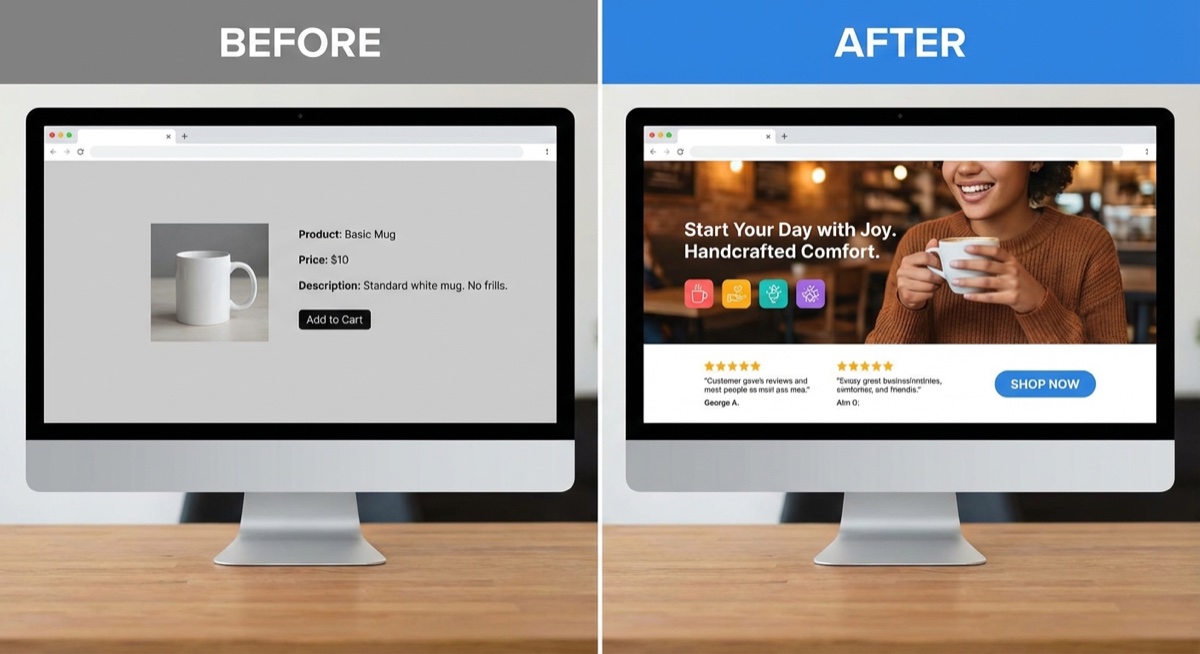
Great product descriptions for print on demand focus on benefits over features, speak directly to your customer’s desires, and include a clear call to action. Instead of describing what your shirt is, describe how it makes your customer feel. The best POD sellers spend as much time on their copy as their designs.
The difference between descriptions that sell and descriptions that don’t
Why Most POD Product Descriptions Fail
Most print-on-demand sellers copy the default product specs from their supplier and call it a day. “100% cotton, preshrunk, sizes S-XL.” That tells customers nothing about why they should buy your shirt instead of the million others online.
Here’s the thing: people don’t buy products. They buy better versions of themselves. A dad buying a “Best Dad Ever” shirt isn’t purchasing cotton and ink — he’s purchasing a way to show his kids he’s proud of his role. Your description needs to tap into that.
The Benefits vs. Features Framework
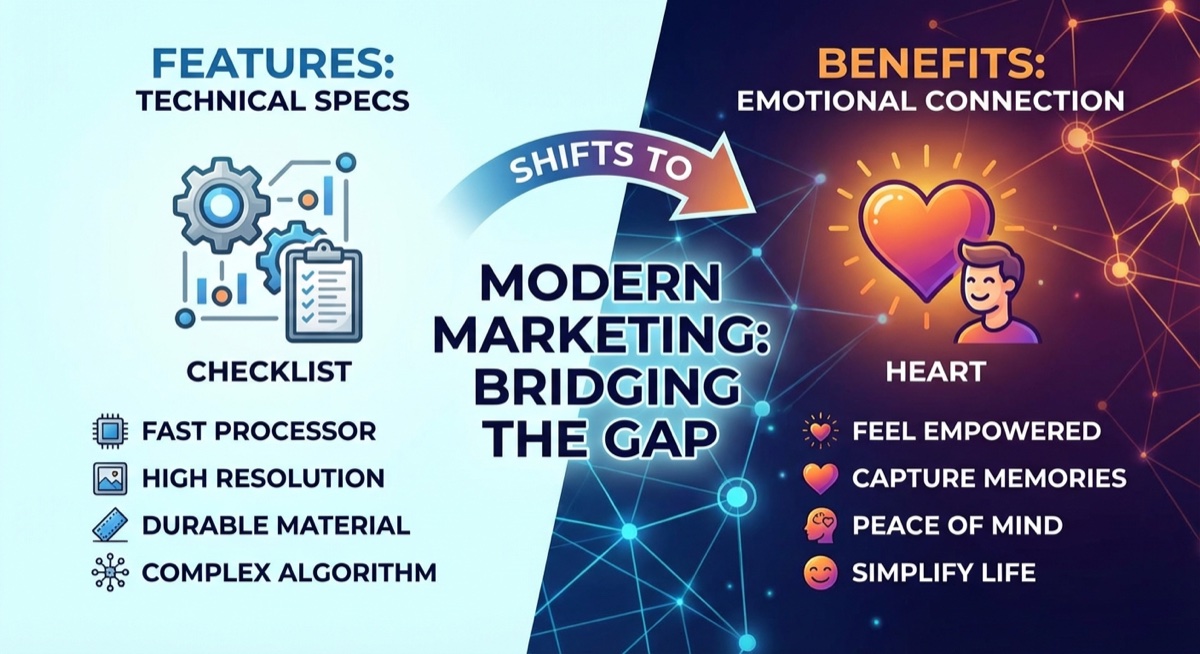
Features are facts. Benefits are feelings. Here’s the difference:
Feature: “Made with 100% ring-spun cotton”
Benefit: “So soft you’ll forget you’re wearing it — all day comfort guaranteed”
Feature: “High-quality DTG printing”
Benefit: “Colors stay vibrant wash after wash, so your statement piece looks new for years”
Lead with what customers care about: how your product improves their life
Every feature should be translated into a benefit. Ask yourself: “So what?” after each feature until you reach the emotional payoff.
The 5-Part Product Description Template
Use this framework for every POD product listing:
1. Hook Line (First Sentence)
Grab attention immediately. Speak to your customer’s identity or desire. “For the dad who’s always there — even when his coffee isn’t.”
2. Emotional Connection (2-3 Sentences)
Paint a picture. Help them see themselves wearing it. “Picture the smiles at the family cookout when you show up rocking this. It’s not just a shirt — it’s a conversation starter.”
3. Key Benefits (Bullet Points)
List 3-4 benefits that matter to your audience:
Premium comfort for all-day wear
Durable printing that won’t crack or fade
Fits true to size — no surprises
Makes the perfect gift
4. Social Proof (If Available)
“Hundreds of happy customers” or “Our best-seller for a reason” — any credibility you can add helps.
5. Call to Action
Tell them what to do next. “Order now and wear your pride” or “Grab yours before they’re gone.”
Words That Sell (And Words That Don’t)
Power words that convert: You, Free, Because, Instantly, New, Proven, Easy, Discover, Results, Guaranteed, Love, Secret, Limited
Weak words to avoid: Nice, Good, Quality (overused), Great (meaningless), Buy (too pushy early on), Cheap
Notice how the power words focus on the customer (“you”) and create urgency or curiosity. Your descriptions should feel like a friend recommending something, not a salesperson pushing inventory.
Match Your Copy to Your Customer
A fishing enthusiast and a yoga practitioner speak different languages. Your descriptions should match your niche:
For a fishing shirt: “Hit the water in style. This breathable tee keeps you cool during those early morning casts — because the best fishing stories start before sunrise.”
For a yoga shirt: “Flow freely. Our ultra-soft fabric moves with you through every pose, so you can focus on your practice, not your wardrobe.”
Know your audience. Speak their language. Reference their world.
The right words turn browsers into buyers
Common Product Description Mistakes
Mistake 1: Wall of text. Break up your description. Use short paragraphs, bullet points, and white space. Mobile shoppers skim.
Mistake 2: Focusing on yourself. “We made this with love” doesn’t help customers. Focus on them: “You’ll love how this fits.”
Mistake 3: No urgency. “Limited edition” or “While supplies last” nudges people off the fence. Without urgency, they’ll “come back later” (they won’t).
Mistake 4: Ignoring mobile. Most POD traffic comes from phones. Your first 2-3 lines need to hook them before they scroll past.
Mistake 5: Copy-paste across products. Each design serves a different customer. Customize your descriptions to match.
FAQ
How long should a product description be for print on demand?
Aim for 100-200 words. Long enough to convey value, short enough to hold attention. The first 50 words matter most since that’s what shows above the fold on most platforms.
Should I use AI to write my product descriptions?
AI can help generate drafts, but always edit for your brand voice and niche-specific language. Generic AI copy sounds like everyone else. Your goal is to stand out, not blend in.
Do product descriptions really affect sales?
Absolutely. Studies show compelling product copy can increase conversions by 30% or more. When your traffic costs money (like Facebook ads), every percentage point matters for profitability.
The Bottom Line
Your designs get people to click. Your descriptions get them to buy. Most POD sellers treat product copy as an afterthought — which is exactly why those who invest time in compelling descriptions have a massive advantage.
Start by rewriting your top 5 products using the framework above. Test the results. You’ll likely see better conversion rates within days. And if you want to learn more about building a profitable print-on-demand business, check out the Apparel Cloning System for a complete roadmap from design to consistent sales.
Alright, let's get you set up to run some killer Facebook ads for your print-on-demand store. If you're serious about this, getting ads right is the single most powerful way to put your designs in front of millions of people who are ready to buy. Your First Steps into Profitable Facebook Advertising Look, diving into…
Quick Answer The best side hustle for people over 50 is print on demand (POD) — specifically, selling custom-designed apparel through your own Shopify store. Unlike other online businesses, POD requires no inventory, minimal startup costs ($500-1,000), and can be run part-time while working a full-time job. It’s particularly well-suited for people over 50 because…
A good free t shirt mockup is the absolute fastest way to make your print-on-demand products look like a million bucks. It’s what connects a flat design file on your computer to a customer actually picturing themselves wearing your shirt. Get ready to be excited, because this is where the journey to a successful eCom…