How to Spot Ecommerce Course Scams: 7 Red Flags to Watch For (2026)
Looking for an ecommerce course but worried about getting scammed? Here’s exactly what to look for—and what to avoid.
Quick Answer
Ecommerce course scams typically share these red flags: guaranteed income claims, no verifiable student results, hidden pricing until after a sales call, fake urgency tactics, no clear refund policy, and instructors with no proven track record. Legitimate programs show real student results with names and numbers, are transparent about pricing and what you get, and have instructors with documented experience in the business they teach.
Why Ecommerce Course Scams Are So Common
The ecommerce education space has exploded—and unfortunately, so have the scammers. According to the FTC, Americans lost over $8.8 billion to fraud in 2022 alone, with “business opportunity” scams being a top category.
The problem? It’s easy to create a course. Anyone with a camera and some editing software can position themselves as an expert. And because ecommerce success stories are so compelling (who doesn’t want to make money online?), people are eager to believe.
Here’s how to protect yourself.
The 7 Red Flags of Ecommerce Course Scams
1. Guaranteed Income Claims
The red flag: “Make $10K/month guaranteed” or “Earn six figures in 90 days.”
Why it’s a scam: No legitimate program can guarantee income. Ecommerce success depends on countless variables—your niche, your effort, market conditions, your ads. Anyone promising specific income numbers is either lying or using cherry-picked outlier results.
What legitimate programs say: They share ranges of what’s possible, acknowledge that results vary, and show actual student results—including people who are still building.
2. No Verifiable Student Results
The red flag: Testimonials with only first names, stock photos, or vague claims like “This changed my life!”
Why it’s a scam: If a program works, students are happy to share their results publicly. Real student wins include specific numbers, full names (or at least verifiable social profiles), and screenshots of actual dashboards.
What to look for: Programs that share specific student results—”Sarah hit $8,200 in her third month” with actual screenshots and identifiable students you can find on social media.
3. Hidden Pricing Until Sales Call
The red flag: You can’t find the price anywhere. You have to book a call to “see if it’s a fit.”
Why it’s suspicious: While some high-ticket programs do use sales calls, completely hiding the price is often a tactic to get you emotionally committed before revealing a shocking number. Legitimate programs at least give a price range upfront.
What to look for: Transparent pricing on the website, or at minimum a clear price range before any sales conversation.
4. Fake Urgency and Scarcity
The red flag: “Only 3 spots left!” (every single day), countdown timers that reset, “price increases at midnight” (but never does).
Why it’s a scam: Real programs have real enrollment periods. Fake scarcity is designed to short-circuit your decision-making and prevent you from doing research.
What to look for: Genuine enrollment windows with clear dates, or always-open programs that don’t pretend to be limited.
5. The Instructor Has No Verifiable Track Record
The red flag: Claims of millions in revenue with no proof, no public business presence, or a mysterious past.
Why it’s a scam: If someone teaches ecommerce, they should have built ecommerce businesses. You should be able to find their stores, their brands, their track record.
What to look for: Instructors with documented business history, verifiable companies, and ideally years of public content showing their expertise.
6. No Clear Refund Policy
The red flag: Refund policy buried in fine print, or no refund policy at all.
Why it’s suspicious: Legitimate programs stand behind their content. They offer reasonable refund windows because they know the program works for people who do the work.
What to look for: Clear refund policy stated upfront—typically 7-30 days, with reasonable conditions.
7. It’s All Hype, No Substance
The red flag: Lots of screenshots of luxury cars, watches, and “laptop lifestyle” photos. Very little information about what you actually learn.
Why it’s a scam: Scammers sell the dream, not the path. They focus on outcomes (money, freedom) without explaining the actual skills, strategies, and work required.
What to look for: Clear curriculum, specific topics covered, realistic expectations about effort required.
What a Legitimate Ecommerce Program Looks Like
Here’s what separates real education from scams:
Transparent about what you get: Clear curriculum, specific modules, defined outcomes.
Real student results with proof: Screenshots, specific numbers, students you can actually verify exist.
Instructors with track records: Years of experience, public businesses, consistent content.
Honest about the work required: No “push-button” promises. Clear that success requires effort.
Clear pricing and refund policy: No hidden costs, reasonable refund window.
Community and support: Real students helping each other, active coaching, responsive team.
Real Student Results: What Proof Looks Like
Want to know what legitimate student results look like? Here’s what we share at Skup:
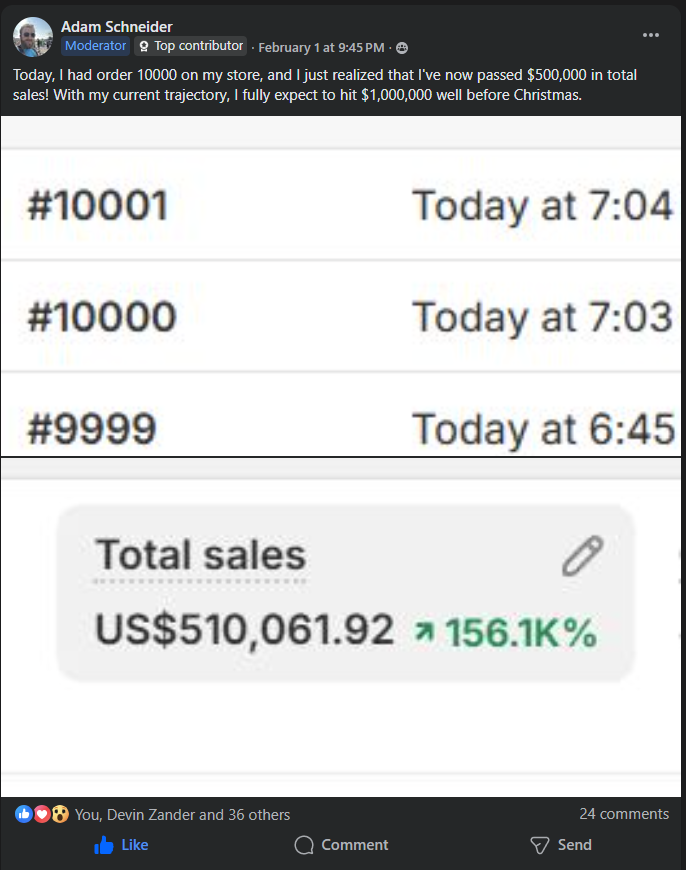
- Adam Schneider hit $179,000 in his first 90 days and has now crossed over $500,000 in total sales with 1,000+ orders
- Sean Young recently crossed $50,000 in total sales and 1,000 orders—growing consistently month over month
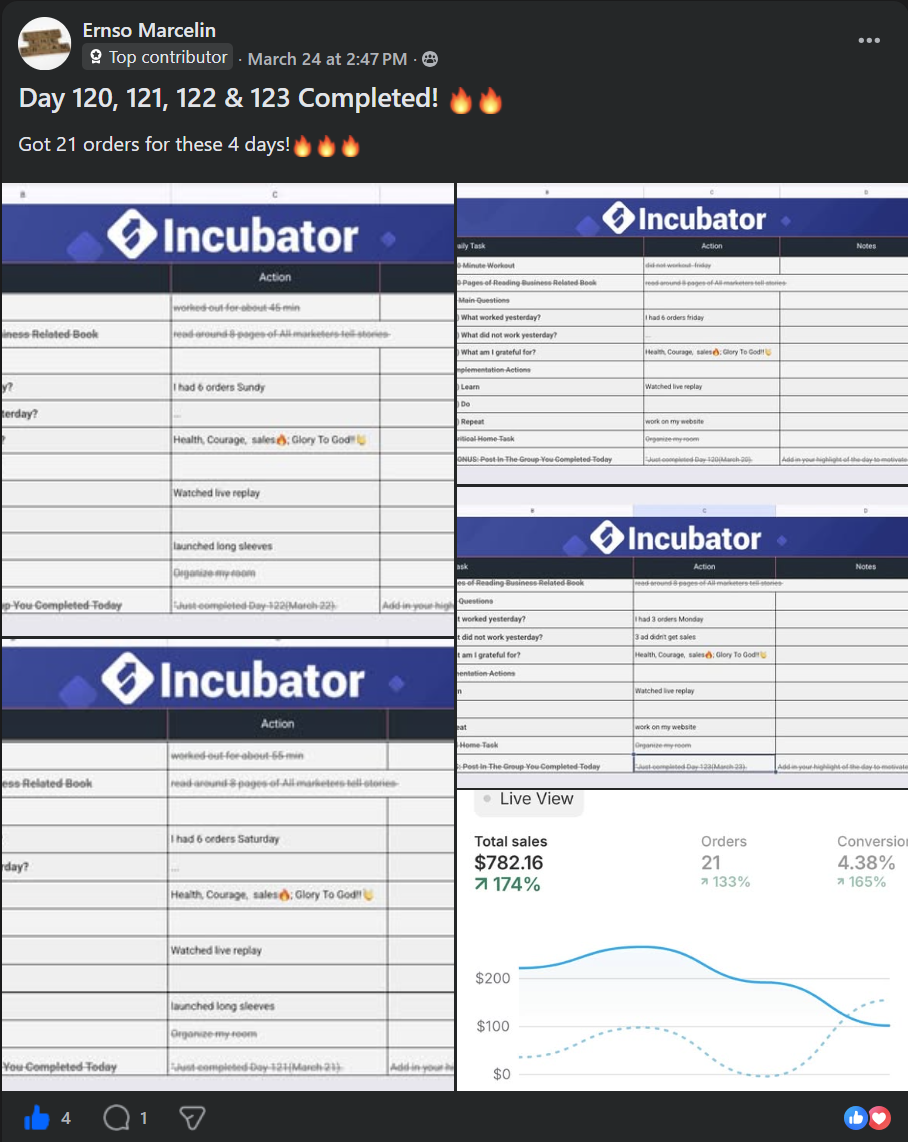
- Ernso Marcelin built up to consistent 5-6 order days, sometimes hitting 21 orders in just 4 days
These aren’t anonymous testimonials. These are real students in our community with verifiable results, active in our group, sharing their journeys publicly.
Who Skup Is For (And Who It’s NOT For)
Since we’re talking about spotting scams, let’s be transparent about what Skup actually is:
Skup teaches print-on-demand ecommerce—specifically, how to build apparel brands using the Apparel Cloning System method. You learn to find proven designs, create your own versions, and sell them with Facebook ads.
It’s for:
- Beginners who want step-by-step guidance
- People willing to put in work (this isn’t passive income from day one)
- Anyone who wants direct access to coaches who’ve actually built the businesses they teach
It’s NOT for:
- Anyone looking for a get-rich-quick scheme
- People who won’t follow a system
- Those expecting results without effort
We have students making six figures. We also have students who never launched because they didn’t do the work. We’re honest about both.
Before You Buy Any Course: A Checklist
Before purchasing any ecommerce course, ask yourself:
- ☐ Can I find verifiable student results with real names and numbers?
- ☐ Is pricing transparent, or am I being pushed to a sales call?
- ☐ Does the instructor have a documented track record in this business?
- ☐ Is there a clear refund policy?
- ☐ Does the curriculum match what I actually need to learn?
- ☐ Are expectations realistic, or is it all hype?
If you can’t answer yes to most of these, keep looking.
FAQ
Are all ecommerce courses scams?
No. There are legitimate programs that provide real value and help people build businesses. The key is doing your research—checking for verifiable student results, transparent pricing, and instructors with proven track records.
How much should an ecommerce course cost?
Legitimate courses range from free YouTube content to premium programs costing $2,000-$10,000+. Price alone doesn’t determine quality—what matters is the value provided, the support included, and whether the program delivers on its promises.
What’s the best way to verify student results?
Look for students you can find on social media. Search their names. Check if they’re active in the program’s community. Real students with real results are usually happy to talk about their experience.
The Bottom Line
Ecommerce education can genuinely change your life—but only if you invest in legitimate programs and put in the work.
Watch for the red flags: guaranteed income, hidden pricing, fake urgency, and instructors with no track record. Look for transparency, real student results, and honest expectations.
If you’re interested in print-on-demand specifically, we’d love to show you how the Apparel Cloning System works at Skup. We share real student results, we’re transparent about pricing, and we’ve been doing this for years. But ultimately, the choice is yours—do your research, trust your gut, and invest wisely.