Home » Blog » 10 Different Types of T Shirt Printing to Launch Your eCommerce Brand in 2025
Launching a print-on-demand (POD) apparel brand is one of the most exciting opportunities in eCommerce today. It is a direct path to financial freedom, creative expression, and building something you can truly call your own. But before you can sell your first shirt, you must understand the engine that powers your business: the printing method. The choice you make directly impacts your profit margins, the quality of your final product, and your ability to scale effectively.
This guide is your blueprint. We will break down the 10 most important different types of t shirt printing, giving you the exact knowledge needed to choose the right path for your brand. Understanding these methods helps you unlock your full potential and start your journey with confidence. As you lay the groundwork for your T-shirt empire, remember to also consider key marketing elements like creating effective product videos to showcase your incredible designs.
We are moving beyond generic advice to provide actionable insights drawn from over a decade of experience building 8-figure POD businesses. This isn't just a list; it's a strategic roadmap designed to help you make informed, profitable decisions from day one. Get ready to feel that spark of excitement, your future as a successful apparel entrepreneur starts right now.
1. Direct-to-Garment (DTG) Printing
Direct-to-Garment (DTG) printing is a modern apparel decoration method that functions much like a standard inkjet printer for paper, but instead prints directly onto fabric. It uses specialized aqueous inks that absorb into the garment's fibers, resulting in a soft-to-the-touch feel. This technique is renowned for its ability to reproduce highly detailed, full-color images, photographs, and intricate gradients with impressive accuracy.
The process is straightforward: a t-shirt is pre-treated, secured on a flat platen, and then run through the DTG printer where the design is applied. Afterward, the garment is heat-pressed to cure the ink, ensuring washability and permanence. This digital, no-setup-fee approach makes it a cornerstone of the print-on-demand (POD) industry. Major POD platforms rely on DTG to fulfill single-item orders efficiently, empowering entrepreneurs to launch product lines with zero upfront inventory costs.
When to Use DTG Printing
DTG is the undisputed champion for businesses that require flexibility and detail. It is the ideal choice for print-on-demand stores, as there are no minimum order quantities. This means you can sell one-off designs without investing in bulk stock, making it an incredible entry point for anyone exploring how to start a clothing line.
Key Takeaway: Choose DTG for photorealistic designs, unlimited color palettes, and single-piece or small-batch orders. It offers unparalleled creative freedom for new eCommerce entrepreneurs.
DTG Pro-Tips for Success:
Fabric Choice is Key: For the most vibrant and lasting prints, always use high-quality, 100% ring-spun cotton t-shirts.
Design for Vibrancy: Create your designs in a high-resolution format (300 DPI minimum) to ensure every detail is crisp and clear.
Dark Garment Printing: When printing on dark-colored apparel, the process includes a white underbase layer to make your colors pop.
Care Instructions: Provide clear washing instructions (wash inside-out, cold water, gentle cycle) to customers to maximize the print's longevity and keep them happy with their purchase.
2. Screen Printing
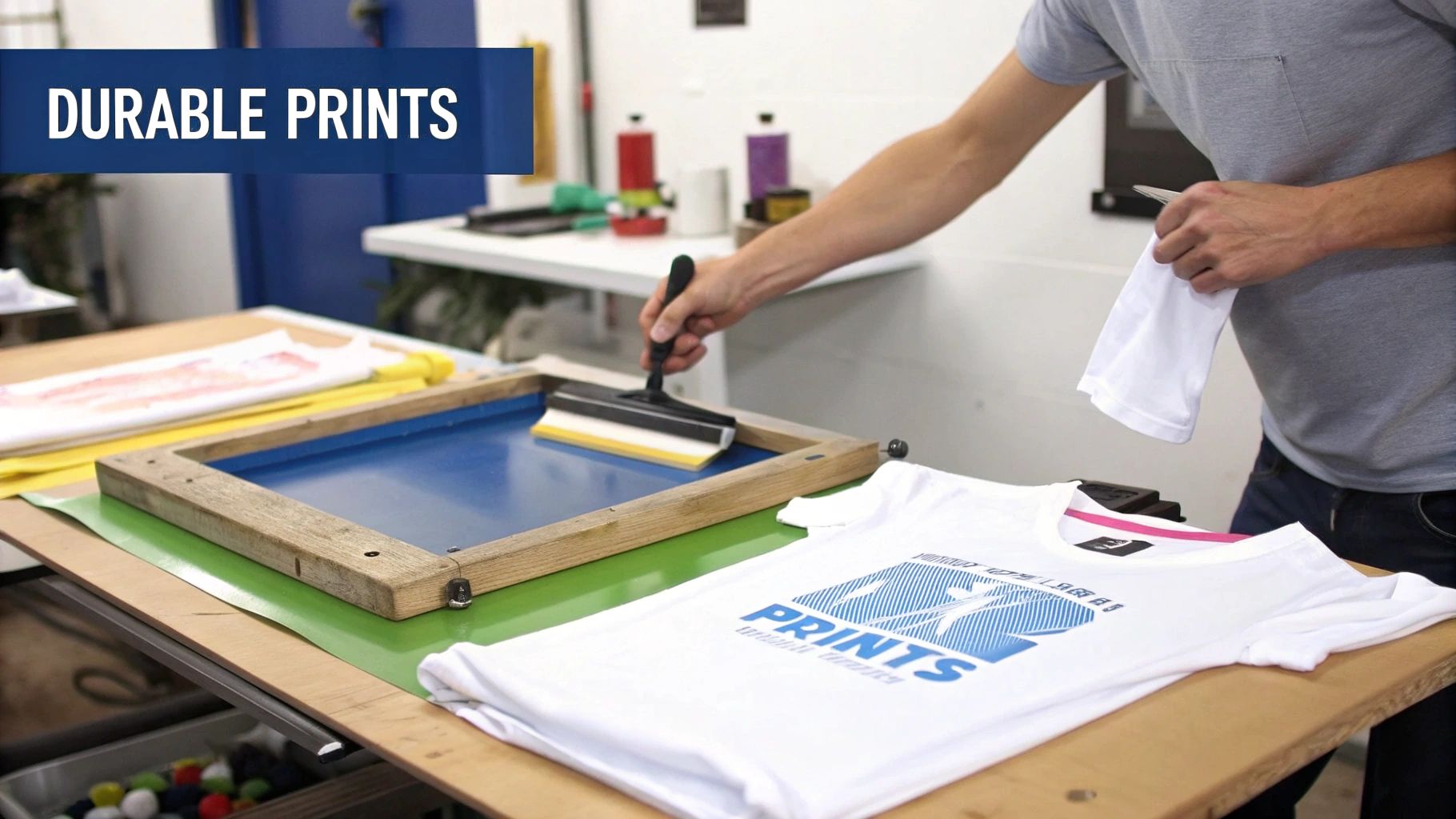
Screen printing is a classic and time-tested t-shirt printing method where ink is pushed through a stenciled mesh screen directly onto the fabric. Each color in a design requires its own separate screen, which is first coated in a light-sensitive emulsion, exposed with the artwork, and then "burned" with UV light to create the stencil. This process creates a thick, durable, and incredibly vibrant print that sits on top of the garment.
The setup for screen preparation makes it best suited for large batches. Once the screens are made, the actual printing process is highly efficient, whether done manually or with an automatic press. This economy of scale makes screen printing the go-to choice for band merchandise, corporate uniforms, and large-scale apparel lines where hundreds or thousands of identical items are needed.
When to Use Screen Printing
Screen printing is the undisputed king for bulk orders. Its cost-per-shirt drops dramatically as the quantity increases, making it highly profitable for high-volume sales. It's the perfect method once you've validated a best-selling design with a print-on-demand model and are ready to scale up production to maximize your profit margins. Brands focused on durability and bold, simple graphics thrive with this technique.
Key Takeaway: Choose screen printing for large-volume orders (typically 50+ units), simple designs with a limited color palette, and when you need maximum durability and color vibrancy.
Screen Printing Pro-Tips for Success:
Validate Before You Scale: Test your designs using a print-on-demand service first. Once you have a proven winner, move to screen printing for a bulk order to increase your profits.
Simplify Your Colors: To keep setup costs low, create designs with fewer colors. One or two-color graphics are the most cost-effective for screen printing.
Think in Bulk: The magic of screen printing is in the volume. Aim for minimum order quantities of 50-100 units to make the initial setup fees worthwhile.
Vector is Your Best Friend: Always design your artwork in a vector format (like AI or SVG). This ensures your lines remain crisp and scalable for screen production, which is a key part of designing for print-on-demand success.
3. Heat Transfer Printing
Heat transfer printing is a versatile t-shirt decoration technique where a design is first printed onto a special substrate, like transfer paper or vinyl, and then applied to the garment using a heat press. This method uses a combination of high temperature, pressure, and time to permanently bond the design to the fabric fibers. It's a popular choice because it works well on both light and dark-colored garments and can reproduce full-color designs with precision.
The workflow is efficient and requires minimal setup, making it an excellent middle ground between the single-item flexibility of DTG and the bulk-order efficiency of screen printing. First, the design is created and printed onto the transfer material. The t-shirt is then placed in a heat press, the transfer is positioned on top, and heat is applied to seal the graphic. This process has been widely adopted by businesses specializing in custom gifts, event merchandise, and sports uniforms due to its speed and adaptability.
When to Use Heat Transfer Printing
Heat transfer printing shines for small-to-medium batch orders and projects that require vibrant, solid-color graphics or personalization, like adding names and numbers to sports jerseys. It is an ideal method for event-specific merchandise, such as t-shirts for a local tournament or a company conference, where you need a limited run of high-quality apparel produced quickly. Its accessibility and relatively low startup cost make it a great option for entrepreneurs testing new designs or fulfilling custom orders.
Key Takeaway: Choose heat transfer printing for custom team uniforms, event merchandise, and small-batch apparel releases. It offers a fast, cost-effective solution for vibrant designs without high minimums.
Heat Transfer Pro-Tips for Success:
Invest in a Quality Heat Press: A professional-grade heat press, not a household iron, is crucial for achieving consistent pressure and temperature, which ensures the print is durable and won't peel.
Test Your Settings: Always press a sample garment first to dial in the perfect temperature (typically 350-375°F) and time (10-15 seconds) for your specific transfer material and fabric.
Use High-Quality Transfers: The quality of your transfer paper or vinyl directly impacts the final look and feel of the print. Select materials designed for your specific printer and garment type.
Provide Proper Care Instructions: Advise your customers to wash their shirts inside-out in cold water and avoid high-heat drying to preserve the vibrancy and integrity of the transfer for as long as possible.
4. Sublimation Printing
Sublimation printing is a powerful t-shirt printing method where heat turns solid dye directly into a gas, which then permeates and bonds with the fabric's fibers. This process uses special sublimation paper to transfer a design onto synthetic materials, primarily polyester. Unlike methods that lay ink on top of a garment, sublimation dye becomes a permanent part of the fabric itself, resulting in stunning, full-color designs that are impossible to feel, crack, peel, or fade.
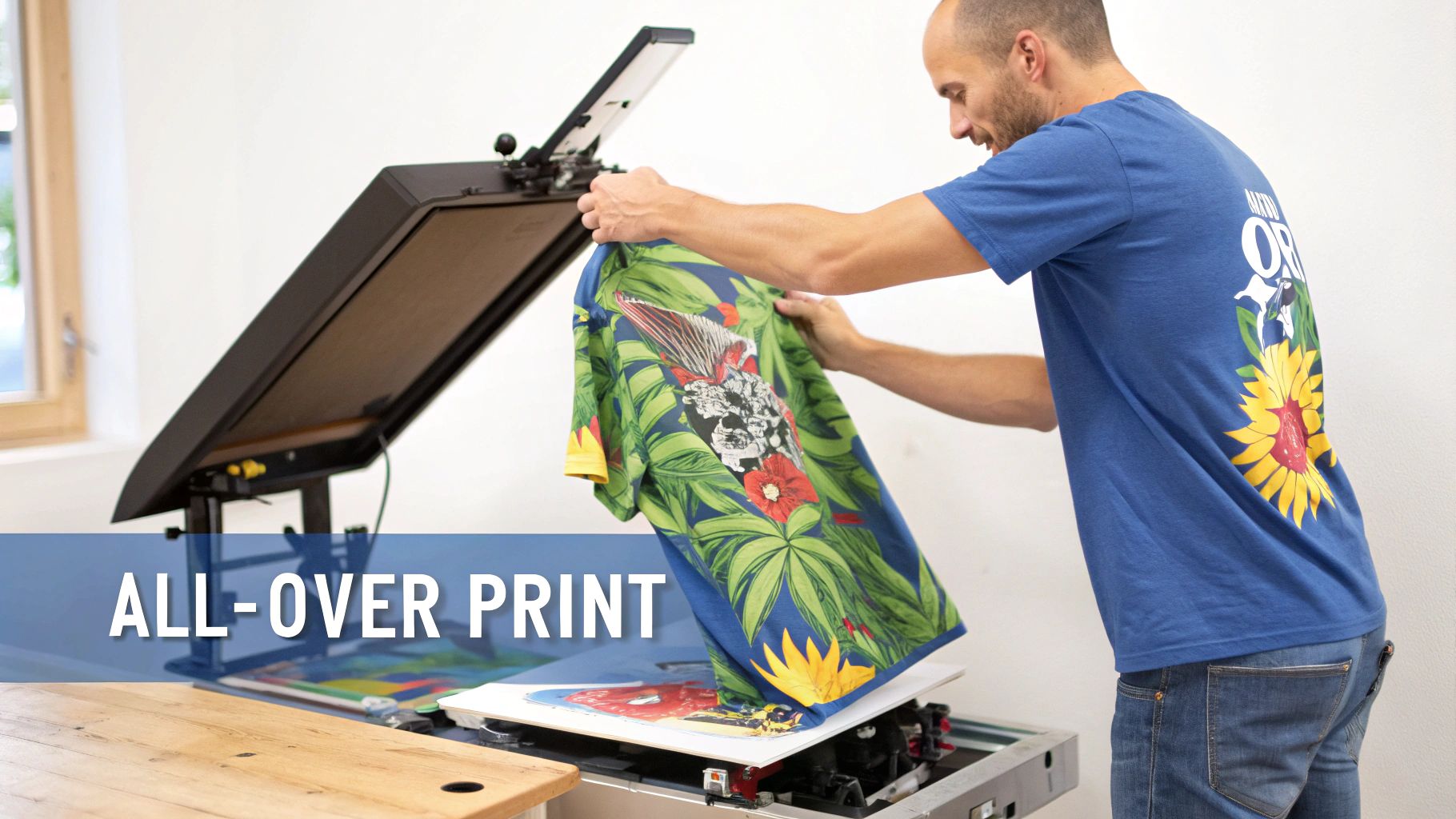
The workflow involves printing the design onto the transfer paper and then using a heat press to apply it to the t-shirt. The extreme heat and pressure trigger the chemical reaction, creating a seamless and vibrant print with photographic quality. This technique is especially popular for "all-over" prints that cover the entire garment, a favorite among activewear brands and businesses selling personalized photo merchandise. Sublimation is a key player in creating eye-catching products that stand out in a competitive market.
When to Use Sublimation Printing
Sublimation is the go-to choice for creating ultra-vibrant, permanent designs on polyester and other synthetic-blend apparel. It's the perfect technique for entrepreneurs focusing on the athletic wear, performance gear, or personalized gift markets. Because the dye becomes one with the fabric, the final product maintains its original soft feel and moisture-wicking properties, which is critical for sportswear. It's also ideal for creating bold, all-over patterns that turn a simple t-shirt into a wearable work of art.
Key Takeaway: Choose sublimation for brilliant, full-color, all-over prints on polyester garments. It's the best option for creating premium activewear and personalized products with unmatched durability and vibrancy.
Sublimation Pro-Tips for Success:
Fabric is Non-Negotiable: Sublimation works only on light-colored, high-polyester-count fabrics (ideally 100% polyester). The print will not transfer to cotton.
Invest in Quality Supplies: Use high-quality sublimation ink and paper to ensure accurate color reproduction and prevent smudging or fading.
Perfect Your Heat Press Settings: Calibrate your heat press to the recommended temperature (typically 375-400°F) and time for your specific garment to achieve a perfect transfer.
Create Edge-to-Edge Designs: Leverage sublimation's strengths by designing all-over prints that cover seams and collars, offering a premium look that other different types of t shirt printing cannot achieve.
5. Embroidery
Embroidery is a classic and premium apparel decoration method that stitches designs directly onto fabric using thread. Unlike printing techniques that apply ink, embroidery creates a textured, three-dimensional design with a high-perceived value. The process involves digitizing a design into a specific file format that a computerized embroidery machine can read, which then meticulously stitches the pattern onto the t-shirt.
This technique is celebrated for its exceptional durability and professional appearance. The stitched threads are incredibly resilient to washing and wear, making the design as long-lasting as the garment itself. While it has limitations in color blending and photorealistic detail compared to other printing types, its sophisticated finish makes it a popular choice for high-end branding and retail-quality apparel.
When to Use Embroidery
Embroidery is the ideal choice when you want to create a premium product that conveys quality and permanence. It’s perfect for establishing a high-end brand identity, creating durable corporate uniforms, or offering personalized, luxury-feel items in your store. The professional finish allows you to position these products at a higher price point.
Key Takeaway: Choose embroidery for a durable, high-end finish that elevates your brand. It is perfect for professional logos, simple text-based designs, and creating products with a premium, retail-quality feel.
Embroidery Pro-Tips for Success:
Simplify Your Designs: For the best results and cost-efficiency, keep designs simple with bold lines and a limited color palette (3-5 colors is ideal).
Professional Digitization: The quality of your final stitch-out depends on the digitized file. For those interested in the specialized equipment used in this technique, our comprehensive Ultimate Pfaff Embroidery Machines Guide provides valuable insights into top models and their capabilities.
Use a Stabilizer: Always back the embroidery area with a stabilizer material. This prevents the fabric from puckering and ensures a clean, flat design.
Test Stitch-Outs: Before starting a production run, always create a sample stitch-out to check for any issues with thread tension, color, or design translation.
Print-on-Demand (POD) integration isn't a physical printing method itself, but rather a revolutionary business model that automates the entire production process. Instead of purchasing equipment and printing in-house, you integrate your online store with a third-party POD platform. When a customer places an order, the platform automatically prints, packages, and ships the t-shirt directly to them under your brand. This dropshipping approach completely removes the need for inventory, equipment, or manual fulfillment.
The workflow is designed for maximum efficiency: you upload your designs to a POD platform, connect it to your eCommerce store, and set your retail price. The rest is handled for you. This model has democratized the apparel industry, allowing TikTok creators, Etsy sellers, and niche community leaders to launch entire product lines with zero upfront investment. The platform simply deducts its production costs, and you keep the profit, making it a powerful and exciting entry into eCommerce.
When to Use POD Platform Integration
This model is the ultimate starting point for entrepreneurs eager to enter the t-shirt business. It's perfect for validating design ideas, testing niche markets, and building a brand from scratch. Because the platform handles all the technical production, you can dedicate 100% of your energy to what truly drives sales: creating compelling designs and marketing your store.
Key Takeaway: Choose POD integration to launch your apparel brand with zero inventory and no production headaches. It's the most accessible and scalable way to start selling custom t-shirts online.
POD Pro-Tips for Success:
Validate Before You Scale: Use POD platforms to test dozens of designs simultaneously. This lets the market tell you which ones are winners without you spending a dime on unsold stock.
Focus on High-Margin Niches: Your primary job is marketing and design creation. Focus on finding passionate niche audiences that are underserved and willing to pay a premium for unique designs.
Generate Design Variations: To maximize your testing efforts, use tools like Skup's AvatarIQ to generate unlimited design variations from a single concept, flooding your store with options for customers.
Plan Your Growth Path: Once a design consistently generates high sales volume, you can analyze the numbers and consider transitioning to a bulk printing method like screen printing to significantly increase your profit margins. To better understand this business model, you can learn more about what print on demand is and how it empowers entrepreneurs.
7. Vinyl Cutting and Heat Press Application
Vinyl cutting, often paired with heat press application, is a popular method for creating bold, durable designs on t-shirts. This process involves a plotter, or vinyl cutter, that precisely cuts out shapes and text from a sheet of colored heat transfer vinyl (HTV). The excess vinyl is then manually removed in a process called "weeding," and the final design is placed on the garment and permanently bonded to the fabric using a heat press.
This technique is celebrated for its vibrant, opaque colors and crisp edges, making it a go-to choice for single-color logos, numbers, and text-based graphics. Because each color requires a separate layer of vinyl, it's best suited for designs with a limited color palette. The rise of affordable and user-friendly cutters has made this one of the most accessible different types of t shirt printing for small businesses and hobbyists. It is especially effective for custom name and number personalization on sports jerseys or promotional apparel for businesses.
When to Use Vinyl Cutting
Vinyl cutting is the perfect solution for creating custom apparel with sharp, solid-color graphics. It's ideal for small to medium-sized batches, particularly for personalizing items like sports team fan wear, music merchandise with bold logos, or one-off custom gifts. For entrepreneurs, it offers a low-cost entry point to producing high-quality, durable products without the complex setup of other methods.
Key Takeaway: Choose vinyl cutting for simple, bold designs, text-heavy graphics, and personalizing individual garments. Its durability and vibrant finish make it a reliable choice for small-scale production.
Vinyl Pro-Tips for Success:
Invest in Quality Vinyl: Use premium adhesive vinyl from reputable suppliers to ensure the design adheres properly and lasts through many washes.
Keep Designs Simple: Bold, clean graphics and fonts work best. Intricate, tiny details can be challenging to cut and weed accurately.
Master Your Heat Press: Press vinyl at the recommended temperature (typically 315-325°F) for 10-15 seconds. The exact settings vary by vinyl type, so always check the manufacturer's instructions.
Weed with Precision: Be patient when weeding (removing excess vinyl) to avoid accidentally lifting or tearing small parts of your design.
Educate Your Customers: Advise customers to wash garments inside-out in cold water and avoid high-heat drying to maximize the print's longevity and keep them thrilled with their purchase.
8. Discharge Printing
Discharge printing is a specialized screen printing technique that uses a unique ink to remove the original dye from a dark-colored garment. Instead of laying ink on top of the fabric, a discharge agent (often combined with a new color pigment) bleaches the shirt's fibers in the shape of the design, replacing it with the desired color. This process creates an incredibly soft, "no-feel" print that is dyed directly into the fabric itself.
The result is a distinct, high-end vintage aesthetic that is impossible to achieve with standard inks. Because the ink becomes part of the shirt, the print is exceptionally breathable and will never crack or peel. This premium feel is highly sought after by indie apparel lines, streetwear brands, and anyone aiming for a retro or worn-in look. Vintage band merchandise often popularizes this style, giving new apparel an authentically aged appearance from day one.
When to Use Discharge Printing
Discharge printing is the perfect choice for brands that want to offer a premium, super-soft product with a vintage or retro vibe. It's ideal for bulk orders where a consistent, high-quality finish is essential, especially for fashion-forward brands that prioritize comfort and hand-feel. It allows entrepreneurs to create apparel that feels like a well-loved favorite right off the shelf, commanding higher price points and building a loyal customer base.
Key Takeaway: Choose discharge printing for creating premium, vintage-style designs on dark cotton garments. It delivers an unbeatable soft feel that elevates your brand beyond basic print-on-demand offerings.
Discharge Pro-Tips for Success:
Fabric is Everything: This method works best on 100% natural fibers, particularly cotton. The discharge agent reacts with the fabric's dye, and results can be inconsistent on synthetic blends.
Color Variations: The final print color can vary slightly depending on the original garment dye. Always run a test print to ensure the outcome matches your vision.
Design for the Style: Light and pastel colors, like pale yellows, blues, and pinks, often produce the most striking results against a dark background.
Market as Premium: Educate your customers about the discharge process. Highlighting the soft feel and vintage look justifies a higher price and positions your product as a unique, high-quality item.
9. Water-Based Screen Printing
Water-based screen printing is an eco-friendly alternative to traditional plastisol printing. This method uses inks made with water as the main solvent instead of plasticizers, resulting in a significantly softer, more breathable print. The ink penetrates and dyes the fabric's fibers rather than sitting on top, creating a smooth, no-feel finish that is highly desirable for premium apparel.
The process is similar to traditional screen printing: a stencil (screen) is used to apply layers of ink to the garment. However, the water-based ink is then cured with heat, which evaporates the water and leaves the pigment bonded to the fabric. This technique is favored by eco-conscious brands and premium streetwear labels that want to offer a high-quality, sustainable product without compromising on design detail.
When to Use Water-Based Screen Printing
This method is the top choice for brands building a reputation around sustainability, premium quality, and comfort. It's perfect for bulk orders of lightweight, fashion-forward apparel, especially for organic cotton or high-end blended garments. If your brand story revolves around being environmentally friendly or offering a superior, soft-hand feel, water-based printing aligns perfectly with that message.
Key Takeaway: Choose water-based screen printing for bulk orders where a soft, breathable, and eco-friendly print is a key selling point. It elevates your product and appeals to environmentally conscious consumers.
Water-Based Pro-Tips for Success:
Fabric is Paramount: This technique achieves the best and brightest results on 100% cotton garments. The natural fibers absorb the ink beautifully.
Market the Benefits: Educate your customers on the sustainability angle and the superior soft feel of water-based prints to justify a premium price point.
Partner with Experts: Work with a print shop experienced in water-based inks, as they require more technical skill to mix, apply, and cure correctly compared to plastisol.
Test for Color Accuracy: Water-based inks can appear muted when wet and brighten as they cure. Always get a sample to ensure the final color matches your design vision.
Specialty techniques move beyond flat ink to create designs with unique tactile and visual appeal, instantly elevating a t-shirt's perceived value. These methods add texture, dimension, and shine, making them popular among premium streetwear and high-end fashion brands. The three primary methods are flocking (a velvet-like texture), puff printing (a raised, 3D effect), and foil transfer (a metallic or holographic finish).
The process varies for each technique but generally involves specialized materials applied with heat and pressure. Flocking uses an adhesive ink base to which tiny fibers are applied, creating a soft, fuzzy surface. Puff printing utilizes an ink with a heat-activated expanding agent. Foil transfer involves heat-pressing a sheet of metallic foil onto a pre-applied adhesive design. These methods are perfect for creating standout, limited-edition apparel that commands a higher price point.
When to Use Specialty Techniques
These advanced techniques are your go-to for creating premium, high-margin products that feel luxurious and exclusive. They are ideal for limited edition drops, brand logos that need to pop, and collectible merchandise where a unique finish justifies a higher cost. This is how you create an apparel item that customers don't just wear, but experience.
Key Takeaway: Choose specialty techniques like flocking, puff, or foil to add premium, tactile, and visual effects that significantly increase a garment's perceived value and sale price.
Specialty Pro-Tips for Success:
Design for the Medium: Bold, simple shapes and lettering work best. Intricate details can get lost or fail to adhere properly, especially with puff and foil techniques.
Test for Durability: Always order samples to test adhesion and wash durability before launching. These finishes require more care, so durability is a key selling point.
Price for Premium: The materials and labor for these techniques are more expensive. Price your products accordingly to reflect their enhanced quality and complexity.
Educate Your Customers: Provide specific care instructions (gentle wash, turn inside-out, hang dry) to ensure the special effects last, leading to greater customer satisfaction and positive reviews.
10-Method T-Shirt Printing Comparison
Technique
Implementation Complexity 🔄
Resource & Speed ⚡
Expected Outcomes ⭐📊
Ideal Use Cases 💡
Key Advantages ⭐
Direct-to-Garment (DTG) Printing
Moderate — requires garment pre-treatment and machine color management.
Unique 3D/metallic effects, high perceived value, differentiates brand.
Turn Knowledge Into Action: Your Next Steps to a Thriving POD Business
You’ve just journeyed through the dynamic world of t-shirt printing, exploring a powerful arsenal of techniques from the high-detail precision of Direct-to-Garment to the vibrant, permanent results of Sublimation. We've demystified the processes, weighed the pros and cons, and laid out the specific use cases for each method. The goal wasn't just to list facts; it was to arm you with the strategic knowledge needed to build a thriving, independent business. Understanding the different types of t-shirt printing is the foundational blueprint for success in the print-on-demand (POD) and eCommerce apparel space.
This knowledge empowers you to make smarter, more profitable decisions at every stage of your business journey. You now see the path from idea to empire isn't a mystery; it's a proven system. You can start with zero inventory and zero risk using POD fulfillment with DTG printing to test designs and find what resonates with your audience. Once you've identified a bestseller, you can scale production with a bulk order using screen printing to maximize your profit margins and build a sustainable brand.
Your Blueprint for Success
This is the exact model our students use, a strategy we've perfected and teach in our Apparel Cloning system. It’s about working smarter, not harder. You leverage the flexibility of POD to validate your creative ideas and then pivot to high-volume methods to capture maximum profit on your winning designs. This strategic approach minimizes risk and maximizes reward, creating a clear and repeatable path to financial freedom.
The biggest hurdle for new entrepreneurs isn't a lack of ambition; it's the creative bottleneck of producing unique, high-quality designs consistently. We saw this obstacle holding back too many aspiring business owners, which is why we built AvatarIQ.
Key Insight: Your success in POD isn't just about choosing the right printing method. It's about rapidly testing unique design ideas to find what sells. The faster you can test, the faster you can find winners and scale.
From Bottleneck to Breakthrough
AvatarIQ is our revolutionary AI-powered design tool, created specifically for apparel entrepreneurs. It eliminates the design bottleneck entirely. Imagine generating an endless stream of unique, commercially-ready t-shirt designs and professional mockups in seconds, without any design experience. That's the power you now have at your fingertips. You can focus your energy on marketing and finding winning products, which are the true drivers of a seven-figure brand.
You now possess the technical knowledge of printing and the strategic framework for growth. The path to escaping the 9-to-5 grind and building something you are truly proud of is clearer than ever. That excitement you feel right now is the feeling of opportunity knocking. It’s the realization that your dream of building a profitable, independent business is not just possible, but within reach. Take this newfound understanding of the different types of t-shirt printing, combine it with powerful tools and a proven system, and start building your future today.
Ready to turn this knowledge into a real, profitable business? Skup provides the all-in-one platform you need, integrating powerful tools like AvatarIQ with our exclusive Apparel Cloning training. Stop just learning and start building your eCommerce empire with Skup today.
Imagine launching a full-blown apparel brand without ever touching a single t-shirt or hoodie. That’s the magic of print on demand, and if you’ve been waiting for the right moment to jump in, this is it. This is your complete roadmap to getting your first sale and building a real, high-margin brand from the ground…
Quick Answer Matt Schmitt is the co-founder of Skup, a print-on-demand ecommerce training company. With over $30 million in personal ecommerce sales and a decade of experience building and scaling POD stores, Matt oversees Skup’s coaching program and teaches the systems that helped him exit multiple 7-figure businesses. His students have collectively generated tens of…
Ready to turn your creativity into cash? The fastest way to make money selling t-shirts is to find designs that are already crushing it, create even better versions with your own unique spin, and sell them to passionate audiences. The exciting world of print-on-demand allows you to start with virtually zero risk and build a…